On This Page
Description
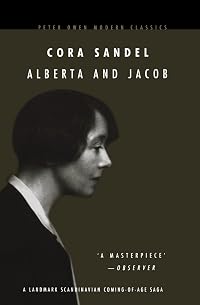
Hailed as a masterpiece on its British publication in 1962, this Modern Classic reissue should bring this magnificent novel to a new generation. Imaginative and intelligent, Alberta is a misfit trapped in a stiflingly provincial town in the far north of Norway whose only affinity is for her extrovert brother Jacob. Combining mastery of style and characterization with brilliant descriptive writing, this powerful story of a young woman's rebellion is universally regarded as one of the greatest show more novels to come from Scandinavia. show lessTags
Recommendations






















Member Reviews
Alberta is a teenage girl living in the far north of Norway. She is painfully shy to the point of being practically mute both out in town and at home. She blushes at the drop of a hat and hides from everyone. Her exacting mother is constantly frustrated with her and her father is too preoccupied with his own money problems to take an interest in her. At the point we meet her, she is done with the schooling her parents can afford and supposed to be learning domestic skills like the other girls her age, something she is hopeless at. She has no desire to be a part of the community or find a husband. The only person she openly loves is her brother, Jacob, who escapes their town as a sailor after disappointing his parents’ hope that he show more will find a scholarly career.
Alberta is also cold – physically cold. She sneaks behind her mother’s back to drink more than her share of coffee – gulping down the scalding liquid for a moment of warmth. She sneaks coal when her mother is out to build a fire in her room. She runs as fast and hard as she can outside, hoping the physical activity will warm her up. It is all to no avail. The setting of northern Norway is a character in this book – the constant dark and cold of the winter and the round the clock sun in the summer that gives the only short bursts of warmth and with it brings a few characters Alberta’s age home from school in the south. Even with the people her age who try to be friendly to her, Alberta can’t manage to string together more than a few words.
With that bleak description and unsympathetic main character, you may be surprised to hear that I LOVED this book. It is the start of a trilogy about Alberta and I had wish-listed the next two books after reading about ten pages and then purchased them before finishing. I’m not sure what it was, but I just loved the writing and description. I also really liked the awkward Alberta. I certainly was never as shy to the extreme as she is, but I could sympathize with many of the feelings she has. She’s trapped in that age and circumstance where she’s not an adult yet but not a child either. She also has no interest in staying in her town but no vision for an alternative. I’m excited to have found another Norwegian author that I love and looking forward to the rest of this semi-autobiographical trilogy.
Original Publication Date: 1926
Author’s nationality: Norwegian
Original language: Norwegian, translated to English in 1962, trans. by Elizabeth Rokkan
Length: 220 pages
Rating: 5 stars show less
Alberta is also cold – physically cold. She sneaks behind her mother’s back to drink more than her share of coffee – gulping down the scalding liquid for a moment of warmth. She sneaks coal when her mother is out to build a fire in her room. She runs as fast and hard as she can outside, hoping the physical activity will warm her up. It is all to no avail. The setting of northern Norway is a character in this book – the constant dark and cold of the winter and the round the clock sun in the summer that gives the only short bursts of warmth and with it brings a few characters Alberta’s age home from school in the south. Even with the people her age who try to be friendly to her, Alberta can’t manage to string together more than a few words.
With that bleak description and unsympathetic main character, you may be surprised to hear that I LOVED this book. It is the start of a trilogy about Alberta and I had wish-listed the next two books after reading about ten pages and then purchased them before finishing. I’m not sure what it was, but I just loved the writing and description. I also really liked the awkward Alberta. I certainly was never as shy to the extreme as she is, but I could sympathize with many of the feelings she has. She’s trapped in that age and circumstance where she’s not an adult yet but not a child either. She also has no interest in staying in her town but no vision for an alternative. I’m excited to have found another Norwegian author that I love and looking forward to the rest of this semi-autobiographical trilogy.
Original Publication Date: 1926
Author’s nationality: Norwegian
Original language: Norwegian, translated to English in 1962, trans. by Elizabeth Rokkan
Length: 220 pages
Rating: 5 stars show less
Read during a trip to N Norway, which undoubtedly brings the dark, bleak world of the teenage 'heroine' to life.
I absolutely loved this book and the descriptions of Alberta's feelings as she struggles to survive in a middle class home under the eagle eye of disapproving, disappointed Mama. Her walks with Papa almost lead to meaningful conversation ...but not quite:
"She and Papa repeated the same words that they had repeated countless times before. They would turn back and go home, nothing had changed, everything was just as hopeless and just as oppressive."
And what does Alberta even want? "Not knowing brought unrest and a giddy sensation under her heart. She existed like a negative of herself." But despite the details being blurred, show more "She imagined somehere open, free, bathed in sunshine. And a throng of people, none of them her relatives, none of whom could criticize her appearance and character, and to whom she was not responsible for being other than herself."
But life goes on - the darkness, the intense cold, the poverty, the disapproval, whether she hangs back shyly or consorts with "the wrong sort." I adored it and am reading the second in the trilogy. show less
I absolutely loved this book and the descriptions of Alberta's feelings as she struggles to survive in a middle class home under the eagle eye of disapproving, disappointed Mama. Her walks with Papa almost lead to meaningful conversation ...but not quite:
"She and Papa repeated the same words that they had repeated countless times before. They would turn back and go home, nothing had changed, everything was just as hopeless and just as oppressive."
And what does Alberta even want? "Not knowing brought unrest and a giddy sensation under her heart. She existed like a negative of herself." But despite the details being blurred, show more "She imagined somehere open, free, bathed in sunshine. And a throng of people, none of them her relatives, none of whom could criticize her appearance and character, and to whom she was not responsible for being other than herself."
But life goes on - the darkness, the intense cold, the poverty, the disapproval, whether she hangs back shyly or consorts with "the wrong sort." I adored it and am reading the second in the trilogy. show less
When you're young and you're frustrated by your emotions, your inability to make the world work the way you think it should, life can seem unbearably unjust. You may even think of taking your life to end all this hurting, and even succeed at it, as did my own poor sister. But you may get a glimpse of the drabber, infinitely more hopeless lives of older, saddened and resigned people who despite all that, go "back to it" day after day, step by step, until it's ended, and realize that there it is, life, to be met full on and made the best of. That's what Alberta's life is, in the stiflingly patriarchal small-town society in which she exists in northern Norway. Insightful and moving.
Alberta and Jacob are brother and sister, living in a Norwegian city inside the Arctic circle with their unhappy parents. Their father, the magistrate, has taken out a huge loan to pay off debts. Money is so short that the family cannot even afford the fuel to heat the house properly during the long, dark winter, and their main diet is gruel. Alberta, an intelligent young woman, has been taken out of school to help her mother in the house because money must be spent so that Jacob, who would much rather leave, can matriculate and take his rightful place in the middle class.
The book, first published in the twenties, is based on Sandel's own life. There are beautiful descriptions of the eerie winter landscape, and the summer, with its show more long, long days and celebrations. Sandel delineates the social structure of the town: who can socialise together, who must be listened to, expectations of behaviour. It is a rigid system. Alberta's friend, Beda, is known for speaking coarsely, like a "country person" and Beda's mother associates with the wives of shopkeepers, who are below her station, so according to the middle-class ladies of the town, their eventual misfortune is well-deserved. Beda, like Alberta, seems trapped.
It sounds bleak, but Alberta will escape. show less
The book, first published in the twenties, is based on Sandel's own life. There are beautiful descriptions of the eerie winter landscape, and the summer, with its show more long, long days and celebrations. Sandel delineates the social structure of the town: who can socialise together, who must be listened to, expectations of behaviour. It is a rigid system. Alberta's friend, Beda, is known for speaking coarsely, like a "country person" and Beda's mother associates with the wives of shopkeepers, who are below her station, so according to the middle-class ladies of the town, their eventual misfortune is well-deserved. Beda, like Alberta, seems trapped.
It sounds bleak, but Alberta will escape. show less
In the far north of Norway Alberta lives in a small town with its bourgeoisie, hypocrisy, gossip and petty scandals. She is not happy about this, torn between despising her surroundings and wanting to fit in. A few of the characters defy these attitudes, among them Jacob, Alberta's brother, and the only one she truly loves. She longs to escape to the south, at the same time realising she will fit in even less with the bourgeoisie there. After her brother leaves home, there seems even less to live for, but a small spark of tenacious hope keeps her going.
Undoubtedly bleak, but honest and so well described that it can't fail to resonate with most of us. I do hope things work out for Alberta in the next two books in the trilogy.
Undoubtedly bleak, but honest and so well described that it can't fail to resonate with most of us. I do hope things work out for Alberta in the next two books in the trilogy.
Moving and affecting, but also bleak. One presumes the bleakness is in part intentional - the depiction of what life is like so far north, in a small town with attitudes to match. But it's also hard to find a character here that you really empathise with, even though you do care what happens to them. You want them to transcend their faults, and they don't.
Ratings
Members
- Recently Added By
Lists

The Guardian's 1000 Novels Everyone Must Read
1,005 works; 551 members

Reading List - Scandinavian Fiction
134 works; 3 members

Allie's List of Books I Want To Read
93 works; 1 member

Fiction with Men's Given Names in the Title
302 works; 11 members

Books published by The Women's Press
14 works; 1 member
Author Information

19+ Works 966 Members
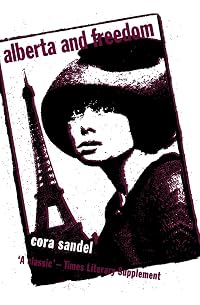
Sandel's best-known work is an autobiographical trilogy---Alberta and Jacob (1926), Alberta and Freedom (1931), and Alberta Alone (1939), which describes with insight and honesty the coming to maturity of a small-town Norwegian girl. Trained as a painter, Sandel has an eye for telling detail. She is also an attentive student of human nature. show more Sandel's short stories often explore with great sympathy the lives of society's outcasts and underdogs. She is a masterful prose stylist of marvelous delicacy whose work rarely fails to move. Her insight into the psyches of women and artists is especially acute and justly praised. (Bowker Author Biography) show less
Awards and Honors
Series

Belongs to Publisher Series
Lanterne (L 41)
Work Relationships
Is contained in
Common Knowledge
- Canonical title
- Alberta and Jacob
- Original title
- Alberte og Jakob
- Original publication date
- 1926
- People/Characters
- Alberta Selmer; Jakob Selmer; Mrs Selmer; Mr Selmer; Beda Buck; Cedolf Kjeldsen (show all 7); Harriet Pram
- First words
- The church clock shone like a moon in the night sky.
- Last words
- (Click to show. Warning: May contain spoilers.)Soon it would be another day.
- Original language
- Norwegian
Classifications
- Genres
- General Fiction, Fiction and Literature
- DDC/MDS
- 839.8237 — Literature & rhetoric German & related literatures Other Germanic literatures Danish and Norwegian literatures Norwegian literature Norwegian Bokmål fiction 1900–2000
- LCC
- PT8950 .F2 .A813 — Language and Literature German, Dutch and Scandinavian literatures Norwegian literature Individual authors or works 1900-1960
- BISAC
Statistics
- Members
- 337
- Popularity
- 94,335
- Reviews
- 6
- Rating
- (4.05)
- Languages
- 9 — Danish, English, Finnish, French, German, Italian, Norwegian (Bokmål), Norwegian, Swedish
- Media
- Paper, Audiobook, Ebook
- ISBNs
- 24
- ASINs
- 5