On This Page
Description
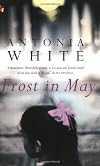
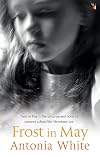
Nanda Gray, the daughter of a Catholic convert, is nine when she is sent to the Convent of Five Wounds. Quick-witted, resilient and eager to please, she accepts this closed world where, with all the enthusiasm of the outsider, her desires and passions become only those the school permits. Her only deviation from total obedience is the passionate friendships she makes. Convent life is perfectly captured - the smell of beeswax and incense; the petty cruelties of the nuns; the eccentricities of show more Nanda's school friends. show lessTags
Recommendations























Member Recommendations


lahochstetler Books about young girls growing up in convents
crittergirl Novels with protagonists who struggle with Catholic doctrine
Member Reviews
This is a Virago Modern Classic, in fact the first book issued in that series. It is the story of a young girl coming of age in a convent school in the years just before World War I. To my thoroughly protestant and currently non-observant-of-anything outlook, this is the story of the systematic destruction of minds and souls in the name of "love" and obedience to an utterly perverse supreme being. Any expression of joy, kindness or love for fellow humans, appreciation of beauty, or even excellence is somehow suspect, and if taken too far, grounds for mortification. Our protagonist, Fernanda Grey, struggles with her desire to be a proper Catholic set against her terror that she may receive the "call" and be destined to take the veil, or show more worse, that she will miss the message, and be doomed to live life having rejected a vocation without realizing it. This reminds me of the terror of MY adolescence, born of precisely the same adult-fostered ignorance, that any number of perfectly innocent interactions with boys might result in having a baby. The most disturbing thing about this novel, I think, is that I'm not sure whether the author means us to feel what I feel while reading it, or whether she is presenting Nanda's story as some sort of cautionary tale. I suspect this will be made clearer in White's three "sequel" novels, and as cranky as this one made me, I am contrarily eager to read those too. show less
A beautifully observed book, Frost in May is set in a Catholic girls' boarding school in England in the 1910s. Young Nanda Gray, the daughter of a recent convert to Catholicism, at once finds herself entranced by the romanticised religiosity of the nuns and her fellow students, and uneasy with the petty cruelties inflicted by the nuns that are designed to break down those girls who take pleasure in, show an aptitude for, or independently think about, well, pretty much anything.
As someone who was educated in a similar environment to Nanda, but who never had any faith to speak of, even as a child, the experience of reading Frost in May was at once alienating and queasily familiar. No contemporary YA dystopia comes close to the kind of show more hothouse, authoritarian, ritualised power games that play out here—and often for such small stakes. show less
As someone who was educated in a similar environment to Nanda, but who never had any faith to speak of, even as a child, the experience of reading Frost in May was at once alienating and queasily familiar. No contemporary YA dystopia comes close to the kind of show more hothouse, authoritarian, ritualised power games that play out here—and often for such small stakes. show less
The Virago group is doing themed monthly reads and the first was "Nuns, Teachers, and Governesses". I have about 6 unread viragos on my shelf, so I'm trying to read them when they fit a category. I had never read [Frost in May], which is Virago #1, so I took the opportunity and I'm so glad I did!
[Frost in May] is about a young girl whose father has recently converted to Catholicism. He sends her to a conservative Catholic boarding school. There, 9 year old Nanda whole-heartedly discovers the Catholic faith, makes friends, and begins to know herself. She is immersed in the closed world of the convent, where self-control, discipline, and humility are demanded of these young children. The glimmers of non-conformity come from a few of her show more friends at the convent who have more worldly families and from Nanda's mother, who during brief visits, obviously shows that she does not buy in to the system. Though internally Nanda embraces the lifestyle, some of her actions don't fit with the convent rules and the book does not end happily from Nanda's point of view.
I unexpectedly found this book delightful. There is a subtle and slightly subversive humor throughout from the author, but at the same time she perfectly captures the rigidity of a child's mind as it opens up through the teen years.
I would love to know more about the politics/cultural ramifications of converting to Catholicism in England in the early 1900s. I'm curious if there was a deeper cultural statement being made in the book that I didn't have the background to comprehend.
Original publication date: 1933, Virago publication date 1978 (#1)
Author’s nationality: British
Original language: English
Length: 221 pages
Rating: 4 stars
Format/where I acquired the book: given to me by Barbara/romain from the Virago group
Why I read this: virago monthly challenge show less
[Frost in May] is about a young girl whose father has recently converted to Catholicism. He sends her to a conservative Catholic boarding school. There, 9 year old Nanda whole-heartedly discovers the Catholic faith, makes friends, and begins to know herself. She is immersed in the closed world of the convent, where self-control, discipline, and humility are demanded of these young children. The glimmers of non-conformity come from a few of her show more friends at the convent who have more worldly families and from Nanda's mother, who during brief visits, obviously shows that she does not buy in to the system. Though internally Nanda embraces the lifestyle, some of her actions don't fit with the convent rules and the book does not end happily from Nanda's point of view.
I unexpectedly found this book delightful. There is a subtle and slightly subversive humor throughout from the author, but at the same time she perfectly captures the rigidity of a child's mind as it opens up through the teen years.
I would love to know more about the politics/cultural ramifications of converting to Catholicism in England in the early 1900s. I'm curious if there was a deeper cultural statement being made in the book that I didn't have the background to comprehend.
Original publication date: 1933, Virago publication date 1978 (#1)
Author’s nationality: British
Original language: English
Length: 221 pages
Rating: 4 stars
Format/where I acquired the book: given to me by Barbara/romain from the Virago group
Why I read this: virago monthly challenge show less
The novel starts with Nanda arriving at the Convent of the Five Wounds Catholic boarding school at nine-years of age. Her father had recently converted to Catholicism and she quickly picks up that this makes her a second class Catholic, compared to those who come from long-standing Catholic families. Nanda is a clever and creative young person who quite normally craves close friends. However, creativity, free will and young women talking in groups of only two are all frowned on at the Convent. Nanda continues to be very devout but has doubts when she can't quite reach the level of emotional engagement with Catholic traditions that others claim. Antonia White writes brilliantly and constantly makes fun of the Catholic faith, beliefs and show more dogma, as Nanda struggles hard to accept. The Nuns main aim is to break any free spirited child and achieve unquestioning acceptance of Catholicism and they take this to extremes. The novel is all set in the convent, apart from one section at home at Christmas, and has the same stifling and incense-rich atmosphere of the convent. An excellent and interesting read. show less
Set in the early 1900s, Nanda is nine years old when her father enrolls her in the convent school outside of London called Convent of the Five Wounds. She quickly learns, in this closed society, that she has to please only God. And, of course, the stodgy, cruel nuns that run the place. (I can say that, as a lapsed Catholic who has had my fill of nuns.) There was a little too much of the holy affairs in the early part of the book but then as Nanda grew up to be a teenager there was a sense of dread that somehow her attention to the rules was slipping and the nuns were going to catch her doing something they didn't allow which was just about anything really. The author was great at character development and creating this sense of doom.
I show more followed it up by listening to the Backlisted podcast about the book and it was absolutely wonderful and revealed that the book was very autobiographical and played parts of an interview with the author from the 60s. show less
I show more followed it up by listening to the Backlisted podcast about the book and it was absolutely wonderful and revealed that the book was very autobiographical and played parts of an interview with the author from the 60s. show less
Young Nanda Grey has a pious nature and wants nothing more than to be a good Catholic girl, but the stifling, rigid atmosphere of her convent school, where creativity is frowned upon and "particular friendships" are strongly discouraged, threatens to destroy her sense of self. Although the novel drags in places, especially when the reader is subjected to Nanda's retreat notes on Catholic doctrine, I do want to read more by Antonia White.
Frost in May, by Antonia White, tells the story of Nanda Grey, a nine year old girl who enters a Catholic convent school in the early 1930s. Her father has only recently converted to Catholicism and wants Nanda to get a solid foundation in the faith. The school caters to many of the upper class Catholics in Europe, and Nanda befriends several girls who are in a different social strata than she is. As she grows older, Nanda discovers that she loves literature and music, and while she is inoculated into Catholic dogma, she also finds herself occasionally questioning some of the things she is taught.
Frost in May is a coming of age story. While there is a long tradition of these types of stories focused on boys, White has made something show more different by focusing on a girl's experience at boarding school. I think, however, that because I am an American who was raised in a Protestant tradition, I probably missed some of the nuances and social/religious criticism of the book. There was an undercurrent of social class issues which would have probably been quite obvious to an English reader in the 1930s, but which was only hazily apparent to me. Additionally, while I am familiar with Catholicism to some extent, because I was not raised in the tradition I'm sure that some of the religious nuances were lost on me. Overall, Frost in May was an excellently written, well-plotted book, but one which did not resonate for me. show less
Frost in May is a coming of age story. While there is a long tradition of these types of stories focused on boys, White has made something show more different by focusing on a girl's experience at boarding school. I think, however, that because I am an American who was raised in a Protestant tradition, I probably missed some of the nuances and social/religious criticism of the book. There was an undercurrent of social class issues which would have probably been quite obvious to an English reader in the 1930s, but which was only hazily apparent to me. Additionally, while I am familiar with Catholicism to some extent, because I was not raised in the tradition I'm sure that some of the religious nuances were lost on me. Overall, Frost in May was an excellently written, well-plotted book, but one which did not resonate for me. show less
Members
- Recently Added By
Published Reviews
ThingScore 75
Few other novels of our time, whatever the materials they have dealt in, have exhibited the clarity of purpose, the niceness of emphasis, the neatness of detail displayed by Miss White in "Frost in May."
added by christiguc
Lists

The Guardian's 1000 Novels Everyone Must Read
1,005 works; 548 members

Favourite Virago Modern Classics
183 works; 38 members

Favorite Coming of Age Novels.
164 works; 51 members

Recommend the 20 best books you've read in the last five years
2,168 works; 607 members

Best Books Set in London
157 works; 42 members

Best Books Set in Boarding Schools
160 works; 56 members

Books featuring monks and/or nuns
166 works; 33 members
20th Century Literature
1,161 works; 54 members

Best School Stories
219 works; 22 members

Sense of place
156 works; 13 members

all aboard for malory towers (grownups)
28 works; 5 members

Best books read in 2011
200 works; 51 members
Literature About Women and Girls
394 works; 39 members

Bibliography for How to be a Heroine
148 works; 12 members

Academia in Fiction
158 works; 23 members

CONVENTional novels
19 works; 1 member

Books Read in 2020
4,379 works; 124 members
Author Information

21+ Works 2,414 Members
Some Editions
Awards and Honors
Series

Belongs to Publisher Series
Work Relationships
Common Knowledge
- Canonical title
- Frost in May
- Original title
- Frost in May
- Original publication date
- 1933
- People/Characters
- Nanda Gray
- Related movies
- Frost in May (1982 | IMDb)
- Dedication
- To H.T. Hopkinson
- First words
- Nanda was on her way to the Convent of the Five Wounds.
Frost in May is a girls' school story. (Introduction) - Last words
- (Click to show. Warning: May contain spoilers.)But Nanda knew that whatever might happen in the future, nothing for her would ever be the same again.
(Click to show. Warning: May contain spoilers.)I think it not unlikely that Frost in May may be more comprehensible now than it was at first. (Introduction) - Blurbers
- Bowen, Elizabeth; Waugh, Evelyn
Classifications
Statistics
- Members
- 988
- Popularity
- 26,672
- Reviews
- 24
- Rating
- (3.91)
- Languages
- 8 — Danish, Dutch, English, French, German, Japanese, Spanish, Swedish
- Media
- Paper, Audiobook, Ebook
- ISBNs
- 23
- ASINs
- 14