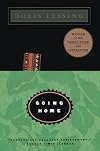
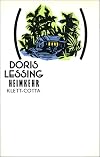
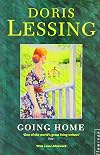
Going Home
by Doris Lessing
On This Page
Description
"Africa belongs to the Africans; the sooner they take it back the better. But--a country also belongs to those who feel at home in it. Perhaps it may be that love of Africa the country will be strong enough to link people who hate each other now. Perhaps..." Going Home is Doris Lessing's account of her first journey back to Africa, the land in which she grew up and in which so much of her emotion and her concern are still invested. Returning to Southern Rhodesia in 1956, she found that her show more love of Africa had remained as strong as her hatred of the idea of "white supremacy" espoused by its ruling class. Going Home evokes brilliantly the experience of thepeople, black and white, who have shaped and will shape a beloved country. show lessTags
Recommendations


















Member Reviews
Lessing describes a visit to the country where she grew up, pre-independence Southern Rhodesia (Zimbabwe), in 1956, her first - and last - after moving to England. As it turned out, it was a very interesting historical moment: 1956 was a momentous year internationally (Khruschev's renunciation of Stalin, the invasion of Hungary, Suez, etc.) and it was also the time of the abortive attempt to create a white-dominated federation of former British colonies in Central Africa (modern Zimbabwe, Zambia and Malawi).
She writes perceptively and wittily about the peculiar political situation of the moment, and the hypocrisy that was needed on all sides to oppress black Africans enough to satisfy the fears and prejudices of the white settlers (the show more only people with any actual political rights in the autonomous colony) whilst keeping up the pretence to the rest of the world that Southern Rhodesia was still a bastion of British liberalism, quite different from its repressive neighbour South Africa.
It’s all rather less nuanced than what Lessing tells us about her later visits to independent Zimbabwe in African laughter, but obviously the political situation in the fifties was less nuanced too. And there’s a very typical Lessing move when you get to the end of the book: a sequence of (count ‘em!) four postscripts, written for new editions at intervals of about ten years, pointing out the things in the book that she feels with hindsight were wrong. Not least her frequent assertions of her own communist ideals (she had asked the Soviet government to sponsor her trip, and set out under the - mistaken - belief that they had).
A period piece, but very much worth reading if you want to know more about the messy winding-up of British colonialism. show less
She writes perceptively and wittily about the peculiar political situation of the moment, and the hypocrisy that was needed on all sides to oppress black Africans enough to satisfy the fears and prejudices of the white settlers (the show more only people with any actual political rights in the autonomous colony) whilst keeping up the pretence to the rest of the world that Southern Rhodesia was still a bastion of British liberalism, quite different from its repressive neighbour South Africa.
It’s all rather less nuanced than what Lessing tells us about her later visits to independent Zimbabwe in African laughter, but obviously the political situation in the fifties was less nuanced too. And there’s a very typical Lessing move when you get to the end of the book: a sequence of (count ‘em!) four postscripts, written for new editions at intervals of about ten years, pointing out the things in the book that she feels with hindsight were wrong. Not least her frequent assertions of her own communist ideals (she had asked the Soviet government to sponsor her trip, and set out under the - mistaken - belief that they had).
A period piece, but very much worth reading if you want to know more about the messy winding-up of British colonialism. show less
Doris Lessing had an agenda when she went back to South Rhodesia (Zimbabwe) in 1956, seven years since her exile in 1949 and although on reflection she found the country: “A backwater full of neurotic and bigoted racists” her love for Africa comes shinning through:
"Africa belongs to that Africans; the sooner they take it back the better. But - the country also belongs to those that feel at home in it. Perhaps it may be that the love of Africa the country will be strong enough to link people who hate each other now. Perhaps.”
Lessing wanted to re-visit her homeland and believed (mistakenly as it turned out) that she had been employed by Tass the soviet news agency to write about the current situation in the country. Lessing at the show more time was still a card carrying communist, but was in a unique position as an exile to record the nuances of the political situation. She was steeped in the culture and had used her experiences as a young white woman in colonial Africa as a subject for most of her previously published work. Employed as a journalist this book tells of the six or so weeks she spent “back home” and while there is an insightful examination of the political scene there is also her reminisces about her younger life in Rhodesia and some marvellous writing about the sights, sounds and smells of the country.
In 1956 Garfield Todd was the leading political figure, he was a liberal and believed that the way forward for the country was to create an educated black middle class and had launched the Partnership movement. Lessing sees this as a sham; a way of keeping power for the white minority, while putting on a progressive face for the rest of the world. She may well have been right, but she comes down hard on the Partnership people, many of whom it is clear thought that they were progressive and that they were making moves in the right direction. From subsequent history it is clear that Todd was not an opportunist and genuinely believed in Partnership, but he could not take the country with him and was soon replaced by hardliners.
Lessing interviews both politicians, government workers, and local white and black people and paranoia is everywhere. Lessing herself believes that she is continually shadowed by the secret police and much of what she learns is “off the record”. She backs up her view of the repressive state by listing the legislation that is currently being enforced and it is a powerful argument:
The Land Apportionment Act (used to transfer tribal land to white settlers)
Native Pass laws (black people must at all times carry passes to go into towns and cities), which could be revoked.
Destocking Act ( forcing black people to slaughter their cattle)
The Sedition Act.
The book captures a moment in time of a colonial African country already well down the road of becoming a repressive state on a collision course with its majority black population. At this time the black majority were not sufficiently well organised and had not taken up an armed struggle; that would come later, but in 1956 Lessing was pessimistic about the future as it looked like repression would last for several generations. With each significant republication of Going Home; Lessing has added a short afterword. The first in 1967 is still pessimistic about the future for Black Africans, but twenty six years later in 1982 history has proved her wrong and she can reflect on a Black majority government and finally in 1992 apartheid even in South Africa was being dismantled.
This book is a history lesson and a valuable document of a country in transition. It had me researching facts on the internet because I was so involved in the writing. Truthful, honest and at times a little misguided, this remains a very human document, which may well have opened eyes when it was published in 1957 about the appalling situation for the black majority. It still makes for absorbing reading in 2015 and as Lessing herself says (with some irony because for some years she was fooled by Stalin’s communism), we must be continually watchful of repressive regimes and must ‘man the barricades” if necessary. A four star read. show less
"Africa belongs to that Africans; the sooner they take it back the better. But - the country also belongs to those that feel at home in it. Perhaps it may be that the love of Africa the country will be strong enough to link people who hate each other now. Perhaps.”
Lessing wanted to re-visit her homeland and believed (mistakenly as it turned out) that she had been employed by Tass the soviet news agency to write about the current situation in the country. Lessing at the show more time was still a card carrying communist, but was in a unique position as an exile to record the nuances of the political situation. She was steeped in the culture and had used her experiences as a young white woman in colonial Africa as a subject for most of her previously published work. Employed as a journalist this book tells of the six or so weeks she spent “back home” and while there is an insightful examination of the political scene there is also her reminisces about her younger life in Rhodesia and some marvellous writing about the sights, sounds and smells of the country.
In 1956 Garfield Todd was the leading political figure, he was a liberal and believed that the way forward for the country was to create an educated black middle class and had launched the Partnership movement. Lessing sees this as a sham; a way of keeping power for the white minority, while putting on a progressive face for the rest of the world. She may well have been right, but she comes down hard on the Partnership people, many of whom it is clear thought that they were progressive and that they were making moves in the right direction. From subsequent history it is clear that Todd was not an opportunist and genuinely believed in Partnership, but he could not take the country with him and was soon replaced by hardliners.
Lessing interviews both politicians, government workers, and local white and black people and paranoia is everywhere. Lessing herself believes that she is continually shadowed by the secret police and much of what she learns is “off the record”. She backs up her view of the repressive state by listing the legislation that is currently being enforced and it is a powerful argument:
The Land Apportionment Act (used to transfer tribal land to white settlers)
Native Pass laws (black people must at all times carry passes to go into towns and cities), which could be revoked.
Destocking Act ( forcing black people to slaughter their cattle)
The Sedition Act.
The book captures a moment in time of a colonial African country already well down the road of becoming a repressive state on a collision course with its majority black population. At this time the black majority were not sufficiently well organised and had not taken up an armed struggle; that would come later, but in 1956 Lessing was pessimistic about the future as it looked like repression would last for several generations. With each significant republication of Going Home; Lessing has added a short afterword. The first in 1967 is still pessimistic about the future for Black Africans, but twenty six years later in 1982 history has proved her wrong and she can reflect on a Black majority government and finally in 1992 apartheid even in South Africa was being dismantled.
This book is a history lesson and a valuable document of a country in transition. It had me researching facts on the internet because I was so involved in the writing. Truthful, honest and at times a little misguided, this remains a very human document, which may well have opened eyes when it was published in 1957 about the appalling situation for the black majority. It still makes for absorbing reading in 2015 and as Lessing herself says (with some irony because for some years she was fooled by Stalin’s communism), we must be continually watchful of repressive regimes and must ‘man the barricades” if necessary. A four star read. show less
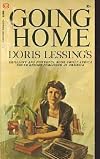
My edition of this book -- Popular Library paperback, 1968 -- is the most amazing instance of publishing fraud in my possession. The back cover reads in part: "SHE RETURNED TO A LAND OF RISING DANGER AND EXPLOSIVE PASSION. She had grown up in the heart of Africa, and had fled its savage tensions and corrupting seductions as soon as she was able . . .But now, as she climbed off the plane that had brought her back, and the rich exotic scents and dizzying sunlight enveloped her . . ." A novel, right? A novel with some nice juicy sex? No, it's political journalism -- Nobel prize winner Doris Lessing's indictment of apartheid as it functioned in 1956 in Southern Rhodesia, now Zimbabwe, where she grew up. (And an excellent book it is, too.)
Back in 1956, after years living in England, Doris Lessing set out for a trip back to her native country, South Rhodesia. Here was a diary, then, written as a report for a newspaper, and that served as a pretext to this chronicle -a return to her roots.
If the book is partly autobiographical (childhood memories, her parents, and, even, the clichés comparing sunny Africa to rainy London) this is not where its key interest lies. What she does above all indeed is to offer a pessimistic, yet bluntly honest portrayal of a country, then under the boots of an handful of British bureaucrats, those mindset was corrupted by colonialism in one of its ugliest forms: paternalistic racism.
A lot of things have changed since she had left! Grouped show more together with North Rhodesia and Nyasaland in a Central African Federation, the country was then a political experiment led by the British, and those purpose was to conciliate White population as much as the independentist aspirations of Black people. Relying on both demographics, led by an otherwise 'liberal' leader when it came to racial issues (Garfield Todd) the endeavour purported to be skilful, and yet... Racial issues, well, inevitably, would waste it all.
Like a cancer, it will in fact sicken the Federation and throws itself at the face of the author, baffled observant, so taken aback that she mostly talk only about it. Racism was an obsession, nearly pathological.
From Salisbury, her native town, to the mines of the Copper Belt, communist sympathiser those anti-segregationist ideas are well-known of the political police that will follow her, she gives us to see, through various interviews with people from no less various backgrounds (trade unionists, bureaucrats, political leaders, nationalists....) the irrational and stupid insanity of a whole system, which has no qualm discriminating against Blacks, from education to housing and employment. Here's a Federation that self-proclaimed itself a 'Partnership', yet those hypocrisy, in the end, won't even sustain it for a decade, doomed as it was to collapse and give birth to what are nowadays the Zimbabwe, Zambia, and Malawi.
More than half of a century after the facts, 'Going Home' definitely remains a damning testimony about a whole part of colonialism, that will interest anyone curious, about Africa, colonialism, the shaping of a new world, and/ or racial issues. show less
If the book is partly autobiographical (childhood memories, her parents, and, even, the clichés comparing sunny Africa to rainy London) this is not where its key interest lies. What she does above all indeed is to offer a pessimistic, yet bluntly honest portrayal of a country, then under the boots of an handful of British bureaucrats, those mindset was corrupted by colonialism in one of its ugliest forms: paternalistic racism.
A lot of things have changed since she had left! Grouped show more together with North Rhodesia and Nyasaland in a Central African Federation, the country was then a political experiment led by the British, and those purpose was to conciliate White population as much as the independentist aspirations of Black people. Relying on both demographics, led by an otherwise 'liberal' leader when it came to racial issues (Garfield Todd) the endeavour purported to be skilful, and yet... Racial issues, well, inevitably, would waste it all.
Like a cancer, it will in fact sicken the Federation and throws itself at the face of the author, baffled observant, so taken aback that she mostly talk only about it. Racism was an obsession, nearly pathological.
From Salisbury, her native town, to the mines of the Copper Belt, communist sympathiser those anti-segregationist ideas are well-known of the political police that will follow her, she gives us to see, through various interviews with people from no less various backgrounds (trade unionists, bureaucrats, political leaders, nationalists....) the irrational and stupid insanity of a whole system, which has no qualm discriminating against Blacks, from education to housing and employment. Here's a Federation that self-proclaimed itself a 'Partnership', yet those hypocrisy, in the end, won't even sustain it for a decade, doomed as it was to collapse and give birth to what are nowadays the Zimbabwe, Zambia, and Malawi.
More than half of a century after the facts, 'Going Home' definitely remains a damning testimony about a whole part of colonialism, that will interest anyone curious, about Africa, colonialism, the shaping of a new world, and/ or racial issues. show less
Ratings
Members
- Recently Added By
Author Information

264+ Works 37,215 Members
Doris Lessing was born in Kermanshah, Persia (later Iran) on October 22, 1919 and grew up in Rhodesia (the present-day Zimbabwe). During her two marriages, she submitted short fiction and poetry for publication. After moving to London in 1949, she published her first novel, The Grass Is Singing, in 1950. She is best known for her 1954 Somerset show more Maugham Award-winning experimental novel The Golden Notebook. Her other works include This Was the Old Chief's Country, the Children of Violence series, the Canopus in Argos - Archives series, and Alfred and Emily. She has received numerous awards for her work including the 2001 Prince of Asturias Prize in Literature, the David Cohen British Literature Prize, and the 2007 Nobel Prize for Literature. She died on November 17, 2013 at the age of 94. (Bowker Author Biography) show less
Common Knowledge
- Original title
- Going Home
- Original publication date
- 1957
- People/Characters
- Doris Lessing
- First words
- Over the plains of Ethiopia the sun rose as I had not seen it in seven years.
- Last words
- (Click to show. Warning: May contain spoilers.)Yes, I haven't changed my mind about that.
- Blurbers
- Davidson, Basil
Classifications
- Genre
- Biography & Memoir
- DDC/MDS
- 828.91403 — Literature & rhetoric English & Old English literatures English miscellaneous writings English miscellaneous writings 1900- English miscellaneous writings 1900-1999 English miscellaneous writings 1945-1999 Diaries, journals, notebooks, reminiscences
- LCC
- DT2912 .L47 — History of Europe, Asia, Africa and Oceania Africa History of Africa Zimbabwe. Southern Rhodesia Ethnography
- BISAC
Statistics
- Members
- 197
- Popularity
- 166,844
- Reviews
- 4
- Rating
- (3.69)
- Languages
- Dutch, English, German
- Media
- Paper, Ebook
- ISBNs
- 8
- ASINs
- 10