The Man in the Maze
by Robert Silverberg
On This Page
Description
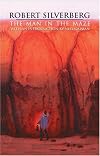
A diplomat who successfully negotiated with intelligent aliens finds his loyalty to the human race tested in this novel by a Nebula Award–winning author.Richard Muller was an honorable diplomat who braved unimaginable dangers to make contact with the first-known race of intelligent aliens. But those aliens left a mark on him: a psychic wound that emanates a telepathic miasma his fellow humans can neither cure nor endure. Muller is exiled to the remote planet of Lemnos, where he is left, show more deeply embittered, at the heart of a deadly maze . . . until a new alien race appears, seemingly intent on exterminating humanity. Only Muller can communicate with them, due to the very condition that has made him an outcast. But will Muller stick his neck out for the people who so callously rejected him?
. show less
Tags
Recommendations




























Member Recommendations
Member Reviews
3.5/5
I was immediately drawn in to the premise of The Man in the Maze. A dark and mysterious alien mega-structure that hides a human hermit is explored by another group of humans that is trying to find him. The setting is pretty great. Similar to Rendezvous with Rama, the exact processes and purpose of the maze is never truly understood, but what isn't similar is that the maze gives a certain amount of tension and danger that suits the novel well.
What really make The Man in the Maze shine is the deeply textured exploration of human psychology. Muller is an interesting character, and provides a morally ambiguous focal point that you get to chew on. In fact, most of the characters are moral ambiguous. Silverberg spends a lot of time show more asking what a persons moral obligation or duty is to their species. Do the ends justify the means? At what point does a human become alien to their own race? How hard is it to overcome xenophobia? The maze itself is a real world example of the inner workings of Muller's mind. All of these ideas are explored with some really excellent prose from Silverberg. The pacing and ending are both excellent. A beautifully written story.
Why not a higher rating then? Well, it's kinda hard to ignore Silverberg's treatment of women. I'm used to a lot of older SF simply excluding women entirely from the story, but Silverberg takes that a step further by viewing women as nothing but sexual toys for his main characters. It's honestly disgusting, and it keeps popping up throughout the book. I certainly hope that as I explore other novels of his that he tones down the misogyny a lot, because in this one it's really unbearable. show less
I was immediately drawn in to the premise of The Man in the Maze. A dark and mysterious alien mega-structure that hides a human hermit is explored by another group of humans that is trying to find him. The setting is pretty great. Similar to Rendezvous with Rama, the exact processes and purpose of the maze is never truly understood, but what isn't similar is that the maze gives a certain amount of tension and danger that suits the novel well.
What really make The Man in the Maze shine is the deeply textured exploration of human psychology. Muller is an interesting character, and provides a morally ambiguous focal point that you get to chew on. In fact, most of the characters are moral ambiguous. Silverberg spends a lot of time show more asking what a persons moral obligation or duty is to their species. Do the ends justify the means? At what point does a human become alien to their own race? How hard is it to overcome xenophobia? The maze itself is a real world example of the inner workings of Muller's mind. All of these ideas are explored with some really excellent prose from Silverberg. The pacing and ending are both excellent. A beautifully written story.
Why not a higher rating then? Well, it's kinda hard to ignore Silverberg's treatment of women. I'm used to a lot of older SF simply excluding women entirely from the story, but Silverberg takes that a step further by viewing women as nothing but sexual toys for his main characters. It's honestly disgusting, and it keeps popping up throughout the book. I certainly hope that as I explore other novels of his that he tones down the misogyny a lot, because in this one it's really unbearable. show less
Science fiction that is essentially a character study of three men who face a moral dilemma. These three are Dick Muller, the titular man in the maze who has exiled himself from all social interactions, Charles Boardman, the pragmatic manipulator, and Ned Rawlins, the young idealist. Each is a key contributor to events that have the potential to change the future trajectory of humankind.
Muller is living in self-imposed exile after a life-changing encounter with an alien species that has rendered him repulsive to other humans. He has solved the maze that exists on the planet Lemnos. It has taken the lives of myriad other lifeforms and humans trying to navigate it. It is a book that works on multiple levels. The storyline itself is show more compelling and spurs interest to keep reading, it contains “big ideas” on the nature of the mind (represented by the maze) and humanity, and it is a commentary on personal interconnections and “othering” (represented by alien species).
The narrative momentum is provided by whether Charles and Ned can convince Muller to leave the maze for the benefit of the species rather than trying to “trick” him with false promises. The two disagree based on their moral codes and personalities. Themes include honor, free will, ambition, emotional vulnerability, and connectedness.
It was published in 1968 and is one of those books that examines larger questions about humankind, as great science fiction tends to do. The primary drawback is one shared by many male SciFi authors of the 1960s. Women are given only sexual or subservient roles, not to mention the lack of any diversity. This would make a great book to discuss with a group, especially with regard to moral dilemmas and questionable decisions with significant consequences. show less
Muller is living in self-imposed exile after a life-changing encounter with an alien species that has rendered him repulsive to other humans. He has solved the maze that exists on the planet Lemnos. It has taken the lives of myriad other lifeforms and humans trying to navigate it. It is a book that works on multiple levels. The storyline itself is show more compelling and spurs interest to keep reading, it contains “big ideas” on the nature of the mind (represented by the maze) and humanity, and it is a commentary on personal interconnections and “othering” (represented by alien species).
The narrative momentum is provided by whether Charles and Ned can convince Muller to leave the maze for the benefit of the species rather than trying to “trick” him with false promises. The two disagree based on their moral codes and personalities. Themes include honor, free will, ambition, emotional vulnerability, and connectedness.
It was published in 1968 and is one of those books that examines larger questions about humankind, as great science fiction tends to do. The primary drawback is one shared by many male SciFi authors of the 1960s. Women are given only sexual or subservient roles, not to mention the lack of any diversity. This would make a great book to discuss with a group, especially with regard to moral dilemmas and questionable decisions with significant consequences. show less
"El hombre en el laberinto" (1969), de Robert Silverberg, es una novela de ciencia ficción que explora los límites de la condición humana, el aislamiento y el sacrificio en un contexto de intriga galáctica. Richard Muller, un antiguo héroe de la exploración espacial, se ha exiliado en el planeta Lemnos tras un encuentro traumático con una raza alienígena que lo ha transformado, dotándolo de una habilidad psíquica que proyecta sus emociones más oscuras, haciendo insoportable su presencia para otros humanos. Refugiado en un antiguo y letal laberinto construido por una civilización extinta, Muller vive en soledad, navegando sus trampas mortales y enfrentándose a su propia alienación.
Nueve años después, una nave terrestre show more llega a Lemnos liderada por Charles Boardman, un astuto diplomático, y Ned Rawlings, un joven idealista. Su misión: convencer a Muller de abandonar su retiro para enfrentarse a una nueva amenaza extragaláctica, unos seres radiales que esclavizan mundos humanos. Boardman, manipulador y pragmático, ve en la maldición de Muller una herramienta para comunicarse con estas criaturas, mientras Rawlings lucha con su propia moralidad ante las tácticas de Boardman. La novela traza un arco de tensión psicológica y moral, mientras Muller, atrapado entre su resentimiento hacia la humanidad y su sentido del deber, enfrenta una decisión que podría determinar el destino de la especie.
El laberinto, tanto físico como metafórico, sirve como escenario y símbolo de los conflictos internos de Muller, mientras la narrativa combina elementos de ciencia ficción con una profunda exploración de la psique humana, el sacrificio y la redención.
Robert Silverberg, uno de los pilares de la ciencia ficción de la Nueva Ola, entrega en "El hombre en el laberinto" una obra que trasciende los tropos tradicionales del género para adentrarse en un territorio profundamente introspectivo y existencial. Publicada en el apogeo de su carrera, esta novela refleja la madurez estilística de Silverberg, quien, tras un período de prolífica producción comercial, comenzó a explorar temas más complejos, alejándose de las convenciones pulp hacia una literatura de género con ambiciones filosóficas y literarias. En este sentido, "El hombre en el laberinto" se erige como un hito en su obra, comparable a títulos como "Tiempo de cambios" (que tengo pendiente) o "Muero por dentro", donde el autor prioriza la psicología de los personajes y la exploración de la condición humana sobre los arquetipos heroicos o las maravillas tecnológicas.
La novela se articula en torno a Richard Muller, un protagonista trágico cuya complejidad psicológica lo convierte en un arquetipo moderno del héroe alienado. Muller, un explorador estelar que una vez encarnó el ideal humano de conquista y descubrimiento, regresa transformado por un encuentro alienígena que lo dota de una habilidad devastadora: la proyección de sus emociones más crudas, que repelen a quienes lo rodean. Esta maldición, que Silverberg describe con una precisión casi clínica, no solo lo aísla físicamente en el laberinto de Lemnos, sino que lo convierte en un paria emocional, un símbolo de la desconexión existencial. La habilidad de Muller, que podría interpretarse como una metáfora de la incomunicación o la vulnerabilidad expuesta, añade una capa de ambigüedad moral a la narrativa, pues su sufrimiento no es solo personal, sino un reflejo de la incapacidad de la humanidad para aceptar lo diferente.
El laberinto mismo, una construcción alienígena de complejidad mortal, es uno de los logros más destacados de la novela. Silverberg lo describe con una prosa evocadora que combina la precisión técnica con un aura de misterio arcaico, evocando tanto la mitología clásica (el Minotauro de Creta) como la ciencia ficción especulativa. Este escenario no es meramente un telón de fondo, sino un personaje en sí mismo, un organismo vivo que desafía a los intrusos con trampas físicas y psicológicas. La interacción de Muller con el laberinto, su dominio paulatino de sus secretos, refleja su lucha interna por encontrar un propósito en su aislamiento. Como señala el crítico John Clute, “Silverberg utiliza el laberinto como un microcosmos de la condición humana, un espacio donde el individuo se enfrenta a sus propios demonios mientras navega por un universo indiferente”.
La dinámica entre Muller, Boardman y Rawlings constituye el corazón emocional de la novela. Boardman, un manipulador cínico que encarna el pragmatismo político, contrasta con la ingenuidad idealista de Rawlings, creando un diálogo moral que enriquece la narrativa. Boardman, con su disposición a sacrificar individuos por el bien mayor, representa una crítica a las estructuras de poder utilitaristas, mientras que Rawlings, con su acto de rebelión al revelar la verdad a Muller, encarna una esperanza frágil en la redención personal. Muller, atrapado entre ambos, se debate entre el resentimiento hacia una humanidad que lo rechazó y un sentido del deber que no puede eludir por completo. Esta tensión culmina en un clímax que, sin desvelar detalles, combina la resignación trágica con un destello de trascendencia, un sello distintivo del Silverberg de esta época.
Desde el punto de vista estilístico, la prosa de Silverberg es sobria pero cargada de matices, alternando descripciones técnicas del laberinto y la tecnología con pasajes introspectivos que capturan el tormento de Muller. Su habilidad para equilibrar la acción con la introspección recuerda a los mejores momentos de Philip K. Dick, aunque con un enfoque menos paranoico y más melancólico. La traducción al español de Beatriz Podestá, aunque fiel, pierde ocasionalmente la densidad emocional de ciertos pasajes, pero conserva la claridad narrativa y el tono evocador del original.
En el contexto de la ciencia ficción de finales de los sesenta, "El hombre en el laberinto" destaca por su rechazo a las soluciones fáciles y su exploración de temas como el sacrificio, la alienación y la ética en la supervivencia colectiva. Aunque algunos críticos han señalado que la resolución puede parecer abrupta o ambigua, esta ambigüedad es precisamente uno de los puntos fuertes de la novela, pues invita al lector a reflexionar sobre la naturaleza del heroísmo y la identidad en un universo que no ofrece respuestas claras. Como señala el académico Gary K. Wolfe, “Silverberg no busca consolar al lector, sino confrontarlo con las paradojas de la existencia humana en un cosmos vasto y a menudo hostil”.
En conclusión, "El hombre en el laberinto" es una obra maestra de la ciencia ficción introspectiva, una meditación sobre el aislamiento, el deber y la humanidad en un contexto de maravilla tecnológica y peligro cósmico. Silverberg logra un equilibrio magistral entre la especulación científica y la exploración psicológica, creando una novela que no solo entretiene, sino que desafía al lector a cuestionar los límites de la empatía y el sacrificio. Para los aficionados al género, esta novela es un recordatorio de por qué Silverberg sigue siendo una figura central en la evolución de la ciencia ficción literaria. show less
Nueve años después, una nave terrestre show more llega a Lemnos liderada por Charles Boardman, un astuto diplomático, y Ned Rawlings, un joven idealista. Su misión: convencer a Muller de abandonar su retiro para enfrentarse a una nueva amenaza extragaláctica, unos seres radiales que esclavizan mundos humanos. Boardman, manipulador y pragmático, ve en la maldición de Muller una herramienta para comunicarse con estas criaturas, mientras Rawlings lucha con su propia moralidad ante las tácticas de Boardman. La novela traza un arco de tensión psicológica y moral, mientras Muller, atrapado entre su resentimiento hacia la humanidad y su sentido del deber, enfrenta una decisión que podría determinar el destino de la especie.
El laberinto, tanto físico como metafórico, sirve como escenario y símbolo de los conflictos internos de Muller, mientras la narrativa combina elementos de ciencia ficción con una profunda exploración de la psique humana, el sacrificio y la redención.
Robert Silverberg, uno de los pilares de la ciencia ficción de la Nueva Ola, entrega en "El hombre en el laberinto" una obra que trasciende los tropos tradicionales del género para adentrarse en un territorio profundamente introspectivo y existencial. Publicada en el apogeo de su carrera, esta novela refleja la madurez estilística de Silverberg, quien, tras un período de prolífica producción comercial, comenzó a explorar temas más complejos, alejándose de las convenciones pulp hacia una literatura de género con ambiciones filosóficas y literarias. En este sentido, "El hombre en el laberinto" se erige como un hito en su obra, comparable a títulos como "Tiempo de cambios" (que tengo pendiente) o "Muero por dentro", donde el autor prioriza la psicología de los personajes y la exploración de la condición humana sobre los arquetipos heroicos o las maravillas tecnológicas.
La novela se articula en torno a Richard Muller, un protagonista trágico cuya complejidad psicológica lo convierte en un arquetipo moderno del héroe alienado. Muller, un explorador estelar que una vez encarnó el ideal humano de conquista y descubrimiento, regresa transformado por un encuentro alienígena que lo dota de una habilidad devastadora: la proyección de sus emociones más crudas, que repelen a quienes lo rodean. Esta maldición, que Silverberg describe con una precisión casi clínica, no solo lo aísla físicamente en el laberinto de Lemnos, sino que lo convierte en un paria emocional, un símbolo de la desconexión existencial. La habilidad de Muller, que podría interpretarse como una metáfora de la incomunicación o la vulnerabilidad expuesta, añade una capa de ambigüedad moral a la narrativa, pues su sufrimiento no es solo personal, sino un reflejo de la incapacidad de la humanidad para aceptar lo diferente.
El laberinto mismo, una construcción alienígena de complejidad mortal, es uno de los logros más destacados de la novela. Silverberg lo describe con una prosa evocadora que combina la precisión técnica con un aura de misterio arcaico, evocando tanto la mitología clásica (el Minotauro de Creta) como la ciencia ficción especulativa. Este escenario no es meramente un telón de fondo, sino un personaje en sí mismo, un organismo vivo que desafía a los intrusos con trampas físicas y psicológicas. La interacción de Muller con el laberinto, su dominio paulatino de sus secretos, refleja su lucha interna por encontrar un propósito en su aislamiento. Como señala el crítico John Clute, “Silverberg utiliza el laberinto como un microcosmos de la condición humana, un espacio donde el individuo se enfrenta a sus propios demonios mientras navega por un universo indiferente”.
La dinámica entre Muller, Boardman y Rawlings constituye el corazón emocional de la novela. Boardman, un manipulador cínico que encarna el pragmatismo político, contrasta con la ingenuidad idealista de Rawlings, creando un diálogo moral que enriquece la narrativa. Boardman, con su disposición a sacrificar individuos por el bien mayor, representa una crítica a las estructuras de poder utilitaristas, mientras que Rawlings, con su acto de rebelión al revelar la verdad a Muller, encarna una esperanza frágil en la redención personal. Muller, atrapado entre ambos, se debate entre el resentimiento hacia una humanidad que lo rechazó y un sentido del deber que no puede eludir por completo. Esta tensión culmina en un clímax que, sin desvelar detalles, combina la resignación trágica con un destello de trascendencia, un sello distintivo del Silverberg de esta época.
Desde el punto de vista estilístico, la prosa de Silverberg es sobria pero cargada de matices, alternando descripciones técnicas del laberinto y la tecnología con pasajes introspectivos que capturan el tormento de Muller. Su habilidad para equilibrar la acción con la introspección recuerda a los mejores momentos de Philip K. Dick, aunque con un enfoque menos paranoico y más melancólico. La traducción al español de Beatriz Podestá, aunque fiel, pierde ocasionalmente la densidad emocional de ciertos pasajes, pero conserva la claridad narrativa y el tono evocador del original.
En el contexto de la ciencia ficción de finales de los sesenta, "El hombre en el laberinto" destaca por su rechazo a las soluciones fáciles y su exploración de temas como el sacrificio, la alienación y la ética en la supervivencia colectiva. Aunque algunos críticos han señalado que la resolución puede parecer abrupta o ambigua, esta ambigüedad es precisamente uno de los puntos fuertes de la novela, pues invita al lector a reflexionar sobre la naturaleza del heroísmo y la identidad en un universo que no ofrece respuestas claras. Como señala el académico Gary K. Wolfe, “Silverberg no busca consolar al lector, sino confrontarlo con las paradojas de la existencia humana en un cosmos vasto y a menudo hostil”.
En conclusión, "El hombre en el laberinto" es una obra maestra de la ciencia ficción introspectiva, una meditación sobre el aislamiento, el deber y la humanidad en un contexto de maravilla tecnológica y peligro cósmico. Silverberg logra un equilibrio magistral entre la especulación científica y la exploración psicológica, creando una novela que no solo entretiene, sino que desafía al lector a cuestionar los límites de la empatía y el sacrificio. Para los aficionados al género, esta novela es un recordatorio de por qué Silverberg sigue siendo una figura central en la evolución de la ciencia ficción literaria. show less
Although this book has a science fiction setting and plot, it is primarily a character study of three men in a crucible of moral choice. All three are exceptional: brave, courageous, intelligent, and ambitious, and each in his own way is a crucial player in a series of events and encounters which may alter the fate of humanity.
Big words, big concepts. . . but the book is intimate. The three men have intense personal connections to each other, and the resolution is determined by how each deals with his emotions. Which - as I suddenly think about it - makes this book unusual for its genre and date (1968). This is a book about male vulnerability, connection, and emotion as much as it is about honor and idealism and ambition. The maze is a show more perilous setting, but the main characters don't get through it through heroism or macho courage. "Saving the earth" doesn't involve weapons or steely intellect.
The other strength of the book is the absolute otherness of the aliens. Three non-human species influence the story, and all are fascinating but enigmatic. The inability to connect with, much less comprehend, humanity's 'neighbors' raises the stakes for the characters and thus the readers.
The book is problematic in its treatment of women, who are only present as sexual partners and/or ex-wives, and its racist assumption that given the option of sculpting the human body in virtually every way, the ideal is a white-skinned, blonde, blue-eyed male, as exemplified by the youngest focus character. Other characters make different choices about their bodies, and there is a mention of a colony world where obesity is the ideal, but Ned's looks and their positive social significance are remarked on more than once.
"The Man in the Maze" lends itself to discussions of courage, morally questionable decisions in the face of the possibility of overwhelming destruction, masculine archetypes, and the way that emotion, intellect, and honor motivate the primary characters. show less
Big words, big concepts. . . but the book is intimate. The three men have intense personal connections to each other, and the resolution is determined by how each deals with his emotions. Which - as I suddenly think about it - makes this book unusual for its genre and date (1968). This is a book about male vulnerability, connection, and emotion as much as it is about honor and idealism and ambition. The maze is a show more perilous setting, but the main characters don't get through it through heroism or macho courage. "Saving the earth" doesn't involve weapons or steely intellect.
The other strength of the book is the absolute otherness of the aliens. Three non-human species influence the story, and all are fascinating but enigmatic. The inability to connect with, much less comprehend, humanity's 'neighbors' raises the stakes for the characters and thus the readers.
The book is problematic in its treatment of women, who are only present as sexual partners and/or ex-wives, and its racist assumption that given the option of sculpting the human body in virtually every way, the ideal is a white-skinned, blonde, blue-eyed male, as exemplified by the youngest focus character. Other characters make different choices about their bodies, and there is a mention of a colony world where obesity is the ideal, but Ned's looks and their positive social significance are remarked on more than once.
"The Man in the Maze" lends itself to discussions of courage, morally questionable decisions in the face of the possibility of overwhelming destruction, masculine archetypes, and the way that emotion, intellect, and honor motivate the primary characters. show less
The Man in the Maze is an older (1960s) short science fiction story by the celebrated writer Robert Silverberg. While he tends to objectify women, he still writes some excellent science fiction. This book is character-driven, utilizing three unique men. Richard Mueller is the man in the maze, an explorer who was infected by an alien species that causes him to emanate his feelings, causing other humans to avoid him. He's isolated himself on the planet Lemnos in a huge abandoned city shaped like a maze. Charles Boardman, the devious older man who sent Mueller out to the aliens first now needs him to visit another alien species that is threatening humanity, so he uses young Ned Rawlins to entice him out of the maze for another betrayal.
I show more found out that the story is loosely based on Philoctetes, a Greek warrior who was wounded on the way to the Trojan War. His wound smelled so bad that he was left on the island of Lemnos until Cassandra prophesied a need for the sword of Heracles which belonged to Philoctetes, so the Greeks went back to get him.
Mr. Silverberg raises some interesting questions in the debates between the three men. Is humanity worth saving? What does Mueller owe to humanity after they turned their backs on him? Does idealism no longer matter? He doesn't give answers but lets the reader come to their own conclusions. It's a very interesting read if you like older sci-fi. show less
I show more found out that the story is loosely based on Philoctetes, a Greek warrior who was wounded on the way to the Trojan War. His wound smelled so bad that he was left on the island of Lemnos until Cassandra prophesied a need for the sword of Heracles which belonged to Philoctetes, so the Greeks went back to get him.
Mr. Silverberg raises some interesting questions in the debates between the three men. Is humanity worth saving? What does Mueller owe to humanity after they turned their backs on him? Does idealism no longer matter? He doesn't give answers but lets the reader come to their own conclusions. It's a very interesting read if you like older sci-fi. show less
More psychological drama than space opera, this is the story of a misanthrope who shuns humanity and the two men sent to bring him back into the fold in a time of desperate need. Good, clean, eloquent prose which has withstood the test of time, with the exception of the misogyny. Women are utterly absent from the action, except as sexual objects. Meh, it was 1969.
My reactions to reading this novel in 1993. Spoilers follow.
I liked a lot of things in this novel.
This alien maze was much more lush and exotic seeming with is nature as a romantic alien archaealogical site than the maze in Algis Budry’s Rogue Moon. (I read this novel to compare it to that work.) I liked the throaway bits of description (political, cultural, environmental) Silverberg gives for the various worlds of man -- proving the truth of one reviewer saying Silverberg takes the material of space opera and recasts it into a more literate form. I liked the various technological details – the matter duplicators, drones, computer projection of probability, “women cubes” – that reminded me that the current crop of sf stories show more dealing with the implications of nanotechnology and computers and virtual reality are really not that new in the their concerns and findings, only in the window dressing of their rationales. I liked the giant aliens from a gas giant who see down the entire electromagnetic spectrum, who need to telepathically control other species to build their technologies.
I liked Silverberg’s skill at weaving the details of Richard Muller’s past with his self-exile on Lemnos. I liked Ned Rawlins as the young reflection of the earlier Muller: ambitious, moral, removed from humanity but also desireous of company. I liked the thematic tension – symbolized in Muller’s repulsive telepathic emmissions of his emotions – between man’s repulsiveness (the physical repulsiveness of his pores, his guts, his skull – in contrast to the many sexual and sensual references in this novel – and his spiritual repulsiveness of lusts, xenophobia, fears, despairs, regrets) and his potential, his superficial beauty and grandeur, his cleverness. The novel says, in its rejection of Muller’s “sophomoric cynicism”, that man has to do the best he can with his nature, to adopt Boardman’s seemingly world-weary but really wise pragmatism.
However, I felt the novel fell a little short in a couple of respects: convincing me that naked emotions from Muller would be that bad and that Muller hated humanity (though it could be argued that he really didn’t). The ending, Muller’s soul being drained, was a bit abrupt too. show less
I liked a lot of things in this novel.
This alien maze was much more lush and exotic seeming with is nature as a romantic alien archaealogical site than the maze in Algis Budry’s Rogue Moon. (I read this novel to compare it to that work.) I liked the throaway bits of description (political, cultural, environmental) Silverberg gives for the various worlds of man -- proving the truth of one reviewer saying Silverberg takes the material of space opera and recasts it into a more literate form. I liked the various technological details – the matter duplicators, drones, computer projection of probability, “women cubes” – that reminded me that the current crop of sf stories show more dealing with the implications of nanotechnology and computers and virtual reality are really not that new in the their concerns and findings, only in the window dressing of their rationales. I liked the giant aliens from a gas giant who see down the entire electromagnetic spectrum, who need to telepathically control other species to build their technologies.
I liked Silverberg’s skill at weaving the details of Richard Muller’s past with his self-exile on Lemnos. I liked Ned Rawlins as the young reflection of the earlier Muller: ambitious, moral, removed from humanity but also desireous of company. I liked the thematic tension – symbolized in Muller’s repulsive telepathic emmissions of his emotions – between man’s repulsiveness (the physical repulsiveness of his pores, his guts, his skull – in contrast to the many sexual and sensual references in this novel – and his spiritual repulsiveness of lusts, xenophobia, fears, despairs, regrets) and his potential, his superficial beauty and grandeur, his cleverness. The novel says, in its rejection of Muller’s “sophomoric cynicism”, that man has to do the best he can with his nature, to adopt Boardman’s seemingly world-weary but really wise pragmatism.
However, I felt the novel fell a little short in a couple of respects: convincing me that naked emotions from Muller would be that bad and that Muller hated humanity (though it could be argued that he really didn’t). The ending, Muller’s soul being drained, was a bit abrupt too. show less
Members
- Recently Added By
Lists

Best Sellers / Popular 1968
237 works; 5 members

La Bibliothèque idéale de la SF (Éditions Albin Michel, 1988)
52 works; 1 member

Les 100 principaux titres de la science-fiction (1981)
126 works; 3 members
Author Information

991+ Works 62,363 Members
Some Editions
Awards and Honors
Notable Lists
Series
Belongs to Publisher Series
Moewig Science Fiction (3578)
Urania [Mondadori] (498)
Work Relationships
Common Knowledge
- Canonical title
- The Man in the Maze
- Original title
- The Man in the Maze
- Alternate titles*
- Exil im Kosmos
- Original publication date
- 1969
- People/Characters*
- Richard Muller; Charles Boardman; Ned Rawlins
- Important places
- Lemnos (Fictional planet)
- First words
- Muller knew the maze quite well by this time.
- Last words
- (Click to show. Warning: May contain spoilers.)But he left before dawn.
- Publisher's editor*
- Alpers, Hans Joachim
- Original language*
- Englisch
*Some information comes from Common Knowledge in other languages. Click "Edit" for more information.
Classifications
Statistics
- Members
- 771
- Popularity
- 36,154
- Reviews
- 22
- Rating
- (3.71)
- Languages
- 11 — Catalan, Czech, English, French, German, Hebrew, Italian, Lithuanian, Polish, Portuguese, Spanish
- Media
- Paper, Audiobook, Ebook
- ISBNs
- 37
- ASINs
- 19