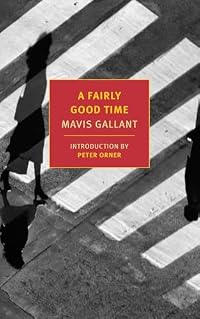
A Fairly Good Time AND Green Water, Green Sky
by Mavis Gallant
On This Page
Description
"An NYRB Classics Original Mavis Gallant's two novels are as memorable as her many short stories. Full of wit, whim, and psychological poignancy, A Fairly Good Time, here accompanied by Green Water, Green Sky, encapsulates Gallant's unparalleled skill as a storyteller. Shirley Perrigny (nee Norrington, then briefly Higgins), the heroin of A Fairly Good Time, is an original. Derided by the Parisians she lives among and chided by her fellow Canadians, this young, widowed girl recently show more remarried to a French journalist named Philippe is fond of quoting from Jane Austen and Kingsley Amis to describe her life and of using her myopia as a defense against social aggression. As the fixed points in Shirley's life begin to recede Philippe having apparently though not definitively left her freewheeling, makeshift and self-abnegating ways come to seem an aspect of devotion to her fellow man. Could the unreliable protagonist be the unwitting heroine of her own story? Green Water, Green Sky, Gallant's first novel, is a darker tale of the fractured family life of Bonnie McCarthy, an American divorcee, and her daughter, Flor. Uprooted and unmoored, mother and daughter live like itinerants--in Venice, Cannes, and Paris--glamorous and dependent. From this untidy life and the false notes of her mother, Flor attempts to flee, with little hope of escape"-- show lessTags
Recommendations











































Member Recommendations

by anonymous user
Member Reviews
We get to know Shirley Perrigny, formerly Higgins, nee Norrington, through a nonlinear jumble of perspectives – her husband, her several in-laws, her assortment of friends and acquaintances, her landlord, her mother, Shirley herself, and a 3rd person narrator who weaves in and out among the characters and is sometimes in Shirley’s head, and sometimes not. All of this is the perfect way to get to know the utterly original Shirley, whose life didn't start out promising - in her first few months of existence her mother thought she was a tumor, and when she was born, she was named by the doctor because her parents couldn't think of a name.
Her soon-to-be ex-husband tells her “your life is like a house without doors” - a lovely way to show more say she has no boundaries. She knows this, but can’t seem to stop:
“All her private dialogues were furnished with scraps of prose recited out of context, like the disparate chairs carpets and lamps adrift in her apartment. She carried her notions of conversation into active life and felt as if she had been invited to act in a play without having been told the name of it. No one had ever mentioned who the author was or if the action was supposed to be sad or hilarious. She came on stage wondering whether the plot was gently falling apart or rushing onward toward a solution. Cues went unheeded and unrecognized, and she annoyed the other players by bringing in lines from any other piece she happened to recall.”
In addition to having a great main character, this book is frequently HILARIOUS, starting with the opening pages, where Shirley’s mother writes her a Polonius-like letter of advice, including such gems as “Don’t cry whilst writing letters. The person receiving it is apt to take it as a reproach. Undefined misery is no use to anyone. Be clear, or better still, be silent.”
Another favorite of mine, Shirley’s experience of being a Canadian in Paris:
“…she had been daunted by the wave of hostility that rose to greet the stranger in Paris. Nothing seemed to be considered rude or preposterous if it was said to someone like her. ‘We wanted to give you beans and jam for dinner to make you feel at home, but my wife refuses to do American cooking.”
And this description of Shirley’s hypochondriac mother-in-law:
“Yet the fact of eating alarmed her. Peristalsis was an enemy she had never mastered. Her intestines were of almost historical importance: soothed with bismuth, restored with charcoal, they were still as nothing to her stomach in which four-course meals remained for days, undigested, turning over and over like clothes forgotten in a tumble dryer.”
Update: I got so carried away with the wit, I may have made it sound like a flat-out comedy, but it isn't, there is much that is poignant, it just isn't milked for cheap emotion. For example, my first quote from her mother's letter, while funny, also shows the kinds of letters Shirley has been sending her mother, and the way her mother responds to her misery. Here's another quote from the novel: "Mrs. Norrington was an attentive listener; only Shirley had ever failed to catch her ear.” show less
Her soon-to-be ex-husband tells her “your life is like a house without doors” - a lovely way to show more say she has no boundaries. She knows this, but can’t seem to stop:
“All her private dialogues were furnished with scraps of prose recited out of context, like the disparate chairs carpets and lamps adrift in her apartment. She carried her notions of conversation into active life and felt as if she had been invited to act in a play without having been told the name of it. No one had ever mentioned who the author was or if the action was supposed to be sad or hilarious. She came on stage wondering whether the plot was gently falling apart or rushing onward toward a solution. Cues went unheeded and unrecognized, and she annoyed the other players by bringing in lines from any other piece she happened to recall.”
In addition to having a great main character, this book is frequently HILARIOUS, starting with the opening pages, where Shirley’s mother writes her a Polonius-like letter of advice, including such gems as “Don’t cry whilst writing letters. The person receiving it is apt to take it as a reproach. Undefined misery is no use to anyone. Be clear, or better still, be silent.”
Another favorite of mine, Shirley’s experience of being a Canadian in Paris:
“…she had been daunted by the wave of hostility that rose to greet the stranger in Paris. Nothing seemed to be considered rude or preposterous if it was said to someone like her. ‘We wanted to give you beans and jam for dinner to make you feel at home, but my wife refuses to do American cooking.”
And this description of Shirley’s hypochondriac mother-in-law:
“Yet the fact of eating alarmed her. Peristalsis was an enemy she had never mastered. Her intestines were of almost historical importance: soothed with bismuth, restored with charcoal, they were still as nothing to her stomach in which four-course meals remained for days, undigested, turning over and over like clothes forgotten in a tumble dryer.”
Update: I got so carried away with the wit, I may have made it sound like a flat-out comedy, but it isn't, there is much that is poignant, it just isn't milked for cheap emotion. For example, my first quote from her mother's letter, while funny, also shows the kinds of letters Shirley has been sending her mother, and the way her mother responds to her misery. Here's another quote from the novel: "Mrs. Norrington was an attentive listener; only Shirley had ever failed to catch her ear.” show less
This is the best-written book I've read this year. Not my favorite book, but the book where every sentence was so alarmingly perfect that I needed to stop and give a little gasp and read it again, and maybe once more after that. Sometimes writers who write this exquisitely at the sentence-level are called 'writers' writers' but that's not what I'm talking about. This isn't beautiful sentence-level prose for its own sake. It's not over polished gem-like writing. It's perfect writing. The sentences are not only beautiful in their shape and vocabulary choice but they convey great meaning in each condensed space from the first Capital Letter to the Period at the end. They tell the story. They reveal the character. They move the story show more forward. And they delight. All at once. I would say it is timeless writing, too, in that it's so uniquely hers and nobody else writes like this. It's short. I hope you find time for it soon. show less
I'm a huge fan of Mavis Gallant's short stories, so I snapped up this book which contains all two of her novels (the second is novella length, but it packs in so much it feels like a novel). In both works, Gallant exhibits her marvelous insight into people at odds with their families, their lovers, or the world.
A Fairly Good Time tells the story of Shirley, a Canadian living in Paris, a devoted friend of various likely and unlikely people. At the start of the novel, she returns from a night spent at a friend's who was threatening suicide (after an abortion the previous day -- abortion was very much illegal in France at the time) to find her French husband not at home. She didn't tell her husband where she was because she didn't want him show more to know about the illegal abortion because he could be implicated. (Although she is in her 20s, she was previously married to a man who, as we find out, died in an accident on their honeymoon.) She first meets a friend of her mother's and realizes she is supposed to be at her husband's mother where they're celebrating the return of his sister. She also hasn't any money so she borrows some from the man who lives upstairs of her apartment and goes to a café. There she meets a very strange girl, Claudie, who doesn't seem to have money to pay for her meal (and her dog's meal); Shirley pays for her and accompanies her home, at Claudie's insistence, and meets her very strange family, including the son she had when she was a young teenager who is being raised by her parents as their child.
In the words, of Peter Orner, who wrote the introduction to this NYRB edition, Shirley is "brave, exuberant, bewildered, wounded, fickle, mistake-prone, meandery." The story involves Shirley, of course, her mother (via letters), her husband Philippe, his family, Claudie and her family, the quasi-concierge, the man, James, who lives upstairs, and various other characters; Gallant probes, in her typical way, all these relationships. In one chapter, Shirley herself writes a letter to Philippe (which she never sends) about where she was that Saturday night she didn't come home, about James, about what happened with her first husband, and how she happened to write her mother a personal letter.
A few quotes.
" 'You're about like you always were. Reading instead of listening. Life isn't books.' " Said by a friend of Shirley's mother to Shirley. p. 39
She expected the end of the world and would not eat an egg unless she had first met the hen. Thought about Shirley's mother by the father of her first husband. p. 213
I thoroughly enjoyed this novel and was rooting for Shirley all the way.
Green Water, Green Sky tells the story of Florence (Flor), who descends into mental illness. The story opens in Venice with her aged 14, her mother, and a 7-year-old cousin, George, and an incident which has meaning for George, but not for Flor. The scene switches to Paris, where Flor, from the US, lives with her husband Bob, also from the US, and her horrifying mother, Bonnie. It is there that her mental illness becomes obvious to her and her husband and mother (Flor is becoming so "queer," as her mother writes to her sister). It is painful to watch Flor as she gradually becomes sicker. Then the scene switches to the summer when Flor met Bob, in Cannes, while her mother has a strange relationship with a man who has fabricated his life and family history while worrying about Bob, who is (gasp) Jewish. The final section brings George back, now 19, at a dinner with Flor's mother and husband; Flor herself is absent, in some kind of "rest home." The interaction between them is pure Gallant, with everyone thinking and talking at cross purposes.
A quote especially apt for LTers.
And yet, how she had read! She had read in hotel rooms, sprawled on the bed -- drugged, drowned -- while on the other side of the dark window, rain fell on foreign streets. She had read on buses and on trains and in the waiting rooms of doctors and dressmakers, waiting for Bonnie. She had read with her husband across from her at the table and beside her in bed. (She had been reading in a café, alone, the first time he had ever spoken to her. He had never forgotten it.) She had read through her girlhood and even love hadn't replaced the reading only at times. p. 294 show less
A Fairly Good Time tells the story of Shirley, a Canadian living in Paris, a devoted friend of various likely and unlikely people. At the start of the novel, she returns from a night spent at a friend's who was threatening suicide (after an abortion the previous day -- abortion was very much illegal in France at the time) to find her French husband not at home. She didn't tell her husband where she was because she didn't want him show more to know about the illegal abortion because he could be implicated. (Although she is in her 20s, she was previously married to a man who, as we find out, died in an accident on their honeymoon.) She first meets a friend of her mother's and realizes she is supposed to be at her husband's mother where they're celebrating the return of his sister. She also hasn't any money so she borrows some from the man who lives upstairs of her apartment and goes to a café. There she meets a very strange girl, Claudie, who doesn't seem to have money to pay for her meal (and her dog's meal); Shirley pays for her and accompanies her home, at Claudie's insistence, and meets her very strange family, including the son she had when she was a young teenager who is being raised by her parents as their child.
In the words, of Peter Orner, who wrote the introduction to this NYRB edition, Shirley is "brave, exuberant, bewildered, wounded, fickle, mistake-prone, meandery." The story involves Shirley, of course, her mother (via letters), her husband Philippe, his family, Claudie and her family, the quasi-concierge, the man, James, who lives upstairs, and various other characters; Gallant probes, in her typical way, all these relationships. In one chapter, Shirley herself writes a letter to Philippe (which she never sends) about where she was that Saturday night she didn't come home, about James, about what happened with her first husband, and how she happened to write her mother a personal letter.
A few quotes.
" 'You're about like you always were. Reading instead of listening. Life isn't books.' " Said by a friend of Shirley's mother to Shirley. p. 39
She expected the end of the world and would not eat an egg unless she had first met the hen. Thought about Shirley's mother by the father of her first husband. p. 213
I thoroughly enjoyed this novel and was rooting for Shirley all the way.
Green Water, Green Sky tells the story of Florence (Flor), who descends into mental illness. The story opens in Venice with her aged 14, her mother, and a 7-year-old cousin, George, and an incident which has meaning for George, but not for Flor. The scene switches to Paris, where Flor, from the US, lives with her husband Bob, also from the US, and her horrifying mother, Bonnie. It is there that her mental illness becomes obvious to her and her husband and mother (Flor is becoming so "queer," as her mother writes to her sister). It is painful to watch Flor as she gradually becomes sicker. Then the scene switches to the summer when Flor met Bob, in Cannes, while her mother has a strange relationship with a man who has fabricated his life and family history while worrying about Bob, who is (gasp) Jewish. The final section brings George back, now 19, at a dinner with Flor's mother and husband; Flor herself is absent, in some kind of "rest home." The interaction between them is pure Gallant, with everyone thinking and talking at cross purposes.
A quote especially apt for LTers.
And yet, how she had read! She had read in hotel rooms, sprawled on the bed -- drugged, drowned -- while on the other side of the dark window, rain fell on foreign streets. She had read on buses and on trains and in the waiting rooms of doctors and dressmakers, waiting for Bonnie. She had read with her husband across from her at the table and beside her in bed. (She had been reading in a café, alone, the first time he had ever spoken to her. He had never forgotten it.) She had read through her girlhood and even love hadn't replaced the reading only at times. p. 294 show less
This book was totally not for me, and I stopped at p.170. Iwas looking for humor, but the humor was mostly making fun of people with very limited knowledge of life. There was also bigotry and racism which offended me. No more gallant for me
Disappointing
Splendid.
Splendid.
Members
- Recently Added By
Author Information

54+ Works 2,996 Members
Mavis Gallant was born in Montreal, Canada on August 11, 1922. Her parents sent her to live at a French convent when she was 4. When she was 10, her father died from kidney disease. Her mother quickly remarried and moved to New York - leaving her daughter behind. During World War II, Gallant worked in the cutting room at the National Film Board of show more Canada and as a reporter for the Montreal Standard. She eventually became a columnist and feature writer. Two of her short stories appeared in the December, 1944, issue of Preview. She published more than 100 stories in The New Yorker beginning in 1951. During her lifetime, she wrote two novels and several short story collections. Her works include Green Water, Green Sky; A Fairly Good Time; Overhead in a Balloon; Across the Bridge; The Pegnitz Junction; Paris Stories; and The Cost of Living. She received several awards including the Governor-General's Award for Home Truths: Selected Canadian Stories, the Pen Nabokov Award for career achievement, the Matt Cohen Prize in 2000, and the Rea Award for the Short Story in 2002. In 1981, she was made Officer of the Order of Canada for her contribution to literature that year. She died on February 18, 2014 at the age 91. (Bowker Author Biography) show less
Some Editions
Series
Belongs to Publisher Series
Work Relationships
Common Knowledge
- Canonical title
- A Fairly Good Time AND Green Water, Green Sky
Classifications
Statistics
- Members
- 79
- Popularity
- 400,185
- Reviews
- 7
- Rating
- (3.69)
- Languages
- English
- Media
- Paper, Ebook
- ISBNs
- 2
- ASINs
- 1