On This Page
Description
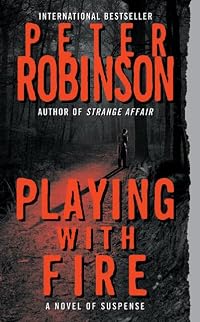
Chief Inspector Alan Banks finds himself up against a diabolical arsonist in this electrifying novel of suspense from New York Times bestselling author Peter Robinson. In the early hours of the morning, a man reports a fire on two old canal boats. One of the firefighters notices the use of accelerant at the scene and calls the police, but by the time Inspector Banks arrives, the fire brigade have put out the flames and only the smoldering wreckage remains. A body has been found on each show more barge, and all the evidence points towards a deliberate arson attack. One of the victims is Tina, a young girl with a drug addiction and a terrible past who had been living with her boyfriend Mark. The other is Tom, an artist who had been living alone. Now, with little evidence to go on and a number of possible suspects, including Tina's boyfriend, the local 'lock-keeper' who reported the fire, and Tina's own father, Banks must begin to delve into the lives of the victims, and to discover who could have wanted them out of the way the master of psychological suspense, Peter Robinson, comes a mind-bending thriller of secrets and murder. show lessTags
Recommendations






Member Reviews
“The barge she sat in, like a burnish’d throne, burn’d on the water.”
It’s not every policeman who can quote from Shakespeare’s Antony and Cleopatra while surveying the carnage wrought by fire. Then again, not every policeman is Inspector Alan Banks.
Playing With Fire, the fourteenth entry in the Inspector Banks series, contains everything that has made the character a popular read in mystery circles. His brash, world-weary demeanour, his passion for diverse musical selections, his love of action films, his problems with women; all are present and accounted for. It would be easy for Canadian author Peter Robinson to coast on this blueprint for a few novels, relying on reader support to carry Banks through a few show more less-than-stellar efforts.
Luckily, Robinson is not yet ready to rest on his laurels. The multiple-award winning author has had the good fortune to be allowed the opportunity to improve over time, evolving the Banks mysteries from their admittedly minor beginnings to their current regard as distinguished police procedurals. Playing With Fire, a superior example of its kind, takes the reader for a suspenseful ride through red herrings and dead ends, escorted by the estimable talents of Inspector Banks and the spare prose and technical grace of Peter Robinson.
As the tale begins, Banks is just arriving on the scene. The bodies of a young junkie and a reclusive artist have been discovered in the burnt-out ruins of two dilapidated barges. Banks, along with partner Annie Cabbot, suspects arson, yet a reason for the destruction of two seemingly lost souls is nowhere to be found. Over the course of 350 pages, suspects and motives emerge and evaporate, leading Banks into an intricate web of paedophilia, drugs, and forgers.
As in all truly good mysteries, the mystery itself is secondary to the overall atmosphere of the piece, supplied in large part by locale and character. Banks’s stomping ground of Yorkshire, England, is an inspired choice, at once familiar yet invitingly foreign. Robinson adeptly captures the nuance of local language and colour, creating an intriguing landscape of class warfare and criminal underworld, which Banks adroitly manoeuvres through.
Like contemporaries such as Ian Rankin and John Harvey, Robinson also understands that without compelling characters, the readers won’t return. Banks shares the rarefied company of Rankin’s Inspector Rebus and Harvey’s under-appreciated Charlie Resnick, police officers with rich, believable personal lives to compliment their professional accomplishments. Even minor and secondary characters are given moments to shine (especially suspect Mark Siddons and DC Winsome Jackman),each abundant in human frailties and passion, making the novel just that much more vibrant.
However, where Rankin and Harvey fully transcend the genre, Robinson’s latest effort falls just shy. For all the sterling dialogue, finely hued characterizations, and in-depth procedural investigation, there remains something decidedly clunky in Robinson’s narrative. While by no means boring, the convolutions of the plot occasionally stretch credibility, with one major plot twist that would be far more at home in the absurd, low-rent soap opera ‘thrillers’ of James Patterson than in Robinson’s undeniably superior efforts.
Playing With Fire is still a crackling good read, a hearty dose of grisly remains and harried detectives that keeps the reader guessing until the very last page. In an often-maligned category of literature, Robinson reminds us that good writing is good writing, no matter the genre. show less
It’s not every policeman who can quote from Shakespeare’s Antony and Cleopatra while surveying the carnage wrought by fire. Then again, not every policeman is Inspector Alan Banks.
Playing With Fire, the fourteenth entry in the Inspector Banks series, contains everything that has made the character a popular read in mystery circles. His brash, world-weary demeanour, his passion for diverse musical selections, his love of action films, his problems with women; all are present and accounted for. It would be easy for Canadian author Peter Robinson to coast on this blueprint for a few novels, relying on reader support to carry Banks through a few show more less-than-stellar efforts.
Luckily, Robinson is not yet ready to rest on his laurels. The multiple-award winning author has had the good fortune to be allowed the opportunity to improve over time, evolving the Banks mysteries from their admittedly minor beginnings to their current regard as distinguished police procedurals. Playing With Fire, a superior example of its kind, takes the reader for a suspenseful ride through red herrings and dead ends, escorted by the estimable talents of Inspector Banks and the spare prose and technical grace of Peter Robinson.
As the tale begins, Banks is just arriving on the scene. The bodies of a young junkie and a reclusive artist have been discovered in the burnt-out ruins of two dilapidated barges. Banks, along with partner Annie Cabbot, suspects arson, yet a reason for the destruction of two seemingly lost souls is nowhere to be found. Over the course of 350 pages, suspects and motives emerge and evaporate, leading Banks into an intricate web of paedophilia, drugs, and forgers.
As in all truly good mysteries, the mystery itself is secondary to the overall atmosphere of the piece, supplied in large part by locale and character. Banks’s stomping ground of Yorkshire, England, is an inspired choice, at once familiar yet invitingly foreign. Robinson adeptly captures the nuance of local language and colour, creating an intriguing landscape of class warfare and criminal underworld, which Banks adroitly manoeuvres through.
Like contemporaries such as Ian Rankin and John Harvey, Robinson also understands that without compelling characters, the readers won’t return. Banks shares the rarefied company of Rankin’s Inspector Rebus and Harvey’s under-appreciated Charlie Resnick, police officers with rich, believable personal lives to compliment their professional accomplishments. Even minor and secondary characters are given moments to shine (especially suspect Mark Siddons and DC Winsome Jackman),each abundant in human frailties and passion, making the novel just that much more vibrant.
However, where Rankin and Harvey fully transcend the genre, Robinson’s latest effort falls just shy. For all the sterling dialogue, finely hued characterizations, and in-depth procedural investigation, there remains something decidedly clunky in Robinson’s narrative. While by no means boring, the convolutions of the plot occasionally stretch credibility, with one major plot twist that would be far more at home in the absurd, low-rent soap opera ‘thrillers’ of James Patterson than in Robinson’s undeniably superior efforts.
Playing With Fire is still a crackling good read, a hearty dose of grisly remains and harried detectives that keeps the reader guessing until the very last page. In an often-maligned category of literature, Robinson reminds us that good writing is good writing, no matter the genre. show less
What more can you say about a Peter Robinson novel than that the maestro is at the top of his game yet again? He and Ian Rankin have a very similar ability to immerse the reader entirely in the lives of their protagonists to the extent that it can be a struggle for readers to pull themselves back into the real world. Yes, these are crime novels, and, yes, there's a strong element of mystery too, but to say only that would really be to mislead.
This latest installment of the Yorkshire DCI Alan Banks chronicles begins with the destruction by fire of two derelict canal barges and the squatters dwelling within. Forensics soon reveal arson, and that the target was one of the barges, occupied by an unsuccessful artist; the casualty in the show more other barge, junkie Tina, was either just "collateral damage", as the disgusting euphemism has it, or, perhaps worse, was a deliberate piece of misdirection by the arsonist to obscure his motives. Banks and DI Annie Cabbot and their crew -- notably DC Winsome Jackman, with whom I could all too easily fall in love -- soon unravel an art-forgery conspiracy, especially when there's another arson murder just a few days later; but they also, with the aid of innocent bystander Tina's hotheaded wastrel boyfriend Mark (about whom one begins to care inordinately) uncover a nasty backstory for her involving childhood sexual abuse. Robinson's working through of these two plots in parallel is mesmerizing.
Each time I finish one of Robinson's novels I wonder briefly why I don't read them more often, and then almost immediately the answer hits me: they're far too good to waste on a binge. Rather, I need to spread them out and savour them, waiting for le moment juste before I pick up the next one. But what a moment of happiness that moment usually proves to be! show less
This latest installment of the Yorkshire DCI Alan Banks chronicles begins with the destruction by fire of two derelict canal barges and the squatters dwelling within. Forensics soon reveal arson, and that the target was one of the barges, occupied by an unsuccessful artist; the casualty in the show more other barge, junkie Tina, was either just "collateral damage", as the disgusting euphemism has it, or, perhaps worse, was a deliberate piece of misdirection by the arsonist to obscure his motives. Banks and DI Annie Cabbot and their crew -- notably DC Winsome Jackman, with whom I could all too easily fall in love -- soon unravel an art-forgery conspiracy, especially when there's another arson murder just a few days later; but they also, with the aid of innocent bystander Tina's hotheaded wastrel boyfriend Mark (about whom one begins to care inordinately) uncover a nasty backstory for her involving childhood sexual abuse. Robinson's working through of these two plots in parallel is mesmerizing.
Each time I finish one of Robinson's novels I wonder briefly why I don't read them more often, and then almost immediately the answer hits me: they're far too good to waste on a binge. Rather, I need to spread them out and savour them, waiting for le moment juste before I pick up the next one. But what a moment of happiness that moment usually proves to be! show less
I absolutely love the Inspector Banks series, and have been reading my way through the series. This book was good with the characters fully fleshed out and enough suspense to keep me turning pages, but it didn't have the "slam in the gut" plot twists that I've come to expect from Peter Robinson. I had figured out who the perpetrator was about halfway through, and that never usually happens with an Inspector Banks book. That is why I gave the book four stars instead of my usual five. There is an arsonist in and around Eastvale, and people are being burned in their homes. At first there doesn't appear to be a connection between the two fires, but as Banks and his team start digging, they find some old history between two of the victims. show more The characters in these books are what sets this series apart from other police procedurals. Robinson's characters are so brilliant and so alive that it almost seems like you are reading true-crime narratives. I highly recommend this series, but read it starting at book one so you will get the full effect of Robinson's character development. show less
When two abandoned barges burn, killing two squatters who had been occupying them, it is quickly determined to be deliberate. But who was the intended target, the scruffy artist or the junkie teenager? And when a caravan not far away also burns, killing a third person, it’s up to Inspector Alan Banks to figure out what connection, if any, existed between the dead - and whether another murder might be in the works…."Playing with Fire" is the 14th Inspector Banks novel, so by now we are familiar with the main character and his methods; more, we are familiar with his private life and those of his colleagues, which are as rich and complex as the lives of people in the real world. In this one, I figured out the culprit fairly early on, show more but that didn’t impede my enjoyment of the book in any way. Mr. Robinson is a fine writer, and I’m very pleased that I still have a long way to go before finishing this series; recommended! show less
another Inspector Banks story. Usually by this time in a series, I begin to tire of characters and tend to put the series aside for awhile. This series has not suffered from that fate however. In this episode, a series of mysterious and apparently unrelated arsons have Banks convinced that the coincidences matter. Although I figured out who the culprit was fairly early, I couldn't figure out how it was pulled off and certainly didn't anticipate the wonderfully dramatic ending. A solid 4 stars for me.
DCI Banks is recovering from his breakup with DI Cabbot and getting to terms with her new boyfriend when an art fraud case may be connected with a fire on two houseboats. Another solid installment in a solid series. I do like to follow along in Banks' personal life and those side stories never take over the mystery part, but in this book they do get to mix a little in an unexpected way. I already have the rest of the series waiting in the (virtual) bookcase, so I will definitely continue.
Superior crime novel. Arson attacks involving a failed artist and a drop-out young couple. The characters are complex, and Banks is aware of his own weaknesses which makes him a far more fascinating character than the perfect, discreet detectives of the P.D. James' era.
Members
- Recently Added By
Lists

Best Crime Fiction
262 works; 39 members

Crime and Mysteries to Read
746 works; 31 members

British Mystery
469 works; 14 members

Books Read in 2017
4,249 works; 129 members

Books Read in 2021
5,361 works; 114 members
Author Information

82+ Works 30,052 Members
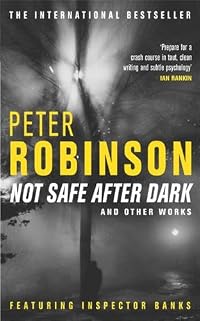
Peter Robinson was born in Castleford, Yorkshire, in 1950. He received a B.A. Honours Degree in English literature from the University of Leeds, moved to Canada, and went on to earn a M.A. in English and creative writing from the University of Windsor and a Ph.D. in English from York University. His first novel, Gallows View, was published in 1987 show more and became the first book in the Inspector Banks Mystery series. His other works include Caedmon's Song, No Cure for Love, Not Safe after Dark and Other Stories, Before the Poison, and When the Music's Over. He has received several awards including the Crime Writers of Canada's Arthur Ellis Award for Best Novel in 1992 for Past Reason Hated and the Author's Award from the Foundation for the Advancement of Canadian Letters in 1994 for Final Account. He has also published many short stories in anthologies and in Ellery Queen's Mystery Magazine, including Innocence, which won the CWC Best Short Story Award, and The Two Ladies of Rose Cottage, which won a Macavity Award. He has taught at a number of Toronto colleges and served as Writer-in-Residence at the University of Windsor, Ontario, 1992-93. (Bowker Author Biography) show less
Some Editions
Awards and Honors
Awards
Notable Lists
Series

Work Relationships
Is contained in
Has the adaptation
Common Knowledge
- Canonical title
- Playing with Fire
- Original title
- Playing With Fire
- Original publication date
- 2004
- People/Characters
- Alan Banks; Annie Cabbot; Phillip Keane
- Important places*
- Eastvale-kanaal
- Related movies
- playing with Fire (2011 | IMDb)
- Epigraph*
- Bij een brand komen twee mensen om
het leven. Het gaat om moord, maar
tegen wie was de aanslag gericht? - Dedication
- For Sheila
- First words
- I was on my third sleeping pill and my second glass of whisky when he knocked on my door.
- Last words*
- (Click to show. Warning: May contain spoilers.)De cirkel is rond.
- Blurbers
- King, Stephen; Rankin, Ian
- Original language*
- Engels
*Some information comes from Common Knowledge in other languages. Click "Edit" for more information.
Classifications
Statistics
- Members
- 1,225
- Popularity
- 20,002
- Reviews
- 31
- Rating
- (3.77)
- Languages
- 11 — Danish, Dutch, English, Finnish, French, German, Norwegian (Bokmål), Polish, Spanish, Swedish, Portuguese (Portugal)
- Media
- Paper, Audiobook, Ebook
- ISBNs
- 59
- ASINs
- 14