The Space Machine
by Christopher Priest
On This Page
Description
A young Victorian couple are pulled into a mystery that transcends time and space. A mystery that will have very familiar elements for any fan of HG Wells but which cannot possibly be related to the work of the great man. Or can it? This early novel from Christopher Priest is at once a wonderful facsimile of late Victorian writing and an enticing modern novel that plays with the reader's expectations and comments on two of the greatest novels of science fiction. Christopher Priest is a show more genre-leading author of SFF fiction. His novel, THE PRESTIGE, won a number of awards and was adapted into a critically acclaimed, Oscar-nominated film directed by Christopher Nolan (TENET, INCEPTION) starring Hugh Jackman (THE GREATEST SHOWMAN, X-MEN), Christian Bale (THE BIG SHORT, BATMAN BEGINS), Michael Caine (THE ITALIAN JOB) and Scarlett Johansson (MARRIAGE STORY, THE AVENGERS). show lessTags
Recommendations





















Member Reviews
Christopher Priest once served as vice president of the international H. G. Wells Society. It is no surprise that a successful English novelist who was also a card-carrying Wells fan would write a novel that channeled Wells.
The Space Machine (1976) combines The Time Machine with War of the Worlds. It is set in 1893, written in Wells’s turn-of-the-century style, and even has Wells show up as a character toward the end. Its lackluster user reviews suggest that many readers did not know what to make of it. So many movies modernize both stories that readers may not have been ready for its Victorian pace and ambiance.
The beginning of the novel is certainly a slow burn. His protagonists, Edward Turnbull and Amelia Fitzgibbon, are typical show more Wells characters—a conventional, all-too-polite leather-goods salesman and a New Woman who chafes against Victorian prudishness. Their meet-cute in a Devonshire hotel has poor Turnbull cowering in the bathroom while Amelia gets rid of a nosy neighbor. Once they get to know each other, their adventures take them to Mars, where they join a rebellion against the Tripod monsters.
Priest is an excellent storyteller, and I enjoyed his relaxed period style. show less
The Space Machine (1976) combines The Time Machine with War of the Worlds. It is set in 1893, written in Wells’s turn-of-the-century style, and even has Wells show up as a character toward the end. Its lackluster user reviews suggest that many readers did not know what to make of it. So many movies modernize both stories that readers may not have been ready for its Victorian pace and ambiance.
The beginning of the novel is certainly a slow burn. His protagonists, Edward Turnbull and Amelia Fitzgibbon, are typical show more Wells characters—a conventional, all-too-polite leather-goods salesman and a New Woman who chafes against Victorian prudishness. Their meet-cute in a Devonshire hotel has poor Turnbull cowering in the bathroom while Amelia gets rid of a nosy neighbor. Once they get to know each other, their adventures take them to Mars, where they join a rebellion against the Tripod monsters.
Priest is an excellent storyteller, and I enjoyed his relaxed period style. show less
https://fromtheheartofeurope.eu/the-space-machine-by-christopher-priest/
It’s a very entertaining mash-up of The Time Machine and The War of the Worlds. Our protagonist is a goggles salesman, who hooks up with the lovely Amelia (who is way better than he is; we can see this, though he does not know it); they are transported to Mars, where she undermines the structures of government by bringing them revolution; and return to Earth where they encounter H.G. Wells in the flesh. Witty and well-executed.
It’s a very entertaining mash-up of The Time Machine and The War of the Worlds. Our protagonist is a goggles salesman, who hooks up with the lovely Amelia (who is way better than he is; we can see this, though he does not know it); they are transported to Mars, where she undermines the structures of government by bringing them revolution; and return to Earth where they encounter H.G. Wells in the flesh. Witty and well-executed.
I'm a sucker for time travel novels, because it mixes my love for history with my love for science fiction very nicely. So, any time I see a (second-hand) book about time travel, I find it very hard to resist. I picked this book from mount To Be Read at this moment because Christopher Priest is one of the guests at the World Science Fiction Convention in London (Loncon3) this year.
Edward is a traveling salesman in Victorian England. He meets Amelia, assistant to inventor Sir William Reynolds. Edward is a fan of this new invention, the car, and he knows Reynolds is too. He does everything he can to be introduced to Amelia, so he can meet Reynolds and maybe sell him some wares. Amelia and Edward meet, and Edward is smitten with Amelia. show more Amelia introduces him to Reynolds, and shows him around Reynolds' estate. Reynolds has moved on from cars to other inventions, including a self-propelling bicycle and a... time machine!
Edward and Amelia try out the time machine, that cannot only travel in time, but also in space, and of course, things go wrong. They find themselves in very strange surroundings with very alien beings. Soon they figure out these aliens want to attack and take over earth, and they try everything not only to return to earth, but to save it too.
I read this novel without knowing any of the back story. While reading it I thought it fit rather nicely in with the works of H. G. Wells, 'The Time Machine' and 'War of the Worlds'. After finishing I read on Wikipedia that this was exactly what Priest intended, so I guess he succeeded. What I loved most about this novel was the way Priest really succeeded in making this feel like it not only takes place in Victorian England, but was also written in that time. The adventure of Edward and Amelia itself is pretty fantastic and this book is very enjoyable. I give this book four out of five stars. show less
Edward is a traveling salesman in Victorian England. He meets Amelia, assistant to inventor Sir William Reynolds. Edward is a fan of this new invention, the car, and he knows Reynolds is too. He does everything he can to be introduced to Amelia, so he can meet Reynolds and maybe sell him some wares. Amelia and Edward meet, and Edward is smitten with Amelia. show more Amelia introduces him to Reynolds, and shows him around Reynolds' estate. Reynolds has moved on from cars to other inventions, including a self-propelling bicycle and a... time machine!
Edward and Amelia try out the time machine, that cannot only travel in time, but also in space, and of course, things go wrong. They find themselves in very strange surroundings with very alien beings. Soon they figure out these aliens want to attack and take over earth, and they try everything not only to return to earth, but to save it too.
I read this novel without knowing any of the back story. While reading it I thought it fit rather nicely in with the works of H. G. Wells, 'The Time Machine' and 'War of the Worlds'. After finishing I read on Wikipedia that this was exactly what Priest intended, so I guess he succeeded. What I loved most about this novel was the way Priest really succeeded in making this feel like it not only takes place in Victorian England, but was also written in that time. The adventure of Edward and Amelia itself is pretty fantastic and this book is very enjoyable. I give this book four out of five stars. show less
En ‘La máquina espacial’, Christopher Priest realiza todo un homenaje a la ciencia ficción de los precursores del género, esa literatura de finales del siglo XIX y principios del XX con sabor a romance científico cuyos mayores exponentes fueron H.G. Wells y Julio Verne.
Lo que nos propone Priest es un pastiche en toda regla, centrándose en dos obras de Wells, ‘La máquina del tiempo’ y ‘La guerra de los mundos’. La historia comienza en 1893, en Inglaterra, y el narrador es Edward Turnbull, un viajante de comercio. En el mismo hotel en el que se hospeda se encuentra con Amelia Fitzgibbon, amanuense de Sir William Reynolds, el famoso inventor, y Edward ve la oportunidad de ofrecerle unos productos con un gran potencial. A show more raíz de este encuentro, Edward y Amelia vivirán una aventura extraordinaria. Me niego a contar nada más sobre el argumento. Tanto en la contraportada como en el prólogo ya se encargan de destripar sucesos que tienen lugar pasada la página 150. El prólogo de Javier Negrete es estupendo, por otra parte, y debería leerse tras la lectura de la novela y no antes.
Priest realiza un buen trabajo de ambientación, y recrea perfectamente los escenarios de las novelas de Wells. La narración es absolutamente lineal, y se aleja de lo es habitual en Priest. En la parte final del libro hay un giro argumental con la aparición de cierto personaje que, francamente, no me ha gustado nada y encuentro innecesario. Para pastiches del tipo que podemos encontrar en ‘La máquina espacial’, Félix J. Palma está un paso por encima, tanto en argumento como en calidad.
No es la mejor novela de Priest, pero resulta una buena historia de aventuras con gusto clásico. Priest no tiene ninguna novela mala (al menos de lo que he podido leer hasta la fecha), y eso es mucho decir. show less
Lo que nos propone Priest es un pastiche en toda regla, centrándose en dos obras de Wells, ‘La máquina del tiempo’ y ‘La guerra de los mundos’. La historia comienza en 1893, en Inglaterra, y el narrador es Edward Turnbull, un viajante de comercio. En el mismo hotel en el que se hospeda se encuentra con Amelia Fitzgibbon, amanuense de Sir William Reynolds, el famoso inventor, y Edward ve la oportunidad de ofrecerle unos productos con un gran potencial. A show more raíz de este encuentro, Edward y Amelia vivirán una aventura extraordinaria. Me niego a contar nada más sobre el argumento. Tanto en la contraportada como en el prólogo ya se encargan de destripar sucesos que tienen lugar pasada la página 150. El prólogo de Javier Negrete es estupendo, por otra parte, y debería leerse tras la lectura de la novela y no antes.
Priest realiza un buen trabajo de ambientación, y recrea perfectamente los escenarios de las novelas de Wells. La narración es absolutamente lineal, y se aleja de lo es habitual en Priest. En la parte final del libro hay un giro argumental con la aparición de cierto personaje que, francamente, no me ha gustado nada y encuentro innecesario. Para pastiches del tipo que podemos encontrar en ‘La máquina espacial’, Félix J. Palma está un paso por encima, tanto en argumento como en calidad.
No es la mejor novela de Priest, pero resulta una buena historia de aventuras con gusto clásico. Priest no tiene ninguna novela mala (al menos de lo que he podido leer hasta la fecha), y eso es mucho decir. show less
I read this in the omnibus edition (with the wonderful A Dream of Wessex) that was done by the short-lived imprint Earthlight, 'way back when.
As will be evident to all, I'm a great fan of Priest's work. I read this novel many years ago and, while I enjoyed it on its own terms, felt it to be the weakest of his books. Rereading it recently confirmed both of these senses to me: the fact that his writing has gone from strength to strength in later novels makes The Space Machine seem even flimsier, yet I enjoyed the romp even more this time around. That said, I was more irritated this time by the constant stream, most especially in the earlier chapters, of arch knowingness on sexual matters and narrator Edward Turnbull's astonishing show more innocence of them; that aside, though, this was lots of fun.
Essentially this is a sequel to Wells's The Time Machine and a complement to the same author's The War of the Worlds. Edward, a travelling salesman and part-time inventor, encounters Amelia Fitzgibbon, the beautiful young ward of and assistant to famous inventor Sir William Reynolds, who proves to be the character known only as the Time Traveller in Wells's book. With a few drinks inside them and Sir William away on business, the young pair drunkenly experiment in his Richmond laboratory with the time machine, which -- as Amelia tells us -- is also a space machine, in that it moves in all four dimensions and not just the temporal one. When they manage to stop the device, they find themselves on Mars, with no immediate hope of return. There they discover a society ruled by the ruthless, soulless, near-immobile monsters of The War of the Worlds, who are creatures bred into existence from themselves centuries ago by the Martians, who are normally humanoid; the reason for developing these "thinking machines" was to tackle the problem of Mars's rapidly depleting resources, a problem the monsters have decided to solve by taking over the earth. Beneath the monsters in Martian society are the techs and slavemasters, and beneath those are countless slaves, who serve also as food animals for the monsters, who must feed regularly on human blood. After many adventures, Edward and Amelia find themselves in the cockpit of the first of the mighty projectiles fired at earth as the monsters mount their invasion. Landing near Richmond, they encounter H.G. Wells, who informs them that Sir William departed years ago aboard the time machine (whose automatic Snap Home feature returned it from Mars to the inventor's laboratory, without him being aware it had ever been gone) and has never been heard of since. The trio, in Sir William's home, build a second, more primitive version of the time machine, employing its space-machine capabilities to mount a resistance against the Martian conquerors . . .
While I was reading it occurred to me that, with The Space Machine, Priest must have more or less invented the recursive Steampunk novel. The only other one I can offhand think of that's of similar vintage is Tim Powers's The Anubis Gates, but that was published quite a few years later, in 1983. Hm. Checking in the Clute/Nicholls Encyclopedia of Science Fiction I find it mentions also Michael Moorcock's The Warlord of the Air which, published in 1971, predates The Space Machine. As with Colin Greenland -- another extremely literary writer -- being the one to trigger the great Space Opera Revival with his Take Back Plenty (and I can remember disbelieving him, a couple of years before that, when he told me he thought Space Opera was due for a comeback), it seems an unexpected matchup. All power to Priest's elbow that it should be so. show less
It's war! For starters, martians vs. martians, then there is more, much more. A highly entertaining adventure story; a superbly imaginative tale of science fiction; a creative reworking of two classics: The Time Machine and The War of the Worlds. This Christopher Priest novel is simply too good to be true, a fanciful cross between Anthony Trollope and H.C. Wells, a must read for any lover of Victorian literature or science fiction, a work featuring the following two main characters along with several highlights of their astonishing saga:
Amelia Fitzgibbon: Actress Keira Knightley captures the spirit of the novel's beautiful, brilliant heroine who is assistant to genius science inventor Sir William Reynolds. Shortly after the inventor show more leaves for London, Amelia persuades her new acquaintance, a proper young Victorian gentleman, to accompany her on a test run of Sir William's most astounding invention - a time machine.
Edward Turnbull: Little does young Edward know what adventures lie ahead and how he will repeatedly be thrust into the role of an Indiana Jones-style hero. But through it all, Edward is forever the Victorian gentleman. And, yes, this novel is also a romance: Edward and Amelia fall completely and totally in love with each other.
The Space-Time Machine: Once aboard Sir William's miraculous machine and moving through future time, catastrophe hits: Edward detects Amelia is in danger. Edward instinctively kicks out, hitting a lever propelling the machine not only through time but also through space. Oh, my! - zoom-zoom-zoom and the machine finally comes to an abrupt halt. "Where do you think we are, Edward?" To which our Victorian gentleman replies something to the effect: "Toto, I've a feeling we're not in Kansas anymore."
Mars: One of the more charming parts of the novel is when Edward and Amelia stroll arm in arm across the strange, cold, desolate landscape. Judging from the thin air and barrenness, Amelia reasons they are on a Tibetan plateau. They explore further and discover even more strangeness. The author's descriptions are vivid and precise, making the couple's every step and encounter a believable event.
Martians: Amelia and Edward come upon human-like martians, tall with reddish skin, scant clothing, indecipherable language and strange gestures. But then they discover another race that isn't nearly as pleasant to be around.
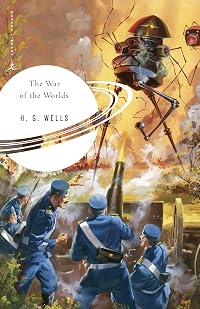
War of the Worlds: There is good reason why the below illustration for the H.G. Wells classic is also most appropriate for this action-packed Christopher Priest story. You will have to read for yourself to find out exactly how and why this is the case. One of the most exciting adventure stories I've ever read. Also, there is a first-rate audio book available narrated by Barnaby Edwards. show less
Amelia Fitzgibbon: Actress Keira Knightley captures the spirit of the novel's beautiful, brilliant heroine who is assistant to genius science inventor Sir William Reynolds. Shortly after the inventor show more leaves for London, Amelia persuades her new acquaintance, a proper young Victorian gentleman, to accompany her on a test run of Sir William's most astounding invention - a time machine.
Edward Turnbull: Little does young Edward know what adventures lie ahead and how he will repeatedly be thrust into the role of an Indiana Jones-style hero. But through it all, Edward is forever the Victorian gentleman. And, yes, this novel is also a romance: Edward and Amelia fall completely and totally in love with each other.
The Space-Time Machine: Once aboard Sir William's miraculous machine and moving through future time, catastrophe hits: Edward detects Amelia is in danger. Edward instinctively kicks out, hitting a lever propelling the machine not only through time but also through space. Oh, my! - zoom-zoom-zoom and the machine finally comes to an abrupt halt. "Where do you think we are, Edward?" To which our Victorian gentleman replies something to the effect: "Toto, I've a feeling we're not in Kansas anymore."
Mars: One of the more charming parts of the novel is when Edward and Amelia stroll arm in arm across the strange, cold, desolate landscape. Judging from the thin air and barrenness, Amelia reasons they are on a Tibetan plateau. They explore further and discover even more strangeness. The author's descriptions are vivid and precise, making the couple's every step and encounter a believable event.
Martians: Amelia and Edward come upon human-like martians, tall with reddish skin, scant clothing, indecipherable language and strange gestures. But then they discover another race that isn't nearly as pleasant to be around.
War of the Worlds: There is good reason why the below illustration for the H.G. Wells classic is also most appropriate for this action-packed Christopher Priest story. You will have to read for yourself to find out exactly how and why this is the case. One of the most exciting adventure stories I've ever read. Also, there is a first-rate audio book available narrated by Barnaby Edwards. show less
Audiobook
Members
- Recently Added By
Lists

Favourite Steampunk Books
80 works; 16 members

Readers Guide to Steampunk
65 works; 1 member
Author Information

63+ Works 11,856 Members
Some Editions
Awards and Honors
Awards
Series
Belongs to Publisher Series
Work Relationships
Common Knowledge
- Canonical title
- The Space Machine
- Original title
- The Space Machine
- Original publication date
- 1976
- People/Characters*
- Edward Turnbull; Amelia Fitzgibbon; Wells
- First words*
- Au mois d'avril 1893, mes affaires m'amenèrent à demeurer quelques temps à l'hôtel de Devonshire Arms à Skipton, dans le Yorkshire.
- Last words*
- (Click to show. Warning: May contain spoilers.)Je l'embrassai passionnément, et, avec un joyeux sentiment d'espoir renaissant, nous remontâmes nous asseoir sur le lit de fer pour attendre l'arrivée des premières personnes.
*Some information comes from Common Knowledge in other languages. Click "Edit" for more information.
Classifications
Statistics
- Members
- 369
- Popularity
- 84,996
- Reviews
- 10
- Rating
- (3.60)
- Languages
- 6 — Dutch, English, French, German, Lithuanian, Spanish
- Media
- Paper, Audiobook, Ebook
- ISBNs
- 19
- ASINs
- 9