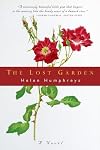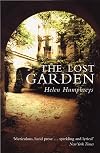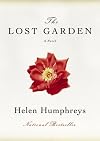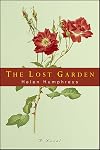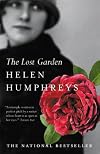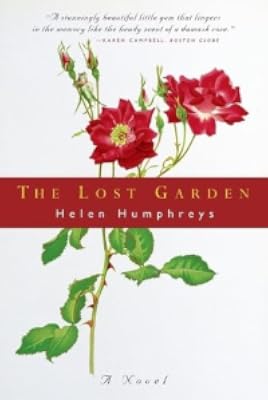
The Lost Garden
by Helen Humphreys
On This Page
Description
Leaving London to grow food for the war effort, Gwen discovers a mysterious lost garden and the story of a love that becomes her own.This word-perfect, heartbreaking novel is set in early 1941 in Britain when the war seems endless and, perhaps, hopeless. London is on fire from the Blitz, and a young woman gardener named Gwen Davis flees from the burning city for the Devon countryside. She has volunteered for the Land Army, and is to be in charge of a group of young girls who will be trained show more to plant food crops on an old country estate where the gardens have fallen into ruin. Also on the estate, waiting to be posted, is a regiment of Canadian soldiers. For three months, the young women and men will form attachments, living in a temporary rural escape. No one will be more changed by the stay than Gwen. She will inspire the girls to restore the estate gardens, fall in love with a soldier, find her first deep friendship, and bring a lost garden, created for a great love, back to life. While doing so, she will finally come to know herself and a life worth living.
. show less
Tags
Recommendations

















Member Recommendations

charl08 Different views of the experiences of women enlisted in WW2 to work on the land whilst the men were away.
Member Reviews
"The thing about gardens is that everyone thinks they go on growing, that in winter they sleep and in spring they rise. But it's more that they die and return, die and return. They lose themselves. They haunt themselves."
I loved this beautiful, and pain filled story set in the English countryside during World War II but I seem to be having difficulties writing a review on it. The words allude me. I am pretty sure I will fail to adequately review this one, but I will try.
The year is 1941. Horticulturalist Gwen Davis is a woman in her mid thirties that has never experienced love. She is a woman who fears social engagements and prefers to lock herself in her office at the Horticultural Society with her diseased parsnips - where she is show more looking for a cause and a cure. Her only other passion, besides horticulture, appears to be the works of Virginia Woolf. Surprisingly, even to Gwen, she agrees to leave her beloved London for the quiet Devon countryside to oversee a group of Woman's Land Army girls with the goal of growing crops for the home front on the neglected, and I am assuming requisitioned, country estate of Mosel. it is at Mosel where she encounters a group of Canadian soldiers awaiting orders of their next posting and discovers a lost garden full of hidden meanings in the choice of plants that make up the garden. Within the group at Mosel, Gwen befriends two individuals who have experienced love, and loss. The spring and summer of 1941 will change Gwen's life forever and her understanding of what it means to love.
Don't get me wrong.... this isn't a love story. Well, okay, it is a love story but not your typical love story. This is more a story of understanding what love is, how it means different things to different people, the urges of longing and how painful the loss of love, once you have experienced it, can be. It is also a beautiful story for anyone that enjoys gardening and is a fan of Virginia Woolf, and in particular, Woolf's novel To the Lighthouse, which I admit I haven't read yet, even though it is within easy reach sitting on my bookshelf.
A beautiful, heart wrenching, and at times introspective story about love, loss and longing, set against the backdrop of World War II. One that I highly recommend. show less
I loved this beautiful, and pain filled story set in the English countryside during World War II but I seem to be having difficulties writing a review on it. The words allude me. I am pretty sure I will fail to adequately review this one, but I will try.
The year is 1941. Horticulturalist Gwen Davis is a woman in her mid thirties that has never experienced love. She is a woman who fears social engagements and prefers to lock herself in her office at the Horticultural Society with her diseased parsnips - where she is show more looking for a cause and a cure. Her only other passion, besides horticulture, appears to be the works of Virginia Woolf. Surprisingly, even to Gwen, she agrees to leave her beloved London for the quiet Devon countryside to oversee a group of Woman's Land Army girls with the goal of growing crops for the home front on the neglected, and I am assuming requisitioned, country estate of Mosel. it is at Mosel where she encounters a group of Canadian soldiers awaiting orders of their next posting and discovers a lost garden full of hidden meanings in the choice of plants that make up the garden. Within the group at Mosel, Gwen befriends two individuals who have experienced love, and loss. The spring and summer of 1941 will change Gwen's life forever and her understanding of what it means to love.
Don't get me wrong.... this isn't a love story. Well, okay, it is a love story but not your typical love story. This is more a story of understanding what love is, how it means different things to different people, the urges of longing and how painful the loss of love, once you have experienced it, can be. It is also a beautiful story for anyone that enjoys gardening and is a fan of Virginia Woolf, and in particular, Woolf's novel To the Lighthouse, which I admit I haven't read yet, even though it is within easy reach sitting on my bookshelf.
A beautiful, heart wrenching, and at times introspective story about love, loss and longing, set against the backdrop of World War II. One that I highly recommend. show less
Gwen Davis has left her job with the Royal Horticultural Society for the Devon countryside, where she will lead a group of young women in planting vegetables to contribute to the war effort. Stationed on an estate, the rural landscape is a welcome respite from London’s streets and the constant fear of air raids. A Canadian regiment is also billeted there, in training while awaiting deployment.
Gwen has led a solitary life and finds it difficult to form relationships. She builds an alliance with Raley, the Commanding Officer; they organize dances for their younger charges and provide moral support for one another. But Gwen is an unreliable narrator, unwilling to admit to the reader the deeper feelings obviously stirring within. When show more she discovers a hidden garden left unattended since the first world war, Gwen finds new purpose in restoring the plots and trying to learn more about the gardeners who created them.
Helen Humphreys gives readers so much more than just Gwen’s story. This book is layered with poetry and literature, gardening, love, and loss. It’s a book to be read slowly and savored. show less
Gwen has led a solitary life and finds it difficult to form relationships. She builds an alliance with Raley, the Commanding Officer; they organize dances for their younger charges and provide moral support for one another. But Gwen is an unreliable narrator, unwilling to admit to the reader the deeper feelings obviously stirring within. When show more she discovers a hidden garden left unattended since the first world war, Gwen finds new purpose in restoring the plots and trying to learn more about the gardeners who created them.
Helen Humphreys gives readers so much more than just Gwen’s story. This book is layered with poetry and literature, gardening, love, and loss. It’s a book to be read slowly and savored. show less
The Lost Garden by Helen Humphreys is a deceptively simple story, but one of many layers which makes it difficult to describe. Set during World War II, this is less a story of war and more of a reflection on the emotions of war - love, longing and loss. The author obviously is a gardener and uses the plants as a metaphor for these very emotions.
The main character, Gwen Davis was a researcher at the Royal Horticultural Society in London but came to the country to oversee a group of Land Girls and to get away from the constant bombing and destruction of the city that she loved. When she arrives however, she realizes that she is a fish out of water with no ability to inspire those she is intended to lead. Other standout characters are show more Jane, who became a Land Girl with the hope that it would help her cope with the fact that her fiancé is missing in action and Captain Raley, who is a Canadian officer in charge of the soldiers billeted nearby. He is mourning the loss of a friend and pondering his own mortality as the days of combat approach.
This book packs an emotional punch that one would not expect from such a slender volume. This beautifully written story is lyrical and visual, yet there are moments of humor and a sense of discovery that makes the book very accessible. I highly recommend The Lost Garden. show less
The main character, Gwen Davis was a researcher at the Royal Horticultural Society in London but came to the country to oversee a group of Land Girls and to get away from the constant bombing and destruction of the city that she loved. When she arrives however, she realizes that she is a fish out of water with no ability to inspire those she is intended to lead. Other standout characters are show more Jane, who became a Land Girl with the hope that it would help her cope with the fact that her fiancé is missing in action and Captain Raley, who is a Canadian officer in charge of the soldiers billeted nearby. He is mourning the loss of a friend and pondering his own mortality as the days of combat approach.
This book packs an emotional punch that one would not expect from such a slender volume. This beautifully written story is lyrical and visual, yet there are moments of humor and a sense of discovery that makes the book very accessible. I highly recommend The Lost Garden. show less
The Lost Garden by Helen Humphreys is a WWII novel set in the peaceful English countryside. It centers around 35 year old Gwen Davis, a researcher at the Royal Horticultural Society who has volunteered to take charge of turning a manor's rundown gardens, with the help of volunteer "Land Girls", into a source of potatoes for the soldiers. She has found the bombing destruction of her beloved London unbearable, and her own life barren of companionship. Her most treasured possession is a huge two volume encyclopedia of roses, the weight of which she sometimes lays under and imagines is a lover. "The point, dear Davis, is that sometimes what you want is nothing more than to put your name beside someone else's, someone whom you love. Stretch show more your name out alongside theirs as though it was you, lying next to them.”
She sees herself as plain and socially inept; at the manor others see her differently, and she becomes close to Jane, a young volunteer whose husband has gone missing in the war. Gwen has arrived late, and has to struggle initially in asserting her authority. There are soldiers billeted at the manor, too, awaiting orders, and Captain Raley, a fancier of poetry, helps her find her footing. The gardens are in severe disrepair, but she knows how to mend them. She finds three hidden gardens that further inspire her. “What I've always found interesting in gardens is looking at what people choose to plant there. What they put in. What they leave out. One small choice and then another, and soon there is a mood, an atmosphere, a series of limitations, a world.” The three gardens have been planted, she surmises, to represent longing, loss, and faith. She labors in secret to understand and restore them. We find ourselves gradually caught up in the intertwined tendrils of her, Jane's, and Captain Raley's lives, all of them dependent, in one way or another, on the war being prosecuted beyond the garden walls.
Another quietly brilliant book by this author. Four and a quarter stars. show less
She sees herself as plain and socially inept; at the manor others see her differently, and she becomes close to Jane, a young volunteer whose husband has gone missing in the war. Gwen has arrived late, and has to struggle initially in asserting her authority. There are soldiers billeted at the manor, too, awaiting orders, and Captain Raley, a fancier of poetry, helps her find her footing. The gardens are in severe disrepair, but she knows how to mend them. She finds three hidden gardens that further inspire her. “What I've always found interesting in gardens is looking at what people choose to plant there. What they put in. What they leave out. One small choice and then another, and soon there is a mood, an atmosphere, a series of limitations, a world.” The three gardens have been planted, she surmises, to represent longing, loss, and faith. She labors in secret to understand and restore them. We find ourselves gradually caught up in the intertwined tendrils of her, Jane's, and Captain Raley's lives, all of them dependent, in one way or another, on the war being prosecuted beyond the garden walls.
Another quietly brilliant book by this author. Four and a quarter stars. show less
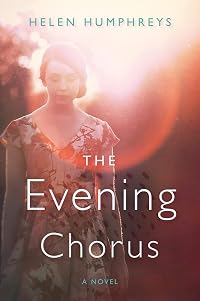
I am not much of a gardener myself but when I was small, I knew the names of most of the common flowers where we lived, I am intrigued by the language of flowers, and I have always thrilled to beautiful gardens. The idea of a hidden or lost garden appeals to me more than you can know and I'm sure the title and cover of this book drew me in immediately. I have to say that as a conditional because I have had it sitting on my bookshelf unread for more than a decade. I can't explain why it sat for so long but getting the push to finally read it was wonderful, especially as it is a gorgeously written story. In fact, Helen Humphreys' latest novel, The Evening Chorus was one of my favorite reads of last year. The Lost Garden has the same show more seductive, mesmeric feel to it that the newer novel does and I loved immersing myself in the lush and gorgeous language of this beautiful novel.
Gwen Davis has worked for years at the Royal Horticulture Society in London when she volunteers for the Women's Land Army as a way to escape the Blitz. Gwen is generally quiet, almost invisible, ill at ease with others, and convinced of her plainness and undesirability so being in charge of an outfit of young women, especially young women determined to make the most of life in the midst of wartime, is a stretch for her. When Gwen arrives at the country estate where she is to be in charge, she finds that a Canadian regiment is also on the grounds as they await orders and her Land Girls have made themselves at home with the men. Initially Gwen wants no fraternizing, after all; the Land Girls are there to plant potatoes and do their part producing food for the war effort, but she quickly realizes that a lighter hand will return better results. It doesn't hurt that she is intrigued by Raley, the Canadian Commander. With the help of Jane, whose fiance is missing in the war, Gwen starts to soften, learning not only how to lead but also how to connect personally. When Gwen finds a lost garden, one not on any map of the estate and seemingly unknown to the others there, she sets about bringing it back to life, trying to understand the motivation behind building it. Divided into three distinct parts labeled loss, longing, and faith, Gwen tends to the hidden garden as she herself traverses these three states of experience and feeling alongside the corresponding plants blooming and fading.
Humphreys is a master at beautiful language and dreamy imagery and she has drawn a lovely, introspective novel about love and memory and connection. Like the growing season of the gardens, the time the characters have together is fleeting and there is a melancholic and elegiac feel to the novel. Watching Gwen bloom, watching her open her heart to others, to desire, to love is exquisitely done. She is certainly the central character of the novel, the other characters acting as accents. And it is Gwen's personal growth that is carefully detailed in quiet ways, like her giving each of the Land Girls the nickname of a potato variety, starting by calling them exclusively by these nicknames, but slowly coming to use the young women's real names as the book comes to its quiet close. Humphreys writes stunningly of nature and the poetry to be found in plants, weaving nature into this very human story of a desire for connection and love, tying Gwen and the gardens together wonderfully. This is a graceful and stunning novel, reaffirming for me that I should pull the rest of Humphreys's novels off my shelf sooner rather than later so I can submerge myself again in the beauty and magnificence that is her writing. show less
Gwen Davis has worked for years at the Royal Horticulture Society in London when she volunteers for the Women's Land Army as a way to escape the Blitz. Gwen is generally quiet, almost invisible, ill at ease with others, and convinced of her plainness and undesirability so being in charge of an outfit of young women, especially young women determined to make the most of life in the midst of wartime, is a stretch for her. When Gwen arrives at the country estate where she is to be in charge, she finds that a Canadian regiment is also on the grounds as they await orders and her Land Girls have made themselves at home with the men. Initially Gwen wants no fraternizing, after all; the Land Girls are there to plant potatoes and do their part producing food for the war effort, but she quickly realizes that a lighter hand will return better results. It doesn't hurt that she is intrigued by Raley, the Canadian Commander. With the help of Jane, whose fiance is missing in the war, Gwen starts to soften, learning not only how to lead but also how to connect personally. When Gwen finds a lost garden, one not on any map of the estate and seemingly unknown to the others there, she sets about bringing it back to life, trying to understand the motivation behind building it. Divided into three distinct parts labeled loss, longing, and faith, Gwen tends to the hidden garden as she herself traverses these three states of experience and feeling alongside the corresponding plants blooming and fading.
Humphreys is a master at beautiful language and dreamy imagery and she has drawn a lovely, introspective novel about love and memory and connection. Like the growing season of the gardens, the time the characters have together is fleeting and there is a melancholic and elegiac feel to the novel. Watching Gwen bloom, watching her open her heart to others, to desire, to love is exquisitely done. She is certainly the central character of the novel, the other characters acting as accents. And it is Gwen's personal growth that is carefully detailed in quiet ways, like her giving each of the Land Girls the nickname of a potato variety, starting by calling them exclusively by these nicknames, but slowly coming to use the young women's real names as the book comes to its quiet close. Humphreys writes stunningly of nature and the poetry to be found in plants, weaving nature into this very human story of a desire for connection and love, tying Gwen and the gardens together wonderfully. This is a graceful and stunning novel, reaffirming for me that I should pull the rest of Humphreys's novels off my shelf sooner rather than later so I can submerge myself again in the beauty and magnificence that is her writing. show less
The combination of a story set between the wars in England and into the early years of the Second World War, with a writer who doesn’t seem to misstep as she writes of fragile things like longing, loss and love, promised to be a good read. "The Lost Garden" by Helen Humphreys didn’t disappoint.
Gwen Davis is leaving London, driven out by the death of her mother and the bombs constantly removing sections of the city, to work with the Women’s Land Army growing potatoes on an old estate, Mosel, in the west of England. She leaves on the same day her favourite author, Virginia Woolf, has gone missing, her treasured copy of “To the Lighthouse” packed in her luggage. Shy and awkward, with only her skills and degree in horticulture to show more recommend her, Gwen is ill prepared to be the leader of a disparate group of young women who are also displaced as a result of the war.
What unfolds is a beautiful story of friendship, love, the tremendous loss that war and death bring, of finding something enormously important in the process of connecting with others who are left as ravaged by war and death as is Gwen herself. The lost garden is the metaphor for longing, loss and love which forms the heart of the story, as well as for the characters themselves. In Humphreys’ hands this doesn’t feel hackneyed but is exquisitely drawn and lucidly real.
I love this writer’s ‘voice’. She doesn’t seem to indulge in overwrought or superfluous language but has a quiet trueness about her, even when writing of the most momentous things where a few pyrotechnics might be excused. You know that feeling as a reader when you sense a falseness, when you know something wouldn’t have happened a certain way or the characters wouldn’t have felt like that? There wasn't a moment of that for this reader.
The story had a special resonance with me: a couple of years ago I visited the Lost Gardens of Heligon near St. Austell, in Cornwall, gardens which had been lost, rediscovered, and beautifully restored. It was a paradise of flora and fauna, of purpose and design. I learned then that the gardens had employed about 100 full-time gardeners in their heyday but after WWI there weren’t enough skilled men left alive to carry them on. The great house which had created them had to give them up and they got forgotten by subsequent generations. I read my experience of this extraordinary place into “The Lost Garden”, fleshing out Gwen’s experience with what my own eyes had seen, what I, as a gardener, had felt witnessing this rebirth. So I can’t speak to whether this aspect of the book would hold the same meaning for another reader as it did for me. However, the story itself speaks beautifully, powerfully and needs no specialised awareness to appreciate it. Recommended. show less
Gwen Davis is leaving London, driven out by the death of her mother and the bombs constantly removing sections of the city, to work with the Women’s Land Army growing potatoes on an old estate, Mosel, in the west of England. She leaves on the same day her favourite author, Virginia Woolf, has gone missing, her treasured copy of “To the Lighthouse” packed in her luggage. Shy and awkward, with only her skills and degree in horticulture to show more recommend her, Gwen is ill prepared to be the leader of a disparate group of young women who are also displaced as a result of the war.
What unfolds is a beautiful story of friendship, love, the tremendous loss that war and death bring, of finding something enormously important in the process of connecting with others who are left as ravaged by war and death as is Gwen herself. The lost garden is the metaphor for longing, loss and love which forms the heart of the story, as well as for the characters themselves. In Humphreys’ hands this doesn’t feel hackneyed but is exquisitely drawn and lucidly real.
I love this writer’s ‘voice’. She doesn’t seem to indulge in overwrought or superfluous language but has a quiet trueness about her, even when writing of the most momentous things where a few pyrotechnics might be excused. You know that feeling as a reader when you sense a falseness, when you know something wouldn’t have happened a certain way or the characters wouldn’t have felt like that? There wasn't a moment of that for this reader.
The story had a special resonance with me: a couple of years ago I visited the Lost Gardens of Heligon near St. Austell, in Cornwall, gardens which had been lost, rediscovered, and beautifully restored. It was a paradise of flora and fauna, of purpose and design. I learned then that the gardens had employed about 100 full-time gardeners in their heyday but after WWI there weren’t enough skilled men left alive to carry them on. The great house which had created them had to give them up and they got forgotten by subsequent generations. I read my experience of this extraordinary place into “The Lost Garden”, fleshing out Gwen’s experience with what my own eyes had seen, what I, as a gardener, had felt witnessing this rebirth. So I can’t speak to whether this aspect of the book would hold the same meaning for another reader as it did for me. However, the story itself speaks beautifully, powerfully and needs no specialised awareness to appreciate it. Recommended. show less
Original Review posted on my blog, Musings of a Bookish Kitty:
http://www.literaryfeline.com/2016/07/bookish-thoughts-lost-garden-by-helen.html
The Lost Garden by Helen Humphreys
W.W. Norton & Company, 2003
Fiction (Historical); 208 pgs
The Lost Garden is a quiet novel about a woman who longs for love, who has never really experienced love, and when she does . . . Well, it is beautiful and sad all rolled into one. The novel is set during World War II and is about a group of women who volunteered for the Women's Land Army in an effort to help the war effort--and whatever other more personal reasons they have for needing a change. On a nearby estate are a group of Canadian soldiers waiting for their orders.
Gwen Davis is 35 years old and show more unmarried. Her mother was not the most affectionate of mothers and Gwen has never known what it is to be in love. A lover of literature and Virginia Woolf, Gwen only knows what is in her books. Wanting to get away from the city after her mother's death, Gwen decides to take charge of a project in the countryside to help the war effort--and to put her skills as a botanist to use. She longs to return to her first love of gardening, having grown tired of working in a lab setting. When she arrives at the requisitioned estate in which she is assigned in Devon, Gwen finds she's arrived a week later than anticipated. The young women she is to supervise have already taken up with their neighboring soldiers and have little interest in work.
Over the course of the novel, the reader sees Gwen come into her own with the help of Jane, one of the Land Girls, who is waiting for news about her boyfriend who is lost at war, and the Canadian Commanding Officer, Raley, whose love for music matches her love for literature. I could sense in Raley a deep sadness and suspected he had suffered a great loss in his past. He saw clearly what lay ahead with the war and proved to be a good influence on Gwen. The two work together to keep morale up and to help Gwen in gaining the women's trust and loyalty.
It bothered me a bit that Gwen does not use the women's real names, expect for Jane. I imagine it fit though given how Gwen stands separate from those around her. It takes time for her to warm up to others, and even longer to loosen up. While the Land Girls remain more in the background throughout the novel, their backstories barely told, one of them does stand out. That of Jane. She is such an interesting character, a lost soul as she waits for news about her boyfriend. She loves with all her heart. Whereas Gwen holds tightly onto hers.
As the women plow the fields and prepare for the planting of the potatoes, Gwen spends time in a hidden garden she's discovered on the estate. It is overgrown, but was once loved. The hidden garden tells its own story, one Gwen is determined to figure out as she works on making it what it once was. She sees her own life, her own experiences, in that secret garden.
Helen Humphreys has written such a beautiful novel. You can tell the author is a poet. Her prose is simple and yet descriptive, really bringing to life the English countryside and the characters within the book's pages. I found the juxtaposition between the war backdrop and the paradise of the gardens interesting. Even in such a peaceful place, the war was always there in one form or another, especially for the characters in Humphreys's novel.
Some would say this is a love story. The love between friends, romantic love, unrequited love, and the love between a mother and a daughter. Others might say it is a war story--on the impact war has even on those who remain home. It is all of those things as well as the story of one woman coming into her own, finding her heart and learning to live.
I had not expected to like The Lost Garden as much as I did. Even as I sit here writing this review, I find myself wishing there had been more to it, and yet feeling it was perfect. I wish the author had spent more time on the minor characters. I feel like I did not really get to know them. And yet, this isn't really their story. show less
http://www.literaryfeline.com/2016/07/bookish-thoughts-lost-garden-by-helen.html
The Lost Garden by Helen Humphreys
W.W. Norton & Company, 2003
Fiction (Historical); 208 pgs
The Lost Garden is a quiet novel about a woman who longs for love, who has never really experienced love, and when she does . . . Well, it is beautiful and sad all rolled into one. The novel is set during World War II and is about a group of women who volunteered for the Women's Land Army in an effort to help the war effort--and whatever other more personal reasons they have for needing a change. On a nearby estate are a group of Canadian soldiers waiting for their orders.
Gwen Davis is 35 years old and show more unmarried. Her mother was not the most affectionate of mothers and Gwen has never known what it is to be in love. A lover of literature and Virginia Woolf, Gwen only knows what is in her books. Wanting to get away from the city after her mother's death, Gwen decides to take charge of a project in the countryside to help the war effort--and to put her skills as a botanist to use. She longs to return to her first love of gardening, having grown tired of working in a lab setting. When she arrives at the requisitioned estate in which she is assigned in Devon, Gwen finds she's arrived a week later than anticipated. The young women she is to supervise have already taken up with their neighboring soldiers and have little interest in work.
Over the course of the novel, the reader sees Gwen come into her own with the help of Jane, one of the Land Girls, who is waiting for news about her boyfriend who is lost at war, and the Canadian Commanding Officer, Raley, whose love for music matches her love for literature. I could sense in Raley a deep sadness and suspected he had suffered a great loss in his past. He saw clearly what lay ahead with the war and proved to be a good influence on Gwen. The two work together to keep morale up and to help Gwen in gaining the women's trust and loyalty.
It bothered me a bit that Gwen does not use the women's real names, expect for Jane. I imagine it fit though given how Gwen stands separate from those around her. It takes time for her to warm up to others, and even longer to loosen up. While the Land Girls remain more in the background throughout the novel, their backstories barely told, one of them does stand out. That of Jane. She is such an interesting character, a lost soul as she waits for news about her boyfriend. She loves with all her heart. Whereas Gwen holds tightly onto hers.
As the women plow the fields and prepare for the planting of the potatoes, Gwen spends time in a hidden garden she's discovered on the estate. It is overgrown, but was once loved. The hidden garden tells its own story, one Gwen is determined to figure out as she works on making it what it once was. She sees her own life, her own experiences, in that secret garden.
Helen Humphreys has written such a beautiful novel. You can tell the author is a poet. Her prose is simple and yet descriptive, really bringing to life the English countryside and the characters within the book's pages. I found the juxtaposition between the war backdrop and the paradise of the gardens interesting. Even in such a peaceful place, the war was always there in one form or another, especially for the characters in Humphreys's novel.
Some would say this is a love story. The love between friends, romantic love, unrequited love, and the love between a mother and a daughter. Others might say it is a war story--on the impact war has even on those who remain home. It is all of those things as well as the story of one woman coming into her own, finding her heart and learning to live.
I had not expected to like The Lost Garden as much as I did. Even as I sit here writing this review, I find myself wishing there had been more to it, and yet feeling it was perfect. I wish the author had spent more time on the minor characters. I feel like I did not really get to know them. And yet, this isn't really their story. show less
Members
- Recently Added By
Published Reviews
Like love, the novel is not quite definable and has moments of awkwardness or obviousness, but taken as a whole, is delicate and ambitious and, happily, even subtly comic on occasion.
added by lkernagh
England in 1941 is the setting for this bittersweet story, where maturity means a stoic acceptance of the constant presence of death and the sadness of unfulfilled loves. Gwen Davis leaves London amid the burning wreckage left by the German bombings having given up her job at the Royal Horticultural Society to volunteer as a captain in the Women's Land Army in Devon. She will supervise a small show more group of young women whose task is to raise food for the war effort. Awkward with people and inexperienced with men, Gwen initially finds the nonagricultural aspects of her new job beyond her. Gradually she becomes friends with one of the young women and falls in love with the Canadian officer billeted with his men in the adjoining estate. show less
added by kthomp25
Lists

Books about World War II
241 works; 22 members

Favorite Books by Mid-List Authors
25 works; 8 members

Canada Reads Winners and Nominees
129 works; 9 members

Books Read in 2016
4,666 works; 197 members

Garden-fiction
67 works; 20 members

Books Read in 2025
4,091 works; 97 members

Books We Discovered On LibraryThing
530 works; 130 members
Author Information

29+ Works 3,006 Members
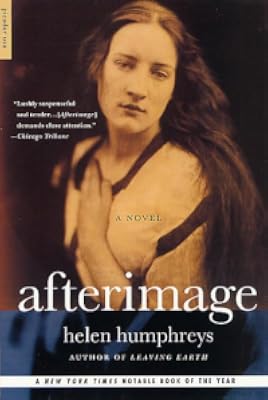
Helen Humphreys is the author of four collections of poetry & one previous novel, "Leaving Earth", which won the Toronto Book Award, was a "New York Times" Notable Book, & was published in six languages. "Afterimage" was inspired by an exhibition of Julia Margaret Cameron's photographs. Humphreys lives in Kingston, Ontario. (Bowker Author show more Biography) show less
Awards and Honors
Awards
Distinctions
Common Knowledge
- Canonical title
- The Lost Garden
- Original publication date
- 2002
- People/Characters
- Women's Land Army; Gwen Davis; Captain Raley; Jane; David; Doris
- Important places
- Devon, England, UK
- Important events
- World War II; World War II, British Home Front
- Epigraph
- Say this when you return, "I came by the wrong road, and saw the starved woods burn." - RICHARD CHURCH
Nothing will catch you. Nothing will let you go. We call it blossoming - the spirit breaks from you and you remai... (show all)n. - JORIE GRAHAM - First words
- What can I say about love?
- Quotations
- Every day weather blows in and out, alters the surface. Sometimes it is stripped down to a single essential truth, the thing that is always believed, no matter what. The seeds from which the garden has grown.
- Last words
- (Click to show. Warning: May contain spoilers.)And this is what I have remembered of love.
- Blurbers
- Campbell, Karen; Ciuraru, Carmela; Livesey, Margot; Batt, Matthew; Kephart, Beth
Classifications
Statistics
- Members
- 603
- Popularity
- 48,469
- Reviews
- 42
- Rating
- (3.84)
- Languages
- Dutch, English, German, Italian
- Media
- Paper, Ebook
- ISBNs
- 19
- ASINs
- 4