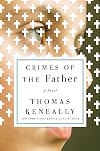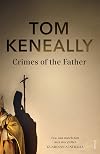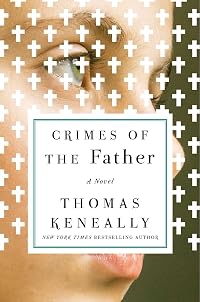
Crimes of the Father
by Thomas Keneally
On This Page
Description
From one of our greatest living writers, a bold and timely novel about sin cloaked in sacrament, shame that enforces silence, and the courage of one priest who dares to speak truth to power. Sent away from his native Australia to Canada due to his radical preaching against the Vietnam War, apartheid, and other hot button issues, Father Frank Docherty made for himself a satisfying career as a psychologist and monk. When he returns to Australia to lecture on the future of celibacy and the show more Catholic Church, he is unwittingly pulled into the lives of two people, a young man, via his suicide note, and an ex-nun, both of whom claim to have been sexually abused by a prominent monsignor. As a member of the commission investigating sex abuse within the Church, and as a man of character and conscience, Docherty decides he must confront each party involved and try to bring the matter to the attention of both the Church and the secular authorities. What follows will shake him to the core and call into question many of his own choices. This riveting, profoundly thoughtful novel is "the work of a richly experienced and compassionate writer [with] an understanding of a deeply wounded culture" (Sydney Morning Herald). It is an exploration of what it is to be a person of faith in the modern world, and of the courage it takes to face the truth about an institution you love. show lessTags
Recommendations














Member Reviews
Keneally's novel will, without a doubt, scare many people away just by virtue of its subject. It's difficult to pick up a book which you know from the get-go is going to focus on sexual abuse, the Catholic Church, and children who've been taken advantage of by their own priests. And yet, Keneally's creation of Father Frank Doherty is touching, nuanced, and striking; his character is one who is stuck in a situation and place that he never dreamed of entering at all, surrounded by people who distrust him because of his openness and values, and an institution he loves, but sees honestly and feels compelled to criticize because he believes it is only through such criticism that its greatness can be regained, if not maintained.
Keneally's show more gorgeous writing and unerring pacing make this book nearly impossible to put down, despite the fact that he takes on subjects which, most often, are more comfortably left unspoken. The book is striking, smart, and compelling, and well worth reading for anyone concerned with the Catholic Church as an institution or the faith in our contemporary world, as well as any reader who might be interested in an intricate character study of a man who is caught irrevocably between his faith and his reality.
Absolutely, 100%, recommended. show less
Keneally's show more gorgeous writing and unerring pacing make this book nearly impossible to put down, despite the fact that he takes on subjects which, most often, are more comfortably left unspoken. The book is striking, smart, and compelling, and well worth reading for anyone concerned with the Catholic Church as an institution or the faith in our contemporary world, as well as any reader who might be interested in an intricate character study of a man who is caught irrevocably between his faith and his reality.
Absolutely, 100%, recommended. show less
Having grown up in the Catholic faith, this book struck a chord of recognition for me. However, in no way do I mean to suggest that I or anyone I knew experienced physical abuse at the hands of the clergy or teaching nuns. I accept that the perpetrators need to be held to account and the church needs to be honest in its handling of these cases. Too the book...
Frank Docherty is exiled by his order to Canada (from his native Australia) after speaking openly on topics such as the Vietnam War. In Ontario he studies and works as a psychologist specializing in sexual abuse by priests. He returns to Australia to give a lecture and visit his mother, and receives information suggesting that the brother of a very close friend has in the past abused both teenage boys and girls. This brother is (on behalf of the church) currently seeking to make small monetary payments to people abused by other priests in exchange for confidentiality agreements. Frank is obliged to follow his conscience, even though this may jeopardize his chances of returning to Australia for good.
I found this novel interesting, show more although in a rather cerebral way. There was tension in the way the narrative explored how the church would respond to allegations and whether Frank would persevere. However, some of the story was quite technical and there were chunks which read like a history text book. I found plenty to ponder in connection with the consequences of demanding celibacy of priests and whether those entering the seminary were already a self-selected group of men running from sexual difficulties. The portions dealing with the failure of the church to allow contraception were very interesting to me, but seemed to be making a different point altogether. Indeed there were discussions between characters in the novel about following individual conscience or blind obedience to the Pope/church. Again, these were interesting, but it was like listening to a lecture rather than relating to fully rounded characters facing decisions in their own lives.
Having said all that, I would be interested to read other novels by this author. show less
I found this novel interesting, show more although in a rather cerebral way. There was tension in the way the narrative explored how the church would respond to allegations and whether Frank would persevere. However, some of the story was quite technical and there were chunks which read like a history text book. I found plenty to ponder in connection with the consequences of demanding celibacy of priests and whether those entering the seminary were already a self-selected group of men running from sexual difficulties. The portions dealing with the failure of the church to allow contraception were very interesting to me, but seemed to be making a different point altogether. Indeed there were discussions between characters in the novel about following individual conscience or blind obedience to the Pope/church. Again, these were interesting, but it was like listening to a lecture rather than relating to fully rounded characters facing decisions in their own lives.
Having said all that, I would be interested to read other novels by this author. show less
CRIMES OF THE FATHER has a valiant attempt at achieving the impossibly lofty goal of making some sense of the horrendous scale of abuse by Catholic clergy over many decades and the arguably even more horrendous scale of the cover-up of this abuse by Church hierarchy for almost as long. It’s not, I think, entirely successful but then it’s a lot to expect of one relatively short work of fiction.
It is set in the mid 1990’s with occasional, illustrative flashbacks to the preceding 30 or so years. Keneally made a deliberate choice to set the book at a time when information about the abuse was starting to filter out into the wider community but before the Church had irrevocably chosen a way of dealing with the scandal and its many show more victims. When there was still a chance that the Church might take a path of openness, restitution and genuine healing. Of dealing sensitively and compassionately with victims who suffered directly. And of offering those indirectly impacted by the scandal – who include people of faith reeling from the allegations being made about ‘their’ Church and the many clergy who have never perpetrated any abuse of any kind or been involved in any covering up – some kind of solace that all was not lost.
That alternative path is chiefly represented by Father Frank Docherty. Sydney born and raised he is exiled by his Cardinal to Canada in the 70’s for his unorthodox political beliefs. His infatuation with a married female parishioner, though never acted upon, also plays into the mix. He becomes a University teacher and psychiatrist; eventually working with many clerics who have been accused of and/or admitted to the kinds of sexual abuse that is starting to be made public. In 1996 he is invited to Sydney to give a lecture on this subject; on how the Church should deal with the growing number of accusations and victims. His proposed approach – one that does not involve lawyers and confidentiality agreements and threats implied or explicit – is not the majority view of his peers. As for the hierarchy? Late in the book Docherty realises the Church will not follow his recommended approach because
…impelled by their anxiety about institutional survival, as well as by a fear of the ignorant malice of a pluralist community all too ready to believe the worst.
It is, of course, an unsatisfying resolution but it echoes reality. Which on this subject is as unsatisfying as it gets. This aspect of the book does not offer anything particularly new – we all know now what a bloody mess the Church has made of this the world over – but it is as clear an explanation as I’ve seen regarding why the Church made the choices it did. Keneally’s not justifying it or apologising for it by any stretch but explanation is a necessary thing in its own right if society is to avoid repeating its mistakes.
There’s an attempt also to explain how such a culture of abuse developed though I think there’s less clarity about this within the book. And that’s reasonable. Although Keneally has clearly done much research and thinking about the subject, and has some personal experience of the kind of teaching given to priests, there isn’t a single, neat answer to this. However the book does offer some genuine insight about the problems with the way priests (and potentially other religious leaders) are taught and the reverential way society has traditionally treated such people. I don’t think I’m any clearer on why or how an individual could choose to act on their desires in such a way but I’m not blaming the book for that. There are some minds I really don’t need or want to get inside.
In a recent interview with the ABC Keneally offered some thoughts regarding why he wrote this as a work of fiction
“Fiction hath charms — that’s all I have to say,” he says.
“You’re telling truth through lies. But they are true lies, the lies of fiction. They’re authentic lies. You still depend on absolute reality.”
I get the point – and generally agree with it – but I’m not convinced it was the best choice in this instance. It enabled things to be a bit too…neat…I suppose. Though that’s not really the word I want but I’ve been trying to think of a better one for three days and have come up empty.
The key characters used to tease out this aspect of the story are the mother of a young man who commits suicide and names a prominent member of the clergy as his abuser in his suicide note and a damaged ex-nun Father Docherty meets by chance who was abused by the same man. They display different aspects of the sort of anger you might expect. A third victim wants nothing to do with naming and shaming, at least initially, as he’s managed to make a success of his life despite the abuse. Of course these people are all sympathetic but I thought that they were pretty superficial: more like case studies than real human characters. This is unlike Keneally who normally excels at character development. Father Docherty and and another character, the married woman he loves from afar who is also the sister of the priest accused by the book’s three victims, are more well rounded but even so it’s all a bit too…neat. Or contrived. Or something not quite natural.
I’m not sure exactly what I expected from this book but it was without doubt too much. I knew that going in though as I don’t think it’s possible for anyone to provide the definitive answer to horrors such as this. Is a tiny part of me disappointed that Keneally didn’t pull off a miracle? Sure. But it is only a tiny part. I’m glad to have read the book, I learned some things and I have some ideas to ponder and discuss with other lapsed Catholics (because it always comes up). That’ll do. show less
It is set in the mid 1990’s with occasional, illustrative flashbacks to the preceding 30 or so years. Keneally made a deliberate choice to set the book at a time when information about the abuse was starting to filter out into the wider community but before the Church had irrevocably chosen a way of dealing with the scandal and its many show more victims. When there was still a chance that the Church might take a path of openness, restitution and genuine healing. Of dealing sensitively and compassionately with victims who suffered directly. And of offering those indirectly impacted by the scandal – who include people of faith reeling from the allegations being made about ‘their’ Church and the many clergy who have never perpetrated any abuse of any kind or been involved in any covering up – some kind of solace that all was not lost.
That alternative path is chiefly represented by Father Frank Docherty. Sydney born and raised he is exiled by his Cardinal to Canada in the 70’s for his unorthodox political beliefs. His infatuation with a married female parishioner, though never acted upon, also plays into the mix. He becomes a University teacher and psychiatrist; eventually working with many clerics who have been accused of and/or admitted to the kinds of sexual abuse that is starting to be made public. In 1996 he is invited to Sydney to give a lecture on this subject; on how the Church should deal with the growing number of accusations and victims. His proposed approach – one that does not involve lawyers and confidentiality agreements and threats implied or explicit – is not the majority view of his peers. As for the hierarchy? Late in the book Docherty realises the Church will not follow his recommended approach because
…impelled by their anxiety about institutional survival, as well as by a fear of the ignorant malice of a pluralist community all too ready to believe the worst.
It is, of course, an unsatisfying resolution but it echoes reality. Which on this subject is as unsatisfying as it gets. This aspect of the book does not offer anything particularly new – we all know now what a bloody mess the Church has made of this the world over – but it is as clear an explanation as I’ve seen regarding why the Church made the choices it did. Keneally’s not justifying it or apologising for it by any stretch but explanation is a necessary thing in its own right if society is to avoid repeating its mistakes.
There’s an attempt also to explain how such a culture of abuse developed though I think there’s less clarity about this within the book. And that’s reasonable. Although Keneally has clearly done much research and thinking about the subject, and has some personal experience of the kind of teaching given to priests, there isn’t a single, neat answer to this. However the book does offer some genuine insight about the problems with the way priests (and potentially other religious leaders) are taught and the reverential way society has traditionally treated such people. I don’t think I’m any clearer on why or how an individual could choose to act on their desires in such a way but I’m not blaming the book for that. There are some minds I really don’t need or want to get inside.
In a recent interview with the ABC Keneally offered some thoughts regarding why he wrote this as a work of fiction
“Fiction hath charms — that’s all I have to say,” he says.
“You’re telling truth through lies. But they are true lies, the lies of fiction. They’re authentic lies. You still depend on absolute reality.”
I get the point – and generally agree with it – but I’m not convinced it was the best choice in this instance. It enabled things to be a bit too…neat…I suppose. Though that’s not really the word I want but I’ve been trying to think of a better one for three days and have come up empty.
The key characters used to tease out this aspect of the story are the mother of a young man who commits suicide and names a prominent member of the clergy as his abuser in his suicide note and a damaged ex-nun Father Docherty meets by chance who was abused by the same man. They display different aspects of the sort of anger you might expect. A third victim wants nothing to do with naming and shaming, at least initially, as he’s managed to make a success of his life despite the abuse. Of course these people are all sympathetic but I thought that they were pretty superficial: more like case studies than real human characters. This is unlike Keneally who normally excels at character development. Father Docherty and and another character, the married woman he loves from afar who is also the sister of the priest accused by the book’s three victims, are more well rounded but even so it’s all a bit too…neat. Or contrived. Or something not quite natural.
I’m not sure exactly what I expected from this book but it was without doubt too much. I knew that going in though as I don’t think it’s possible for anyone to provide the definitive answer to horrors such as this. Is a tiny part of me disappointed that Keneally didn’t pull off a miracle? Sure. But it is only a tiny part. I’m glad to have read the book, I learned some things and I have some ideas to ponder and discuss with other lapsed Catholics (because it always comes up). That’ll do. show less
Whilst this novel focuses on some fictional stories of crimes committed by priests within the catholic church, it must be remembered that it is fiction. By the church's own admission, these type of events do occur, it is not my intention to get into a religious discussion. Needless to say that there are good and bad people everywhere in all organisations including religious groups.
That said, the book is exceptionally well written with believable characters. The story deals with a very difficult subject, and will, no doubt, cause distress to a lot of readers.
Keneally handles it well and manages to keep the reader riveted.
That said, the book is exceptionally well written with believable characters. The story deals with a very difficult subject, and will, no doubt, cause distress to a lot of readers.
Keneally handles it well and manages to keep the reader riveted.
If issues raised in this review cause personal distress,
help is available from Lifeline and Beyond Blue.
Crimes of the Father is a book that was crying out to be written, and Tom Keneally has created an exceptional novel out of a momentous issue of our times. With the Royal Commission into Institutional Responses to Child Sexual Abuse about to resume its hearings, this time about the Anglican Diocese of Newcastle, this issue is well and truly out of the shadows in Australia as it is elsewhere, but Keneally’s novel takes us back to the 1990s when the Catholic Church was steadfast in its denials and victims were routinely disbelieved. While then as now there were heroes and villains and all kinds in between, in Crimes of the Father show more Keneally has created a textured novel that is about, above all else, courage and determination and a struggle for justice.
The circumstances of three victims in this novel testify to the damage done by clerical abuse. The catalyst for action is the suicide of Stephen for whom even drug addiction failed to offer any solace. A chance encounter enables Sarah who lost a career, a calling and any chance of normal relationships, to confront a torment long suppressed. His name in Stephen’s suicide note enables a corporate tycoon called Brian to recognise that his power could be used to demand action, but his professional reputation is at stake.
Their enabler is a priest, exiled to Canada for his radicalism during the Vietnam years. Father Docherty has since become a distinguished psychologist, completed his PhD and has tenure at a Canadian University. As the novel begins, he has returned to Sydney to speak at a Council of the Clergy, to warn them of the 'enlarging rage now loose in the world. If nobody listened, he believed such rage would grow to fill the sky…'
To read the rest of my review please visit https://anzlitlovers.com/2016/11/12/crimes-of-the-father-by-tom-keneally/ show less
help is available from Lifeline and Beyond Blue.
Crimes of the Father is a book that was crying out to be written, and Tom Keneally has created an exceptional novel out of a momentous issue of our times. With the Royal Commission into Institutional Responses to Child Sexual Abuse about to resume its hearings, this time about the Anglican Diocese of Newcastle, this issue is well and truly out of the shadows in Australia as it is elsewhere, but Keneally’s novel takes us back to the 1990s when the Catholic Church was steadfast in its denials and victims were routinely disbelieved. While then as now there were heroes and villains and all kinds in between, in Crimes of the Father show more Keneally has created a textured novel that is about, above all else, courage and determination and a struggle for justice.
The circumstances of three victims in this novel testify to the damage done by clerical abuse. The catalyst for action is the suicide of Stephen for whom even drug addiction failed to offer any solace. A chance encounter enables Sarah who lost a career, a calling and any chance of normal relationships, to confront a torment long suppressed. His name in Stephen’s suicide note enables a corporate tycoon called Brian to recognise that his power could be used to demand action, but his professional reputation is at stake.
Their enabler is a priest, exiled to Canada for his radicalism during the Vietnam years. Father Docherty has since become a distinguished psychologist, completed his PhD and has tenure at a Canadian University. As the novel begins, he has returned to Sydney to speak at a Council of the Clergy, to warn them of the 'enlarging rage now loose in the world. If nobody listened, he believed such rage would grow to fill the sky…'
To read the rest of my review please visit https://anzlitlovers.com/2016/11/12/crimes-of-the-father-by-tom-keneally/ show less
Father Frank Docherty seems to attract controversy. He’s a good man and a good priest but his beliefs are sometimes at odds with the Catholic Church. He was banished from the Australian church in the sixties due to his religious beliefs and he truly wants to return to Australia and their church so he can be near his aging mother. But events come about that bring him into direct confrontation with the same Cardinal he’s trying to win favor with. He’s become aware of several incidents of child abuse by a now well-known and respected monsignor. His conscience won’t allow him to turn a blind eye to these horrendous betrayals of trust.
I had a bit of a problem getting into this book. In the beginning there are somewhat long essays show more about church dogma that I didn’t find particularly interesting. There was nothing in there that was new to me. And at times the book read almost like case studies instead of a novel. I found the beginning to be quite dry and didactic. It took a while for the character of Father Docherty to grow on me. Certainly the stories of the child abuse and the way the church tried to cover it up were very shocking and disturbing. But I wasn’t drawn into the story line until late in the book. Once I was pulled into the story, I enjoyed it more. I remember reading “Schindler’s List” with much more emotion than I did this one. His newest book lacked the emotional impact that I had expected from such a story.
I won this book in a Goodreads giveaway and am under no obligation to review it. show less
I had a bit of a problem getting into this book. In the beginning there are somewhat long essays show more about church dogma that I didn’t find particularly interesting. There was nothing in there that was new to me. And at times the book read almost like case studies instead of a novel. I found the beginning to be quite dry and didactic. It took a while for the character of Father Docherty to grow on me. Certainly the stories of the child abuse and the way the church tried to cover it up were very shocking and disturbing. But I wasn’t drawn into the story line until late in the book. Once I was pulled into the story, I enjoyed it more. I remember reading “Schindler’s List” with much more emotion than I did this one. His newest book lacked the emotional impact that I had expected from such a story.
I won this book in a Goodreads giveaway and am under no obligation to review it. show less
Members
- Recently Added By
Lists

Review 2
36 works; 1 member
Author Information

85+ Works 19,961 Members
Thomas Keneally was born in Sydney, Australia on October 7, 1935. Although he initially studied for the Catholic priesthood, he abandoned that idea in 1960, turning to teaching and clerical work before writing and publishing his first novel, The Place at Whitton, in 1964. Since that time he has been a full-time writer, aside from the occasional show more stint as a lecturer or writer-in-residence. He won the Booker Prize in 1982 for Schindler's Ark, which Stephen Spielberg adapted into the film Schindler's List. He won the Miles Franklin Award twice with Bring Larks and Heroes and Three Cheers for the Paraclete. His other fiction books include The Chant of Jimmy Blacksmith, Gossip from the Forest, Confederates, The People's Train, Bettany's Book, An Angel in Australia, The Widow and Her Hero, and The Daughters of Mars. His nonfiction works include Searching for Schindler, Three Famines, The Commonwealth of Thieves, The Great Shame, and American Scoundrel. In 1983, he was awarded the order of Australia for his services to Australian Literature. Thomas Keneally is the recipient of the 2015 Australia Council Award for Lifetime Achievement in Literature. The award, formerly known as the Writers' Emeritus Award, recognises 'the achievements of eminent literary writers over the age of 60 who have made an outstanding and lifelong contribution to Australian literature. (Bowker Author Biography) show less
Common Knowledge
- Canonical title
- Crimes of the Father
- Original title
- Crimes of the Father
- Original publication date
- 2016
- People/Characters
- Father Frank Docherty; Monsignor Leo Shannon; Maureen Breslin; Damian Breslin; Sarah Fagan; Liz Cosgrove (show all 10); Paul Cosgrove; Brian Wood; Cardinal Condon; Declan Docherty
- Important places
- Sydney, Australia
- First words
- Monastery of the Congregation of the Divine Charity
2214 Kitchener Boulevard, Waterloo,
Ontario N2J AO1, CANADA
16 June 1996
His Eminence Cardinal John Charles Condon
Cardinal Archbishop of Sydney
Po... (show all)lding Centre
133 Liverpool Street
NSW 2000
AUSTRALIA
Your Eminence,
Re: Dr Francis Dominic Docherty CCD, formerly of the archdiocese of Sydney
Please accept my most reverent respects. - Last words
- (Click to show. Warning: May contain spoilers.)It was home.
Classifications
- Genres
- Fiction and Literature, General Fiction, Historical Fiction, Suspense & Thriller
- DDC/MDS
- 823.914 — Literature & rhetoric English & Old English literatures English fiction 1900- 1901-1999 1945-1999
- LCC
- PR9619.3 .K46 .C75 — Language and Literature English English Literature English literature: Provincial, local, etc.
- BISAC
Statistics
- Members
- 104
- Popularity
- 311,281
- Reviews
- 8
- Rating
- (3.80)
- Languages
- English
- Media
- Paper, Audiobook, Ebook
- ISBNs
- 17
- ASINs
- 3