On This Page
Description
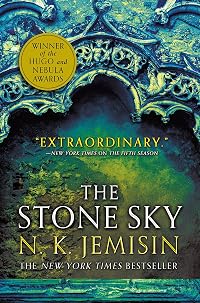
The Moon will soon return. Whether this heralds the destruction of humankind or something worse will depend on two women. Essun has inherited the power of Alabaster Tenring. With it, she hopes to find her daughter Nassun and forge a world in which every orogene child can grow up safe. For Nassun, her mother's mastery of the Obelisk Gate comes too late. She has seen the evil of the world, and accepted what her mother will not admit: that sometimes what is corrupt cannot be cleansed, only show more destroyed. show lessTags
Recommendations


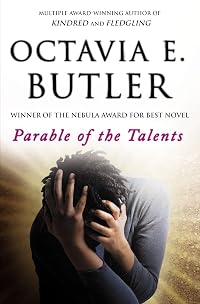
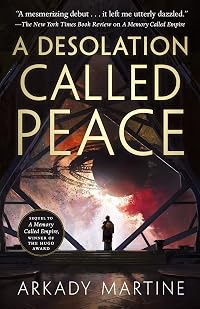
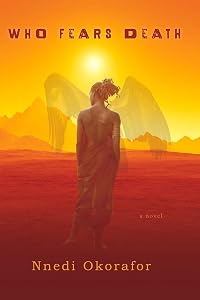
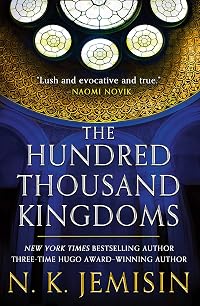




Member Recommendations
by susanbooks
Member Reviews
Jemisin caps off the best fantasy trilogy with a conclusion that is deeply & profoundly personal to the protagonist, and also about changing the world. Jemisin is endlessly imaginative, but her books capture a grittiness about our world, about self-sacrifice and cultural conflicts and about what people in power inflict on others. This is one of the darkest books I've read in ages and I was sitting on a friend's floor trying to convince her to read it anyway: "When Jemisin's characters die, it's about something. She cares about her characters. They aren't forgotten. The other characters don't just magically heal their trauma. They find ways to construct meaning to move forward." This is a story about being in community and how we do show more that, despite hurting each other, despite being unable to save each other. This is a story about unconventional loves (and more about Alabaster and Essun) including platonic and familial. I loved every page. show less
There comes a time in the lives of most women I know, when you realize that your body and your life are worth less to the legal system of the country in which you reside than your property.
That moment came for me personally a few years ago when I tried to report to police an admission made by an ex-boyfriend that he'd had his ex's apartment bugged so he could monitor who she was sleeping with. They refused to take the report "because no crime had taken place." Apparently she would have had to find out on her own that it was being bugged, and then prove that he was the one who had done it, and then call the police herself, before they could do anything to investigate, which seems contrary to how other criminal investigations are show more conducted. I mean, if someone is shot, you don't hear police going "when you know who did it, let us know and we'll be happy to get involved!" Or "yes, but the corpse has to call us, not a bystander." But a man telling someone--bragging to them--that he had hired someone to place cameras and recorders in the house of an ex to monitor her sex life is not enough to look into. That he was also stalking me, and that I worried that he might have bugged my home, changed nothing. I was told that I would first need to demonstrate that my home had been bugged and then hire a PI to prove it was him before I could even file a report. I was on my own.
On the other hand, when I wanted to report that my bicycle had been stolen--without knowing who had stolen it--the same police force was quite happy to help, not that they could do anything to get it back.
So my bike counts. But I don't.
I've always been a feminist, so it's not like I was unaware of this in theory, but it's different when it happens to you. And then the problem becomes that all future similar cases remind you, and you never forget: you are worth less than your property.
Sure, yes: when a white woman, preferably a virtuous white woman with money and an upstanding husband, or a young and virginal white woman with her whole life ahead of her, turns up dead, her body and life suddenly matter. But it's truly striking how often it turns out in retrospect that she had tried for years to get help and been denied at every turn. Her life only mattered when it was lost. And for too many women, particularly our indigenous sisters here in Canada, her life doesn't even matter then. What murder? She probably tripped on a broken beer bottle and accidentally gouged out her vagina. It happens.
There was that story recently of the university hockey player who wasn't just let off the hook on a sexual assault charge, but even the regular assault conviction that did stick was delayed so that the sentence wouldn't interfere with his prestigious Deloitte internship. I mean. Just because he violated a 16 year old girl doesn't mean that his career prospects should suffer. Right?
A 16 year old who was raped by her stepfather with her mother watching, pimped out by the stepfather to his friends--he plead guilty and got four years. The judge described this crime as heinous and a violation of trust and responsibility with lifelong consequences for the victim. Four years is what that's worth.
And another story, which didn't lead to Change.org petitions and general social media outrage, about a Dalhousie student who broke into an ex-girlfriend's apartment--by battering down the door, no less--assaulted the man she was there with until he fled to get help, sexually assaulted his ex-girlfriend, broke a window, who ended up with no jail time at all. He was a wealthy white boy, you know. They can't really be dangerous. When they do things like this it's an aberration, not an indication of future risk. And you don't want to interfere with his promising future with anything so arbitrary and high-handed as justice. He plead guilty to break and enter and assault of the boyfriend, for which he received a two-year conditional sentence. The sex assault charge was dropped. It was considered that she couldn't prove it, and you don't want to take the word of a girl over a wealthy white boy with good prospects who just happened to have broken a door down in an uncharacteristic fit of rage!
She dropped out of school. He went to law school.
It's not just that her body and life matter less than his career prospects.
Her body and life clearly mattered less than her fucking door. If he hadn't broken the door down and hit an actual person (i.e. a man) he would likely have gotten away without any penalties at all.
(Oh, but don't mention rape culture. That hurts some men's feelings. Women's lives and bodies matter less than that, too.)
It's the kind of thing that makes you wonder what the hell you're doing it for, when you've been employed as a professional do-gooder for a few decades. As it is, it's a stressful career that leads to burnout for many. The hours can be long, you're often harassed (or assaulted or stalked) by members of the public who see you as an enemy of freedom and progress, and as one writer memorably put it, the victories are temporary while the defeats are permanent--a situation that leads to higher rates of alcoholism, mental illness and divorce. And I'm doing this, I've sometimes asked myself, for those assholes? For a society that considers on the whole that I am worth less than my bicycle? For a large number of people who don't think of me as fully human?
In my house, the Battlestar Galactica remake is an appropriate reference point for almost everything. So:
I've read the series as a climate change metaphor: people create a technology that is supposed to make their lives easier (a fossil-fueled industrial revolution, the Cylons) that then turns around and destroys their entire world. I don't think the creators meant it that way, but that's the lens I watch it through, and it works. President Roslin's rejoinder to the military brass: "The war is over. We lost," often plays in my head when I'm reading or watching desperate 11-th hour pleas on transitioning to a low-carbon economy to save ourselves. I mean I'm sorry but the 11-th hour was in the late nineties; we're well past midnight now.
The other side of the series, of course, is what makes a person, and it is highly highly relevant both to modern-day politics and society.
What makes a person? Genetics? Does that mean a person with wonky genes isn't a person? Intelligence? So what about a person of low IQ? Art, music, literature? What does that make people who don't produce any? Sex? Orientation? Race? Well of course, you're saying--but remember that I'm worth less than my bicycle, and during the Harper government it was made abundantly clear in their policy decisions that my career to help save and repair the environment made me potentially an enemy of the state. Most women I know, and most people of colour I know, have a choice between permanent rage and pretending not to see what they see or know what they know. So what makes a person?
Around the same time I read a news story about a young woman in South Africa who was raped, then ripped open with a knife from her throat to her vulva and left to bleed out in the rubble of an abandoned building.
Why the hell are we worth saving?
It's a question that comes up relentlessly in The Stone Sky. Do you try to achieve the impossible and save a world that's enslaved you while in the process reforming it, or do you burn it down?
It's impossible to summarize all of the things the book is about, but let me try:
Motherhood, trauma, survival, the long shadows that trauma casts on families, genocide, racism, slavery, oppression, projection, fear, the cost of survival, the price of supporting luxury and privilege on the destruction of the earth and the dehumanization of other people, loss, how loved ones factor into living life in such circumstances, and ultimately:
How, as someone who has been so dehumanized, to respond.
(All packaged in a fantasy trilogy in which magic is the ability to manipulate earth, from small stones to tectonic plates.)
This from one of the novel's protagonists, a ten-year-old girl who has seem more of man's inhumanity to man than anyone should ever have to. One of the trilogy's achievements is presenting all of the perspectives in credible and sympathetic characters, and she is a strong voice for the case of letting the world end.
What would you do? Would you save a world that tortured you, if you were the only one who could?
~~~~~
Essun, the novel's main protagonist, is amazing. As a literary achievement and as a person. She is strong, clever, a survivor; she has lived through horrors, and inflicted some of her own; she is difficult and has learned to fear and mistrust strangers for good reason; she has lived as a slave and as a "free" person who can only be free so long as no one knows what she is; she has buried more than one much-loved child; and she has been told that she is the only person who can save the world. So should she? Will she?
In the first novel, you learn to love her for her strength, determination, and love of her children.
In the second novel, you learn about her crimes and her victims. And why.
In the third novel, you wonder: do you want her to save this world? Does it deserve to survive?
I don't want to give too much away, because I think everyone should be reading these books. Jemisin manages the fantastically difficult feat of writing a book of immense, scathing and current social commentary packaged in an entertaining plot with vivid characters, deep relationships, and gorgeous writing. Forget whether or not you think you like fantasy novels. These books are worth reading. They will break your heart and knit it back together a hundred times over.
And if you are involved in any kind of world-saving, Essun's story is one you really want to read.
The world is burning now, actually; and while The Broken Earth is about a lot more things than environmental destruction, it's about that too. Harvey and Irma should be very potent and very timely reminders that we have really fucked things up, and the payment's not due in 2200 or 2100, but is coming due now. I look at those storms and I don't just see the destruction and loss of life (and it's not just people and their pets) now, but from all the similar storms that climate change has made inevitable and which will happen with greater and greater frequency as this century progresses. This is and will increasingly become normal. All of the wonderful and inspiring actions the global community is undertaking (Trumpians exepted) are at least 20 years too late to prevent catastrophe, though we can lessen it, and that's not nothing. But it's also not, you know, wait around 20 years and Tesla will solve everything. We're in for a rough time, if we survive it.
That moment came for me personally a few years ago when I tried to report to police an admission made by an ex-boyfriend that he'd had his ex's apartment bugged so he could monitor who she was sleeping with. They refused to take the report "because no crime had taken place." Apparently she would have had to find out on her own that it was being bugged, and then prove that he was the one who had done it, and then call the police herself, before they could do anything to investigate, which seems contrary to how other criminal investigations are show more conducted. I mean, if someone is shot, you don't hear police going "when you know who did it, let us know and we'll be happy to get involved!" Or "yes, but the corpse has to call us, not a bystander." But a man telling someone--bragging to them--that he had hired someone to place cameras and recorders in the house of an ex to monitor her sex life is not enough to look into. That he was also stalking me, and that I worried that he might have bugged my home, changed nothing. I was told that I would first need to demonstrate that my home had been bugged and then hire a PI to prove it was him before I could even file a report. I was on my own.
On the other hand, when I wanted to report that my bicycle had been stolen--without knowing who had stolen it--the same police force was quite happy to help, not that they could do anything to get it back.
So my bike counts. But I don't.
I've always been a feminist, so it's not like I was unaware of this in theory, but it's different when it happens to you. And then the problem becomes that all future similar cases remind you, and you never forget: you are worth less than your property.
Sure, yes: when a white woman, preferably a virtuous white woman with money and an upstanding husband, or a young and virginal white woman with her whole life ahead of her, turns up dead, her body and life suddenly matter. But it's truly striking how often it turns out in retrospect that she had tried for years to get help and been denied at every turn. Her life only mattered when it was lost. And for too many women, particularly our indigenous sisters here in Canada, her life doesn't even matter then. What murder? She probably tripped on a broken beer bottle and accidentally gouged out her vagina. It happens.
There was that story recently of the university hockey player who wasn't just let off the hook on a sexual assault charge, but even the regular assault conviction that did stick was delayed so that the sentence wouldn't interfere with his prestigious Deloitte internship. I mean. Just because he violated a 16 year old girl doesn't mean that his career prospects should suffer. Right?
A 16 year old who was raped by her stepfather with her mother watching, pimped out by the stepfather to his friends--he plead guilty and got four years. The judge described this crime as heinous and a violation of trust and responsibility with lifelong consequences for the victim. Four years is what that's worth.
And another story, which didn't lead to Change.org petitions and general social media outrage, about a Dalhousie student who broke into an ex-girlfriend's apartment--by battering down the door, no less--assaulted the man she was there with until he fled to get help, sexually assaulted his ex-girlfriend, broke a window, who ended up with no jail time at all. He was a wealthy white boy, you know. They can't really be dangerous. When they do things like this it's an aberration, not an indication of future risk. And you don't want to interfere with his promising future with anything so arbitrary and high-handed as justice. He plead guilty to break and enter and assault of the boyfriend, for which he received a two-year conditional sentence. The sex assault charge was dropped. It was considered that she couldn't prove it, and you don't want to take the word of a girl over a wealthy white boy with good prospects who just happened to have broken a door down in an uncharacteristic fit of rage!
She dropped out of school. He went to law school.
It's not just that her body and life matter less than his career prospects.
Her body and life clearly mattered less than her fucking door. If he hadn't broken the door down and hit an actual person (i.e. a man) he would likely have gotten away without any penalties at all.
(Oh, but don't mention rape culture. That hurts some men's feelings. Women's lives and bodies matter less than that, too.)
It's the kind of thing that makes you wonder what the hell you're doing it for, when you've been employed as a professional do-gooder for a few decades. As it is, it's a stressful career that leads to burnout for many. The hours can be long, you're often harassed (or assaulted or stalked) by members of the public who see you as an enemy of freedom and progress, and as one writer memorably put it, the victories are temporary while the defeats are permanent--a situation that leads to higher rates of alcoholism, mental illness and divorce. And I'm doing this, I've sometimes asked myself, for those assholes? For a society that considers on the whole that I am worth less than my bicycle? For a large number of people who don't think of me as fully human?
In my house, the Battlestar Galactica remake is an appropriate reference point for almost everything. So:
[from Adama's speech at the decommissioning ceremony] You know, when we fought the Cylons, we did it to save ourselves from extinction. But we never answered the question "Why?" Why are we as a people worth saving? We still commit murder because of greed and spite, jealousy, and we still visit all of our sins upon our children. We refuse to accept the responsibility for anything that we've done, like we did with the Cylons. We decided to play God, create life. And when that life turned against us, we comforted ourselves in the knowledge that it really wasn't our fault, not really. You cannot play God then wash your hands of the things that you've created. Sooner or later, the day comes when you can't hide from the things that you've done anymore.
I've read the series as a climate change metaphor: people create a technology that is supposed to make their lives easier (a fossil-fueled industrial revolution, the Cylons) that then turns around and destroys their entire world. I don't think the creators meant it that way, but that's the lens I watch it through, and it works. President Roslin's rejoinder to the military brass: "The war is over. We lost," often plays in my head when I'm reading or watching desperate 11-th hour pleas on transitioning to a low-carbon economy to save ourselves. I mean I'm sorry but the 11-th hour was in the late nineties; we're well past midnight now.
The other side of the series, of course, is what makes a person, and it is highly highly relevant both to modern-day politics and society.
What makes a person? Genetics? Does that mean a person with wonky genes isn't a person? Intelligence? So what about a person of low IQ? Art, music, literature? What does that make people who don't produce any? Sex? Orientation? Race? Well of course, you're saying--but remember that I'm worth less than my bicycle, and during the Harper government it was made abundantly clear in their policy decisions that my career to help save and repair the environment made me potentially an enemy of the state. Most women I know, and most people of colour I know, have a choice between permanent rage and pretending not to see what they see or know what they know. So what makes a person?
Number Six: I'm so proud of you, Gaius.
Doctor Gaius Baltar: Why? Because I've taken a life?
Number Six: It makes you human.
Doctor Gaius Baltar: Is it? Not conscious thought? Not poetry, or art, or music, literature? Murder. Murder is my heritage. Is that the lesson I'm supposed to pass on to our child?
"Battlestar Galactica: Resurrection Ship: Part 2 (#2.12)" (2006)
Lt. Sharon 'Boomer' Valerii: [Adama asks Sharon why the Cylons hate humanity so much] It's what you said at the ceremony before the attack when Galactica was being decommissioned. You gave a speech that sounded like it wasn't the one you prepared. You said that humanity was a flawed creation. And that people still kill one another for petty jealousy and greed. You said that humanity never asked itself why it deserved to survive. Maybe you don't."
Around the same time I read a news story about a young woman in South Africa who was raped, then ripped open with a knife from her throat to her vulva and left to bleed out in the rubble of an abandoned building.
Why the hell are we worth saving?
It's a question that comes up relentlessly in The Stone Sky. Do you try to achieve the impossible and save a world that's enslaved you while in the process reforming it, or do you burn it down?
It's impossible to summarize all of the things the book is about, but let me try:
Motherhood, trauma, survival, the long shadows that trauma casts on families, genocide, racism, slavery, oppression, projection, fear, the cost of survival, the price of supporting luxury and privilege on the destruction of the earth and the dehumanization of other people, loss, how loved ones factor into living life in such circumstances, and ultimately:
How, as someone who has been so dehumanized, to respond.
(All packaged in a fantasy trilogy in which magic is the ability to manipulate earth, from small stones to tectonic plates.)
These things have distorted her voice, made it a shaky growl that randomly spikes into a higher pitch and louder volume, because it's everything she can do not to just start screaming. "I wouldn't fix it, Schaffa, I wouldn't, I'm sorry, I don't want to fix it I want to kill everybody who hates me--"
Her middle is so heavy that she can't stand. [She] drops into a crouch, then to her knees. She wants to vomit but instead she spits words onto the ground between her splayed hands. "G-g-gone! I want it all GONE, Schaffa! I want it to BURN, I want it burned up and dead and gone, gone, NOTHING l-l-left, no more hate and no more killing just nothing, r-rusting nothing, nothing FOREVER--"
This from one of the novel's protagonists, a ten-year-old girl who has seem more of man's inhumanity to man than anyone should ever have to. One of the trilogy's achievements is presenting all of the perspectives in credible and sympathetic characters, and she is a strong voice for the case of letting the world end.
What would you do? Would you save a world that tortured you, if you were the only one who could?
~~~~~
Essun, the novel's main protagonist, is amazing. As a literary achievement and as a person. She is strong, clever, a survivor; she has lived through horrors, and inflicted some of her own; she is difficult and has learned to fear and mistrust strangers for good reason; she has lived as a slave and as a "free" person who can only be free so long as no one knows what she is; she has buried more than one much-loved child; and she has been told that she is the only person who can save the world. So should she? Will she?
In the first novel, you learn to love her for her strength, determination, and love of her children.
In the second novel, you learn about her crimes and her victims. And why.
In the third novel, you wonder: do you want her to save this world? Does it deserve to survive?
There are stages to the process of being betrayed by your society. One is jolted from a place of complacency by the discovery of difference, by hypocrisy, by inexplicable or incongruous ill treatment....
Some accept their fate. Swallow their pride, forget the real truth, embrace the falsehood for all they're worth--because, they decide, they cannot be worth much. If a whole society has dedicated itself to their subjugation, after all, then surely they deserve it? Even if they don't, fighting back is too painful, too impossible. At least this way there is peace, of a sort....
The alternative is to demand the impossible. It isn't right, they whisper, weep, shout; what has been done to them is not right. They are not inferior. They do not deserve it. And so it is the society that must change. There can be peace this way, too, but not before conflict.
I don't want to give too much away, because I think everyone should be reading these books. Jemisin manages the fantastically difficult feat of writing a book of immense, scathing and current social commentary packaged in an entertaining plot with vivid characters, deep relationships, and gorgeous writing. Forget whether or not you think you like fantasy novels. These books are worth reading. They will break your heart and knit it back together a hundred times over.
And if you are involved in any kind of world-saving, Essun's story is one you really want to read.
When a man dies, it should be devastating to a girl who once called him Father, but this becomes as nothing when she has been called monster so many times that she finally embraces the label. When a slave rebels, it is nothing much to the people who read about it later. Just thin words on thinner paper worn finer by the friction of history. ("So you were slaves, so what?" they whisper. Like it's nothing.) But to the people who live through a slave rebellion, both those who take their dominance for granted until it comes for them in the dark, and those who would see the world burn before enduring one moment longer in "their place"--
That is not a metaphor, Essun. Not hyperbole. I did watch the world burn. Say nothing to me of innocent bystanders, unearned suffering, heartless vengeance. When a comm builds atop a fault line, do you blame its walls when they inevitably crush the people inside? No; you blame whoever was stupid enough to think they could defy the laws of nature forever. Well, some worlds are built on a fault line of pain, held up by nightmares. Don't lament when those worlds fall. Rage that they were built doomed in the first place.
The world is burning now, actually; and while The Broken Earth is about a lot more things than environmental destruction, it's about that too. Harvey and Irma should be very potent and very timely reminders that we have really fucked things up, and the payment's not due in 2200 or 2100, but is coming due now. I look at those storms and I don't just see the destruction and loss of life (and it's not just people and their pets) now, but from all the similar storms that climate change has made inevitable and which will happen with greater and greater frequency as this century progresses. This is and will increasingly become normal. All of the wonderful and inspiring actions the global community is undertaking (Trumpians exepted) are at least 20 years too late to prevent catastrophe, though we can lessen it, and that's not nothing. But it's also not, you know, wait around 20 years and Tesla will solve everything. We're in for a rough time, if we survive it.
You consider. I listen to the slow ongoing roar of the volcano, down here in the deep. Then you say, "I want the world to be better."show less
I have never regretted more my inability to leap into the air and whoop for joy.
Instead, I transit to you, with one hand proferred. "Then let's go make it better."
You look amused. It's truly you. "Just like that?"
"It might take some time."
"I don't think I'm very patient." But you take my hand.
Don't be patient. Don't ever be. This is the way a new world begins.
"Neither am I," I say. "So let's get to it."
This was an amazing conclusion to the series, and it felt extra appropriate that I ended up reading most of it on the day of the eclipse. So much was resolved in this volume. The origin of the stone eaters, why father earth is so angry, what happened to the moon, the purpose of the obelisks... The only thing I don't feel was really successfully explained was the Guardians -- I mean, I understand that father earth is controlling the Guardians, and they would want the orogenes under control, but why let any of them train? Why let them be strong and counteract some of the possible season-causing events?
Anyway, this volume shows off the thoroughness of Jemisin's world-building. Not to mention her understanding of the emotional damage we do show more to each other, often without meaning to. And the value of community.
One of my favorite currently working authors. show less
Anyway, this volume shows off the thoroughness of Jemisin's world-building. Not to mention her understanding of the emotional damage we do show more to each other, often without meaning to. And the value of community.
One of my favorite currently working authors. show less
This was a very good end to an excellent series. After first worrying that the books would be too painful for me to get through, I found that it was a different kind of pain than the kind I’m so used to reading about--this was a compassionate pain, very real, and very clearly written by someone who understands it personally. I was not surprised, but still very moved, to read that the author wrote the last book while going through a very difficult time in her life, and the way she was dealing with the loss of her own mother works its way through the narrative and made me ache.
After destroying Castrima, Essun is traveling through the ash wastelands with what is left of her comm on its way to the northern comm that was destroyed in the show more last book. Now empty, it is possibly the only place in which they will be able to thrive, but getting there proves to be soul-crushingly difficult, as food runs out, as they are beset by enemies, and as they each slowly lose the will to go on. Essun and Ykka both struggle to keep the comm together and to keep up hope as things get worse and worse.
Meanwhile, Nassun, having left the comm of Falling Moon with Schaffa, travels to Corepoint, the Stone Eater-inhabited ruin of the city that created this whole mess. She has grown into a teenager by this point, but seen more pain than any child of her age should. It is impressive that she is written in such a way that one can see how tired she is from everything she has gone through, yet still doesn’t quite have the maturity to see things the way an adult would. I think most authors tend to prematurely “age-up” young protagonists who have had hard lives--that is, they stop making an effort to write them appropriately for their age--but Jemisin evidently has the writing chops to avoid this pitfall.
Interspersed here and there are flashbacks that fill in the gaps about what we haven’t learned and tell the story of how the Earth became so broken in the first place. It is, unsurprisingly, a tale of oppression and abuse, heavy on the philosophy, yet never preachy. This book shows and does not tell. And it is all told from the perspective of the victims, compassionately, and angrily. The message and the way the characters responded to it resonated with me so very much that it became cathartic in a way--the way sharing anguish between friends is supposed to feel.
Needless to say I thought these books were wonderful. I would love to recommend them to as many people as I could! show less
After destroying Castrima, Essun is traveling through the ash wastelands with what is left of her comm on its way to the northern comm that was destroyed in the show more last book. Now empty, it is possibly the only place in which they will be able to thrive, but getting there proves to be soul-crushingly difficult, as food runs out, as they are beset by enemies, and as they each slowly lose the will to go on. Essun and Ykka both struggle to keep the comm together and to keep up hope as things get worse and worse.
Meanwhile, Nassun, having left the comm of Falling Moon with Schaffa, travels to Corepoint, the Stone Eater-inhabited ruin of the city that created this whole mess. She has grown into a teenager by this point, but seen more pain than any child of her age should. It is impressive that she is written in such a way that one can see how tired she is from everything she has gone through, yet still doesn’t quite have the maturity to see things the way an adult would. I think most authors tend to prematurely “age-up” young protagonists who have had hard lives--that is, they stop making an effort to write them appropriately for their age--but Jemisin evidently has the writing chops to avoid this pitfall.
Interspersed here and there are flashbacks that fill in the gaps about what we haven’t learned and tell the story of how the Earth became so broken in the first place. It is, unsurprisingly, a tale of oppression and abuse, heavy on the philosophy, yet never preachy. This book shows and does not tell. And it is all told from the perspective of the victims, compassionately, and angrily. The message and the way the characters responded to it resonated with me so very much that it became cathartic in a way--the way sharing anguish between friends is supposed to feel.
Needless to say I thought these books were wonderful. I would love to recommend them to as many people as I could! show less
As the world around us flies aaprt in fragments of plastic and psychosis and the internet is my fidget spinner, an endlessly whirling toy of facts and jokes and horrors, it's odd to find some sort of comfort and catharsis in an epic fantasy novel of such seemingly overwhelming hopelesness and despair as presented in the first two volumes. A massive rift is venting ash and smoke into the sky. The world is reduced to hunkered down communities and roving bands of starving bandits. Roggas, who can control such eruptions and outbursts are despised and feared and murdered on discovery or sent to be brutally trained and used. What future can there possibly be to look forward to?
Essun, travelling with a unique community of orogenes and stills show more to a city abandoned - largely because Essun killed them all when they invaded her new home - is torn by a desire to save her daughter and take use the obelisk gate to restore the Moon and close the rift. Doing the latter will kill her, however. Meanwhile daughter Nessun in the company of a Guardian travels to an ancient, hi-tech city the other side of the world with a similar plan on a larger scale, but the lessons she has learned incline her to a more catastrophic approach to making the world a peaceful place.
The finale plays out in a masterful and titanic battle of magic and tectonics and physics between the traumatised and damaged hearts and minds of mother and daughter to an ending that did not seem remotely possible or likely in our first introduction to this world. But it felt earned and logical and right. A crowning achievement to one of the the defining fantasy works of the age. show less
Essun, travelling with a unique community of orogenes and stills show more to a city abandoned - largely because Essun killed them all when they invaded her new home - is torn by a desire to save her daughter and take use the obelisk gate to restore the Moon and close the rift. Doing the latter will kill her, however. Meanwhile daughter Nessun in the company of a Guardian travels to an ancient, hi-tech city the other side of the world with a similar plan on a larger scale, but the lessons she has learned incline her to a more catastrophic approach to making the world a peaceful place.
The finale plays out in a masterful and titanic battle of magic and tectonics and physics between the traumatised and damaged hearts and minds of mother and daughter to an ending that did not seem remotely possible or likely in our first introduction to this world. But it felt earned and logical and right. A crowning achievement to one of the the defining fantasy works of the age. show less
The third book in the trilogy starts very soon after the last book's end, with the comm of Castrima now on the move. Essun's actions saved many lives, but destroyed the place they were living. Meanwhile, her daughter Nassun - a powerful girl in her own right, able to move mountains and turn people into precious stones with the aid of the obelisks that her mother can also maneuver - has killed her father and wants to end it all, all life, all Earth, by controlling the Obelisk Gate. Essun still wants to find her daughter, but she's also being pressured to put everything right as only she (or maybe Nassun) can.
It's impossible to understand this book if you haven't already read the first two, but I will say - it is completely worth the show more rollercoaster ride. We finally get the story of Hoa, the stoneeaters' creation, how everything went wrong, what the obelisks are... it all comes together. I won't say it all works out, because that's too much to hope for in a society where any people group is oppressed, a familiar theme that runs throughout the story and doesn't beat you over the head but definitely makes you sit up straighter and think about our own present world. But it is, I think, ultimately hopeful in people who try their best, imperfectly, to make the world a better place and I found it incredibly satisfying. show less
It's impossible to understand this book if you haven't already read the first two, but I will say - it is completely worth the show more rollercoaster ride. We finally get the story of Hoa, the stoneeaters' creation, how everything went wrong, what the obelisks are... it all comes together. I won't say it all works out, because that's too much to hope for in a society where any people group is oppressed, a familiar theme that runs throughout the story and doesn't beat you over the head but definitely makes you sit up straighter and think about our own present world. But it is, I think, ultimately hopeful in people who try their best, imperfectly, to make the world a better place and I found it incredibly satisfying. show less
I have so much to say about this book that I am almost choking on the words. I put off reading the final book in this deep, beautiful, relevant, and so human trilogy, and then when I couldn't wait anymore I tried to read this as slowly as possible (fail...I devoured it like a stone eater, heh). This was one of those books where the larger story line is compelling and keeps you waiting for what will happen next, but there were also these individual lines that I wanted to highlight, underline, fold pages to find again, and save forever (I didn't as it was a library book library book). This goes on my list of book that not only got a big sigh and a hug when I finished it, but a few times during the read.
Life affirming dystopian fiction show more that feels imaginable and possible and scary and hopeful. I need to find someone else who has read it to talk about it in real life! If you decide to read it, and I hope you do, start from book one in the trilogy. show less
Life affirming dystopian fiction show more that feels imaginable and possible and scary and hopeful. I need to find someone else who has read it to talk about it in real life! If you decide to read it, and I hope you do, start from book one in the trilogy. show less
Members
- Recently Added By
Lists

Best Science Fiction Novels
816 works; 430 members

Favorite Science Fiction by Women Authors
737 works; 202 members

2018 Hugo Eligible Novels
170 works; 16 members

Hugo Awards - Best Novel
69 works; 10 members

Female Protagonist
1,056 works; 57 members

Top Five Books of 2022
736 works; 272 members
Female Author
1,234 works; 67 members

The 100 Best Fantasy Books of All Time
100 works; 15 members

Top Five Books of 2020
982 works; 350 members

2017 Science Fiction and Fantasy I'm Looking Forward To
46 works; 6 members

Black Authors
384 works; 32 members
Nebula Award
111 works; 14 members

Top Five Books of 2017
757 works; 231 members

Speculative Fiction to Read
706 works; 32 members

Books Read in 2023
5,547 works; 144 members

Plan to Listen Audiobooks
63 works; 1 member
Speculative Fiction: The Award Winners
27 works; 6 members

2022
17 works; 1 member

Wishlist
99 works; 1 member

Reading Glasses Podcast
410 works; 3 members

Books Read in 2017
4,249 works; 130 members

Books Read in 2022
5,168 works; 114 members

Recommend Fantasy Books
100 works; 1 member

Books Read in 2019
4,052 works; 110 members

Books Read in 2020
4,379 works; 123 members

Kirkus Starred Fiction Reviews of Books Published in 2017
412 works; 7 members

Overdue Podcast
806 works; 9 members

Mothers and Daughters
114 works; 11 members

Carole's List
445 works; 13 members

READ 2025
190 works; 1 member
Author Information

68+ Works 45,535 Members
N. K. Jemisin is an American author and blogger, born in 1972, and based in Brooklyn, New York. She earned a B.S. in Psychology from Tulane University and her Masters of Education from the University of Maryland College Park. Her work includes numerous short stories, a novella, a triptych, The Inheritance trilogy, Dreamblood series, and The Broken show more Earth trilogy. The Fifth Season is a book in The Inheritance trilogy for which she won the 2016 Hugo Award for Best Novel. Her other awards include Romantic Times Reviewers' Choice, Fantasy (for The Shadowed Sun); Sense of Gender Award, 2011 (for The Hundred Thousand Kingdoms, Japanese version); Romantic Times Reviewers' Choice, Fantasy (for The Broken Kingdoms); and the Locus Award, 2010 (First Novel, for The Hundred Thousand Kingdoms). She won the 2017 Nebula Award and the 2018 Hugo Award, Best Novel category for The Stone Sky. (Bowker Author Biography) show less

N. K. Jemisin is a LibraryThing Author, an author who lists their personal library on LibraryThing.
Some Editions
Awards and Honors
Awards
Series

Work Relationships
Is contained in
Has as a study
Common Knowledge
- Canonical title
- The Stone Sky
- Original title
- The Stone Sky
- Original publication date
- 2017-08-15
- People/Characters
- Essun; Nassun; Schaffa; Hoa; Ykka; Steel (show all 17); Lerna; Tonkee; Houwha; Hjarke; Umber; Nide; Kelenli; Gaewha; Pheylen; Maxixe; Alabaster
- Important places
- the Stillness
- Dedication
- To those who've survived: Breathe. That's it. Once more. Good. You're good. Even if you're not, you're alive. That is a victory.
- First words
- Time grows short, my love. Let's end with the beginning of the world, shall we? Yes. We shall. -Prologue: me, when I was I
Now. Let's review.
You are Essun, the sole surviving orogene in all the world who has opened the Obelisk Gate. No one expected this grand destiny of you. You were once the Fulcrum, but not a rising star like Alaabster.... (show all) You were feral, found in the wild, unique only in that you had more innate ability than the average rogga born by random chance. -Chapter 1: you in waking and dreaming - Quotations
- But breathing doesn't always mean living, and maybe... maybe genocide doesn't always leave bodies.
But there are none so frightened, or so strange in their fears, as conquerors. They conjure phantoms endlessly, terrified that their victims will someday do back what was done to them—even if, in truth, their victims couldn... (show all)'t care less about such pettiness and have moved on. Conquerors live in dread of the day when they are shown to be, not superior, but simply lucky. - Last words
- (Click to show. Warning: May contain spoilers.)"So let's get to it."
- Original language
- English
- Canonical DDC/MDS
- 813.6
- Canonical LCC
- S3610.E46 S76
Classifications
Statistics
- Members
- 5,213
- Popularity
- 2,621
- Reviews
- 193
- Rating
- (4.28)
- Languages
- 13 — Catalan, Czech, Dutch, English, Finnish, French, German, Hungarian, Italian, Polish, Spanish, Swedish, Portuguese (Portugal)
- Media
- Paper, Audiobook, Ebook
- ISBNs
- 33
- ASINs
- 12