The Overcoat
by Nikolai Vasilevich Gogol
On This Page
Description
"The Overcoat" which is generally acknowledged as the finest of Gogol's memorable Saint Petersburg stories, is a tale of the absurd and misplaced obsessions. From the Father of the Golden Age of Russian Literature, Nicolai Gogol's The Overcoat is one of the greatest short stories of all time. This satire on Russia's 19th century bureaucracy is amusing, pointed and has influenced many renowned Russian writers. Civil servant, Akakiy Akakievitch, is underpaid and underappreciated. The harsh show more winter months are fast approaching and Akakievitch knows all too well that his overcoat won't survive another repair. He scrimps and saves to the best of his ability until he finally has the funds to purchase a new coat. With the arrival of the garment, we see Akakievitch emerging from his shell. He is gradually more outgoing and is given a new lease of life. But in the cruel world of 19th century Russia, this newfound happiness cannot last long. When Akakievitch is assaulted on his way home, the two thugs steal his new overcoat. His coworkers, the police and even a government official refuse to assist Akakievitch. As the days grow shorter and the nights colder, Akakievitch falls deathly ill… show lessTags
Recommendations










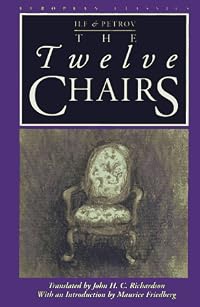


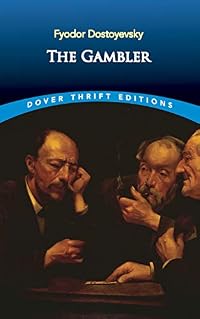
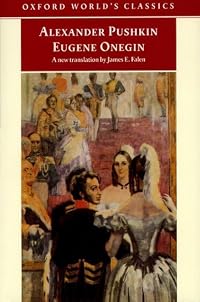


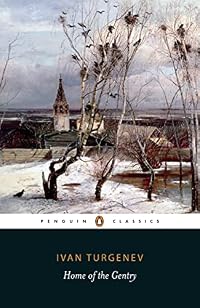












Member Recommendations

alvaropg Para profundizar más en el mundo del cuento.
Member Reviews
Un homenaje a la mediocridad hecha funcionario público, un homenaje a la mediocridad burocrática con ínfulas de superioridad llamada "alguien de puesto superior", un homenaje a la simplicidad de la vida y la diferencia que marca en la vida de un ser minúsculo y pequeño, algo que ni esperaba ni soñaba con tener, entonces de la mano de la genialidad y sentido del humor de Gógol, nuestro pequeño funcionario público toma su revancha hacia quienes se burlaron, se embrutecieron de poder y se aprovecharon de él.
Nada, que es una joya coronada de diamantes y piedras preciosas. Tan pequeño como es este cuento en páginas es enorme en su calidad, en su mensaje y en la perfecta y profunda reflexión de las personas mediocres.
Nada, que es una joya coronada de diamantes y piedras preciosas. Tan pequeño como es este cuento en páginas es enorme en su calidad, en su mensaje y en la perfecta y profunda reflexión de las personas mediocres.
Having read Gogol's short stories before (e.g. Diary of a Madman, The Nose), I felt very familiar with the tone of the first couple pages of The Overcoat. Akaky Akakyevich is a quirky minor official with a funny name, and I was fully prepared to observe all the funny problems that would hound him. Then, as a young clerk was teasing him for being such a quirky man with a funny name, I read this:
I've always felt most sympathetic towards characters that want nothing more than to be left to their own devices. I'm not talking about retired heroes who get called back into action when they just want to go fishing or whatever. I'm talking about losers, guys that aren't cool (I mean unkempt and uninteresting, not nerdy) and have never amounted to anything of any sort of social value but are self-sufficient and happy to forge on alone. Akaky Akakyevich isn't trying to climb the social ladder, start a family, or even interact with his coworkers. He's not asking for anything from anybody, and that's the real tragedy of his downfall.
This isn't Gogol's funniest work, but the juxtaposition of how Gogol views the St. Petersburg that he's created and how Akaky Akakyevich views the same city is amusing in its own way. Gogol makes it clear throughout almost all of his short stories that he cares very little for the "petty trivia," as he called it, of the contemporary Russian social order. The reader gets the sense that the rankings by which Russian society is arranged are arbitrary and useless, that bureaucracy is a hinderance to pretty much anything you'd want to accomplish, and that the letters that Akaky Akakyevich fervidly copies every day are largely superfluous.
But our hero doesn't see it that way. He respects his social superiors to the point where a browbeating at the hands of a "Person of Consequence" irreparably affects his health. He doesn't just value the work that he does; he makes it his entire life. Whether he values the content of the letters or just the simple repetition of the process (my guess is the latter), his whole world is dependent on the preservation of this system.
So can you hold the system responsible for Akaky Akakyevich's ruin? While it certainly isn't blameless, there are plenty of titular counsellors doing meaningless jobs that don't lose their minds over an overcoat.
Akaky Akakyevich is a fragile man whose fragility had yet to be exposed only because of his simple, solitary lifestyle. Like his previous overcoat, the "dressing jacket," he was surviving in a threadbare manner that could only be held together for so long. When he needs a new overcoat, he is able to purchase one, but when he needs a new Akaky Akakyevich, there isn't one available. The new overcoat allows him to display himself, but the loss of that overcoat leaves him exposed, and he is no longer able to patch over his shortcomings.
The Overcoat is great as a standalone work, but its influence is even greater. Dostoevsky said, "[Russian authors] all come out from Gogol's 'Overcoat'," and if you've read much of Russian lit before checking this out, you can feel it in every word. show less
And long afterward, at moments of the greatest gaiety, the figure of the humble little clerk with a bald patch on his head rose before him with his heartrending words: "Leave me alone! Why do you insult me?" and in those heartrending words he heard others: "I am your brother." And the poor young man hid his face in his hands, and many timesshow more
afterwards in his life he shuddered, seeing how much inhumanity there is in man, how much savage brutality lies hidden under refined, cultured politeness, and my God! even in a man whom the world accepts as a gentleman and a man of honor...Yowza. Not quite a story about a guy whose nose jumps off his face.
I've always felt most sympathetic towards characters that want nothing more than to be left to their own devices. I'm not talking about retired heroes who get called back into action when they just want to go fishing or whatever. I'm talking about losers, guys that aren't cool (I mean unkempt and uninteresting, not nerdy) and have never amounted to anything of any sort of social value but are self-sufficient and happy to forge on alone. Akaky Akakyevich isn't trying to climb the social ladder, start a family, or even interact with his coworkers. He's not asking for anything from anybody, and that's the real tragedy of his downfall.
This isn't Gogol's funniest work, but the juxtaposition of how Gogol views the St. Petersburg that he's created and how Akaky Akakyevich views the same city is amusing in its own way. Gogol makes it clear throughout almost all of his short stories that he cares very little for the "petty trivia," as he called it, of the contemporary Russian social order. The reader gets the sense that the rankings by which Russian society is arranged are arbitrary and useless, that bureaucracy is a hinderance to pretty much anything you'd want to accomplish, and that the letters that Akaky Akakyevich fervidly copies every day are largely superfluous.
But our hero doesn't see it that way. He respects his social superiors to the point where a browbeating at the hands of a "Person of Consequence" irreparably affects his health. He doesn't just value the work that he does; he makes it his entire life. Whether he values the content of the letters or just the simple repetition of the process (my guess is the latter), his whole world is dependent on the preservation of this system.
So can you hold the system responsible for Akaky Akakyevich's ruin? While it certainly isn't blameless, there are plenty of titular counsellors doing meaningless jobs that don't lose their minds over an overcoat.
Akaky Akakyevich is a fragile man whose fragility had yet to be exposed only because of his simple, solitary lifestyle. Like his previous overcoat, the "dressing jacket," he was surviving in a threadbare manner that could only be held together for so long. When he needs a new overcoat, he is able to purchase one, but when he needs a new Akaky Akakyevich, there isn't one available. The new overcoat allows him to display himself, but the loss of that overcoat leaves him exposed, and he is no longer able to patch over his shortcomings.
The Overcoat is great as a standalone work, but its influence is even greater. Dostoevsky said, "[Russian authors] all come out from Gogol's 'Overcoat'," and if you've read much of Russian lit before checking this out, you can feel it in every word. show less
9/10
I'm currently (re)reading Crime and Punishment and it came to mind that had I been Dostoyevsky's tutor/editor I might have given him an "F" for plagiarism; for much of C&P ... its sentiments, its morality, its very language has a disturbing parallel to Gogol's overcoat.
One could cut almost entire swathes of ms from Gogol, stick it into D's work, and no one would be the wiser. It has certainly had me rethinking D's greatness, now in juxtaposition. 'Tis an accident that heaven has provided, to be reading these (quite literally) side by side, and feeling the tension and the temperature rise. I wasn't sure, at one point, whether I was reading the overcoat, or deep in an interview with petrovich and raskolnikov.
But, this is not about D show more ... so this little story will have me chasing after Gogol, once my own punishment is at an end with D. show less
I'm currently (re)reading Crime and Punishment and it came to mind that had I been Dostoyevsky's tutor/editor I might have given him an "F" for plagiarism; for much of C&P ... its sentiments, its morality, its very language has a disturbing parallel to Gogol's overcoat.
One could cut almost entire swathes of ms from Gogol, stick it into D's work, and no one would be the wiser. It has certainly had me rethinking D's greatness, now in juxtaposition. 'Tis an accident that heaven has provided, to be reading these (quite literally) side by side, and feeling the tension and the temperature rise. I wasn't sure, at one point, whether I was reading the overcoat, or deep in an interview with petrovich and raskolnikov.
But, this is not about D show more ... so this little story will have me chasing after Gogol, once my own punishment is at an end with D. show less
There must be a Russian mindset that I cannot quite plumb. I read this as a prelude to Dead Souls. It's a delightfully satirical short story (I'm reminded of Charles Dickens) but frankly Gogol lost me when Akaky Akakiyevich became a ghost . Yet that odd end to the story must be key to understanding its place in Russian admiration.
I hope I don’t sound too pretentious saying it, but this is quite a droll little story. A lot of fun to read.
Gogol is a master of the short story and "The Overcoat" is widely seen to be one his masterpieces. There is a merger of humor and humanity. It's pre-Modernist so the moralistic ending with the bad guys getting their due, but Gogol makes an unsympathetic weakling character into someone of importance because of his humanity - radical in an age of serfs and princes. Some things are lost in translation, it helped me to read the "Interpretation" section first at Wikipedia which explained the significance of the name Akaky Akakievich. It would be hard to image a better narration then the performance by Bob Neufeld at Librivox.
I first read this about a hundred years ago. Someone gave a smart little leather bound copy and yesterday was an opportunity to place it in my jacket. I enjoyed such while my wife was inside at a hair appointment.
The story regards the plight of a clerk, an Everyman, a copyist by trade and largely oblivious to the world around him. He has no grasp of social mechanics and lives modestly without vice or hobby. It is to his horror that he discovers that his overcoat is disintegrating. He goes to a tailor, who is himself an amazing literary construction. Our clerk must economize and saves for a new coat. Upon completion it is a sartorial marvel and suddenly our Everyman has an unexpected status from his peers, but not the skills to navigate show more such. He attends a party and loses himself in champagne. What follows is simple street crime. Gogol then displays the absence of recourse or justice in the contemporary bureaucracy. Matters go a bit supernatural and the reader can only marvel at the deft skill displayed. show less
The story regards the plight of a clerk, an Everyman, a copyist by trade and largely oblivious to the world around him. He has no grasp of social mechanics and lives modestly without vice or hobby. It is to his horror that he discovers that his overcoat is disintegrating. He goes to a tailor, who is himself an amazing literary construction. Our clerk must economize and saves for a new coat. Upon completion it is a sartorial marvel and suddenly our Everyman has an unexpected status from his peers, but not the skills to navigate show more such. He attends a party and loses himself in champagne. What follows is simple street crime. Gogol then displays the absence of recourse or justice in the contemporary bureaucracy. Matters go a bit supernatural and the reader can only marvel at the deft skill displayed. show less
Members
- Recently Added By
Lists

Favourite 19th century fiction
257 works; 60 members

Favourite Books
1,817 works; 316 members

19th Century
190 works; 16 members

Books set in Saint Petersburg
16 works; 1 member

Bureaucracies
25 works; 2 members

Books Read in 2017
4,249 works; 130 members

Favourite Short Stories
153 works; 9 members

Recommended Literary Books
111 works; 1 member

Books Read in 2024
4,623 works; 126 members

Recommended Reading : 600 Classics Reviewed, Editors of Salem Press, 2015
634 works; 6 members

Ghost Stories That Thrill Us
256 works; 114 members
Author Information

581+ Works 28,827 Members
Nikolai Vasilevich Gogol was born in 1809 in the Ukraine. His father was an amateur playwright who had a small estate with a number of serfs. From the ages of 12 to 19, young Gogol attended a boarding school where he became known for his sharp wit and ability to amuse his classmates. After school he worked as a government clerk. He soon began show more writing memories of his childhood. His quaint depictions of the Ukrainian countryside marked his style and helped to make him famous. Gogol quickly gained fame and formed a friendship with the influential poet, Aleksandr Pushkin. Gogol is largely remembered for his realistic characterizations, his rich imagination, and his humorous style. His works include Mirgorod, a collection of short stories including Taras Bulba. Gogol's wit is evident in his short story, The Nose, where a man's nose wanders off around town in a carriage. Gogol's masterpiece is the novel Dead Souls. In this work, a swindler plots to buy from landowners their dead serfs. Towards the end of Gogol's life, his creative powers faded and he fled to Moscow. Here, he came under the power of a fanatical priest. Ten days before his death he burned some manuscripts of the second part of Dead Souls. He died of starvation in 1852, on the cusp of madness. (Bowker Author Biography) show less
Some Editions
Awards and Honors
Series
Belongs to Publisher Series
Work Relationships
Is contained in
Der Mantel und andere Erzählungen (u.a. Taras Bulba), Übers. v. Ruth Fritze-Hanschmann, Illustr. v. András Karakas by Nikolaj V. Gogol'
The Overcoat, The Nose, Nevsky Prospect, Carriage, The Portrait, Diary of a Madman, Rome (Russian language) (Russian Edition) by Nikolai Vasilevich Gogol
Has as a study
Has as a student's study guide
Common Knowledge
- Canonical title*
- Der Mantel [Erzählung]
- Original title
- Шинель; Shinel’
- Alternate titles*
- Päällysviitta
- Original publication date
- 1842
- People/Characters
- Akakiy Akakievitch; Grigory Petrovitch
- First words
- In the department . . . but perhaps it is just as well not to say in which department.
- Quotations
- Nowadays every private individual takes a personal insult to be an insult against society at large. (Merlin Press, 1961, 1956, trans. by David Magarshack, p. 5)
A kind of unseen power made him keep away from his colleagues whom at first he had taken for decent, well-bred men. And for long afterwards, in his happiest moments, he would see the shortish Civil Servant with the blad pat... (show all)ch on his head, uttering those pathetic words, :Leave me along! Why do you pester me?" And in those pathetic words he seemed to hear others: "I am your brother." (Merlin Press, 1961, 1956, trans. by David Magarshack, p. 9) - Last words
- (Click to show. Warning: May contain spoilers.)But the apparition was much too tall, wore huge moustaches, and, directing its steps apparently towards the Obukhoff bridge, disappeared in the darkness of the night.
- Publisher's editor*
- Kluge, Manfred
- Original language
- Russian
*Some information comes from Common Knowledge in other languages. Click "Edit" for more information.
Classifications
- Genres
- General Fiction, Fiction and Literature
- DDC/MDS
- 813 — Literature & rhetoric American literature in English American fiction in English
- LCC
- PG3332 .S5 — Language and Literature Slavic languages and literatures. Baltic languages. Albanian language Slavic. Baltic. Albanian Russian literature Individual authors and works 1800-1870 Gogol'
- BISAC
Statistics
- Members
- 1,024
- Popularity
- 25,151
- Reviews
- 35
- Rating
- (4.07)
- Languages
- 20 — Amharic, Arabic, Catalan, Chinese, Danish, Dutch, English, Esperanto, Finnish, French, German, Hungarian, Italian, Multiple languages, Norwegian (Bokmål), Portuguese, Russian, Spanish, Swedish, Turkish
- Media
- Paper, Audiobook, Ebook
- ISBNs
- 104
- ASINs
- 34