On This Page
Description
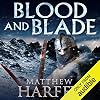
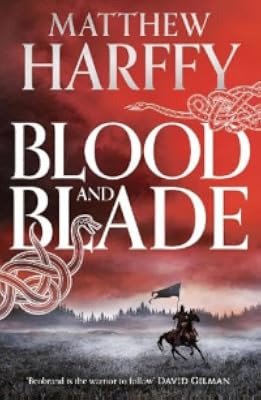
AD 635. Anglo-Saxon Britain. King Oswald must leave his wedding party to combat a Pictish uprising. He leaves Beobrand to escort his new queen to their new home, a journey fraught with danger. The third instalment in The Bernicia Chronicles. Oswald is now King of Northumbria. However, his plans for further alliances and conquests are quickly thrown into disarray when his wedding to a princess of Wessex is interrupted by news of a Pictish uprising. Rushing north, Oswald leaves Beobrand to show more escort the young queen to her new home. Their path is fraught with danger and uncertainty, Beobrand must try to unravel secrets and lies if they are to survive. Meanwhile, old enemies are closing in, seeking brutal revenge. Beobrand will give his blood and blade in service to his king, but will that be enough to avert disaster and save his kith and kin from the evil forces that surround them? show lessTags
Recommendations












Member Reviews
This is the third in the author's series of novels set in 7th century England featuring Beobrand, a Kentish thane who is in service of King Oswald of Northumbria. As a break from fighting Picts, the main plot centres around Beobrand accompanying his master down south so the latter can form an alliance with King Cynegils of Wessex by marrying his beautiful daughter Cyneburg. However, escorting her separately to her new home, Beobrand loses her when she is captured by a band of Mercians. Of course he eventually tracks her down. The overall story arc of war against the Picts resumes though in a final battle to capture their stronghold in what is now Edinburgh, mirrored by Beobrand's personal war against the Nathair family. As I have show more remarked before, while covering very similar ground to Bernard Cornwell's Uhtred series, albeit set 300 years earlier, I think Harffy's characters are more rounded and interesting than Cornwell's. show less
‘Blood and Blade’ features a blend of quality battles, tense encounters, and some decent drama.
I liked it in the most part, but as with many historical novels, the author puts so much effort in getting the history elements correct that essential creative writing skills are neglected. Main problem being too much ‘telling’ and not enough ‘showing’. Don’t tell the reader that Beobrand ‘seemed mollified’ – show *how* he seemed with action, or body language, or a facial expression.
Adverb overuse is another evil, and the biggest problem with adverbs is that they ‘tell’. For example, when a male character ‘made his way quietly”, this tells us how the character got from A to B but we don’t see it. He ‘crept’, show more for example, not only ‘shows’ the action, it flows better because it’s more concise.
The adverb in ‘shifted uncomfortably’ isn’t necessary, as ‘shifted’ alone implies the discomfort.
Adverbs are at their most superfluous with this kind of thing: ‘more quickly’ and ‘more tightly’, whereas ‘quicker’ and ‘tighter’ convey the meaning with a concise verb.
Adverbs and ‘telling’ are blatant in instances like these: ‘walked purposefully’, which could be ‘shown’ with ‘strode’ or ‘marched’, and ‘He stepped quickly forward’, when ‘He darted’ would’ve ‘shown’ the action. There’s always a stronger verb than ‘walked’, all of which do not require any help from adverbs.
To tell the reader that ‘The man was clearly distressed’ is ‘telling’ at its worst. In fiction, if you use ‘clearly’ or ‘obviously’, be assured that you’re not ‘showing’ the reader anything.
Two style issues that irritated me are the overuse of ‘then’ (to state what happens next), and ‘had’ (past perfect).
To keep using ‘then’ is lazy and unimaginative. It’s fine in children’s books, but for gritty historical fiction I expect more imagination. Most can be cut, the rest replaced.
The frequent use of ‘had’ in the past perfect tense is something all authors should avoid, as it reports on the scene as opposed to taking the reader into the action as it unfolds. The odd one is inevitable, but in this book it’s consistent, even though it’s easy to cut them down.
For one thing, this narrative is in the past tense, so ‘had’ should only be used if a sentence sounds odd without it. For example, ‘He had said’ works fine as ‘he said’ because ‘said’ is in the past tense. ‘She had sat down’ works better as ‘She sat down’ because ‘sat’ is past tense. If a scene that’s past is being recalled, all that’s needed is to inform the reader that these events have already happened, after which the frequent use of ‘had’ is unnecessary.
In this novel, we get the likes of ‘had begun’ and ‘had run’, which annoys and baffles me when ‘began’ and ‘ran’ are available.
On the plus side, this author uses some excellent similes. I was impressed with his creativity in this department. Also, he recreates the period well, making me feel like I’m in the seventh century.
Despite the criticisms, I liked this novel well enough to read the next in the series. show less
I liked it in the most part, but as with many historical novels, the author puts so much effort in getting the history elements correct that essential creative writing skills are neglected. Main problem being too much ‘telling’ and not enough ‘showing’. Don’t tell the reader that Beobrand ‘seemed mollified’ – show *how* he seemed with action, or body language, or a facial expression.
Adverb overuse is another evil, and the biggest problem with adverbs is that they ‘tell’. For example, when a male character ‘made his way quietly”, this tells us how the character got from A to B but we don’t see it. He ‘crept’, show more for example, not only ‘shows’ the action, it flows better because it’s more concise.
The adverb in ‘shifted uncomfortably’ isn’t necessary, as ‘shifted’ alone implies the discomfort.
Adverbs are at their most superfluous with this kind of thing: ‘more quickly’ and ‘more tightly’, whereas ‘quicker’ and ‘tighter’ convey the meaning with a concise verb.
Adverbs and ‘telling’ are blatant in instances like these: ‘walked purposefully’, which could be ‘shown’ with ‘strode’ or ‘marched’, and ‘He stepped quickly forward’, when ‘He darted’ would’ve ‘shown’ the action. There’s always a stronger verb than ‘walked’, all of which do not require any help from adverbs.
To tell the reader that ‘The man was clearly distressed’ is ‘telling’ at its worst. In fiction, if you use ‘clearly’ or ‘obviously’, be assured that you’re not ‘showing’ the reader anything.
Two style issues that irritated me are the overuse of ‘then’ (to state what happens next), and ‘had’ (past perfect).
To keep using ‘then’ is lazy and unimaginative. It’s fine in children’s books, but for gritty historical fiction I expect more imagination. Most can be cut, the rest replaced.
The frequent use of ‘had’ in the past perfect tense is something all authors should avoid, as it reports on the scene as opposed to taking the reader into the action as it unfolds. The odd one is inevitable, but in this book it’s consistent, even though it’s easy to cut them down.
For one thing, this narrative is in the past tense, so ‘had’ should only be used if a sentence sounds odd without it. For example, ‘He had said’ works fine as ‘he said’ because ‘said’ is in the past tense. ‘She had sat down’ works better as ‘She sat down’ because ‘sat’ is past tense. If a scene that’s past is being recalled, all that’s needed is to inform the reader that these events have already happened, after which the frequent use of ‘had’ is unnecessary.
In this novel, we get the likes of ‘had begun’ and ‘had run’, which annoys and baffles me when ‘began’ and ‘ran’ are available.
On the plus side, this author uses some excellent similes. I was impressed with his creativity in this department. Also, he recreates the period well, making me feel like I’m in the seventh century.
Despite the criticisms, I liked this novel well enough to read the next in the series. show less
I arrived at this one rather late - two volumes too late, and as such did not really connect with the characters which is a shame as this period in English history usually sparks my interest
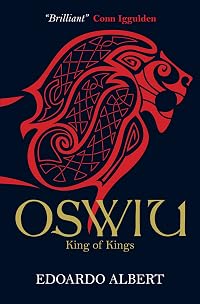
The novel is set in the time of the turmoil in the Kingdom of Northumbria in the AD7th century - a similar period covered by Edoardo Albert in his trilogy (which I read a roughly the same time - and have the opportunity to read again).
I gave this two (and a half) stars as the writing and plot kept me captivated, and I guess had I read the books in sequence, a higher star rating would have ensued. That doesn't mean that I wont return to these in sequential order (so a second review could be in the future).
The novel is set in the time of the turmoil in the Kingdom of Northumbria in the AD7th century - a similar period covered by Edoardo Albert in his trilogy (which I read a roughly the same time - and have the opportunity to read again).
I gave this two (and a half) stars as the writing and plot kept me captivated, and I guess had I read the books in sequence, a higher star rating would have ensued. That doesn't mean that I wont return to these in sequential order (so a second review could be in the future).
Yet another great installment of Beobrand's life
Mather Harffy has a talent not many have. He doesn't just write books, he grabs you and pulls you into his telling of a great great story. A
Mather Harffy has a talent not many have. He doesn't just write books, he grabs you and pulls you into his telling of a great great story. A
Ratings
Members
- Recently Added By
Lists

Library Historical Fiction
163 works; 1 member
Author Information

21 Works 486 Members
Series

Work Relationships
Is contained in
Common Knowledge
- Canonical title
- Blood and Blade
Classifications
Statistics
- Members
- 39
- Popularity
- 748,548
- Reviews
- 4
- Rating
- (4.18)
- Languages
- English
- Media
- Paper, Audiobook, Ebook
- ISBNs
- 5
- ASINs
- 2