
Angus Donald
Author of Outlaw
About the Author
Series
Works by Angus Donald
Tagged
Common Knowledge
- Legal name
- Donald, Angus
- Other names
- Macallan, Angus
- Birthdate
- 1965
- Gender
- male
- Education
- Marlborough College
University of Edinburgh - Occupations
- fruit-picker
waiter
anthropologist
journalist - Agent
- Ian Drury
- Short biography
- Angus Donald was born in China in 1965 and educated at Marlborough College and Edinburgh University.
He has worked as a fruit-picker in Greece, a waiter in New York and as an anthropologist studying magic and witchcraft in Indonesia.
For the past 15 years, he has been a journalist in Hong Kong, India, Afghanistan and London. - Nationality
- England
UK - Birthplace
- China
- Places of residence
- Greece
New York, New York, USA
Indonesia
Edinburgh, Scotland, UK
Members
Reviews
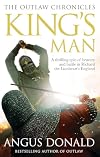
This is book three of Angus Donald's re-boot of the Robin Hood legend. The year is now 1192, and the good news is, that after taking part in the battles of the Crusades in the Holy Land, Alan Dale and Robin Hood have returned to Merrie Olde England. The bad news is, that their King, Richard the Lionheart, whilst also making his way back home, has been captured by his enemies in Europe and is being held for ransom in a castle in Austria. And back in what is turning out to be a not quite as show more Merrie England as the one they departed from, Alan and Robin discover that Richard's brother, Prince John, has been busy making plans, capturing land and castles and generally making a nuisance of himself planning to be King in Richard's absence. An absence he is intent on prolonging by any and all means possible; assasination, bribery, treason...and that's just for starters.
And the good news for me is, I have to admit; it feels good to have Robin and Alan back where they belong, in England and rampaging through the forests of Sherwood. See, even Alan knows it is good for Robin as well:
"Sherwood was, as it had been for many years, the home of his heart, his spiritual sanctuary, his woodland fortress. He would be quite safe there."
So, isn't he back where his legend belongs, physically and spiritually?
In fact the whole of 'King's Man' feels more of a certain and convincing story for being back in ye goode olde greene and pleasant land (be interesting to see how 'Warlord', the fourth installment, develops the story, as I understand that one to take Robin and Alan over to France). It is a thoroughly convincing tale of 12th Century life, love and death. An emotional rollercoaster ride encompassing desperate battles, last-minute escapes - from of course, seemingly impossible situations - bursting with thrills, surprises, nerve-shredding close combat, huge surprises and fist-pumping "that'll learn ya!" satisfying comeuppances. Phew!
And Robin Hood.
It is worth remembering that while Robin Hood grabs the headlines in reviews and the story does revolve around him, this is actually the tale of Alan Dale. Robin has been, as perhaps befits someone more legend than man, something of a supernatural figure moving in and out the background during much of the story so far. However, in 'King's Man', I feel he steps much more onto the centre stage of the story. There is for me, much more of a feeling of Robin steering events, not events steering him. He is still a harsh, non-PC Robin, but also a more rounded, even likeable character. Even with those silver eyes.
Alan Dale narrates the story, but to be honest, it hasn't always been easy to keep liking him. He can be a rather annoying and cautious worrier, always blaming himself for when heavens conspire and things don't go to plan. For instance, when Robin's brother refuses to do his part in relieving a siege of Robin's castle, Alan wonders if he is actually responsible, for not asking more politely.
But then Alan is more a man of his time than Robin is. Alan's inner doubts and tribulations surely mirror the prevailing zeitgeist. Where religious fervour played up self-doubt, tolerated no contradictions and baseless suspicion chased its own tail. As happens here, fiction was turned to 'fact' because no one dare deny it and so proved itself true in the minds of those looking for that proof. It is a similar environment to that of the time in which Giles Kristian's 'The Bleeding Land' is set, just some 400 years earlier. With ordinary people struggling to come out from under the suffocating blanket of religious fervor and blind doctrine. And their lords and self appointed masters seeking by all means possible to keep them in check with threats of eternal damnation, excommunication - and worse! The ordinary person up to his or her knees in mud in the fields, spoke (what became) English. The ruling classes - Richard himself of course - spoke French. The Church rituals were deliberately all in Latin, so the ordinary person had no idea what was going on, and churchmen could be the only means of getting closer to God's will and the only outlet for His displeasure. Sweet.
Luckily for us, Robin has no time for all that petty-minded religious nonsense and goes his own way. And it is that what has surely endeared him to people through the ages.
"He had that wonderous ability, did Robin, of commanding love in the people around him, no matter what he did." As Alan notes.
But then again, Robin can be as manipulative as the church in using Christianity and other people's beliefs, against them, and for his own purposes:
"I was privately amused that my master, a man who I knew did not have the slightest allegiance to the Pope in Rome, or any high Christian churchman for that matter, should use this law as a justification, I assumed, for executing these men."
Then, when the Templars send him notice that they expect him to appear before a Kangeroo court to answer trumped-up charges concerning his lack of faith, wouldn't we all, in such a position, have loved to have told the messenger to go away and bid him;
"That he ask the huskier novices to refrain from buggering him for a few moments to allow him time to shove this inquisition up his fundament."
Go Robin! Go Robin! Go Robin!
But then, the title, 'King's Man'...hmm...interesting. Which King, which man? Having previously sworn allegiance to King Richard, there's no doubt Alan is King Richard's man. So is Robin. And Robin is actually working to a secret agenda agreed with Richard in the Holy Land. Then there's Prince John, a man who would be King in Richard's absence. Alan also manages to pledge allegiance to John at one point in the story, becoming the would-be King's man. However, in my mind, there is no doubt who the real King of this story is, was and always will always be: Robin Hood. And Alan is his man. Like it or not.
And Alan professes not to like it on many an occasion. Giving rise to the point in the book where I realised I had really warmed to the inner turmoil in the character of Alan Dale. When Alan professes disgust at becoming the man he cannot help loving.
"What was I turning into? Would I become like my master, the most cold-hearted, ruthless killer I had ever encountered? I shivered, though the day was quite warm."
As i said earlier (if you're still with me), Alan is of course recounting his story of his life in the company of the legend Robin Hood, many years after the events took place. The concept of the novels, of a character writing his memories down long after the events occurred, is not a new one. But here, especially at the end of this novel, is one of the most poignant passages I have read anywhere in a long time. After doubts over the intentions of his family have risen, an older, wiser, wistful Alan emerges and (I hope Angus won't mind me quoting him at length) describes the feelings he has about how it is to be looking back over his life and the time he spent with Robin. I'm going to have to admit to have been truly moved when Alan says:
"I remember my glorious past so clearly, and my head is there for most of the day while I write. And where better to spend my last few years on this earth than with my younger, stronger self - with that young man so full of light and love and hope? The indignities of age come to all men who live long enough - but not all men can say that they had the friendship of kings and outlaws and heroes in their prime; that they walked proud and tall, without fear - before the weight and care of years bowed their backs. But I can. I can say, I can swear before God, that I have played my part on the world's stage. And played it to the fullest...And I was a warrior, once, a knight of England."
Simple, dignified, wonderful piece. It reminded me of the heart-breaking scene at the end of 'Shakespeare In Love', where Shakespeare promises Viola; "You will never age for me, nor fade, nor die", because they must go their separate ways and know they will never meet again. She will be forever as he sees her now, forever in his memories.
Jus as Alan sees his Robin, forever young, forever in his Sherwood sanctuary and forever safe in the glow of Alan's memories: "A savage warrior, a lawless thief, a Church-condemned heretic and, may Almighty God forgive me, for many years, my good and true friend."
So, what's not to like?
(This is really a 4.5 book. A 4 for the most, with an extra half for that last section alone. I don't want to give 5 stars, as I want him to try and beat this next time out. Won't be easy, but my philosophy has always been; if you think you can't do better - give up and move on. And I hope Angus stays with Robin Hood for many years to come. 'Cause I'll be staying as well). show less
And the good news for me is, I have to admit; it feels good to have Robin and Alan back where they belong, in England and rampaging through the forests of Sherwood. See, even Alan knows it is good for Robin as well:
"Sherwood was, as it had been for many years, the home of his heart, his spiritual sanctuary, his woodland fortress. He would be quite safe there."
So, isn't he back where his legend belongs, physically and spiritually?
In fact the whole of 'King's Man' feels more of a certain and convincing story for being back in ye goode olde greene and pleasant land (be interesting to see how 'Warlord', the fourth installment, develops the story, as I understand that one to take Robin and Alan over to France). It is a thoroughly convincing tale of 12th Century life, love and death. An emotional rollercoaster ride encompassing desperate battles, last-minute escapes - from of course, seemingly impossible situations - bursting with thrills, surprises, nerve-shredding close combat, huge surprises and fist-pumping "that'll learn ya!" satisfying comeuppances. Phew!
And Robin Hood.
It is worth remembering that while Robin Hood grabs the headlines in reviews and the story does revolve around him, this is actually the tale of Alan Dale. Robin has been, as perhaps befits someone more legend than man, something of a supernatural figure moving in and out the background during much of the story so far. However, in 'King's Man', I feel he steps much more onto the centre stage of the story. There is for me, much more of a feeling of Robin steering events, not events steering him. He is still a harsh, non-PC Robin, but also a more rounded, even likeable character. Even with those silver eyes.
Alan Dale narrates the story, but to be honest, it hasn't always been easy to keep liking him. He can be a rather annoying and cautious worrier, always blaming himself for when heavens conspire and things don't go to plan. For instance, when Robin's brother refuses to do his part in relieving a siege of Robin's castle, Alan wonders if he is actually responsible, for not asking more politely.
But then Alan is more a man of his time than Robin is. Alan's inner doubts and tribulations surely mirror the prevailing zeitgeist. Where religious fervour played up self-doubt, tolerated no contradictions and baseless suspicion chased its own tail. As happens here, fiction was turned to 'fact' because no one dare deny it and so proved itself true in the minds of those looking for that proof. It is a similar environment to that of the time in which Giles Kristian's 'The Bleeding Land' is set, just some 400 years earlier. With ordinary people struggling to come out from under the suffocating blanket of religious fervor and blind doctrine. And their lords and self appointed masters seeking by all means possible to keep them in check with threats of eternal damnation, excommunication - and worse! The ordinary person up to his or her knees in mud in the fields, spoke (what became) English. The ruling classes - Richard himself of course - spoke French. The Church rituals were deliberately all in Latin, so the ordinary person had no idea what was going on, and churchmen could be the only means of getting closer to God's will and the only outlet for His displeasure. Sweet.
Luckily for us, Robin has no time for all that petty-minded religious nonsense and goes his own way. And it is that what has surely endeared him to people through the ages.
"He had that wonderous ability, did Robin, of commanding love in the people around him, no matter what he did." As Alan notes.
But then again, Robin can be as manipulative as the church in using Christianity and other people's beliefs, against them, and for his own purposes:
"I was privately amused that my master, a man who I knew did not have the slightest allegiance to the Pope in Rome, or any high Christian churchman for that matter, should use this law as a justification, I assumed, for executing these men."
Then, when the Templars send him notice that they expect him to appear before a Kangeroo court to answer trumped-up charges concerning his lack of faith, wouldn't we all, in such a position, have loved to have told the messenger to go away and bid him;
"That he ask the huskier novices to refrain from buggering him for a few moments to allow him time to shove this inquisition up his fundament."
Go Robin! Go Robin! Go Robin!
But then, the title, 'King's Man'...hmm...interesting. Which King, which man? Having previously sworn allegiance to King Richard, there's no doubt Alan is King Richard's man. So is Robin. And Robin is actually working to a secret agenda agreed with Richard in the Holy Land. Then there's Prince John, a man who would be King in Richard's absence. Alan also manages to pledge allegiance to John at one point in the story, becoming the would-be King's man. However, in my mind, there is no doubt who the real King of this story is, was and always will always be: Robin Hood. And Alan is his man. Like it or not.
And Alan professes not to like it on many an occasion. Giving rise to the point in the book where I realised I had really warmed to the inner turmoil in the character of Alan Dale. When Alan professes disgust at becoming the man he cannot help loving.
"What was I turning into? Would I become like my master, the most cold-hearted, ruthless killer I had ever encountered? I shivered, though the day was quite warm."
As i said earlier (if you're still with me), Alan is of course recounting his story of his life in the company of the legend Robin Hood, many years after the events took place. The concept of the novels, of a character writing his memories down long after the events occurred, is not a new one. But here, especially at the end of this novel, is one of the most poignant passages I have read anywhere in a long time. After doubts over the intentions of his family have risen, an older, wiser, wistful Alan emerges and (I hope Angus won't mind me quoting him at length) describes the feelings he has about how it is to be looking back over his life and the time he spent with Robin. I'm going to have to admit to have been truly moved when Alan says:
"I remember my glorious past so clearly, and my head is there for most of the day while I write. And where better to spend my last few years on this earth than with my younger, stronger self - with that young man so full of light and love and hope? The indignities of age come to all men who live long enough - but not all men can say that they had the friendship of kings and outlaws and heroes in their prime; that they walked proud and tall, without fear - before the weight and care of years bowed their backs. But I can. I can say, I can swear before God, that I have played my part on the world's stage. And played it to the fullest...And I was a warrior, once, a knight of England."
Simple, dignified, wonderful piece. It reminded me of the heart-breaking scene at the end of 'Shakespeare In Love', where Shakespeare promises Viola; "You will never age for me, nor fade, nor die", because they must go their separate ways and know they will never meet again. She will be forever as he sees her now, forever in his memories.
Jus as Alan sees his Robin, forever young, forever in his Sherwood sanctuary and forever safe in the glow of Alan's memories: "A savage warrior, a lawless thief, a Church-condemned heretic and, may Almighty God forgive me, for many years, my good and true friend."
So, what's not to like?
(This is really a 4.5 book. A 4 for the most, with an extra half for that last section alone. I don't want to give 5 stars, as I want him to try and beat this next time out. Won't be easy, but my philosophy has always been; if you think you can't do better - give up and move on. And I hope Angus stays with Robin Hood for many years to come. 'Cause I'll be staying as well). show less
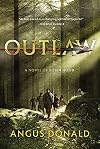
Angus Donald's historical fiction "Outlaw" is an exciting middle-age tale set in the forests of England. Knights in gleaming armor battle on horseback, while beautiful ladies await the return of their loves in a countryside of castles and manors.
At the center of the story sits the legendary Robin Hood. But Donald's Hood is not the singing cartoon Hood of Disney, nor the 90's Robin of Kevin Costner. This Robin Hood has gone hardcore and there's more than a little bit of Godfather in him. Oh, show more he still lives in Sherwood and takes from the rich and gives to the poor, but he does so with a much bloodier dose of fear.
This Robin Hood also has a solid understanding of the fundamentals of public relations and propaganda. It's known wide and far that if you cross Robin once you're part of his merry band, you can expect a very bloody and tortuous end.
Though "General" Hood sits as the centerpiece of this tights & bows adventure, the real star is Alan Dale who narrates the story as an old man - a grandfather - pondering and reflecting on his life as an Outlaw.
Alan's voice is written earnestly and with heart. You ache and relate to his misplaced feelings of love for Robin's betrothed Marie-Anne. You feel a real sense of intimacy with the character as his tale is spun first person throughout. Dale is the strongest character is the book, as Donald seems to have favored action sequences over more involved secondary character development.
Religious themes are significant in Donald's world of 12-century England. Conflict persists between the regal and noble Christianity and the earthy and tribal religions of Robin's followers. Robin himself straddles both theological worlds and only commits himself to one or the other as circumstances see fit. This ecumenical tug of war is a cause of great internal strain for the young Dale as he tussles with his heart, morals, and growing admiration for Robin. Robin understands the politics of religion and also uses Catholic disillusionment to rally country-folk to his side. Likewise, he’s happy to play the role of the good Catholic when needing the support and backing of the English aristocracy.
Donald’s Robin Hood his guilty of some stilted and corny dialogue, but the action sequences are bloody and fresh, and keep the story rolling at a rapid pace. Donald’s world is very boldly drawn, and the violence is vivid and tense. I wouldn’t recommend this story for the feint of heart.
This is a strong entrant into the world of action historical fiction…in a similar vein to Conn Iggulden’s “Genghis” series, and stronger than Iggulden’s “Emperor” novels. It’s great escapist reading, and while I won’t line up to read the sequel the day it comes out, I’m definitely looking forward to reading more.
[I received a free copy of "Outlaw" from LibraryThing's Early Reviewers program] show less
At the center of the story sits the legendary Robin Hood. But Donald's Hood is not the singing cartoon Hood of Disney, nor the 90's Robin of Kevin Costner. This Robin Hood has gone hardcore and there's more than a little bit of Godfather in him. Oh, show more he still lives in Sherwood and takes from the rich and gives to the poor, but he does so with a much bloodier dose of fear.
This Robin Hood also has a solid understanding of the fundamentals of public relations and propaganda. It's known wide and far that if you cross Robin once you're part of his merry band, you can expect a very bloody and tortuous end.
Though "General" Hood sits as the centerpiece of this tights & bows adventure, the real star is Alan Dale who narrates the story as an old man - a grandfather - pondering and reflecting on his life as an Outlaw.
Alan's voice is written earnestly and with heart. You ache and relate to his misplaced feelings of love for Robin's betrothed Marie-Anne. You feel a real sense of intimacy with the character as his tale is spun first person throughout. Dale is the strongest character is the book, as Donald seems to have favored action sequences over more involved secondary character development.
Religious themes are significant in Donald's world of 12-century England. Conflict persists between the regal and noble Christianity and the earthy and tribal religions of Robin's followers. Robin himself straddles both theological worlds and only commits himself to one or the other as circumstances see fit. This ecumenical tug of war is a cause of great internal strain for the young Dale as he tussles with his heart, morals, and growing admiration for Robin. Robin understands the politics of religion and also uses Catholic disillusionment to rally country-folk to his side. Likewise, he’s happy to play the role of the good Catholic when needing the support and backing of the English aristocracy.
Donald’s Robin Hood his guilty of some stilted and corny dialogue, but the action sequences are bloody and fresh, and keep the story rolling at a rapid pace. Donald’s world is very boldly drawn, and the violence is vivid and tense. I wouldn’t recommend this story for the feint of heart.
This is a strong entrant into the world of action historical fiction…in a similar vein to Conn Iggulden’s “Genghis” series, and stronger than Iggulden’s “Emperor” novels. It’s great escapist reading, and while I won’t line up to read the sequel the day it comes out, I’m definitely looking forward to reading more.
[I received a free copy of "Outlaw" from LibraryThing's Early Reviewers program] show less
 This review was written for LibraryThing Early Reviewers.
Angus Donald's Outlaw, the first novel in a series about Robin Hood, is quite unlike any novel I've read featuring one of histories most enduring legends. Dark, gritty and violent are not words that usually come to mind when one thinks of the Robin Hood legend but, in the Sherwood Forest of Outlaw, each of these words provides an apt description of Robin Hood himself, as well as of the world in which he lived and thrived. While many of the characters familiar to fans of the legend are show more featured in this novel - it is narrated by Alan Dale - they are definitely not the band of merry men usually associated with the legend. Robin Hood himself is characterized as a ruthless man, one who cares very little about justice or giving back to the poor. Instead, this Robin is more intent on exacting revenge - often in a violent fashion - on those he perceives to have done him and his band of fellow outlaws harm. While I found the Robin Hood of Outlaw difficult to like and even harder to respect, the traits given to him by Donald make it easy to understand why he was leader of the Sherwood outlaws.
Overall, I enjoyed this novel. While I found certain scenes a little too violent for my tastes, they did serve to give the book a more authentic feel. The late 12th century was not an easy time for idealists, life was tough for those less fortunate and the penalties for breaking the King's law were harsh, especially when applied by ruthless, self-serving men such as the Sheriff of Nottinghamshire. I would expect any man who wished to survive life as an outlaw would need to be a cutthroat to do so, caring little for gallantry or chivalry when his, and perhaps his family's, life was on the line. As Outlaw clearly conveys, life could be extremely violent in the 12th century for those living outside of the law. My main criticism of the novel concerns the relationship between Robin and Marie-Anne of Locksley, which I thought was poorly developed and hard to accept given Robin's personality. It was difficult for me to believe that a noblewoman of Marie-Anne's stature would fall in love with a man as ruthless as Robin. It is my hope that Donald introduces the reader to a more human side of Robin in the next installment of the series.
I recommend this book to historical fiction fans, although I do so with a word of caution. This novel is at times violent. Readers who are bothered by violence might be better off staying away from this book. show less
Overall, I enjoyed this novel. While I found certain scenes a little too violent for my tastes, they did serve to give the book a more authentic feel. The late 12th century was not an easy time for idealists, life was tough for those less fortunate and the penalties for breaking the King's law were harsh, especially when applied by ruthless, self-serving men such as the Sheriff of Nottinghamshire. I would expect any man who wished to survive life as an outlaw would need to be a cutthroat to do so, caring little for gallantry or chivalry when his, and perhaps his family's, life was on the line. As Outlaw clearly conveys, life could be extremely violent in the 12th century for those living outside of the law. My main criticism of the novel concerns the relationship between Robin and Marie-Anne of Locksley, which I thought was poorly developed and hard to accept given Robin's personality. It was difficult for me to believe that a noblewoman of Marie-Anne's stature would fall in love with a man as ruthless as Robin. It is my hope that Donald introduces the reader to a more human side of Robin in the next installment of the series.
I recommend this book to historical fiction fans, although I do so with a word of caution. This novel is at times violent. Readers who are bothered by violence might be better off staying away from this book. show less
I loved reading about Robin Hood when growing up, and didn't hesitate when I saw OUTLAW: A NOVEL OF ROBIN HOOD available.
This book is narrated by Alan Dale, now in his sixties, who tells his story after joining the outlaws in Sherwood Forest. At twelve years old, Alan is caught while stealing a pie. His punishment, dictated by the Sheriff of Nottingham, would most likely result in the loss of his hand, at a minimum. He escapes and comes upon the outlaws living with Robin Hood.
Alan is a young show more minstrel and learned from his father; Robin knew of him and immediately took Alan under his wing. The story shows Adam coming of age and learning to fight and win. There are grievous battles, unmerciful killings, and tortures that take place with descriptions not suited for young people. It was a way of life during the twelfth century.
Robin is also shown as a ruthless outlaw who robs from the rich and takes care of the poor and local villagers - at a price. He practices paganism and ensures that villagers are afraid of him; this allows his band of outlaws to remain safe in the forest.
I thoroughly enjoyed reading this story, which combined legend and historical fiction. I was engaged from beginning to end and look forward to reading the next book in the series. Great job, Angus Donald! show less
This book is narrated by Alan Dale, now in his sixties, who tells his story after joining the outlaws in Sherwood Forest. At twelve years old, Alan is caught while stealing a pie. His punishment, dictated by the Sheriff of Nottingham, would most likely result in the loss of his hand, at a minimum. He escapes and comes upon the outlaws living with Robin Hood.
Alan is a young show more minstrel and learned from his father; Robin knew of him and immediately took Alan under his wing. The story shows Adam coming of age and learning to fight and win. There are grievous battles, unmerciful killings, and tortures that take place with descriptions not suited for young people. It was a way of life during the twelfth century.
Robin is also shown as a ruthless outlaw who robs from the rich and takes care of the poor and local villagers - at a price. He practices paganism and ensures that villagers are afraid of him; this allows his band of outlaws to remain safe in the forest.
I thoroughly enjoyed reading this story, which combined legend and historical fiction. I was engaged from beginning to end and look forward to reading the next book in the series. Great job, Angus Donald! show less
Lists
Awards


You May Also Like


Associated Authors
Statistics
- Works
- 25
- Members
- 1,200
- Popularity
- #21,381
- Rating
- 3.8
- Reviews
- 61
- ISBNs
- 114
- Languages
- 4
- Favorited
- 3
