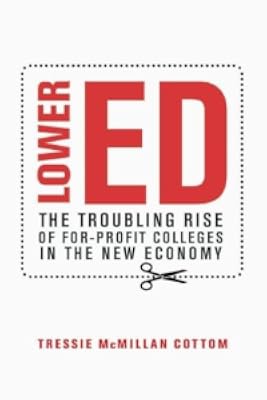
Lower Ed: The Troubling Rise of For-Profit Colleges in the New Economy
by Tressie McMillan Cottom
On This Page
Description
"More than two million students are enrolled in for-profit colleges, from the small family-run operations to the behemoths brandished on billboards, subway ads, and late-night commercials. These schools have been around just as long as their bucolic not-for-profit counterparts, yet shockingly little is known about why they have expanded so rapidly in recent years--during the so-called Wall Street era of for-profit colleges. In Lower Ed Tressie McMillan Cottom--a bold and rising public show more scholar, herself once a recruiter at two for-profit colleges--expertly parses the fraught dynamics of this big-money industry to show precisely how it is part and parcel of the growing inequality plaguing the country today. McMillan Cottom discloses the shrewd recruitment and marketing strategies that these schools deploy and explains how, despite the well-documented predatory practices of some and the campus closings of others, ending for-profit colleges won't end the vulnerabilities that made them the fastest growing sector of higher education at the turn of the twenty-first century. And she doesn't stop there. With sharp insight and deliberate acumen, McMillan Cottom delivers a comprehensive view of postsecondary for-profit education by illuminating the experiences of the everyday people behind the shareholder earnings, congressional battles, and student debt disasters. The relatable human stories in Lower Ed--from mothers struggling to pay for beauty school to working class guys seeking "good jobs" to accomplished professionals pursuing doctoral degrees--illustrate that the growth of for-profit colleges is inextricably linked to larger questions of race, gender, work, and the promise of opportunity in America. Drawing on more than one hundred interviews with students, employees, executives, and activists, Lower Ed tells the story of the benefits, pitfalls, and real costs of a for-profit education. It is a story about broken social contracts; about education transforming from a public interest to a private gain; and about all Americans and the challenges we face in our divided, unequal society." -- Publisher's description show lessTags
Recommendations


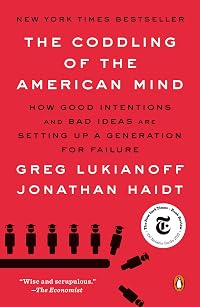
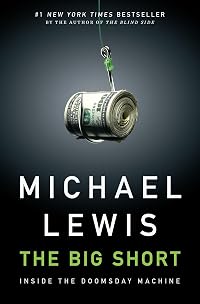
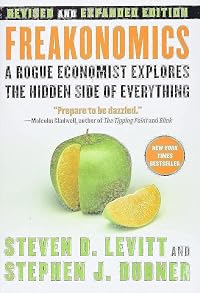
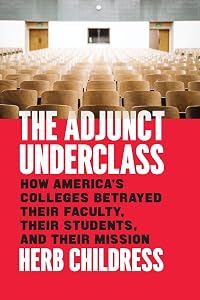

Member Recommendations

Member Reviews
Like the author of this book, I worked for a for-profit college early in my career, and at the time, I didn't fully understand what I had gotten myself into. After I left for another job, I remained fascinated with the industry, which has gone through a lot of turmoil in the past two decades. This book is one of the best and most approachable books on the topic that I've encountered and full of nuance and compassion in its discussion of the students who study at for-profit colleges. While the industry is shrinking and transforming (several large for-profits have shifted to nonprofit status since the publication of this book), this book remains an excellent and relevant study.
If you've ever asked yourself "who in their right mind would GO to a for-profit school?" then you need to read this book. I just assumed that for-profit colleges were pulling the wool over people's eyes, but this book indicates how much more to the story there is than just marketing. In fact, for-profit schools are another consequence of hundreds of years of racism and the USA's particular flavor of late-stage capitalism.
Cottom’s excellent new book is about for-profit colleges and credentialing, but it’s really about the collapse of the safety net and the dumping of risk on individuals. It’s also about really effective marketing techniques.
For-profit colleges became more attractive as the labor market became more uncertain and unfriendly—they even identified declining unemployment as a bigger threat to them than competition among them. “Poor labor market outcomes for their graduates (and non-graduates) is part of their business plan” (which also makes regulatory penalties for poor job placement statistucs just a cost of doing business). “If we have a shitty credentialing system, in the case of for-profit colleges, then it is likely because show more we have a shitty labor market.”
While traditional higher education assumed that employers would recognize the value of a college degree, and thus saw employers as partners in providing relevant job training, for-profit colleges respond to employers’ unwillingness to invest in workers at all by offering to do that—for a price. Thus, for-profit colleges depend on “acute, sustained socioeconomic inequalities,” in everything from enrollment to financing to scheduling classes to deal with constraints on students’ time. Students think, reasonably, that credentials are important to employers, and thus take on debts that (a) seem worthwhile as investments, especially as recruiters for the schools emphasize this, and (b) seem better than the alternatives, given the insecurity so many workers—especially minority women—face.
And yet, one study found that students with for-profit college credentials are only as likely to get a callback as students with high school diplomas. (Cottom says later, though, that for some employment screenings, such as automated ones, merely being able to check the box for a college degree may be of assistance.) Another way of looking at it: students at for-profit colleges “earn about as much as graduates of similar demographic backgrounds from traditional colleges, but have more bouts of unemployment and for longer periods of time.” They’re also less likely to graduate at all, and when they do, they have more debt than they would have from a public school; for-profit graduates are almost half of all student loan defaults.
Poor people, women, minorities, and single parents are disproportionately likely to enroll in for-profit colleges, in part because they make it much easier to do so than even the (far cheaper, probably better credential-wise) community colleges. Some stats: 2 million students in 2010, up from under 400,000 in 2000. One in 20 students in higher education is at a for-profit, but that’s 1 in 10 African-Americans, 1 in 14 Latinx, and 1 in 14 first-generation college students. Much of the recent growth, however, is in offering graduate degrees. On average, for-profit BA programs cost 19% more than public universities,while associate degrees and certificates cost four times more than community colleges. Over 94% of for-profit college students use federal financial aid, where their school participates (there are many small ones that don’t). Average debt for graduating seniors with loans was $29,400 in 2012, but in for-profits it was $39,950. That may not sound like a lot, but it’s all relative; most people won’t get jobs that can easily pay off those loans. Twenty-five percent of for-profit college students have a GED or other non-traditional high school certification; 16% are participating in a welfare program, while 2.6% of those in traditional colleges are.
Cottom contests the narrative that these schools are credentialing people in fields where there are labor market shortages; in health care, for example, they aren’t producing registered nurses or doctors but rather massage therapists. The model the for-profit colleges work off of is that people will need to go back to school repeatedly to combat job instability and employer demands for new skills. Also, students choose for-profit colleges because they don’t want to move away from their family obligations and want to move up where they are; Cottom points out that this hope for the use of a credential conflicts with the assumptions behind the “knowledge economy” proponents who search for the ever more flexible, able-to-move-across-the-country worker.
Here’s quite a statistic: 65 percent of students at for-profit colleges didn’t know their schools were for-profit. They generally thought of “college” as a unified entity, and were encouraged to do so by the colleges themselves, which unlike traditional colleges (pitching a unique on campus experience) touted the value of education generally. I learned about the role of the student loan refund check in funding daily life for many students, especially in for-profit schools that encourage maximum borrowing. I hadn’t thought about what Cottom calls (quoting other researchers) “education deserts”—cf. “food deserts”—postindustrial areas where for-profit colleges seem most accessible. A traditional college 40 miles away is useless if you don’t have a car that can regularly make that trip and the gas money to fuel it. I was also struck by the similarity between Cottom’s informants and the angry white folks in Strangers in Their Own Land: both believed in “following the rules,” but Cottom’s informants expected a lot less from and of following the rules, which required them to hustle just to get where others were by birth and social capital. In that context, the risk of default was not to different from the risk of catastrophe to which they were already exposed by poverty; they didn’t have homes or cars to repossess anyway. (Over 94% of black college students have student loans, compared to 69% of white students, and it turns out that the probability of default isn’t correlated to the size of the loan, but is correlated with whether people actually complete school.) Moreover, Cottom found that—at least for those seeking advanced degrees—the existence of debt was proof of the validity of the investment and proof that the school was “real.”
Marketing at these schools is designed to overcome the obstacles that their target students see, making students’ choices feel rational. At a technical college catering mostly to white men who already had jobs, Cottom says, they sold “insurance—policies against unemployment, career stagnation, and and volatile job markets.” At a beauty school, they focused on barriers like poverty and childcare, repeatedly returning to prospects who often had trouble showing up at scheduled appointments and filling out paperwork. The meaning of being poor and black and a mother made the beauty school “a rational choice in the way that dousing your burning leg with cold water is rational: it helps but you are still scarred.”
Having a car and being able to reach the school were two of the biggest obstacles for prospective students at the beauty school. Other problems were trouble with families that prevented easy filling out of the FAFSA; some families were in disarray and couldn’t find the relevant documents (e.g., birth certificate) while some resisted sharing tax forms with children or worried about immigration status.
Marketing to these students required being very involved, including going to state offices to get birth certificates with them where necessary. They followed up with potential students many, many times, in part to help train them to show up when scheduled. A man who worked at another school told about bringing in a psychoanalyst to consider their students, who found that they were “stuck in a moment of trauma from their lives,” and that students were looking for and would respond well to a “good-enough mother,” a caring authority figure who could help them move past their trauma. Perhaps unsurprisingly, most of the enrollment personnel Cottom encountered were women. When Cottom contacted schools as a prospect, they focused on whether she had the support structures in place to overcome obstacles, such as her work schedule. “There was often visible relief when I mentioned having no romantic partners.” (Cottom herself talks about her experience working at the beauty college with women stranded at the end of the day when their boyfriends failed to show up to drive them home, even though the women owned the cars.)
Lots of classic sales techniques: “I was particualrly struck by how the [enrollment officer] used questioning techniques that made it difficult to answer any way but affirmatively. … On eleven separate occasions at nine schools, the EO said of a job board, ‘You mentioned that you’re looking for a more professional job. Do you think this career board might help you keep an eye out for a better job?’” The schools touted Bureau of Labor Statistics income projections for relevant fields (with asterisks in small print about making no promises), and “made a big deal—through design and the enrollment counselors presentation—about the data being from the federal government and not something made up at the school,” while the school’s job placement data were always subordinate—“generally in a footnote or small table,” implying that national numbers were more important. The schools accepted the necessity of complying with federal regulations about disclosing job placement, but that didn’t mean they had to embrace its spirit.
Enrollment officers made it much easier to enroll than community colleges’ admissions offices did; Cottom contrasts their helpfulness to mystifying community college websites that required social capital to navigate. At for-profit colleges, they never assumed that Cottom had the skills to navigate complex bureaucracy. Nor did they assume that likely students were already committed to the value of college. Rather than touting their school specifically, they talked up the monetary/job-seeking value of a degree. Cottom suggests that the EOs take more or less the place of the “helicopter parents” of the anxious middle class, shepherding their progeny through the steps necessary to survive in a country that has largely abandoned collective responsibility. The simplicity here works for people who are especially vulnerable and lacking in that kind of social capital. But then, they don’t deliver the same results as traditional colleges. For-profit colleges perpetuate inequality by offering riskier credentials than traditional colleges, regardless of whether there’s any intent to discriminate. “[W]hen for-profit colleges design a speedy enrollment process because women have so little flexible time, or assume that I need a job to support my kids, they are profiting from inequality.”
Cottom spends some time on the issue of credit transfer—community colleges resist accepting for-profit credits, and there’s real concern for quality behind that, but it also makes it harder for students to swallow the sunk costs if they realize that they’d do better with a traditional degree. More students lost credits in moving from public or private not-for-profits to for-profits than any other situation (69 and 83% of transfers lost credit, respectively, compared to 38% making a public-to-public transfer). Cottom also points out that the prestige issues and the unwillingness of traditional community colleges to equate themselves with for-profits are additional barriers, over and above the serious concerns about course quality, which aren’t assuaged by for-profits’ treatment of classroom conditions as trade secrets. But making it hard to transfer increases the emotional costs, not just the (significant) financial costs, of choosing what might well be a better college once the student figures that out.
Ultimately, Cottom concludes, for-profit colleges are part of a negative social insurance program—rather than protecting individuals from the risks of modern life and predatory labor markets, negative social insurance allows specific private entities to profit from others’ insecurity. Solutions, she suggests, have to come from good work: a $15/hour minimum wage, for a start. Recently on her blog, https://tressiemc.com/essays-2/lower-ed-lives/ she tied these issues to even more current events: “Shareholder for-profit colleges anticipate a more favorable regulatory climate, thus their rebounding stocks. But, they also anticipate more favorable social policies from this administration that will continue to make workers feel vulnerable in the new economy. Gutting the American Care Act for health savings accounts is just one example. Those kinds of risk shift degrade job quality and make workers willing to pursue all kinds of credentialing to increase their odds of securing higher quality work.” show less
For-profit colleges became more attractive as the labor market became more uncertain and unfriendly—they even identified declining unemployment as a bigger threat to them than competition among them. “Poor labor market outcomes for their graduates (and non-graduates) is part of their business plan” (which also makes regulatory penalties for poor job placement statistucs just a cost of doing business). “If we have a shitty credentialing system, in the case of for-profit colleges, then it is likely because show more we have a shitty labor market.”
While traditional higher education assumed that employers would recognize the value of a college degree, and thus saw employers as partners in providing relevant job training, for-profit colleges respond to employers’ unwillingness to invest in workers at all by offering to do that—for a price. Thus, for-profit colleges depend on “acute, sustained socioeconomic inequalities,” in everything from enrollment to financing to scheduling classes to deal with constraints on students’ time. Students think, reasonably, that credentials are important to employers, and thus take on debts that (a) seem worthwhile as investments, especially as recruiters for the schools emphasize this, and (b) seem better than the alternatives, given the insecurity so many workers—especially minority women—face.
And yet, one study found that students with for-profit college credentials are only as likely to get a callback as students with high school diplomas. (Cottom says later, though, that for some employment screenings, such as automated ones, merely being able to check the box for a college degree may be of assistance.) Another way of looking at it: students at for-profit colleges “earn about as much as graduates of similar demographic backgrounds from traditional colleges, but have more bouts of unemployment and for longer periods of time.” They’re also less likely to graduate at all, and when they do, they have more debt than they would have from a public school; for-profit graduates are almost half of all student loan defaults.
Poor people, women, minorities, and single parents are disproportionately likely to enroll in for-profit colleges, in part because they make it much easier to do so than even the (far cheaper, probably better credential-wise) community colleges. Some stats: 2 million students in 2010, up from under 400,000 in 2000. One in 20 students in higher education is at a for-profit, but that’s 1 in 10 African-Americans, 1 in 14 Latinx, and 1 in 14 first-generation college students. Much of the recent growth, however, is in offering graduate degrees. On average, for-profit BA programs cost 19% more than public universities,while associate degrees and certificates cost four times more than community colleges. Over 94% of for-profit college students use federal financial aid, where their school participates (there are many small ones that don’t). Average debt for graduating seniors with loans was $29,400 in 2012, but in for-profits it was $39,950. That may not sound like a lot, but it’s all relative; most people won’t get jobs that can easily pay off those loans. Twenty-five percent of for-profit college students have a GED or other non-traditional high school certification; 16% are participating in a welfare program, while 2.6% of those in traditional colleges are.
Cottom contests the narrative that these schools are credentialing people in fields where there are labor market shortages; in health care, for example, they aren’t producing registered nurses or doctors but rather massage therapists. The model the for-profit colleges work off of is that people will need to go back to school repeatedly to combat job instability and employer demands for new skills. Also, students choose for-profit colleges because they don’t want to move away from their family obligations and want to move up where they are; Cottom points out that this hope for the use of a credential conflicts with the assumptions behind the “knowledge economy” proponents who search for the ever more flexible, able-to-move-across-the-country worker.
Here’s quite a statistic: 65 percent of students at for-profit colleges didn’t know their schools were for-profit. They generally thought of “college” as a unified entity, and were encouraged to do so by the colleges themselves, which unlike traditional colleges (pitching a unique on campus experience) touted the value of education generally. I learned about the role of the student loan refund check in funding daily life for many students, especially in for-profit schools that encourage maximum borrowing. I hadn’t thought about what Cottom calls (quoting other researchers) “education deserts”—cf. “food deserts”—postindustrial areas where for-profit colleges seem most accessible. A traditional college 40 miles away is useless if you don’t have a car that can regularly make that trip and the gas money to fuel it. I was also struck by the similarity between Cottom’s informants and the angry white folks in Strangers in Their Own Land: both believed in “following the rules,” but Cottom’s informants expected a lot less from and of following the rules, which required them to hustle just to get where others were by birth and social capital. In that context, the risk of default was not to different from the risk of catastrophe to which they were already exposed by poverty; they didn’t have homes or cars to repossess anyway. (Over 94% of black college students have student loans, compared to 69% of white students, and it turns out that the probability of default isn’t correlated to the size of the loan, but is correlated with whether people actually complete school.) Moreover, Cottom found that—at least for those seeking advanced degrees—the existence of debt was proof of the validity of the investment and proof that the school was “real.”
Marketing at these schools is designed to overcome the obstacles that their target students see, making students’ choices feel rational. At a technical college catering mostly to white men who already had jobs, Cottom says, they sold “insurance—policies against unemployment, career stagnation, and and volatile job markets.” At a beauty school, they focused on barriers like poverty and childcare, repeatedly returning to prospects who often had trouble showing up at scheduled appointments and filling out paperwork. The meaning of being poor and black and a mother made the beauty school “a rational choice in the way that dousing your burning leg with cold water is rational: it helps but you are still scarred.”
Having a car and being able to reach the school were two of the biggest obstacles for prospective students at the beauty school. Other problems were trouble with families that prevented easy filling out of the FAFSA; some families were in disarray and couldn’t find the relevant documents (e.g., birth certificate) while some resisted sharing tax forms with children or worried about immigration status.
Marketing to these students required being very involved, including going to state offices to get birth certificates with them where necessary. They followed up with potential students many, many times, in part to help train them to show up when scheduled. A man who worked at another school told about bringing in a psychoanalyst to consider their students, who found that they were “stuck in a moment of trauma from their lives,” and that students were looking for and would respond well to a “good-enough mother,” a caring authority figure who could help them move past their trauma. Perhaps unsurprisingly, most of the enrollment personnel Cottom encountered were women. When Cottom contacted schools as a prospect, they focused on whether she had the support structures in place to overcome obstacles, such as her work schedule. “There was often visible relief when I mentioned having no romantic partners.” (Cottom herself talks about her experience working at the beauty college with women stranded at the end of the day when their boyfriends failed to show up to drive them home, even though the women owned the cars.)
Lots of classic sales techniques: “I was particualrly struck by how the [enrollment officer] used questioning techniques that made it difficult to answer any way but affirmatively. … On eleven separate occasions at nine schools, the EO said of a job board, ‘You mentioned that you’re looking for a more professional job. Do you think this career board might help you keep an eye out for a better job?’” The schools touted Bureau of Labor Statistics income projections for relevant fields (with asterisks in small print about making no promises), and “made a big deal—through design and the enrollment counselors presentation—about the data being from the federal government and not something made up at the school,” while the school’s job placement data were always subordinate—“generally in a footnote or small table,” implying that national numbers were more important. The schools accepted the necessity of complying with federal regulations about disclosing job placement, but that didn’t mean they had to embrace its spirit.
Enrollment officers made it much easier to enroll than community colleges’ admissions offices did; Cottom contrasts their helpfulness to mystifying community college websites that required social capital to navigate. At for-profit colleges, they never assumed that Cottom had the skills to navigate complex bureaucracy. Nor did they assume that likely students were already committed to the value of college. Rather than touting their school specifically, they talked up the monetary/job-seeking value of a degree. Cottom suggests that the EOs take more or less the place of the “helicopter parents” of the anxious middle class, shepherding their progeny through the steps necessary to survive in a country that has largely abandoned collective responsibility. The simplicity here works for people who are especially vulnerable and lacking in that kind of social capital. But then, they don’t deliver the same results as traditional colleges. For-profit colleges perpetuate inequality by offering riskier credentials than traditional colleges, regardless of whether there’s any intent to discriminate. “[W]hen for-profit colleges design a speedy enrollment process because women have so little flexible time, or assume that I need a job to support my kids, they are profiting from inequality.”
Cottom spends some time on the issue of credit transfer—community colleges resist accepting for-profit credits, and there’s real concern for quality behind that, but it also makes it harder for students to swallow the sunk costs if they realize that they’d do better with a traditional degree. More students lost credits in moving from public or private not-for-profits to for-profits than any other situation (69 and 83% of transfers lost credit, respectively, compared to 38% making a public-to-public transfer). Cottom also points out that the prestige issues and the unwillingness of traditional community colleges to equate themselves with for-profits are additional barriers, over and above the serious concerns about course quality, which aren’t assuaged by for-profits’ treatment of classroom conditions as trade secrets. But making it hard to transfer increases the emotional costs, not just the (significant) financial costs, of choosing what might well be a better college once the student figures that out.
Ultimately, Cottom concludes, for-profit colleges are part of a negative social insurance program—rather than protecting individuals from the risks of modern life and predatory labor markets, negative social insurance allows specific private entities to profit from others’ insecurity. Solutions, she suggests, have to come from good work: a $15/hour minimum wage, for a start. Recently on her blog, https://tressiemc.com/essays-2/lower-ed-lives/ she tied these issues to even more current events: “Shareholder for-profit colleges anticipate a more favorable regulatory climate, thus their rebounding stocks. But, they also anticipate more favorable social policies from this administration that will continue to make workers feel vulnerable in the new economy. Gutting the American Care Act for health savings accounts is just one example. Those kinds of risk shift degrade job quality and make workers willing to pursue all kinds of credentialing to increase their odds of securing higher quality work.” show less
Some academic books are straightforward enough that they could be written by any qualified scholar within a field that does the research work, more or less. And some books are too original for that. This is definitely the latter, where the author used her years working in for-profit college admissions as the entry point to analyzing why they have expanded so much in the 21st century and what that means for their students.
Anyhow, this is a relatively accessible book that blends that personal experience with a rigorous look into the investors and executives of several types of for-profit schools. No one is really made to be either the villain or the savior of students, and it's a great contribution to how we should make sense of the show more higher education industry. show less
Anyhow, this is a relatively accessible book that blends that personal experience with a rigorous look into the investors and executives of several types of for-profit schools. No one is really made to be either the villain or the savior of students, and it's a great contribution to how we should make sense of the show more higher education industry. show less
Dr. McMillan Cottom has written an excellent exegesis of the world of for-profit colleges. I am a huge fan of her work and can't wait to read her next offering.
This book will make you laugh, cry, and reevaluate your life(not in any particular order).
The funny thing is, when I was out of Bible College, I almost went to a for-profit until I saw the price tag and high tailed it to one of our local community colleges(which was excellent). If you know anyone who is considering a for-profit, tell them to do like Dare and just say no.
If you are a professor, read this to better understand where your students may be coming from and offer them grace.
This book will make you laugh, cry, and reevaluate your life(not in any particular order).
The funny thing is, when I was out of Bible College, I almost went to a for-profit until I saw the price tag and high tailed it to one of our local community colleges(which was excellent). If you know anyone who is considering a for-profit, tell them to do like Dare and just say no.
If you are a professor, read this to better understand where your students may be coming from and offer them grace.
It's been fashionable lately to search for the causes of disaffection in the American electorate in the march of computer automation, the willingness of both political parties of embrace free trade at the expense of the factory worker, and the rift between the educated and the grassroots.
A couple of the better books on the subject I've read include "Hillbilly Elegy: A Memoire of Family and Culture in Crisis" by J.D. Vance and "Strangers in Their Own Land: Anger and Mourning on the American Right," by Arlie Russell Hochschild.
America is not beset with a crisis. It is trying to navigate multiple crises in parallel time some of its own doing and others a function of the times we live in.
There are simply too many guns in too many hands. show more Alcohol and substance abuse rages across rural and urban landscapes. Computer automation does threaten the workplace of millions. Antipathy toward government and common action forces politicians to abandon public institutions, rail against public health insurance, public education, and environmental regulation.
It is with this backdrop -- and the crisis of leadership in Washington -- that I stumble through Tressie McMillan Cottom's study of American for-profit colleges. This is not a pretty picture. It is yet another condemnation of the failure of public policy to help honest and willing people get out of poverty.
When you dig a little deeper on free market economics, even dig a little deeper on state subsidy of post-secondary education, you find the grubs of free enterprise pick through the most vulnerable to line their pockets with money. Big money.
For even more relevant context I refer you some earlier research on the working poor in the United States: "Nickel and Dimed: On (Not) Getting By in America" by Barbara Ehrenreich; "Broke, USA: From Pawnshops to Poverty, Inc. - How the Working Poor Became Big Business," by Gary Rivlin; and the magisterial and more recent "Evicted: Poverty and Profit in the American City," by Matthew Desmond. (American publishers sure do go for long titles. Hoo-wee!!)
These are the poverty industries. And many of these colleges qualify as the education factories to keep poor people poor.
McMillan Cottom shows how those on the lower side of the cultural divide game the college grants system to find working capital for new business projects because working capital is is simply not available for black, Hispanic or just plain poor entrepreneurs.
Then there are the pressure sales tactics to get the poor to buy in to college programs with dicey if not outright worthless credentials.
Most despicable of all is the debt the unwitting college graduates accumulate which dwarfs the wages they are likely to get in the health, legal, or beauty industries they are training for. Talk about rip off.
I read this book as read about Republican plans to dismantle the nascent consumer protection agency against financial planning weasels and my stomach turns upside down. White collar crime is every bit as alive and virulent as it was when Barak Obama took office.
People who honestly believe in this sort of deregulation would have been comfortable in the Reconstruction South. Carpetbaggers they were. Carpetbaggers they will ever be.
Many years ago, when I was leaving high school and had dreams of a career in the theatre, I saw many of my peers enter the theatre earning next to nothing to get a shot at something better. The gullibility of youth wasn't lost on shysters and con-men in the vanity industries. Phoney acting studios, modelling agencies, and talent agencies sprung up in the pre-gentrified neighbourhoods of downtown Toronto. They convinced kids to buy photo shoots, "method acting" classes, screen test sessions, and then promised they would get calls from the casting agents that never came.
Some of these operations became fronts for escort services and prostitution. Many exhibited the same high pressure sales tactics Tressie McMillan Cotton outlines here.
Now as a father I see some of those same pressure tactics turned toward parents. Dance classes for their kids can turn into money pits for parents: tuition, endless costumes, travel for competitions, special advanced classes, new footwear, special trainers, and on and on and on.
Parents of young musicians and swimmers and skaters, young hockey players and lacrosse and soccer and baseball leagues tell me the same stories. The list goes on.
All a parent needs to hear is "I think your daughter has a special talent" and you're one step from re-mortgaging the house for something that often amounts to high end daycare. show less
A couple of the better books on the subject I've read include "Hillbilly Elegy: A Memoire of Family and Culture in Crisis" by J.D. Vance and "Strangers in Their Own Land: Anger and Mourning on the American Right," by Arlie Russell Hochschild.
America is not beset with a crisis. It is trying to navigate multiple crises in parallel time some of its own doing and others a function of the times we live in.
There are simply too many guns in too many hands. show more Alcohol and substance abuse rages across rural and urban landscapes. Computer automation does threaten the workplace of millions. Antipathy toward government and common action forces politicians to abandon public institutions, rail against public health insurance, public education, and environmental regulation.
It is with this backdrop -- and the crisis of leadership in Washington -- that I stumble through Tressie McMillan Cottom's study of American for-profit colleges. This is not a pretty picture. It is yet another condemnation of the failure of public policy to help honest and willing people get out of poverty.
When you dig a little deeper on free market economics, even dig a little deeper on state subsidy of post-secondary education, you find the grubs of free enterprise pick through the most vulnerable to line their pockets with money. Big money.
For even more relevant context I refer you some earlier research on the working poor in the United States: "Nickel and Dimed: On (Not) Getting By in America" by Barbara Ehrenreich; "Broke, USA: From Pawnshops to Poverty, Inc. - How the Working Poor Became Big Business," by Gary Rivlin; and the magisterial and more recent "Evicted: Poverty and Profit in the American City," by Matthew Desmond. (American publishers sure do go for long titles. Hoo-wee!!)
These are the poverty industries. And many of these colleges qualify as the education factories to keep poor people poor.
McMillan Cottom shows how those on the lower side of the cultural divide game the college grants system to find working capital for new business projects because working capital is is simply not available for black, Hispanic or just plain poor entrepreneurs.
Then there are the pressure sales tactics to get the poor to buy in to college programs with dicey if not outright worthless credentials.
Most despicable of all is the debt the unwitting college graduates accumulate which dwarfs the wages they are likely to get in the health, legal, or beauty industries they are training for. Talk about rip off.
I read this book as read about Republican plans to dismantle the nascent consumer protection agency against financial planning weasels and my stomach turns upside down. White collar crime is every bit as alive and virulent as it was when Barak Obama took office.
People who honestly believe in this sort of deregulation would have been comfortable in the Reconstruction South. Carpetbaggers they were. Carpetbaggers they will ever be.
Many years ago, when I was leaving high school and had dreams of a career in the theatre, I saw many of my peers enter the theatre earning next to nothing to get a shot at something better. The gullibility of youth wasn't lost on shysters and con-men in the vanity industries. Phoney acting studios, modelling agencies, and talent agencies sprung up in the pre-gentrified neighbourhoods of downtown Toronto. They convinced kids to buy photo shoots, "method acting" classes, screen test sessions, and then promised they would get calls from the casting agents that never came.
Some of these operations became fronts for escort services and prostitution. Many exhibited the same high pressure sales tactics Tressie McMillan Cotton outlines here.
Now as a father I see some of those same pressure tactics turned toward parents. Dance classes for their kids can turn into money pits for parents: tuition, endless costumes, travel for competitions, special advanced classes, new footwear, special trainers, and on and on and on.
Parents of young musicians and swimmers and skaters, young hockey players and lacrosse and soccer and baseball leagues tell me the same stories. The list goes on.
All a parent needs to hear is "I think your daughter has a special talent" and you're one step from re-mortgaging the house for something that often amounts to high end daycare. show less
Yes, yes, and yes.
Finally got around to putting up a review of sorts (along with another for Jan Neruda's Prague Tales): https://wp.me/p4LPys-pk.
Finally got around to putting up a review of sorts (along with another for Jan Neruda's Prague Tales): https://wp.me/p4LPys-pk.
Members
- Recently Added By
Lists

Non-Fiction Worth Reading
1,016 works; 262 members

Books for Educators
164 works; 6 members

Black Authors
384 works; 32 members

Female Author
1,234 works; 67 members

Best 21st Century Books (So Far)
679 works; 86 members

Club Read's Recommended Nonfiction Written by Women
618 works; 30 members
Books That Changed Our Perspective
423 works; 168 members
Author Information

5+ Works 1,182 Members
Common Knowledge
- Original publication date
- 2017
- Dedication
- For everyone trying to make a dollar out of 15 cents, but especially for the sisters.
Classifications
- Genres
- Sociology, Nonfiction, Economics, General Nonfiction
- DDC/MDS
- 378.73 — Society, government, & culture Education Higher education (Tertiary education) North America United States
- LCC
- LB2328.52 .U6 .C68 — Education Theory and practice of education Theory and practice of education Higher education Institutions of higher education
- BISAC
Statistics
- Members
- 218
- Popularity
- 150,086
- Reviews
- 7
- Rating
- (3.91)
- Languages
- English
- Media
- Paper, Audiobook, Ebook
- ISBNs
- 7
- ASINs
- 4