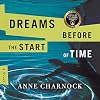
Dreams Before the Start of Time
by Anne Charnock 
On This Page
Description
"In a near-future London, Millie Dack places her hand on her belly to feel her baby kick, resolute in her decision to be a single parent. Across town, her closest friend--a hungover Toni Munroe--steps into the shower and places her hand on a medic console. The diagnosis is devastating. In this stunning, bittersweet family saga, Millie and Toni experience the aftershocks of human progress as their children and grandchildren embrace new ways of making babies. When infertility is a thing of the show more past, a man can create a child without a woman, a woman can create a child without a man, and artificial wombs eliminate the struggles of pregnancy. But what does it mean to be a parent? A child? A family? Through a series of interconnected vignettes that spans five generations and three continents, this emotionally taut story explores the anxieties that arise when the science of fertility claims to deliver all the answers"--Back cover. show lessTags
Recommendations











Member Reviews
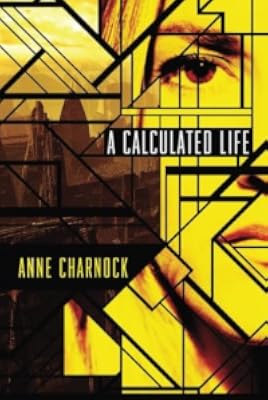
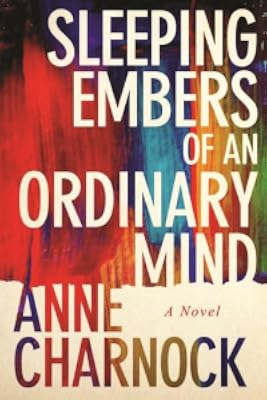
I forget who originally recommended Charnock, but I read her Sleeping Embers of an Ordinary Mind (see here), and was impressed enough to want to read more. Which I now have done. Although it has taken me pretty much exactly twelve months. But it was worth the wait. Dreams Before the Start of Time is… an ensemble piece. There are a group of people, related by blood or marriage or just friends, and they’re living their lives in London and Shanghai over the next few decades, beginning several years from now. The story opens with a young woman deciding to become a single mother, but using a sperm donor. Her friend, on the other hand, has a one-night stand, and decides to keep the consequences. As the years unfold, attitudes to the means show more of conception, gestation and child-rearing change as technology progresses and sensibilities reflect new social mores. A sf novel like this in direct opposition to the Atwood above – the world has not ended, there are no sexual assaults, no mega-violence, no violence, in fact. There needs to be more science fiction like this. Of course, it helps that the writing is really good – good enough for me to pick the novel as one of my top five books of the year – see here. I was given Charnock’s A Calculated Life, her debut novel, for Christmas. I’m looking forward to reading it. show less
4.5 stars
Anne Charnock takes a look at how scientific advances lead to the technological cure for infertility and birth defects. With the introduction of the artificial womb and genetic engineering, anyone can become the parent of a healthy baby. But rather than dwell on the tech itself, Charnock chooses to write about the impact of these developments on the very definition of family.
The novel follows a pair of families across five generations and is told through a series of vignettes. Each one is a snapshot into a character's life when familial decisions are made or pivotal character development is revealed. There are arguments across generations regarding the nature of relationships and reproductive choices. There are contrasting show more scenes where sperm donors are forced to confront the fruits of their offerings. There are passages where genetic tinkering beyond curing maladies is debated. But all of it is coaxed in the language of everyday life.
While Charnock's characters treat these choices as eyebrow raising, we don't get to see the public's reaction to the technology's development. The whole of society is largely kept in the background, but every now and then there are hints and passing mentions of rules and regulations meant to maintain reproductive integrity. Again, this is all kept in the family as it were. I don't know if this is an American vs. European cultural difference, but I believe that there would be a raging wildfire of debate in the States over this development along the lines of the decades-long argument over reproductive rights.
But that's not the point of this work: Charnock is here to focus on the impact on families. She plots a course straight down the middle, neither praising nor condemning choices. Pros and cons to the choices her characters make are deftly shown and presented without judgement. That is left up to the reader to make. Some characters only have one or two opportunities have their stories told before retreating to the background, but other characters in the spotlight refer to them and how they've fared.
Pacing may come as a surprise to some readers. There is no dramatic rise and fall. Instead, the book moves steadily through the characters lives like a river, the occasional dramatic point emphasized like rocks in the riverbed. One generation after the next, families go on. They change just as a river meanders through different terrains, but on it goes.
We've already seen how the definition of family has changed over the last several decades, Charnock suggests that it will continue to evolve as science comes to a greater understanding of how human reproduction works. All in all, there's plenty of food for thought on how it could all play out in Dreams Before the Start of Time. If you're looking for a book that makes you contemplate how breakthrough technologies could affect our lives, then this is the book for you. show less
Anne Charnock takes a look at how scientific advances lead to the technological cure for infertility and birth defects. With the introduction of the artificial womb and genetic engineering, anyone can become the parent of a healthy baby. But rather than dwell on the tech itself, Charnock chooses to write about the impact of these developments on the very definition of family.
The novel follows a pair of families across five generations and is told through a series of vignettes. Each one is a snapshot into a character's life when familial decisions are made or pivotal character development is revealed. There are arguments across generations regarding the nature of relationships and reproductive choices. There are contrasting show more scenes where sperm donors are forced to confront the fruits of their offerings. There are passages where genetic tinkering beyond curing maladies is debated. But all of it is coaxed in the language of everyday life.
While Charnock's characters treat these choices as eyebrow raising, we don't get to see the public's reaction to the technology's development. The whole of society is largely kept in the background, but every now and then there are hints and passing mentions of rules and regulations meant to maintain reproductive integrity. Again, this is all kept in the family as it were. I don't know if this is an American vs. European cultural difference, but I believe that there would be a raging wildfire of debate in the States over this development along the lines of the decades-long argument over reproductive rights.
But that's not the point of this work: Charnock is here to focus on the impact on families. She plots a course straight down the middle, neither praising nor condemning choices. Pros and cons to the choices her characters make are deftly shown and presented without judgement. That is left up to the reader to make. Some characters only have one or two opportunities have their stories told before retreating to the background, but other characters in the spotlight refer to them and how they've fared.
Pacing may come as a surprise to some readers. There is no dramatic rise and fall. Instead, the book moves steadily through the characters lives like a river, the occasional dramatic point emphasized like rocks in the riverbed. One generation after the next, families go on. They change just as a river meanders through different terrains, but on it goes.
We've already seen how the definition of family has changed over the last several decades, Charnock suggests that it will continue to evolve as science comes to a greater understanding of how human reproduction works. All in all, there's plenty of food for thought on how it could all play out in Dreams Before the Start of Time. If you're looking for a book that makes you contemplate how breakthrough technologies could affect our lives, then this is the book for you. show less
The review first appeared on scifiandscary.com
I’ve not read a book like ‘Dreams Before the Start of Time’ in a long while. It’s that kind of insightful, subtle, human-centred science fiction that sticks with you despite its lack of aliens or spaceships. It reminded me a lot of PD James’ excellent ‘Children of Men’, with its similar focus of human reproduction. Charnock’s writing might not quite be up to James’ standards, but she certainly has the ability to convey complex and challenging ideas in an engaging way.
That’s good news, because ‘Dreams Before the Start of Time’ is much more about concepts and people than it is about plot. There are stories here, lots of them in fact, but they are woven together into a show more book without a single narrative thread. In the hands of a lesser writer that might have been a problem, but here it works almost perfectly.
The book takes place over almost a century, starting in 2034, and following multiple generations of the same family. Its focus on both the culture and the science of human reproduction is resolute and fascinating. As the decades progress, Charnock explores a range of possible alternatives to traditional, monogamous, heterosexual childbearing. Platonic co-parenting, artificial wombs, single parent reproduction and more all get considered through a series of stories. Charnock considers the emotions of the characters as they make decisions about how to build their families, as well as the impacts of those decisions on the children they parent.
One of the things that makes the book work so well is that so much of it is recognisable. The London setting gives it a great sense of place, and the familiarity of borough names and landmarks makes it all the more real. Current brands are included as well (in an early chapter a character drinks London Pride beer), which makes it feel less alien than much sci-fi. There is advanced technology here, especially later in the book, but it’s all credible and often feels like a natural extension of current consumer electronics. Home medical consoles and virtual assistant bracelets don’t feel like a huge leap and help to build a vision of a future that is believably similar to our own. Most importantly of all, the tech is treated as just a detail of everyday life. What matters in this book is the people and the way in which science and evolving cultural norms impact on their lives.
Despite the lack of a strong plot to pull the reader through it all, Charnock has written a book that is extremely readable and compelling. The ideas were the thing that kept bringing me back, my curiosity desperate to see what changes the next generation of characters would experience. Too much modern sci-fi is just stories from other genres set in a future world. Detective stories with robots, horror stories in space, thrillers on alien planets. ‘Dreams Before the Start of Time’ is sci-fi as it should be. It’s fiction about science, full of ideas and inventions and wonderful possibilities.
And it’s about people too, living characters whose stories are told with affection and emotion. Whilst there isn’t a central storyline as such, there is a satisfying looping back, with the connections between the characters becoming more apparent as the book progresses. The end result is a book that is satisfying despite the fact that it has more questions than answers. It’s a book with a blend of mind and heart that is rare and precious and that should be applauded and savoured. I loved it. show less
I’ve not read a book like ‘Dreams Before the Start of Time’ in a long while. It’s that kind of insightful, subtle, human-centred science fiction that sticks with you despite its lack of aliens or spaceships. It reminded me a lot of PD James’ excellent ‘Children of Men’, with its similar focus of human reproduction. Charnock’s writing might not quite be up to James’ standards, but she certainly has the ability to convey complex and challenging ideas in an engaging way.
That’s good news, because ‘Dreams Before the Start of Time’ is much more about concepts and people than it is about plot. There are stories here, lots of them in fact, but they are woven together into a show more book without a single narrative thread. In the hands of a lesser writer that might have been a problem, but here it works almost perfectly.
The book takes place over almost a century, starting in 2034, and following multiple generations of the same family. Its focus on both the culture and the science of human reproduction is resolute and fascinating. As the decades progress, Charnock explores a range of possible alternatives to traditional, monogamous, heterosexual childbearing. Platonic co-parenting, artificial wombs, single parent reproduction and more all get considered through a series of stories. Charnock considers the emotions of the characters as they make decisions about how to build their families, as well as the impacts of those decisions on the children they parent.
One of the things that makes the book work so well is that so much of it is recognisable. The London setting gives it a great sense of place, and the familiarity of borough names and landmarks makes it all the more real. Current brands are included as well (in an early chapter a character drinks London Pride beer), which makes it feel less alien than much sci-fi. There is advanced technology here, especially later in the book, but it’s all credible and often feels like a natural extension of current consumer electronics. Home medical consoles and virtual assistant bracelets don’t feel like a huge leap and help to build a vision of a future that is believably similar to our own. Most importantly of all, the tech is treated as just a detail of everyday life. What matters in this book is the people and the way in which science and evolving cultural norms impact on their lives.
Despite the lack of a strong plot to pull the reader through it all, Charnock has written a book that is extremely readable and compelling. The ideas were the thing that kept bringing me back, my curiosity desperate to see what changes the next generation of characters would experience. Too much modern sci-fi is just stories from other genres set in a future world. Detective stories with robots, horror stories in space, thrillers on alien planets. ‘Dreams Before the Start of Time’ is sci-fi as it should be. It’s fiction about science, full of ideas and inventions and wonderful possibilities.
And it’s about people too, living characters whose stories are told with affection and emotion. Whilst there isn’t a central storyline as such, there is a satisfying looping back, with the connections between the characters becoming more apparent as the book progresses. The end result is a book that is satisfying despite the fact that it has more questions than answers. It’s a book with a blend of mind and heart that is rare and precious and that should be applauded and savoured. I loved it. show less
An odd book--not a novel, but not short stories either; rather, a collection of vignettes moving forward 100 years into the future, loosely interconnected by character and the theme of pregnancy. The stories begin with the pregnancies of two friends, Millie and Toni, and returns to touch on their lives and their families, while also taking detours into the lives of other people connected to them. The technology of pregnancy and childbirth evolves throughout, as does attitudes toward having children, and I suppose that is the main theme of the book, but what I enjoyed was the quiet, subtle writing that was more character study than anything else. There wasn't much plot to speak of, and many stories were left unresolved, just a moment in show more time and then the book moves on. While I found the technology fairly believable--not just pregnancy-related but also everyday technology--I would imagine that tech would be much less recognizable 100 years a now, especially when thinking back on what the world was like 100 years ago. And I found the complete omission of climate change--even just a side note about how it had been mitigated--took away from the believability. Overall, though, I think this was well-written if lacking some imagination. show less
As someone who has never had children and never particularly wanted children the central thesis of this book is really only of academic interest. What is that central thesis you ask? The author posits how human procreation will change in the coming years. I do have friends who desperately wanted to have children and so I could see how some of the forecast technologies would make life simpler. There seems to me to be one hole in these interconnected stories though—will the world survive the ecological catastrophes that humankind seems to be bent on bringing to the planet? It was hard for me to envision a world in which a person’s chief concern could be whether to carry a child or have it grown to term in an artificial womb. What show more about whether the ocean levels will inundate many of the large cities of the world (I imagine London which is the location of many of these stories, being on the tidal Thames, might be in for some flooding)? What about whether there will be enough food production to fill the bellies of those children? Sure the author suggests that many people ride bicycles and use mass transit but she also has people flying off to China and India and Australia and air travel is a pretty major energy suck.
Maybe I’m asking too much of a series of short fiction. It just seems to me that another author might reference these matters in a succinct but cohesive manner. This author seems to envision a future that is pretty much what we have right now in 2018 but with new ways to make babies. I enjoyed the stories and the way successive generations dealt with procreation and child-rearing but it was just not a well-rounded story. show less
Maybe I’m asking too much of a series of short fiction. It just seems to me that another author might reference these matters in a succinct but cohesive manner. This author seems to envision a future that is pretty much what we have right now in 2018 but with new ways to make babies. I enjoyed the stories and the way successive generations dealt with procreation and child-rearing but it was just not a well-rounded story. show less
I might have enjoyed this as a discussion more than a novel. The brief character sketches were too brief for me. There were some refreshingly unlikable folks in the line up but sadly no one who I felt invested in or could root for. The last bit wrangles with inequality issues but it's too little, too late. Most of the book is deep into the issues of the well off and excludes any mention of the implied mass population of poors. I like the language and the imaginative strides even if I couldn't warm to it.
Though the subject discussed - the way humans reproduce in the future, is a fascinating one, I didn't like the book.
Firstly, because the narration is very slow, lacks any significant plot movements and the heroes are somewhat unsympathetic for me. Secondly, the book consists of multiple short stories of various generations of the same circle of people, but due to the cut-off nature of each story they are rather difficult to follow and connect - I had to go back few times to catch the connections. And finally, I have already read other sci-fi books that discuss the same topic in a less roundabout manner.
Firstly, because the narration is very slow, lacks any significant plot movements and the heroes are somewhat unsympathetic for me. Secondly, the book consists of multiple short stories of various generations of the same circle of people, but due to the cut-off nature of each story they are rather difficult to follow and connect - I had to go back few times to catch the connections. And finally, I have already read other sci-fi books that discuss the same topic in a less roundabout manner.
Members
- Recently Added By
Lists

2018 Hugo Eligible Novels
170 works; 16 members

Arthur C. Clarke Award Winners and Shortlisted Books
219 works; 14 members

Books Read in 2020
4,379 works; 124 members

Books With Time Words in the Title
160 works; 4 members

Books Set in Great Britain
191 works; 13 members
Author Information

6+ Works 486 Members
Anne Charnock is a journalist and novelist. She attended the University of East Anglia, studying environmental sciences. She earned a master's in fine arts at The Manchester School of Art. Her journalism career includes time as a foreign correspondent, travelling in the Middle East, Africa and India. Her work was published in New Scientist, The show more Guardian, Financial Times, Geographical, and other publication. Her novels include A Calculated Life, Sleeping Embers of an Ordinary Mind, Dreams Before the Start of Time. She is author of the novella The Enclave, which won the British Science Fiction Association 2017 Award for Best Short Fiction. Her 2017 novel, Dreams Before the Start of Time, won the 2018 Arthur C Clarke Award for science-fiction. (Bowker Author Biography) show less
Anne Charnock is a LibraryThing Author, an author who lists their personal library on LibraryThing.
Awards and Honors
Common Knowledge
- Original publication date
- 2017
- First words
- This year's crop of apples is so poor that Betty Matheson counts the overnight windfalls when she opens her bedroom shutters each morning.
- Last words
- (Click to show. Warning: May contain spoilers.)Come home and tell me everything.
Classifications
Statistics
- Members
- 125
- Popularity
- 265,808
- Reviews
- 10
- Rating
- (3.56)
- Languages
- English
- Media
- Paper, Audiobook, Ebook
- ISBNs
- 4
- ASINs
- 2