On This Page
Description
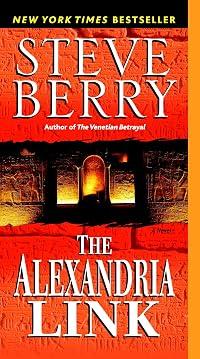
Fiction. Mystery. Suspense. Thriller. HTML:Cotton Malone retired from the high-risk world of elite operatives for the U.S. Justice Department to lead the low-key life of a rare-book dealer. But his quiet existence is shattered when he receives an anonymous e-mail: “You have something I want. You’ re the only person on earth who knows where to find it. Go get it. You have 72 hours. If I don’t hear from you, you will be childless.” His horrified ex-wife confirms that the threat is show more real: Their teenage son has been kidnapped. When Malone’s Copenhagen bookshop is burned to the ground, it becomes brutally clear that those responsible will stop at nothing to get what they want. And what they want is nothing less than the lost Library of Alexandria.A cradle of ideas–historical, philosophical, literary, scientific, and religious–the Library of Alexandria was unparalleled in the world. But fifteen hundred years ago, it vanished into the mists of myth and legend–its vast bounty of wisdom coveted ever since by scholars, fortune hunters, and those who believe its untold secrets hold the key to ultimate power.
Now a cartel of wealthy international moguls, bent on altering the course of history, is desperate to breach the library’s hallowed halls–and only Malone possesses the information they need to succeed. At stake is an explosive ancient document with the potential not only to change the destiny of the Middle East but to shake the world’s three major religions to their very foundations.
Pursued by a lethal mercenary, Malone crosses the globe in search of answers. His quest will lead him to England and Portugal, even to the highest levels of American government–and the shattering outcome, deep in the Sinai desert, will have worldwide repercussions.
BONUS: This edition contains an excerpt from Steve Berry’s The Columbus Affair and a Cotton Malone dossier. show less
Tags
Recommendations






Member Reviews
I bought this book second-hand for two or three dollars at Camberwell Market and regret I will go to my grave minus the cup of coffee I could have got instead. The blurb with the reference to the lost library of Alexandria looked intriguing to a wanna-be librarian. I wish I had read the first few pages before buying it, as the blurb on the back had our hero's book shop in Amsterdam, while in the book itself it was in Copenhagen. I guess these quaint little European capitals are all the same. Still, that would at least have given me some warning. I can only hope the publisher gave the nephew who was no doubt in charge of writing the blurb a good kick in the posterior.
The book has everything that would make it a great text for a class on show more how not to write your novel: colourless characters, inept dialogue, a boring plot, and sloppy editing. Don't know where to go from here with a character? No problem, kill him off. Gets a bit monotonous after the third time this happens, though. And what's with all the references to the Jews when he means Israelis? He doesn't seem to have a problem saying Palestinians when he is refering to Arabs. Sorry, Steve, Israeli is a nationality and Palestinian isn't. Typical of Barry's lazy approach. I am not even going to bother to go into more detail about his moral ambiguity regarding the Israelis and the Arabs and his one-sided presentation of the complex history of the Middle East, it isn't worth the energy. I have to admit I didn't finish the book, though at one point I persevered grimly, wondering all the while whether I should bother to start taking notes of the more irritating aspects. I finally gave up, bored stiff, and cheated and read the last chapter after only getting half way through. Do yourself a favour, and avoid this lazy rip-off of the "Da Vinci Code." show less
The book has everything that would make it a great text for a class on show more how not to write your novel: colourless characters, inept dialogue, a boring plot, and sloppy editing. Don't know where to go from here with a character? No problem, kill him off. Gets a bit monotonous after the third time this happens, though. And what's with all the references to the Jews when he means Israelis? He doesn't seem to have a problem saying Palestinians when he is refering to Arabs. Sorry, Steve, Israeli is a nationality and Palestinian isn't. Typical of Barry's lazy approach. I am not even going to bother to go into more detail about his moral ambiguity regarding the Israelis and the Arabs and his one-sided presentation of the complex history of the Middle East, it isn't worth the energy. I have to admit I didn't finish the book, though at one point I persevered grimly, wondering all the while whether I should bother to start taking notes of the more irritating aspects. I finally gave up, bored stiff, and cheated and read the last chapter after only getting half way through. Do yourself a favour, and avoid this lazy rip-off of the "Da Vinci Code." show less
Unfortunately, this was rather pedestrian - OK for a flight or a long train journey but not remarkable. Part of an odd new genre mixing Middle Eastern politics and Da Vinci code-type plots and mysteriers. It has the most irritating female supporting character that I have ever come across in a thriller - I would have pushed her out of the plane myself if I had been there (see book) - whose depiction proves that Berry could do better by avoiding plots by number and working on character.
Cotton Malone's ex-wife Pam surprises him with the news that his 15-year-old son, Gary, has been kidnapped. The only way they will release Gary is if Malone tells them where he's hidden George Haddad, the man who might know where to find the lost Library of Alexandria. The deadly kidnapper follows Malone and Pam, hoping to find the library. Meanwhile, a mysterious group of world leaders and financiers known as the Order of the Golden Fleece try to manipulate the Alexandria knowledge to gain more power and wealth for themselves. Back in Washington DC, colleagues of Malone's are facing their own threats, many which seem to be coming from America's highest political offices.
Mixed into the search for the Library is a theory that involves show more whether the accepted translations of the Old and New Testaments are correct. Did the story of the Bible really take place in Saudi Arabia instead of Palestine? If this theory can be proven it could upset the current world order and disrupt the global balance of power.
The author incorporates fascinating tidbits of history to create stories that are well-constructed page-turners. You don't need to know too much history to become intrigued with the fascinating historical trivia and mysteries of the past. There's lots of action and an engaging plot. It was difficult to put the book down once I got involved in the story. I'm looking forward to reading the next book in the series. show less
Mixed into the search for the Library is a theory that involves show more whether the accepted translations of the Old and New Testaments are correct. Did the story of the Bible really take place in Saudi Arabia instead of Palestine? If this theory can be proven it could upset the current world order and disrupt the global balance of power.
The author incorporates fascinating tidbits of history to create stories that are well-constructed page-turners. You don't need to know too much history to become intrigued with the fascinating historical trivia and mysteries of the past. There's lots of action and an engaging plot. It was difficult to put the book down once I got involved in the story. I'm looking forward to reading the next book in the series. show less
From Amazon:
Cotton Malone retired from the high-risk world of elite operatives for the U.S. Justice Department to lead the low-key life of a rare-book dealer. But his quiet existence is shattered when he receives an anonymous e-mail: “You have something I want. You’re the only person on earth who knows where to find it. Go get it. You have 72 hours. If I don’t hear from you, you will be childless.” His horrified ex-wife confirms that the threat is real: Their teenage son has been kidnapped. When Malone’s Copenhagen bookshop is burned to the ground, it becomes brutally clear that those responsible will stop at nothing to get what they want. And what they want is nothing less than the lost Library of Alexandria.
My show more Thoughts:
Before anyone attempts to point out the historical discrepancies contained in this book, please remember that The Alexandria Link is ultimately a work of the authors talent and imagination and this is why it is classified as fiction. The one factual thing the book does recognize is that through the ages, religion has been used to incite wars, create economic chaos, disrupt the harmony that could potentially exist between people and nations. Steve Berry researches his history well and his protagonist, Cotton Malone, is a very likable and believable character even if he does posses some James Bond qualities. The only problem I had with this book was it was somewhat of an overload of information. If you can figure out exactly who the good guys and the bad guys are before the very last chapter...you are better at the spy game than I am. 4.5 stars. show less
Cotton Malone retired from the high-risk world of elite operatives for the U.S. Justice Department to lead the low-key life of a rare-book dealer. But his quiet existence is shattered when he receives an anonymous e-mail: “You have something I want. You’re the only person on earth who knows where to find it. Go get it. You have 72 hours. If I don’t hear from you, you will be childless.” His horrified ex-wife confirms that the threat is real: Their teenage son has been kidnapped. When Malone’s Copenhagen bookshop is burned to the ground, it becomes brutally clear that those responsible will stop at nothing to get what they want. And what they want is nothing less than the lost Library of Alexandria.
My show more Thoughts:
Before anyone attempts to point out the historical discrepancies contained in this book, please remember that The Alexandria Link is ultimately a work of the authors talent and imagination and this is why it is classified as fiction. The one factual thing the book does recognize is that through the ages, religion has been used to incite wars, create economic chaos, disrupt the harmony that could potentially exist between people and nations. Steve Berry researches his history well and his protagonist, Cotton Malone, is a very likable and believable character even if he does posses some James Bond qualities. The only problem I had with this book was it was somewhat of an overload of information. If you can figure out exactly who the good guys and the bad guys are before the very last chapter...you are better at the spy game than I am. 4.5 stars. show less
The story was promising and in fairness to the author,this book was a result of a lot of research, creativity, imagination, and effort. The locations were interesting since most of them were in Europe, where great architecture stands, a lot of landmarks' descriptive writing was impressive. The complex plots and subplots in the story are tangled in a mess, no one is whom they seem, but some characters got the chance to develop, with a little background here and there. Given the things I stated above, I wasn't really pulled in the story. I still felt like an observer.
[The Alexandria Link] by Steve Berry
Cotton Malone Series Book#2
4.5★'s
From The Book:
Cotton Malone retired from the high-risk world of elite operatives for the U.S. Justice Department to lead the low-key life of a rare-book dealer. But his quiet existence is shattered when he receives an anonymous e-mail: “You have something I want. You’re the only person on earth who knows where to find it. Go get it. You have 72 hours. If I don’t hear from you, you will be childless.” His horrified ex-wife confirms that the threat is real: Their teenage son has been kidnapped. When Malone’s Copenhagen bookshop is burned to the ground, it becomes brutally clear that those responsible will stop at nothing to get what they want. And what they show more want is nothing less than the lost Library of Alexandria.
My Thoughts:
Great story with loads of action and excitement. Is it 100% accurate? No.. and for those that are looking for that element it can be found in your library under the category of "Non-Fiction". Is some of it accurate? Yes. The author has taken some fact and some historical real people and mixed the combination in with just enough of his rich imagination to create a fast-paced, work that will keep the reader on the edge of their seat and guessing until the very climatic end.
If you wish to read this series start with Book #1 [The Templar's Legacy]. Not that one has anything to do with the other, but you will better understand the working relationship of some of the major characters. show less
Cotton Malone Series Book#2
4.5★'s
From The Book:
Cotton Malone retired from the high-risk world of elite operatives for the U.S. Justice Department to lead the low-key life of a rare-book dealer. But his quiet existence is shattered when he receives an anonymous e-mail: “You have something I want. You’re the only person on earth who knows where to find it. Go get it. You have 72 hours. If I don’t hear from you, you will be childless.” His horrified ex-wife confirms that the threat is real: Their teenage son has been kidnapped. When Malone’s Copenhagen bookshop is burned to the ground, it becomes brutally clear that those responsible will stop at nothing to get what they want. And what they show more want is nothing less than the lost Library of Alexandria.
My Thoughts:
Great story with loads of action and excitement. Is it 100% accurate? No.. and for those that are looking for that element it can be found in your library under the category of "Non-Fiction". Is some of it accurate? Yes. The author has taken some fact and some historical real people and mixed the combination in with just enough of his rich imagination to create a fast-paced, work that will keep the reader on the edge of their seat and guessing until the very climatic end.
If you wish to read this series start with Book #1 [The Templar's Legacy]. Not that one has anything to do with the other, but you will better understand the working relationship of some of the major characters. show less
"The Alexandria Link" is the second in the Cotton Malone series, and it starts off right where the first one left off -- in Cotton's bookshop with his ex-wife on the doorstep.
It wasn't really the mystery in this story that kept the pace. Yes, Cotton and his ex are off to find the Library of Alexandria, or rather, what was saved from the Library prior to all its various sackings and burnings at the hands of people who, frankly, didn't have a healthy respect for knowledge. But I digress.
The main force in the story is all the various twists and turns. You have NO idea who to trust and only a basic idea of who NOT to trust. And it does not congeal until the very end.
I'm not going to say I read this in a day, but I definitely wanted to spend show more more time with it than I had. It could have been a little faster paced, and I am not sure that the payoff delivered, but it was still a pleasant read.
If you like thrillers with an air of conspiracy theory in them, it is definitely worthwhile. If you think stuff like that is lame, avoid it. show less
It wasn't really the mystery in this story that kept the pace. Yes, Cotton and his ex are off to find the Library of Alexandria, or rather, what was saved from the Library prior to all its various sackings and burnings at the hands of people who, frankly, didn't have a healthy respect for knowledge. But I digress.
The main force in the story is all the various twists and turns. You have NO idea who to trust and only a basic idea of who NOT to trust. And it does not congeal until the very end.
I'm not going to say I read this in a day, but I definitely wanted to spend show more more time with it than I had. It could have been a little faster paced, and I am not sure that the payoff delivered, but it was still a pleasant read.
If you like thrillers with an air of conspiracy theory in them, it is definitely worthwhile. If you think stuff like that is lame, avoid it. show less
Members
- Recently Added By
Lists

Mystery and Suspense Group : Books Read from August to December 2016
71 works; 8 members
Talk Discussions
Past Discussions
Pre Group Read Discussion / Chat in Book Discussion : The Alexandria Link by Steve Berry (October 2016)
Author Information

57+ Works 35,092 Members
Steve Berry was born in 1955. He is a graduate of Mercer University's Walter F. George School of Law. He was a practicing attorney when he started writing in 1990. His first book, The Amber Room, was published in 2003. His other works include The Romanov Prophecy, The Third Secret, The Columbus Affair, The Patriot Threat and the Cotton Malone show more series. He also writes e-book original short stories including The Balkan Escape, The Devil's Gold, and The Admiral's Mark. He and his wife founded History Matters, a nonprofit organization dedicated to aiding the preservation of our heritage. In 2015, The Patriot Threat made The New York Times Best Seller List. (Bowker Author Biography) show less
Some Editions
Awards and Honors
Distinctions
Series

Work Relationships
Common Knowledge
- Canonical title
- The Alexandria Link
- Original title
- The Alexandria Link
- Original publication date
- 2007
- People/Characters
- Cotton Malone; Pam Malone; Gary Malone; Stephanie Nelle; Casiopia Vitt; George Haddad (show all 8); Henrik Thorvaldsen; Danny Daniels
- Important places
- Alexandria, Egypt; Copenhagen, Denmark; Denmark; Egypt; Lisbon, Portugal; London, England, UK (show all 12); Oxfordshire, England, UK; Portugal; Palestine; Sinai Peninsula, Egypt; Vienna, Austria; Washington, D.C., USA
- Epigraph
- "History is the distillation of evidence surviving the past." Oscar Handlin, Truth in History (1979)
"Since the first Adam who beheld the night and the day and the shape of his own hand, men have made up stories and have fixed in stone, in metal, or on parchment whatever the world includes or dreams create. Here is the frui... (show all)t of their labor: the Library...The faithless say that if it were to burn, history would burn with it. They are wrong. Unceasing human work gives birth to this infinity of books. If of them all not even one remained, man would again beget each page and every line." Jorge Luis Borges, regarding the Library of Alexandria
"Libraries are the memory of mankind." Johann Wolfgang von Goethe - Dedication
- For Katie and Kevin, Two Shooting Stars, who drifted back into my orbit
- First words
- George Haddad's patience ended as he glared at the man bound to the chair.
- Last words
- (Click to show. Warning: May contain spoilers.)"It's just stuff, Henrik. That's all. Just stuff."
- Original language*
- Engels
*Some information comes from Common Knowledge in other languages. Click "Edit" for more information.
Classifications
Statistics
- Members
- 3,026
- Popularity
- 5,888
- Reviews
- 88
- Rating
- (3.62)
- Languages
- 15 — Czech, Danish, Dutch, English, Estonian, French, German, Hungarian, Italian, Latvian, Polish, Portuguese, Spanish, Swedish, Thai
- Media
- Paper, Audiobook, Ebook
- ISBNs
- 50
- ASINs
- 16