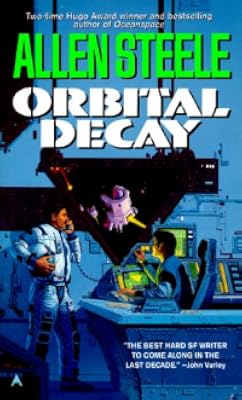
On This Page
Description
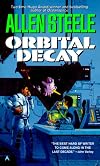
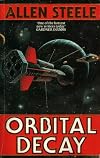
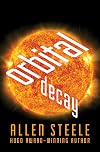
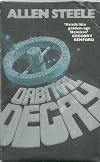
Winner of the Locus Award: Space-station workers discover a shocking global surveillance plot in this novel from "the master of science-fiction intrigue" (The Washington Post).Popeye Hooker knows that space isn't all it's cracked up to be. A former fisherman who takes a job building low orbital stations to escape a failed relationship, he finds that in space, construction work is still a grind. And when they aren't building the space stations that will usher humanity into the stars, Sam show more Sloane and the rest of the beamjacks get high, blast the Grateful Dead, and stare through telescopes at the world they left behind. But life in orbit is about to get much more interesting.
Nestled among the life support equipment that keeps them alive and the entertainment systems that keep them happy, the beamjacks find something astonishing. Turns out, their home isn't just a space station—it's a giant antenna designed to spy on every inhabitant of Earth. It's the greatest privacy invasion ever perpetrated, and the beamjacks won't stand for it.
They may not be pioneers, but these roughnecks are about to become revolutionaries.
Timely—and with Orwellian undertones, Allen Steele's debut won the Locus Award for Best First Novel. Perfect for fans of Robert Heinlein, Robert J. Sawyer, and Greg Bear, Orbital Decay blends fantasy and science fiction with a prescient attention paid to the dangers of government surveillance.
. show less
Tags
Recommendations
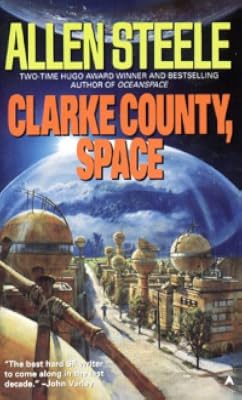
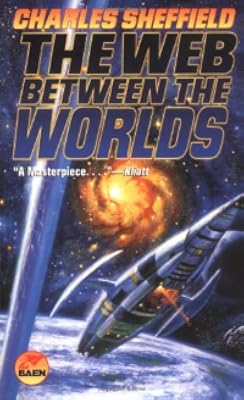
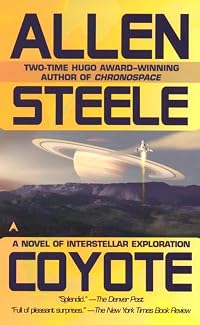






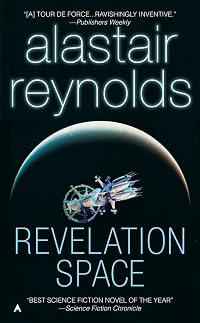

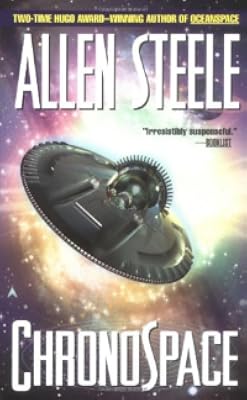
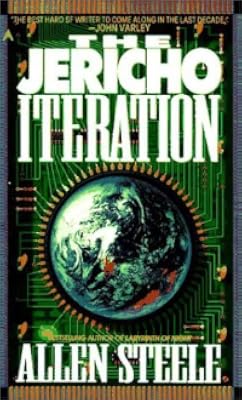


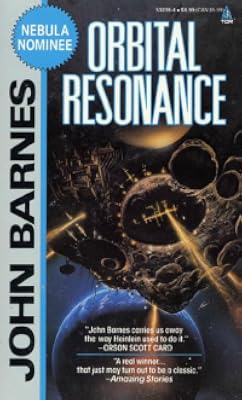

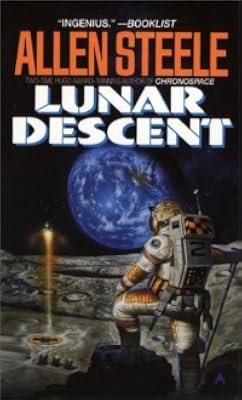
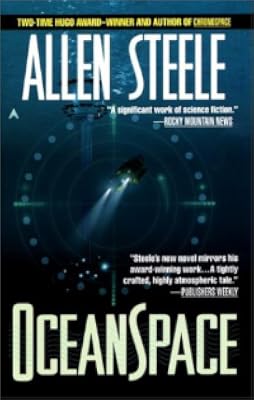
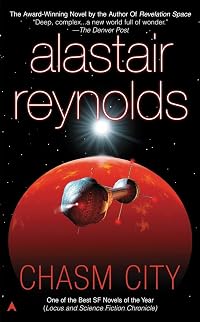
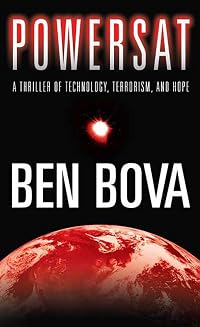





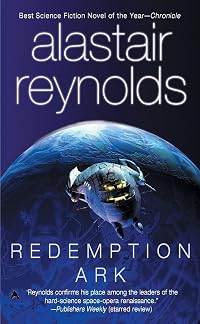



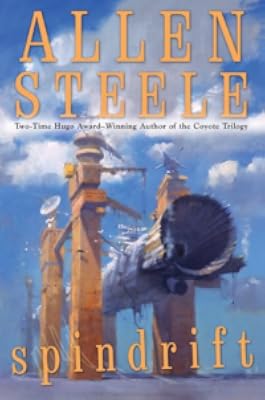


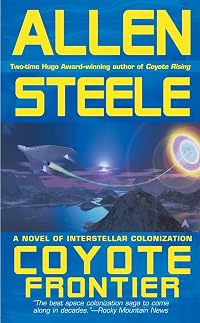
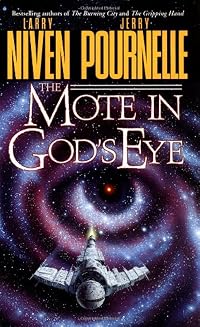
Member Recommendations
theapparatus Next book in series
Member Reviews
Allen Steele’s first novel, Orbital Decay, is the kind of book I wish Heinlein had continued to write in his last two decades. It is sci-fi with a strong engineering component and characters with slangy, individual voices. It is not really future history but wishful speculation that our space program would advance faster than was credible to think three years after the Challenger disaster. Sadly, near-Earth orbit is still not accessible to blue-collar guys in spacesuits escaping from biker gangs.
Like most writers of the time, Steele underestimated the speed with which communication technology would develop as much as he overestimated the expansion of our crewed space program. But we can wish for the day when a future version of the show more ISS will have its own little marijuana patch.
The book gets meh reviews because it is so episodic, seems dated, and does not have the cultural diversity we expect these days. But I have a forgiving nature. show less
Like most writers of the time, Steele underestimated the speed with which communication technology would develop as much as he overestimated the expansion of our crewed space program. But we can wish for the day when a future version of the show more ISS will have its own little marijuana patch.
The book gets meh reviews because it is so episodic, seems dated, and does not have the cultural diversity we expect these days. But I have a forgiving nature. show less
The story of blue collar misfit workers in space building an electricity generating satellite while led by a whacko. There are several characters who are developed very well and the reader gets to know them. The plot is cold war-ish but somehow did not hold my interest and I almost put it down in the middle. Additionally, the book contained long winded technical discussions of stuff that isn't yet built and made a few technical errors. The theme--big government is watching--is either prescient or ripped from Orwell's 1984. Overall..OK for Steele's first effort but not up to the Coyote series quality.
So, I found this book in a friends-of-the-library, take-em-by-the-bag-because-nobody-wants-'em sale.
I'm still fond of it. It's not great. But it's got some great parts. And it's actually fairly predictive.
Thing is, this was written in the late nineties and it does a damn good job of pegging our current surveillance-society.
It also gets down to the bare truth about what space is going to be like once we're actually doing stuff up there like building space stations and solar power plants and whatnot. We're going to get people up there to weld beams together all day. And they are going to be awfully bored up there.
On the downside, you realize that the author likes the Greatful Dead and rolling fatties a little too much...
I'm still fond of it. It's not great. But it's got some great parts. And it's actually fairly predictive.
Thing is, this was written in the late nineties and it does a damn good job of pegging our current surveillance-society.
It also gets down to the bare truth about what space is going to be like once we're actually doing stuff up there like building space stations and solar power plants and whatnot. We're going to get people up there to weld beams together all day. And they are going to be awfully bored up there.
On the downside, you realize that the author likes the Greatful Dead and rolling fatties a little too much...
This is the first novel of Allen Steele I have read. Previously I enjoyed his short stories - like "Emperor of Mars" presented in Starship sofa. Orbital Decay is an older book, written in the eighties, when space exploration steel held a promise. There are some lovely anachronisms here and there but not too much. Yet, the MacGuffin - the centerpiece arround which plot was constructed has a very current resonance. Orbital Decay is a good, simple story of simple men working in space. It sets up a a theme of rising conflict between new frontier that has to confront the big brother state. What is so unique about the book is that heroes are no Astronauts but everyday Joe's - space plumbers (really a construction workers called beamjacks). show more This is somewhat uncommon, and I respect and admire an author who can put a perspective on what is so common in SF - Great men doing great deeds. Here they are the bad guys, and a common man prevails.
Orbital decay is a work of someone who clearly loves the SF genre, so references to books, authors and whole SF culture are abound.
The story develops rather slowly, focusing on different aspects of life in space (mostly boredom). This is shown through the eyes of few people living in the "Olympus" space station. The conclusion was well worth going through the slow parts. A hard SF with a bit of poetic ending and a story of redemption. I certainly am glad I picked this book up.
And a little spoiler - the most awesome reentry ever! show less
Orbital decay is a work of someone who clearly loves the SF genre, so references to books, authors and whole SF culture are abound.
The story develops rather slowly, focusing on different aspects of life in space (mostly boredom). This is shown through the eyes of few people living in the "Olympus" space station. The conclusion was well worth going through the slow parts. A hard SF with a bit of poetic ending and a story of redemption. I certainly am glad I picked this book up.
And a little spoiler - the most awesome reentry ever! show less
Construction workers in space. Average Joes in vacuum and zero-G, building stuff. Neither scientists nor astronauts. That's the premise and Steele does a perfectly fine job of it, but the plots are very predictable, and you've seen all the characters before, and their backstories. Carries on the (early) Heinlein tradition, without the negatives, but doesn't really break through to another level. Readable.
I first read this book when I was in college. Gotta admit that it really was the first science fiction book that I had read that wasn't Star Trek or Doctor Who based. We didn't really have a decent selection at our local paperback bookstore (I lived in Maine and it pretty much catered to tourists and their love of trashy paperbacks) and most of the novels we had in our local library were twenty plus years old. Back then I loved it. I thought it had a decent plot, interesting characters and had a "This is what outer space is really going to be like in 20-30 years" feel to it, much unlike Star Trek.
Now that I reread it, I can't believe that I liked it that much. It jumps around a lot, rambles a bit with unrelated stories and explanations show more that seem to be thrown in for padding or word count, and just seems to be confusing to me. Almost like a series of short stories tied together into a single work. Still seems plausible in the short term (although with the current situation, it's still going to be at least 20-30 years off) but as a novel, it doesn't hold up well.
I give it two stars only because of my previous enjoyment of the novel so many years ago. show less
Now that I reread it, I can't believe that I liked it that much. It jumps around a lot, rambles a bit with unrelated stories and explanations show more that seem to be thrown in for padding or word count, and just seems to be confusing to me. Almost like a series of short stories tied together into a single work. Still seems plausible in the short term (although with the current situation, it's still going to be at least 20-30 years off) but as a novel, it doesn't hold up well.
I give it two stars only because of my previous enjoyment of the novel so many years ago. show less
This took me a while to get through. It's not because it's bad, more like it just feels a bit dated.
Basically, it's a circa 1990 story about just how boring life as a glorified construction worker in space could be. Basically, if you're into hard science fiction that doesn't glamorize space and all that involves, this could be your book.
On the other hand, I'd personally recommend the Coyote Trilogy over this.
That's really about all I have to say about Orbital Decay. So it goes.
Basically, it's a circa 1990 story about just how boring life as a glorified construction worker in space could be. Basically, if you're into hard science fiction that doesn't glamorize space and all that involves, this could be your book.
On the other hand, I'd personally recommend the Coyote Trilogy over this.
That's really about all I have to say about Orbital Decay. So it goes.
Members
- Recently Added By
Author Information

152+ Works 7,159 Members
Some Editions
Awards and Honors
Awards
Series

Common Knowledge
- Original publication date
- 1989-11
- People/Characters
- Virgin Bruce; Popeye Hooker; Joni Lowenstein; Jack Hamilton; Sam Sloane; John Bigthorn
- Dedication
- This one's for Linda
because of all the right reasons
And for her favorite band,
The Grateful Dead - First words
- Some day soon - perhaps, tomorrow, perhaps a week or a month, maybe as long as a year from now if they're really lazy about it - they're going to find this crevasse.
- Last words
- (Click to show. Warning: May contain spoilers.)It was a good night to be out in the desert with a friend.
- Blurbers
- Varley, John; Benford, Gregory; Dozois, Gardner
Classifications
Statistics
- Members
- 604
- Popularity
- 48,774
- Reviews
- 14
- Rating
- (3.29)
- Languages
- English, German, Spanish
- Media
- Paper, Audiobook, Ebook
- ISBNs
- 9
- ASINs
- 6