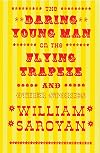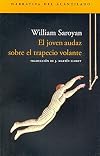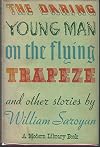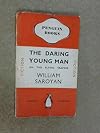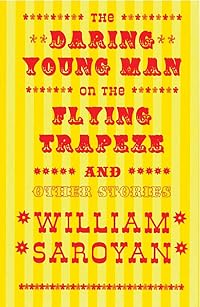
The Daring Young Man on the Flying Trapeze and Other Stories
by William Saroyan
On This Page
Description
Saroyan's debut collection of stories.A timeless selection of brilliant short stories that won William Saroyan a position among the foremost, most widely popular writers of America when it first appeared in 1934.With the greatest of ease William Saroyan flew across the literary skies in 1934 with the publication of The Daring Young Man on the Flying Trapeze and Other Stories. One of the first American writers to describe the immigrant experience in the U.S., Saroyan created characters who show more were Armenians, Jews, Chinese, Poles, Africans, and the Irish. The title story touchingly portrays the thoughts of a very young writer, dying of starvation. All of the tales were written during the great depression and reflect, through pathos and humor, the mood of the nation in one of its greatest times of want. show less
Tags
Recommendations
































Member Reviews
“If I have any desire at all, it is to show the brotherhood of man.”
I had heard of Saroyan, but in a vague way. So I was very pleased to see a new edition of his short stories on NetGalley.
The setting is the Great Depression. Saroyan is very male-centric in his stories – considering my “usual” reads, I thought it was almost refreshing. A change in perspective is one of the many reasons to love reading, I suppose. I did make sure to go through only a few stories a day, so that I wouldn’t overdose on young men.
Saroyan handles words with such dexterity! Everything is so simple, yet poetic. The writing is quietly explosive, warm, humane, whimsical, incredibly sad. The stories are all very short, they are fragments, vignettes. show more They are virtually plotless. Some of them are mesmerizing streams of consciousness. There are snapshots of tramps, beggars, prostitutes, flower peddlers, gamblers, struggling young writers. But ultimately, all the stories are about the miracle of being alive.
I don’t think it’s a good idea to review 26 stories, so let me just mention a few.
“The Daring Young Men on the Flying Trapeze” - a young man is starving to death. He is looking for work, but there is no work. “If the truth were known, he was half starved and yet still there was no end of books he ought to read before he died.”
“Seventy Thousand Assyrians” - an aspiring writer goes to get a haircut, watches people and thinks about many things. “I hadn’t had a haircut in forty days and forty nights, and I was beginning to look like several violinists out of work.”
“Love, Death, Sacrifice and so forth” – this one tells the plot of a Hollywood movie (probably a well-known one, unseen by me). It is satirical, funny and sad all at once. “All I know is this: that suicide is not an orderly occurrence with symphonic music.”
“A Curved Line” - a guy goes to an evening art class. Another mixture of whimsical and sad things. (The story is also rather “male-gazey”. Oh well). “The thing that worries me is that my great-grand-children are going to have to listen to “The Blue Danube Waltz” too.”
“A Cold Day” - a young author is freezing by his typewriter. “The man you write of need not perform some heroic or monstrous deed in order to make your prose great.”
Reading these gave me a feeling akin to happiness, despite so much heartbreak. As I looked up from the book after each story, everything and everyone grew sharper, more colourful, more here.
Thanks a lot to NetGalley and the publisher for the free e-book! show less
I had heard of Saroyan, but in a vague way. So I was very pleased to see a new edition of his short stories on NetGalley.
The setting is the Great Depression. Saroyan is very male-centric in his stories – considering my “usual” reads, I thought it was almost refreshing. A change in perspective is one of the many reasons to love reading, I suppose. I did make sure to go through only a few stories a day, so that I wouldn’t overdose on young men.
Saroyan handles words with such dexterity! Everything is so simple, yet poetic. The writing is quietly explosive, warm, humane, whimsical, incredibly sad. The stories are all very short, they are fragments, vignettes. show more They are virtually plotless. Some of them are mesmerizing streams of consciousness. There are snapshots of tramps, beggars, prostitutes, flower peddlers, gamblers, struggling young writers. But ultimately, all the stories are about the miracle of being alive.
I don’t think it’s a good idea to review 26 stories, so let me just mention a few.
“The Daring Young Men on the Flying Trapeze” - a young man is starving to death. He is looking for work, but there is no work. “If the truth were known, he was half starved and yet still there was no end of books he ought to read before he died.”
“Seventy Thousand Assyrians” - an aspiring writer goes to get a haircut, watches people and thinks about many things. “I hadn’t had a haircut in forty days and forty nights, and I was beginning to look like several violinists out of work.”
“Love, Death, Sacrifice and so forth” – this one tells the plot of a Hollywood movie (probably a well-known one, unseen by me). It is satirical, funny and sad all at once. “All I know is this: that suicide is not an orderly occurrence with symphonic music.”
“A Curved Line” - a guy goes to an evening art class. Another mixture of whimsical and sad things. (The story is also rather “male-gazey”. Oh well). “The thing that worries me is that my great-grand-children are going to have to listen to “The Blue Danube Waltz” too.”
“A Cold Day” - a young author is freezing by his typewriter. “The man you write of need not perform some heroic or monstrous deed in order to make your prose great.”
Reading these gave me a feeling akin to happiness, despite so much heartbreak. As I looked up from the book after each story, everything and everyone grew sharper, more colourful, more here.
Thanks a lot to NetGalley and the publisher for the free e-book! show less
Reading this set of short stories by William Saroyan for the first time was an immense pleasure. Written with humor and full of emotion, there are twenty six stories in this, Saroyan’s first book.
In the Preface the author says that some of the stories were “practice pieces”, and though the style may vary a bit from story to story they are all quintessential Saroyan. He is known for his “free style” of writing. He is much more concerned with conveying an idea, a tone, or an emotion, and much less with the form a story takes. Some of the stories in this book do try to tell a “conventional” tale with a beginning, a middle, and an end, but the best of them are vignettes or conversational pieces. All of them convey rich show more emotion, and most succeed in conveying a deeper idea than the “daily-life” story written on the page.
Most of the stories are centered on young men, about Saroyan’s age, or a bit younger. They live on the West Coast, in and around Fresno (and up to San Francisco), the scene of much of Saroyan’s work. Many of these young men, like Saroyan himself, are struggling to establish themselves as writers.
I liked the stories that featured young struggling writers the best. In these stories, like Seventy Thousand Assyrians and Myself Upon the Earth, Saroyan mixes storytelling with explanations (put into the mouths of his writer characters) of what writing means to him, and what he wants to achieve with it. In that way they are really essays, but wrapped into a story that itself demonstrates what the essay is trying to convey.
In the first story noted above, for instance, Saroyan’s character says:
“I am out here in the far West, in San Francisco, in a small room on Carl Street, writing a letter to common people, telling them in simple language things they already know.”
And later in the same story:
“If I have one desire at all, it is to show the brotherhood of man. This is a big statement and sounds a little precious. Generally a man is ashamed to make such a statement. He is afraid sophisticated people will laugh at him. But I don’t mind. I’m asking sophisticated people to laugh. That is what sophistication is for.”
You get a real sense of who Saroyan was in these stories.
I read Saroyan’s The Human Comedy as a young teen, and it struck a deep chord in me. For years I claimed it as my favorite book. But I tried to read it again in my thirties and I was surprised that it just didn’t hit me in the same way. Perhaps I had become too much like those “sophisticated people”.
From my own experience then, I think that you, as a reader, need to be in a certain receptive state of mind to really appreciate Saroyan. I am happy to find that I am once again in a Saroyan state of mind. The stories here are ones I could return to again and again.
I’m not sure how many people still read Saroyan, but he is well worth your time. He writes with a style all his own, perhaps somewhere between Twain and Hemingway. I’ve resisted the temptation until now of putting star ratings on the classic books I’ve been reading in this challenge, but this was definitely a Five Star ⭐⭐⭐⭐⭐ read for me. show less
In the Preface the author says that some of the stories were “practice pieces”, and though the style may vary a bit from story to story they are all quintessential Saroyan. He is known for his “free style” of writing. He is much more concerned with conveying an idea, a tone, or an emotion, and much less with the form a story takes. Some of the stories in this book do try to tell a “conventional” tale with a beginning, a middle, and an end, but the best of them are vignettes or conversational pieces. All of them convey rich show more emotion, and most succeed in conveying a deeper idea than the “daily-life” story written on the page.
Most of the stories are centered on young men, about Saroyan’s age, or a bit younger. They live on the West Coast, in and around Fresno (and up to San Francisco), the scene of much of Saroyan’s work. Many of these young men, like Saroyan himself, are struggling to establish themselves as writers.
I liked the stories that featured young struggling writers the best. In these stories, like Seventy Thousand Assyrians and Myself Upon the Earth, Saroyan mixes storytelling with explanations (put into the mouths of his writer characters) of what writing means to him, and what he wants to achieve with it. In that way they are really essays, but wrapped into a story that itself demonstrates what the essay is trying to convey.
In the first story noted above, for instance, Saroyan’s character says:
“I am out here in the far West, in San Francisco, in a small room on Carl Street, writing a letter to common people, telling them in simple language things they already know.”
And later in the same story:
“If I have one desire at all, it is to show the brotherhood of man. This is a big statement and sounds a little precious. Generally a man is ashamed to make such a statement. He is afraid sophisticated people will laugh at him. But I don’t mind. I’m asking sophisticated people to laugh. That is what sophistication is for.”
You get a real sense of who Saroyan was in these stories.
I read Saroyan’s The Human Comedy as a young teen, and it struck a deep chord in me. For years I claimed it as my favorite book. But I tried to read it again in my thirties and I was surprised that it just didn’t hit me in the same way. Perhaps I had become too much like those “sophisticated people”.
From my own experience then, I think that you, as a reader, need to be in a certain receptive state of mind to really appreciate Saroyan. I am happy to find that I am once again in a Saroyan state of mind. The stories here are ones I could return to again and again.
I’m not sure how many people still read Saroyan, but he is well worth your time. He writes with a style all his own, perhaps somewhere between Twain and Hemingway. I’ve resisted the temptation until now of putting star ratings on the classic books I’ve been reading in this challenge, but this was definitely a Five Star ⭐⭐⭐⭐⭐ read for me. show less
Después de leer 'La comedia humana', que me dejó tan buen sabor de boca, quería más Saroyan. Pero no me he encontrado lo que esperaba. El primer libro de Saroyan que leí fue 'Me llamo Aram', y, aunque no llega al nivel de La comedia, sí deja entrever en alguno de los cuentos que contiene ese germen que le hace especial. En 'El joven audaz sobre el trapecio volante', gran título por otra parte, hay que buscar bastante para encontrar esa magia. Encuentro que es un libro bien escrito, pero irregular. No hay que olvidar que se trata de un libro de cuentos, género con el que soy muy exigente y que pocas veces me complace. Aun así, me esperaba más.
Los cuentos de El joven audaz están escritos en los años 30, es decir, durante la show more Gran Depresión, con un Saroyan, hijo de inmigrantes armenios, queriendo abrirse a brazo partido en el mundo de las letras, trabajando en múltiples empleos, en lo que fuese. Y ésto se deja traslucir en el libro, esa rabia por su suerte y la de muchos de sus contemporáneos. Lo encuentro demasiado descarnado, con una poesía y lirismo que me ha cansado la mayoría de las veces. Destaco el gran ojo de Saroyan para observar y narrarnos los sentimientos humanos, con todas sus miserias. Pero yo me que quedo con el Saroyan de los años 40.
Estos son los cuentos, junto con mis valoraciones:
- Sesenta mil asirios (****)
- Serpiente (*)
- Amor, muerte, sacrificios, etcétera (****)
- 1,2,3,4,5,6,7,8 (****)
- La Tierra, día, noche, él (**)
- El hombre de las postales francesas (***)
- Hombre (***)
- Diecisiete años (*)
- Risa (***)
- Guerra (*)
- Harry (**)
- Una línea curva (**)
- Viñedo del Gran Valle (*)
- Un día de frío (***)
- Llega el gran árbol (*)
- Querida Greta Garbo (***)
- El joven audaz sobre el trapecio volante: I.Sueño (*), II.Vigilia (*)
- Con los extraviados (*)
- Tres historias: I.Groenlandia (*), II.Vladimir (*), III.Una anciana respirando (*)
- La aspirina forma parte de la NRA (*)
- Dormir en paz terrenal (*)
- Id vosotros a la guerra (**)
- Oración (*)
- La hija del pastor (*)
- Yo sobre la Tierra (**) show less
Los cuentos de El joven audaz están escritos en los años 30, es decir, durante la show more Gran Depresión, con un Saroyan, hijo de inmigrantes armenios, queriendo abrirse a brazo partido en el mundo de las letras, trabajando en múltiples empleos, en lo que fuese. Y ésto se deja traslucir en el libro, esa rabia por su suerte y la de muchos de sus contemporáneos. Lo encuentro demasiado descarnado, con una poesía y lirismo que me ha cansado la mayoría de las veces. Destaco el gran ojo de Saroyan para observar y narrarnos los sentimientos humanos, con todas sus miserias. Pero yo me que quedo con el Saroyan de los años 40.
Estos son los cuentos, junto con mis valoraciones:
- Sesenta mil asirios (****)
- Serpiente (*)
- Amor, muerte, sacrificios, etcétera (****)
- 1,2,3,4,5,6,7,8 (****)
- La Tierra, día, noche, él (**)
- El hombre de las postales francesas (***)
- Hombre (***)
- Diecisiete años (*)
- Risa (***)
- Guerra (*)
- Harry (**)
- Una línea curva (**)
- Viñedo del Gran Valle (*)
- Un día de frío (***)
- Llega el gran árbol (*)
- Querida Greta Garbo (***)
- El joven audaz sobre el trapecio volante: I.Sueño (*), II.Vigilia (*)
- Con los extraviados (*)
- Tres historias: I.Groenlandia (*), II.Vladimir (*), III.Una anciana respirando (*)
- La aspirina forma parte de la NRA (*)
- Dormir en paz terrenal (*)
- Id vosotros a la guerra (**)
- Oración (*)
- La hija del pastor (*)
- Yo sobre la Tierra (**) show less
Saroyan has a gift for articulating the thoughts and emotions which the rest of us have worked hard to bury. I especially appreciated his ability to explore the darkest corners of the human mind and still find good in the world and in life.
This was a complete mixed bag for me!! First of all, it is one more book off my list of those fascinating titles that i have always yearned to know what they meant - and it was less significant than i expected. Some great stories nestled in amongst some that were just dreadful to me. In fact, i never would have predicted the 3-stars 1/3-way through or more. Way too much melancholy introspection about mankind and the world and a beginning writer struggling to get by and his damned phonograph. Many too many that were just the same drivel on and on. But then, some very insightful and almost charming nuggets started to show up to save the day. Highlights for me were - - 'Snake', Seventeen', 'The Shepherd's Daughter', 'Love', & 'Laughter.' show more Also, my volume is an old hardcover Modern Library Edition which i just love to hold and carry and read, so that helped a little. Proceed with caution.... show less
The first of Saroyan's many important collections, it features stories that are explore both the light and dark sides of the world of the 1930s at the same time as presenting some unique perspectives. The story "Dear Gretta Garbo" is a fascinating piece that is actually more relevant today than it was in 1934!
This is probably William Saroyan's second best short story collection, the first being "My Name Is Aram".The title story, about a young struggling writer dying of starvation, is probably the best and most poignant. Saroyan can be self-obsessed and uneven as a writer, but these stories are of uniformly high quality, written before fame and success had affected him.
Members
- Recently Added By
Lists

Recommended Reading : 600 Classics Reviewed, Editors of Salem Press, 2015
634 works; 6 members
Author Information

249+ Works 4,178 Members
An Armenian American with little formal education, Saroyan was a dramatist who disparaged the usual conventions of the form: "Plot, atmosphere, style, and all the rest of it," he wrote, "may be regarded as so much nonsense" (Three Times Three). His plays have been criticized as formless and his writing as undisciplined; yet his work is imbued with show more fondness for the human race and contains an infectious enthusiasm for society's misfits and innocents. Saroyan's dramatic career was launched with My Heart's in the Highlands (1939), a fantasy. The following year, The Time of Your Life (1939) was awarded the Pulitzer Prize---which Saroyan publicly refused on the grounds that commerce had no right to patronize art. This play, undoubtedly Saroyan's one enduring piece, takes place in a waterfront saloon where vivid characters wander in and out to come into contact with the philosophical Joe, a man of unending generosity. (Bowker Author Biography) show less
Some Editions
Series
Belongs to Publisher Series
Work Relationships
Is contained in
Common Knowledge
- Canonical title
- The Daring Young Man on the Flying Trapeze and Other Stories
- Original title
- The Daring Young Man on the Flying Trapeze and Other Stories
- Alternate titles*
- Il trapezio volante
- Original publication date
- 1934
- Important places*
- Armenië
*Some information comes from Common Knowledge in other languages. Click "Edit" for more information.
Classifications
Statistics
- Members
- 285
- Popularity
- 113,290
- Reviews
- 8
- Rating
- (4.11)
- Languages
- 16 — Czech, Danish, English, French, German, Icelandic, Italian, Polish, Portuguese (Brazil), Portuguese (Portugal), Romanian, Russian, Slovak, Slovenian, Spanish, Turkish
- Media
- Paper, Ebook
- ISBNs
- 9
- ASINs
- 15