Hop-Frog [short story]
by Edgar Allan Poe
On This Page
Description
"Hop-Frog" by Edgar Allan Poe explores themes of revenge and freedom. It follows the story of a jester, Hop-Frog, and his close companion, Trippetta, both mistreated by a cruel king and his court. The narrative delves into the limits of endurance and the lengths one will go to reclaim dignity and autonomy.Tags
Recommendations


















Member Reviews
Love and Revenge – among the most intense, powerful, all-consuming passions in the entire range of human experience. I just did finish “The Son” by Jo Nesbø, a novel fueled by high octane love and revenge, enough revenge that when a reader turns the book’s last page, the tally of corpses for the morgue runs in double digits. Curiously enough, Nesbø’s novel reminded me of another tale of love and revenge, a classic, one penned by the inventor of the modern revenge tale, Edgar Allan Poe, a tale about a dwarf in the court of a medieval king, a tale with the title “Hop-Frog".
The narrator begins by saying he never knew anybody who appreciated a joke as much as the king, a fat, jolly king who’s central reason for living was show more joking, so much so he surrounded himself with seven equally fat ministers who were accomplished jokers. And, as to the variety of jokes the king most enjoyed, well, the coarser the better, more specifically, coarse jokes that made fun, nay, humiliated and degraded others, and, to add more spice to his fun, if such humiliation and degradation mixed with a good dose of sadism, well, now that would really and truly be funny.
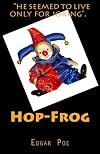
So, recognizing his taste for coarse, sadistic humor, this oh so jolly king had a special variety of jester at his court – a three-in-one object of ridicule, since his jester was not only a funny fatso but also, as the narrator describes, a dwarf and a cripple, a jester by the name of Hop-Frog, so named since Hop-Frog didn’t walk, rather this pint-sized fatso could only move by awkward, jerking jumps. And, for even greater kicks and jollies, the king also kept a second dwarf, a graceful young girl by the name of Trippetta. What fun! And, not surprisingly, emotionally bonded in their common plight, Trippetta and Hop-Frog became fast friends.
Let’s pause to reflect on a few similarities between Poe’s tale and Nesbø’s novel. Both feature a protagonist not only violated but, even more extreme, dehumanized; both tale and novel feature a sadistic villain; and, lastly, both feature a protagonist’s love for another. And these three common themes appear in abundance in ‘Dark Arrows: Great Stories of Revenge’ anthologized by Alberto Manguel, featuring such tales as “The Squaw” by Bram Stoker, "Emma Zunz" by Jorge Luis Borges and “A Bear Hunt” by William Faulkner. The reason I reference these tales is to underscore the power such a narrative line has for readers – via the magic of literature, we live through the emotions of the violated extracting their revenge and rescuing the love of their life – a deeply moving experience.
Back on Poe’s tale. The king hosts a masquerade ball but is in a quandary: what should he himself do to be original? Events transpire leading Hop-Frog to offer a suggestion: a party of eight can enter the masquerade as escaped wild orangutans. The king jumps at the suggestion – he and his seven ministers will do it!
Such costumed extravaganzas are part of the historic record – case in point: in France during the 14th century, a young French king and his five nobleman buddies covered themselves with tar, flax and animal hair and, taking the role of wood savages, entered a room of masqueraders. The wood savages hooted and howled to everyone’s delight but disaster of disasters: a masquerader's torch came too close – several wood savages caught fire and burned alive. Will a similar fate befall the king and his seven ministers? Read this Poe tale (link below) to find out. And please let this review serve as a double recommendation – one recommendation for Poe’s tale and one for Jo Nesbø’s novel. Revenge doesn’t get any sweeter.
http://poestories.com/read/hop-frog show less
This one was a surprise for me. Not exactly one of his creepiest stories, but it really made you agree that the bad guys, the king & his ministers' council totally deserved what they got. To take away a boy's name & call him by a ridiculous name simply because of his disabilities is a sad thing, but I know that historically it did happen with court fools. I am glad to see that the fool gets the upper hand in this one :)
This is a bit reminiscent of the 1930s movie Freaks, in which normal people abuse freaks and then have the freaks turn upon them.
Ratings
Members
- Recently Added By
Lists

Troublesome bodies
110 works; 7 members
Author Information

3,818+ Works 107,733 Members
Edgar Allan Poe was born in Boston, Massachusetts on January 19, 1809. In 1827, he enlisted in the United States Army and his first collection of poems, Tamerlane and Other Poems, was published. In 1835, he became the editor of the Southern Literary Messenger. Over the next ten years, Poe would edit a number of literary journals including the show more Burton's Gentleman's Magazine and Graham's Magazine in Philadelphia and the Broadway Journal in New York City. It was during these years that he established himself as a poet, a short story writer, and an editor. His works include The Fall of the House of Usher, The Tell-Tale Heart, The Murders in the Rue Morgue, The Mystery of Marie Roget, A Descent into the Maelstrom, The Masque of the Red Death, and The Raven. He struggle with depression and alcoholism his entire life and died on October 7, 1849 at the age of 40. (Bowker Author Biography) show less
Awards and Honors
Awards
Series
Belongs to Publisher Series
Work Relationships
Is contained in
The Works of Edgar Allen Poe in One Volume: Poems, Tales, Essays, Criticisms with New Notes by Edgar Allan Poe
The Best Known Works of Edgar Allan Poe in One Volume: Poems, Tales, Essays, Criticisms by Edgar Allan Poe
Cuentos completos de Edgar Allan Poe. . Edicion comentada (Spanish Edition) by Edgar Allan Poe (indirect)
The Complete Tales and Poems of Edgar Allan Poe with Selections from His Critical Writings by Edgar Allan Poe
The annotated tales of Edgar Allan Poe edited with an introduction, notes, and a bibliography by Edgar Allan Poe
The Fall of the House of Usher and Other Writings: Poems, Tales, Essays, and Reviews (Penguin Classics) by Edgar Allan Poe
Edgar Allan Poe: Collected Stories and Poems (Collector's Library Editions) by Edgar Allan Poe (indirect)
Common Knowledge
Classifications
Statistics
- Members
- 87
- Popularity
- 368,491
- Reviews
- 3
- Rating
- (3.82)
- Languages
- English, Italian, Portuguese, Spanish
- Media
- Paper, Audiobook, Ebook
- ISBNs
- 30
- ASINs
- 9