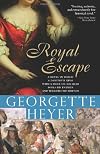
Royal Escape
by Georgette Heyer
On This Page
Description
Dispossessed of crown and kingdom, crushed and routed at the grim Battle of Worcester, the young Charles II is forced to flee for his life. Out of the heat of battle, the outlaw King and his tiny party must journey across Cromwell's England to a Channel port and a ship bound for France and safety. But the King, with his love of adventure, his irrepressible humour and his unmistakeable looks, is no easy man to hide.Tags
Recommendations


















Member Reviews
From time to time Georgette Heyer left the Regency world in which she was steeped and wrote of other periods in History.
In ‘Royal Escape’ she tells the story of Charles 11’s escape after defeat at the Battle of Worcester and the desperate attempts of his supporters to evade Cromwell’s troops and get the King to safety in France.
The book plays out like a thriller and encourages me to try Heyer’s detective stories, another genre in which she wrote successfully.
The king is moved from one safe house to another, danger never far away and his helpers are not just fellow aristocrats like the hard pressed Lord Wilmot whose task it is to organise a boat to carry the King to safety, but also royalists from many different backgrounds show more ranging from country people able to pilot the King through the countryside to various safe havens and middle class landowners who harbour him in their Manor Houses. Some of these are Catholic and have handy priests holes and other hiding places which are valuable in this perilous situation.
A couple of young ladies with very different temperaments are also involved in these adventures. Charles 11’s well known propensity for the fair sex is explored and one of these girls, Jane Lane ,has the misfortune to fall in love with him.
Heyer does not white wash his character. She reveals his cynicism, his lascivious temperament, and his lack of faith in most people. She shows how this has come about because of his experiences in recent years, including having to endure the execution of his father. Trust now does not come easily to him.
However the steadfast loyalty which he finds in those who help him and the knowledge he gains of classes of people whom he would normally never encounter does impress him and he promises to remember and reward them when he gains his throne.
I was very impressed both by Georgette Heyer’s research(always impressive) and by the pace and excitement of the story she tells. She makes me want to know more about this period of history and also to explore her other non-regency stories, much as I love these. show less
In ‘Royal Escape’ she tells the story of Charles 11’s escape after defeat at the Battle of Worcester and the desperate attempts of his supporters to evade Cromwell’s troops and get the King to safety in France.
The book plays out like a thriller and encourages me to try Heyer’s detective stories, another genre in which she wrote successfully.
The king is moved from one safe house to another, danger never far away and his helpers are not just fellow aristocrats like the hard pressed Lord Wilmot whose task it is to organise a boat to carry the King to safety, but also royalists from many different backgrounds show more ranging from country people able to pilot the King through the countryside to various safe havens and middle class landowners who harbour him in their Manor Houses. Some of these are Catholic and have handy priests holes and other hiding places which are valuable in this perilous situation.
A couple of young ladies with very different temperaments are also involved in these adventures. Charles 11’s well known propensity for the fair sex is explored and one of these girls, Jane Lane ,has the misfortune to fall in love with him.
Heyer does not white wash his character. She reveals his cynicism, his lascivious temperament, and his lack of faith in most people. She shows how this has come about because of his experiences in recent years, including having to endure the execution of his father. Trust now does not come easily to him.
However the steadfast loyalty which he finds in those who help him and the knowledge he gains of classes of people whom he would normally never encounter does impress him and he promises to remember and reward them when he gains his throne.
I was very impressed both by Georgette Heyer’s research(always impressive) and by the pace and excitement of the story she tells. She makes me want to know more about this period of history and also to explore her other non-regency stories, much as I love these. show less
This is a slightly odd book. It tells of Charles II's attempts to leave the country after the defeat at the battle of Worcester. And from that perspective, it is a rip roaring adventure tale. Only there's a few too many occasions when the dialogue is overly florid. And there are just a few too many times when Charles' ugly face is split with his dazzling smile and his charm wins over another person who gets dragged into the mess. It's all very uncritical of him, when at times he makes some poor decisions, or has them made on his behalf. It sounds extremely improbable, but Heyer has a reputation for historical accuracy, so one can't doubt that some version of this happened.
I was pleased to note that my home town got a mention, but came show more off badly, there being no sea captain considered trustworthy enough to take the King to France. The egalitarian part of me can't but help be mildly pleased that we were not up to scratch.
Re-read. I have very little to add, it remains a very odd book. Less tedious, in terms of battle descriptions than [An Infamous Army], but it still gets rather repetitive. show less
I was pleased to note that my home town got a mention, but came show more off badly, there being no sea captain considered trustworthy enough to take the King to France. The egalitarian part of me can't but help be mildly pleased that we were not up to scratch.
Re-read. I have very little to add, it remains a very odd book. Less tedious, in terms of battle descriptions than [An Infamous Army], but it still gets rather repetitive. show less
Royal Escape is Georgette Heyer's retelling of the king's escape following the Battle of Worcester in 1651, when Charles Stuart was soundly defeated by Cromwell's Roundheads. The 21-year-old king must flee to France to save his life, and is in almost constant danger as he and his followers travel the countryside in disguise. Political feelings are running high on both sides and there is a large reward promised to the man who gives information leading to the king's capture.
The story follows the king as he makes several abortive attempts to leave the country. There are many humorous moments that keep it from becoming merely a frustrating string of mischances and ill luck. Heyer portrays Charles as a very personable young man with an show more irrepressible sense of humor. I think the fascination of this story is in that portrayal, actually, and from what I have read it's historically substantiated. Though ugly, Charles nevertheless has strong personal magnetism and commands loyalty in even the most fearful of his subjects.
And really, it's those humble subjects who make the tale worth hearing. They are wholly devoted to his cause, even at the expense of their own lives, and count any privations they might suffer on his behalf as privileges. Though the thousand-pound reward would be a fortune beyond imagining to the poor country folk who aid him, the ones we meet would scorn to touch that "blood money."
Heyer has a good ear for the sayings of the time, with people loyal to the king invariably called "honest" and each man doing "his possible." It was interesting how the Battle of Worcester was always called "Worcester fight." It's clear she has done her research, and everything rings true.
I listened to this story on audiobook. Cornelius Garrett's vivacious reading was a pleasure to hear, and he did an excellent job differentiating the characters through their voices and accents. The female characters were a little weak; it seems harder for men to give a believable rendition of a woman's voice than for an actress to play a male part. But for the most part I enjoyed his reading.
I think the pacing of this story dragged a little because of both its subject matter and because I listened to it on audiobook. Make no mistake, I enjoyed it. But sometimes I found myself wishing that Charles and Wilmot and all that crew would finally hit upon a successful way to smuggle the king out of England, so I could move on with my life ;). I might have enjoyed this more had I read it rather than listened to it, but I would still recommend it to fans of historical fiction for its memorable characters and rich, witty dialogue. show less
The story follows the king as he makes several abortive attempts to leave the country. There are many humorous moments that keep it from becoming merely a frustrating string of mischances and ill luck. Heyer portrays Charles as a very personable young man with an show more irrepressible sense of humor. I think the fascination of this story is in that portrayal, actually, and from what I have read it's historically substantiated. Though ugly, Charles nevertheless has strong personal magnetism and commands loyalty in even the most fearful of his subjects.
And really, it's those humble subjects who make the tale worth hearing. They are wholly devoted to his cause, even at the expense of their own lives, and count any privations they might suffer on his behalf as privileges. Though the thousand-pound reward would be a fortune beyond imagining to the poor country folk who aid him, the ones we meet would scorn to touch that "blood money."
Heyer has a good ear for the sayings of the time, with people loyal to the king invariably called "honest" and each man doing "his possible." It was interesting how the Battle of Worcester was always called "Worcester fight." It's clear she has done her research, and everything rings true.
I listened to this story on audiobook. Cornelius Garrett's vivacious reading was a pleasure to hear, and he did an excellent job differentiating the characters through their voices and accents. The female characters were a little weak; it seems harder for men to give a believable rendition of a woman's voice than for an actress to play a male part. But for the most part I enjoyed his reading.
I think the pacing of this story dragged a little because of both its subject matter and because I listened to it on audiobook. Make no mistake, I enjoyed it. But sometimes I found myself wishing that Charles and Wilmot and all that crew would finally hit upon a successful way to smuggle the king out of England, so I could move on with my life ;). I might have enjoyed this more had I read it rather than listened to it, but I would still recommend it to fans of historical fiction for its memorable characters and rich, witty dialogue. show less
Set after the execution of Charles I, this book tells the story of Charles II after his forces lose the Battle of Worcester and he is forced to try and escape the country and go into hiding in France. To be honest there isn’t much of a plot to this book. Okay, so we have the would-be king riding about the English countryside, or sometimes walking, trying to escape. But we all know that he does, escape that is, I mean we have all heard of the Restoration right? So the book is more of a character study of Charles II
And though well written and entertaining, to be honest I can’t say that I really liked our hero. Though that may be my dislike of English kings coming through. Possibly not though, because, well, he is certainly the lesser show more of two evils when the other is Cromwell.
Still, despite his kingly flaws, Charles is entertaining enough. He may give his advisers headaches and scare them almost to death with his seeming disregard for his own safety, but there is nothing to really dislike about him. And Heyer does her usual good job of keeping the reader entertained.
Also as usual for her, the use of language is fantastic. Full of the slang and conventions of the day, it is still readable and entertaining. That being said it isn’t the best of books.
What I did like was that although the female roles in the book are usually quite stereotypical every know and then Heyer seems to draw attention to this fact. And of course the fact that women weren’t really all that listened to back then. Especially not by 21 year old young kings. Good for looking at, some of them, but not for talking to. show less
And though well written and entertaining, to be honest I can’t say that I really liked our hero. Though that may be my dislike of English kings coming through. Possibly not though, because, well, he is certainly the lesser show more of two evils when the other is Cromwell.
Still, despite his kingly flaws, Charles is entertaining enough. He may give his advisers headaches and scare them almost to death with his seeming disregard for his own safety, but there is nothing to really dislike about him. And Heyer does her usual good job of keeping the reader entertained.
Also as usual for her, the use of language is fantastic. Full of the slang and conventions of the day, it is still readable and entertaining. That being said it isn’t the best of books.
What I did like was that although the female roles in the book are usually quite stereotypical every know and then Heyer seems to draw attention to this fact. And of course the fact that women weren’t really all that listened to back then. Especially not by 21 year old young kings. Good for looking at, some of them, but not for talking to. show less
Oddly dull - despite all the desperate chances they had to take, I never really got interested in any of the characters or why they were doing all this. It didn't help that most of the time I was reading I thought the Prince was Bonnie Prince Charlie - rather than his uncle, the future Charles II. Charles is extremely charming - which results in everyone falling over themselves to give him whatever he wants. He's actually quite a nice guy, and sometimes takes back a request if he discovers it's going to be difficult...and sometimes not. He's quite confident throughout that he can manage. I don't know...interesting adventures, some witty badinage (it is a Heyer, after all - which also means it's well-written), illumination of a period of show more English history I know little about (I spent quite a while on Wikipedia etc trying to figure out timelines and family trees), and yet I found it rather a slog to read and have no interest in rereading. Not a winner for me. show less
Excellent 17th century historical detail, surrounding Charles II's escape to France. The story was too slowly paced considering the adventure and intrigue around this royal pursuit. Cromwell's England was a country divided and the novel doesn't particularly reflect how dangerous these times were.
Hugely enjoyable tale of King Charles ll, fleeing from the Battle of Worcester staying in safe houses, while planning to reach the Channel to sail to France.
Wonderful characters litter the story and Charles's charming wit and humour is a joy to read.
As this was written by Heyer in 1938, this has held up remarkably well.
Wonderful characters litter the story and Charles's charming wit and humour is a joy to read.
As this was written by Heyer in 1938, this has held up remarkably well.
Members
- Recently Added By
Lists

Favorite Georgette Heyer Novels, Ranked
49 works; 29 members

Set in the 1600s
15 works; 5 members
Author Information

125+ Works 78,054 Members
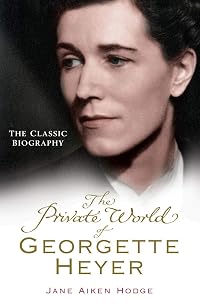
Georgette Heyer was born on August 16, 1902 at Wimbledon, London. She wrote The Black Moth as a story for her brother Boris. Her father, impressed with his daughter's imagination, suggested that she prepare it to be published, which it was by Constable in 1921. Having scored an instant success with The Black Moth at the age of nineteen under her show more own name, Georgette Heyer, she experimented with a pseudonym, Stella Martin, for her third book, published by Mills & Boon. She continued writing and in 1925 she married Ronald Rougier, a mining engineer. After reasonable but not spectacular sales from her first few books the instant success of These Old Shades in 1926 brought her a solid source of income which was very necessary at the time since the family relied to a large extent on the income from Georgette Heyer's writing. She wrote over fifty books during her lifetime and created the Regency England genre of romance novels. She died on July 4, 1974 at the age of 71. (Bowker Author Biography) show less
Some Editions
Series
Belongs to Publisher Series
rororo (4785)
Work Relationships
Common Knowledge
- Canonical title
- Royal Escape
- Original title
- Royal Escape
- Original publication date
- 1938
- People/Characters
- Charles II, King of England, Scotland, and Ireland; Juliana Coningsby; Wilmot
- Important places
- England, UK
- Important events
- English Civil War; Battle of Worcester (1651); Interregnum
- First words
- From the time of the King's ascending the cathedral tower, which he had done early in the morning, to observe the disposition of Cromwell's forces, the day had been dull, heavy with autumnal mists, as gloomy as General Leslie... (show all)'s face.
- Last words
- (Click to show. Warning: May contain spoilers.)He mounted Lawrence Hyde's horse, and, leading the others, turned his back to the sea, and rode soberly home to Racton.
- Original language
- English
Classifications
Statistics
- Members
- 602
- Popularity
- 48,535
- Reviews
- 16
- Rating
- (3.16)
- Languages
- English, German
- Media
- Paper, Audiobook, Ebook
- ISBNs
- 31
- UPCs
- 1
- ASINs
- 29