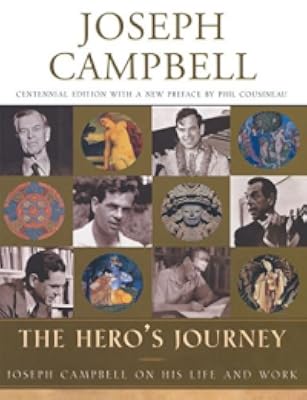
The Hero's Journey: Joseph Campbell on His Life and Work (The Collected Works of Joseph Campbell)
by Joseph Campbell
On This Page
Description
This collection of conversations, interviews, speeches, and book quotes provides insight into the thinking of philosopher and writer Joseph Campbell.Tags
Recommendations










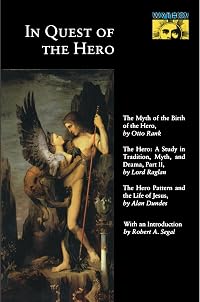
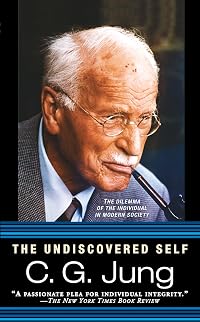
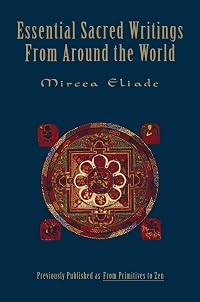
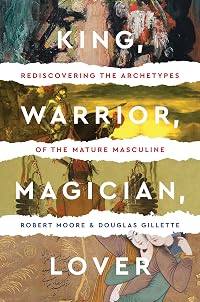


Member Recommendations
Member Reviews
There are some great bits in this but there is also some appallingly sexist moments.
He did some great work looking at the Hero's journey from the point of view of a man, and what he wrote was seminal, but he just didn't see stories that had women's journeys, maybe because they weren't recorded, maybe because, in the past, it was more important for a woman to remain at home and keep the next generation stable and continuing than go on a journey.
He's also very, very fond of Joyce.
The biggest problem is that now, this is the monomyth, the core that many writers can't see beyond, inversion of roles, changes of roles, he did say that there would be new myths built of our culture, I haven't seen many more than the ones he was starting to show more identify that centred around money.
Interesting look at some of his ideas. Worth reading as an introduction, worth also noting that he was born in 1904, so his view of life is from a time and place that is not now, however much of his thinking is quite the same as many modern writers and commentators and in many ways he's more modern than some of them.
Some pieces that got postits:
p 87: The relationship is the sacrificial field, where both of you are relating to the relationship and then you are, as it were, two together. Really like that yin-yang thing. (If you hang onto being the yin, or hang onto being the yang in this thing, as a separate unit, you don't have a marriage.)
p93: ...this woman comes in and sits down and says, "Well, Mr Campbell, you've been talking about the hero. But what about the woman?"
I said, "The woman's the mother of the hero; she's the goal of the hero's achieving; she's the proctress of the here; she is this, she is that. What more do you want?"
She said, "I want to be the hero!"
So I was glad that I was retiring that year and not going to teach any more [laughter].
p133: So an individual who puts himself to the task of activating his imaginative life - the life that springs from inside, not from response to outside information and commands - that person can find stimulation in this wonderful literature that is pouring into the libraries. Now the world is full of wonderful things again.
So there is no rule. An individual has to find what electrifies and enlivens his own heart, and wakes him.
...
But if the religion hasn't put you in touch with those centres [poetic or spiritual feelings within], it's somebody else's religion, really, and well, then you're cut off, and that's one of our problems.
p 181: I remember Alan Watts asked me one day, "Joe, what kind of meditation do you do?"
I said, "I underline sentences"
p.202: "well, what's the name of your computer?"
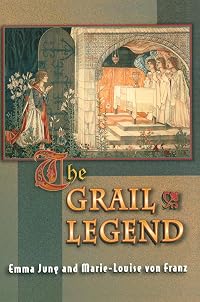
Suddenly I had to figure the name and I named it Parzival, who is my idea of the great Occidental hero. The Grail romance, the whole business of transcending the ego system with the experience of opening of the heart with compassion: That's what Parzival is all about.
Well, he doesn't have compassion [pointing to his computer]
Cousineau: And what's the story behind this Parzival?
Campbell: It works this way. Parzival, seeking the Grail Castle, went back and forth over the place where the Grail Castle was and it wasn't there. Then one time it was there- and the next time it wasn't there.
That's the way it is with this darned thing; I try to get it to do something for me and I do the things that I think I'm supposed to do and the wrong thing happens. Then I do what I think's the same thing and the right thing happens. So, I'm in the magic territory, part of the Grail mystery, and getting to know exactly the rules. Another thing I think of here is those Arabian knights and the djinn in the bottle. They come out and work and work and work for you, but they are very tricky. They can kill you. show less
He did some great work looking at the Hero's journey from the point of view of a man, and what he wrote was seminal, but he just didn't see stories that had women's journeys, maybe because they weren't recorded, maybe because, in the past, it was more important for a woman to remain at home and keep the next generation stable and continuing than go on a journey.
He's also very, very fond of Joyce.
The biggest problem is that now, this is the monomyth, the core that many writers can't see beyond, inversion of roles, changes of roles, he did say that there would be new myths built of our culture, I haven't seen many more than the ones he was starting to show more identify that centred around money.
Interesting look at some of his ideas. Worth reading as an introduction, worth also noting that he was born in 1904, so his view of life is from a time and place that is not now, however much of his thinking is quite the same as many modern writers and commentators and in many ways he's more modern than some of them.
Some pieces that got postits:
p 87: The relationship is the sacrificial field, where both of you are relating to the relationship and then you are, as it were, two together. Really like that yin-yang thing. (If you hang onto being the yin, or hang onto being the yang in this thing, as a separate unit, you don't have a marriage.)
p93: ...this woman comes in and sits down and says, "Well, Mr Campbell, you've been talking about the hero. But what about the woman?"
I said, "The woman's the mother of the hero; she's the goal of the hero's achieving; she's the proctress of the here; she is this, she is that. What more do you want?"
She said, "I want to be the hero!"
So I was glad that I was retiring that year and not going to teach any more [laughter].
p133: So an individual who puts himself to the task of activating his imaginative life - the life that springs from inside, not from response to outside information and commands - that person can find stimulation in this wonderful literature that is pouring into the libraries. Now the world is full of wonderful things again.
So there is no rule. An individual has to find what electrifies and enlivens his own heart, and wakes him.
...
But if the religion hasn't put you in touch with those centres [poetic or spiritual feelings within], it's somebody else's religion, really, and well, then you're cut off, and that's one of our problems.
p 181: I remember Alan Watts asked me one day, "Joe, what kind of meditation do you do?"
I said, "I underline sentences"
p.202: "well, what's the name of your computer?"
Suddenly I had to figure the name and I named it Parzival, who is my idea of the great Occidental hero. The Grail romance, the whole business of transcending the ego system with the experience of opening of the heart with compassion: That's what Parzival is all about.
Well, he doesn't have compassion [pointing to his computer]
Cousineau: And what's the story behind this Parzival?
Campbell: It works this way. Parzival, seeking the Grail Castle, went back and forth over the place where the Grail Castle was and it wasn't there. Then one time it was there- and the next time it wasn't there.
That's the way it is with this darned thing; I try to get it to do something for me and I do the things that I think I'm supposed to do and the wrong thing happens. Then I do what I think's the same thing and the right thing happens. So, I'm in the magic territory, part of the Grail mystery, and getting to know exactly the rules. Another thing I think of here is those Arabian knights and the djinn in the bottle. They come out and work and work and work for you, but they are very tricky. They can kill you. show less
Another good book I've read a couple of times. It names common structural elements found universally in myths, fairy tales, dreams, and movies. The author uses movies to defend his philosophy. A must in a writer's library.
I can honestly say that I LOVE Joseph Campbell and his works. He is such an intriguing man, and he’s never failed to interest me. This quite the insight into his life and works, and it was an enjoyable read. I really want to read more of his works once I get my hands on more.
Joseph Campbell believed there is "one great story of mankind" that is essentially retold in the individual mythologies of all cultures. He was a renowned mythologist and scholar whose work has influenced people in all walks of life beginning with the publication of his first book, The Hero with a Thousand Faces. After his death in 1987, a series of interviews with him conducted by Bill Moyers appeared on PBS, thus bringing his ideas to millions more people. New World Library has been publishing new editions of his books in a "collected works" series, and this is one of them. It’s comprised mostly of excerpts from interviews with Campbell by some of the people who he inspired.
The book is organized chronologically in the same format show more Campbell outlined for the hero’s journey in The Hero with a Thousand Faces, beginning with his "Call to Adventure" and continuing on through his "Road of Trials" and "Vision Quest." Campbell’s life story unfolds mostly in his own words, with threads of his philosophies and ideas running throughout. Campbell, above all, encouraged people to "follow their bliss," meaning find what you are truly passionate about and devote yourself fully to whatever that might be. By doing so, he believed you fulfill your greatest potential within yourself and in your service to your community. It’s deceptively simple advice with the potential for profound results. For more information on Joseph Campbell and his books, visit your local library or check out the website for the Joseph Campbell Foundation. show less
Ratings
Members
- Recently Added By
Lists

Men's healing resources
741 works; 1 member
Author Information

201+ Works 41,643 Members
Joseph Campbell was born in White Plains, New York on March 26, 1904. He received a B.A. in English literature in 1925 and an M.A. in Medieval literature in 1927 from Columbia University. He was awarded a Proudfit Traveling Fellowship to continue his studies at the University of Paris. After he had received and rejected an offer to teach at his show more high school alma mater, his Fellowship was renewed, and he traveled to Germany to resume his studies at the University of Munich. During the year he was housemaster of Canterbury School, he sold his first short story, Strictly Platonic, to Liberty magazine. In 1934, he accepted a position in the literature department at Sarah Lawrence College, a post he would retain until retiring in 1972. During his lifetime, he wrote more than 40 books including The Hero with a Thousand Faces, The Mythic Image, the four-volume The Masks of God, and The Power of Myth with Bill Moyers. During the 1940s and 1950s, he collaborated with Swami Nikhilananda on translations of the Upanishads and The Gospel of Sri Ramakrishna. He received several awards including National Institute of Arts and Letters Award for Contributions to Creative Literature and the 1985 National Arts Club Gold Medal of Honor in Literature. He died after a brief struggle with cancer on October 30, 1987. (Bowker Author Biography) show less
All Editions
Common Knowledge
- Original publication date
- 1990
- People/Characters
- Joseph Campbell
- First words
- Joseph Campbell was born in New York City on March 26, 1904, the son of Charles and Josephine Campbell.
- Last words
- (Click to show. Warning: May contain spoilers.)But don't let anybody know it!
Classifications
- Genres
- Nonfiction, Biography & Memoir, Religion & Spirituality, General Nonfiction
- DDC/MDS
- 200.92 — Religion The Bible & Christianity Religion History, geographic treatment, biography Biography
- LCC
- BL303.6 .C35 .A3 — Philosophy, Psychology and Religion Religions. Mythology. Rationalism Religions. Mythology. Rationalism The myth. Comparative mythology
- BISAC
Statistics
- Members
- 614
- Popularity
- 47,270
- Reviews
- 4
- Rating
- (4.35)
- Languages
- English
- Media
- Paper, Audiobook, Ebook
- ISBNs
- 9
- UPCs
- 2
- ASINs
- 4