

Space
by James A. Michener
On This Page
Description
Fiction. Thriller. Historical Fiction. HTML:Already a renowned chronicler of the epic events of world history, James A. Michener tackles the most ambitious subject of his career: space, the last great frontier. This astounding novel brings to life the dreams and daring of countless men and women—people like Stanley Mott, the engineer whose irrepressible drive for knowledge places him at the center of the American exploration effort; Norman Grant, the war hero and U.S. senator who takes his show more personal battle not only to a nation, but to the heavens; Dieter Kolff, a German rocket scientist who once worked for the Nazis; Randy Claggett, the astronaut who meets his destiny on a mission to the far side of the moon; and Cynthia Rhee, the reporter whose determined crusade brings their story to a breathless world.Praise for Space
“A master storyteller . . . Michener, by any standards, is a phenomenon. Space is one of his best books.”—The Wall Street Journal
“A novel of very high adventure . . . a sympathetic, historically sound treatment of an important human endeavor that someday could be the stuff of myth, told here with gripping effect.”—The New York Times Book Review
“Space is everything that Michener fans have come to expect. Without question, the space program’s dramatic dimensions provide the stuff of great fiction.”—BusinessWeek
“Michener is eloquent in describing the actual flights into space, as well as the blazing, apocalyptic re-entry of the shuttle into earth’s atmosphere.”—The New York Times. show less
Tags
Recommendations





























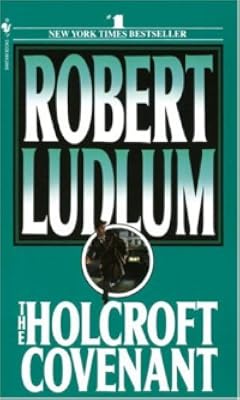
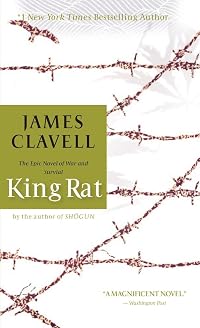
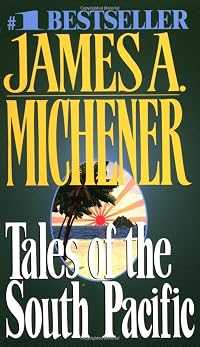
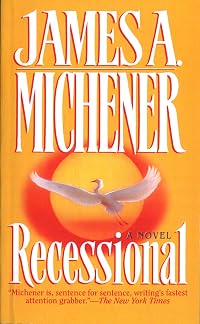
Member Recommendations
Member Reviews
Historical fiction and I aren't the greatest of friends but occasionally we meet and dance and drink and have a good time, as was the case with Space. Michener does a damn good job of mixing history with fiction, I couldn't stop reading this.
It’s interesting to read this book nearly 40 years after it’s publication and to see how the basic science that essentially jump started the space race has become so integrated into mainstream education. It is also interesting, and more disturbing, to see how much commercialism is becoming a driver of such work today.
In many ways, this is a typical Michener book, but with a less expansive scope and cast of characters. It works for me and I rank this effort right up there with some of my favorites. Not all of the characters worked for me (Mott, Strabismus, Grant) but some really did (Pope [Penny and John], Claggett, Kolff).
In many ways, this is a typical Michener book, but with a less expansive scope and cast of characters. It works for me and I rank this effort right up there with some of my favorites. Not all of the characters worked for me (Mott, Strabismus, Grant) but some really did (Pope [Penny and John], Claggett, Kolff).
Thick and thin... 800 pages thick but thin everywhere else. Michener didn't seem to know when to end the book, despite many opportunities. Still, I was always enthralled with the Apollo program and NASA, so the backdrop adds a star to the rating.
I wonder what Michener would have thought of some of his more disturbing story elements coming true. The country heading backward into the dark ages, science losing to ignorance, NASA becoming inconsequential...sad.
I wonder what Michener would have thought of some of his more disturbing story elements coming true. The country heading backward into the dark ages, science losing to ignorance, NASA becoming inconsequential...sad.
I'd never read any Michener before. For some reason I thought he was supposed to be a brilliant writer, one of the giants of American literature.
My mistake! Space was surprisingly dull, and not at all well-written. Simply put, it plodded. It's a fictionalized story of the space program, with some references to some actual astronauts thrown in - plus a fictionalized US state, which was one of two things which stuck in my memory from the book.
The other thing was a rather nasty assessment of golden age science fiction writers, all of whom (I'm sorry to say) were more talented writers than Mr. Michener.
Space had the feel of one of those potboilers that sits on the New York Times best-seller list for many weeks...something written for the show more lowest common denominator. It wasn't awful, mind you, just dull and awkward. Shogun, which I'd put in the same general class of "giant best-sellers" is far better written than Space. show less
My mistake! Space was surprisingly dull, and not at all well-written. Simply put, it plodded. It's a fictionalized story of the space program, with some references to some actual astronauts thrown in - plus a fictionalized US state, which was one of two things which stuck in my memory from the book.
The other thing was a rather nasty assessment of golden age science fiction writers, all of whom (I'm sorry to say) were more talented writers than Mr. Michener.
Space had the feel of one of those potboilers that sits on the New York Times best-seller list for many weeks...something written for the show more lowest common denominator. It wasn't awful, mind you, just dull and awkward. Shogun, which I'd put in the same general class of "giant best-sellers" is far better written than Space. show less
I loved some of Michener's other long books, so I figured this might be a fun read. Well, in fact this is one of the more boring space-oriented novels I've come across. In part, since it was written in the early 80's, and based on research Michener did in the 70's, there was only so much he could write about that would touch space exploration and space science more directly. Still, this novel is really not about space so much as it is a drawn out, poorly paced, jumbled account of 6 early astronauts in NASA's moon landing program, with a bit about how NASA came to be, and a few other related threads, all of which could be so much more interesting than they turn out to be in this novel. In addition, the author's sympathy seems to be with show more the ultra-conservative characters he describes, making it hard for me, as a modern, female reader, to relate to the characters and their problems. Of course, bow, we have had female astronauts, and we've landed rovers on Mars that send us color photos of the surface daily, and we just had a Pluto flyby with photos. We also have still never landed another person on the moon yet since the program described in this book ended. The reasons why we 'doomed' ourselves to not have another moon landing are brought up in this novel, and there are other interesting themes and ideas throughout this book, but related in a rather mind-numbing manner that allows the reader to feel the ponderousness of this long book, one slow page at a time. It could have been worse, but this is not one of Micheners best books. show less
My least favorite so far from Michener. I did enjoy the science parts but not so much the fiction parts. It was a real slog to finish. I felt it could have been 200 less and all the better for it.
LOVED this book!! Great plot, believable characters, some non-fiction mixed in with fiction.
My favorite James Michener book thus far.
My favorite James Michener book thus far.
Members
- Recently Added By
Lists

Best Historical Fiction
620 works; 261 members

Favourite Books
1,817 works; 316 members

20th Century Literature
1,161 works; 55 members

Favorite Long Books
330 works; 42 members

Great American Novels
158 works; 42 members

Best Contemporary Literary Fiction (Around the Last 30 Years)
388 works; 123 members
Author Information

205+ Works 49,258 Members
James A. Michener, 1907 - 1997 James Albert Michener was born on February 3, 1907 in Doylestown, Pa. He earned an A.B. from Swarthmore College, an A.M. from Colorado State College of Education, and an M.A. from Harvard University. He taught for many years and was an editor for Macmillan Publishing Company. His first book, "Tales of the South show more Pacific," derived from Michener's service in the Pacific in World War II, won the 1947 Pulitzer Prize for Fiction and was the basis for the Rodgers and Hammerstein Broadway musical South Pacific, which won the 1950 Pulitzer Prize for Drama. Michener completed close to 40 novels. Some other epic works include "Hawaii," "Centennial," "Space," and "Caribbean." He also wrote a significant amount of nonfiction including his autobiography "The World Is My Home." Among his many other honors, James Michener received the Presidential Medal of Freedom in 1977. He was married to Patti Koon in 1935; they divorced in 1948. He married Vange Nord in 1948 (divorced 1955) and Mari Yoriko Sabusawa in 1955 (deceased 1994). He died in 1997 in Austin, Texas. (Bowker Author Biography) show less
Some Editions
Awards and Honors
Distinctions
Work Relationships
Common Knowledge
- Canonical title
- Space
- Original title
- Space
- Original publication date
- 1982
- People/Characters
- Sen. Norman Grant; Elinor Grant; Randy Claggett; Penny Hardesty Pope; Stanley Mott
- Related movies
- Space (1985 | IMDb)
- Epigraph
- This is a novel and to construe it as anything else would be a mistake. The Mott, Grant, Pope, and Kolf families are based upon no real prototypes. The Solid Six group of astronauts did not exist, nor was there any Gemini 13 ... (show all)or Apollo 18.
However, the great NASA bases, the Patuxent River experience, the battle operations in Korea and the general activities of the astronauts are realistically presented. - First words
- On 24 October 1944 planet Earth was following its orbit about the sun as it has obediently done for nearly five billion years.
- Last words
- (Click to show. Warning: May contain spoilers.)Now they were being revived on a hillside in Vermont, and a thousand years from now they would still be debated on some other planet orbiting some other star in some other galaxy.
- Original language*
- Anglais (Etats-Unis) (Etats-Unis)
*Some information comes from Common Knowledge in other languages. Click "Edit" for more information.
Classifications
- Genres
- Fiction and Literature, General Fiction, Historical Fiction, Science Fiction
- DDC/MDS
- 813.54 — Literature & rhetoric American literature in English American fiction in English 1900-1999 1945-1999
- LCC
- PS3525 .I19 .S6 — Language and Literature American literature American literature Individual authors 1900-1960
- BISAC
Statistics
- Members
- 2,505
- Popularity
- 7,664
- Reviews
- 20
- Rating
- (3.70)
- Languages
- 10 — Dutch, English, French, German, Italian, Japanese, Korean, Portuguese, Spanish, Swedish
- Media
- Paper, Audiobook, Ebook
- ISBNs
- 31
- ASINs
- 21