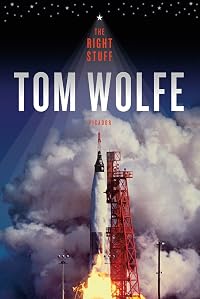
The Right Stuff
by Tom Wolfe
On This Page
Description
A narrative of the early days of the U.S. space program and the people who made it happen, including Chuck Yeager, Pete Conrad, Gus Grissom, and John Glenn.Tags
Recommendations
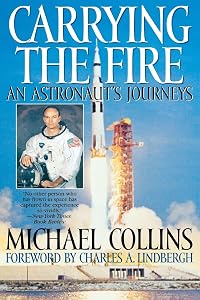


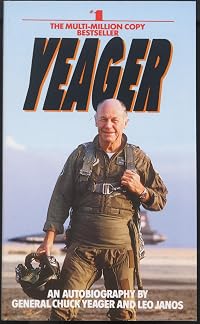
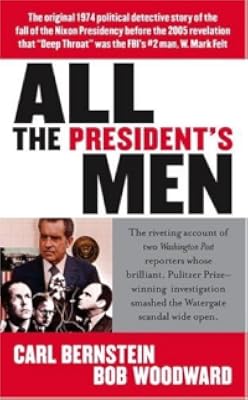
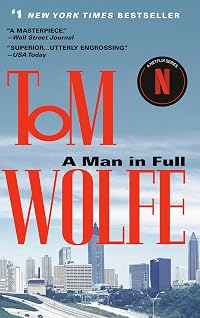


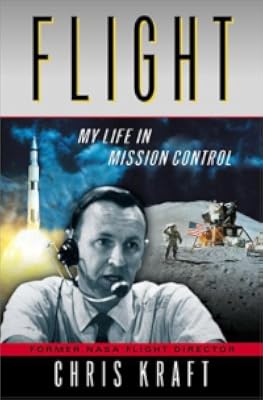
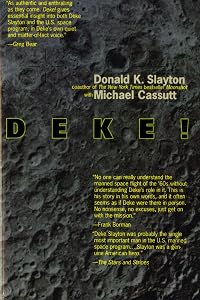

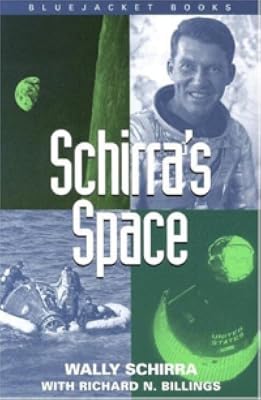


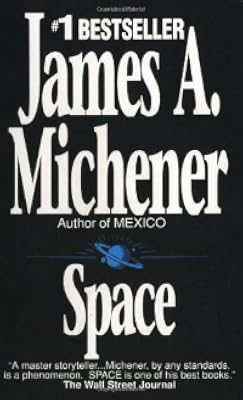

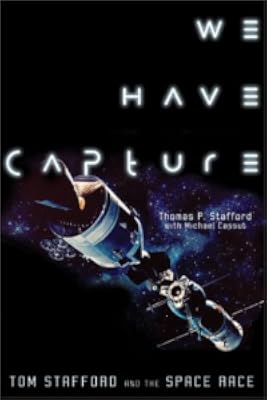
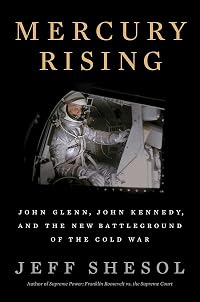






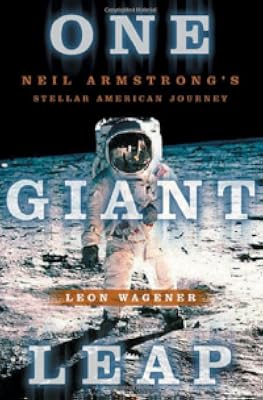
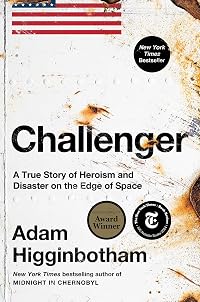
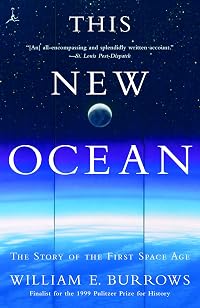


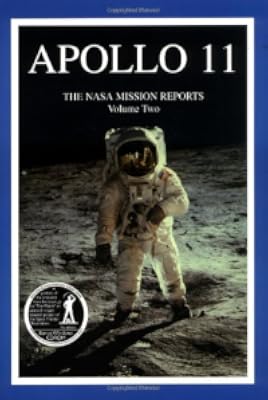


Member Recommendations
by anonymous user
20

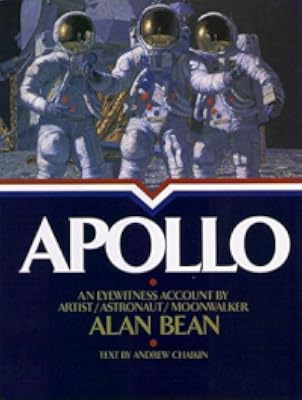
paulkid Chaikin gives a respectful account of the later astronauts' journeys and their personalities, while Wolfe gives irreverent and hilarious depictions of the mood and personalities surrounding the beginning of the space race (ie, Mercury and pre-Mercury).
nessreader The shift in corporate mentality in NASA between the testosterone drenched fighter pilots of Wolfe's era and the team orientated and PR-paranoid present is instructive. The terrifying discipline required seems equal; in any case, interesting to compare.
00
bluepiano Wolfe tells of the early and sometimes would-be astronauts and Smith of the later ones who walked on the moon. Both books are wonderfully readable.
Member Reviews
The story of the first seven American astronauts, compared and contrasted with the life of Chuck Yeager, the first man to break the sound barrier. But this is far more than just a biography of names, dates and places. Wolfe delved deep into what it meant to be a Test Pilot in the years after the Second World War; how these men thought, and talked, and lived (and sometimes died). He also brings the whole story of the pilots' families into focus; what it meant to be married to a test pilot and how it affected the wives, especially in times when male and female roles were far more stratified than they are now. If this book had been written in the 1930s or 1940s, it would have been science fiction; but it goes far beyond any goshwow pulp show more melodrama.
All this is reflected back on the way these pilots were lauded by politicians, businessmen, the media and the American public. This adds a further dimension to the book, making it into a social history of the 1950s and 60s seen through the prism of the space programme.
Wolfe develops his theory that the top pilots had a particular mindset, the "Right Stuff" of the title. If you have to ask what the "Right Stuff" is, especially by the time you've read this book, then you are irretrievably blind to it, and you certainly don't possess it yourself. Wolfe identifies it, using the language of the time, as comprising in part of "manly virtues", though this phrase is italicised so often that I could not help but think that his tongue was firmly stuck in his cheek when he wrote it.
The 1983 film captures the book extremely well, though there is so much more in the book that the film couldn't pin down. For example, Glenn's wife Annie was (sympathetically) portrayed in the film as a somewhat shy and retiring character on account of her stammer; the film's depiction of her husband's tender relationship with her is a key part of its character portrait of John Glenn. But the book makes the point that Annie Glenn was neither shy nor retiring, coming as she did from "good pioneer stock", quite capable of holding her own in life and only quailing before a media onslaught that would roll over most people.
The book also returns often to the Air Force manned X-15 spaceplane project and its planned successors. Throughout the 1950s and 60s, whilst American administrations focussed on rocketry, the achievements of the X-15 pilots, in flying to the edge of space and beyond were broadly ignored. Yet the X-15 programme would eventually produce the first man to walk on the Moon, Neil Armstrong.
I can only fault the book on one error of fact; when talking about the Soviet Vostok vessels, Wolfe translates the Russian word 'Korabl' as 'Cosmic', when in fact it means 'ship'. Quite what the NASA astronauts would have thought, when they were pressing for changes to the Mercury capsule and the mission profiles to give them much more of the role of pilots rather than just payload, to know that the Russians were referring to their rocket as a "ship" from the outset will most likely remain lost.
The writing is resolutely Sixties, both in phrase and usage; but it is a fine piece of writing nonetheless and thoroughly deserves the accolades it received at the time of publication.
(Having said that, I'm sad to say that my copy, a film tie-in Bantam A-format paperback printed in the UK in 1983, is probably one of the nastiest books I've handled in recent years. Pulpy paper, a cover that displays edge and corner wear as soon as I picked it up, and excessively narrow margins and big blocks of text made worse by the displacement of the text towards the bottom of the page, resulting in almost no bottom margin, made the actual reading of this book an unpleasant experience. Fortunately, the content more than made up for this.) show less
All this is reflected back on the way these pilots were lauded by politicians, businessmen, the media and the American public. This adds a further dimension to the book, making it into a social history of the 1950s and 60s seen through the prism of the space programme.
Wolfe develops his theory that the top pilots had a particular mindset, the "Right Stuff" of the title. If you have to ask what the "Right Stuff" is, especially by the time you've read this book, then you are irretrievably blind to it, and you certainly don't possess it yourself. Wolfe identifies it, using the language of the time, as comprising in part of "manly virtues", though this phrase is italicised so often that I could not help but think that his tongue was firmly stuck in his cheek when he wrote it.
The 1983 film captures the book extremely well, though there is so much more in the book that the film couldn't pin down. For example, Glenn's wife Annie was (sympathetically) portrayed in the film as a somewhat shy and retiring character on account of her stammer; the film's depiction of her husband's tender relationship with her is a key part of its character portrait of John Glenn. But the book makes the point that Annie Glenn was neither shy nor retiring, coming as she did from "good pioneer stock", quite capable of holding her own in life and only quailing before a media onslaught that would roll over most people.
The book also returns often to the Air Force manned X-15 spaceplane project and its planned successors. Throughout the 1950s and 60s, whilst American administrations focussed on rocketry, the achievements of the X-15 pilots, in flying to the edge of space and beyond were broadly ignored. Yet the X-15 programme would eventually produce the first man to walk on the Moon, Neil Armstrong.
I can only fault the book on one error of fact; when talking about the Soviet Vostok vessels, Wolfe translates the Russian word 'Korabl' as 'Cosmic', when in fact it means 'ship'. Quite what the NASA astronauts would have thought, when they were pressing for changes to the Mercury capsule and the mission profiles to give them much more of the role of pilots rather than just payload, to know that the Russians were referring to their rocket as a "ship" from the outset will most likely remain lost.
The writing is resolutely Sixties, both in phrase and usage; but it is a fine piece of writing nonetheless and thoroughly deserves the accolades it received at the time of publication.
(Having said that, I'm sad to say that my copy, a film tie-in Bantam A-format paperback printed in the UK in 1983, is probably one of the nastiest books I've handled in recent years. Pulpy paper, a cover that displays edge and corner wear as soon as I picked it up, and excessively narrow margins and big blocks of text made worse by the displacement of the text towards the bottom of the page, resulting in almost no bottom margin, made the actual reading of this book an unpleasant experience. Fortunately, the content more than made up for this.) show less
I first read this book about 20 years ago when I was really obsessed with space and convinced that I would one day become an astronaut. The former of those two things has not changed, but I've become much more realistic about the almost zero chance of the latter. I wanted to re-read this book and see how I'd feel now that I'm a pilot and also now that I just have 20 years more life under my belt in general.
I recall having really loved this book, and I still really loved this book. It's easy to read, and it's fun to read. I had a hard time putting it down and got resentful of my hairdresser for being ready for me early when I hadn't finished reading a sentence yet. The story of the origins of the space program are compelling, I found show more myself rooting for all of the test pilots and astronauts in this story, and feeling suspense about events that happened so many years ago that the outcomes are common knowledge (at least for space nerds such as myself).
However (you all knew that word was coming), I know that any narrative interpretation of the early space program (this book is mostly about the Mercury project with emphasis on the first few flights, and some narrative on the X-1 and X-15/X-20 projects) is going to be colored with bias, incomplete information, and just plain old story telling. This is no exception. Other reviewers lambast Wolfe for his biased takes on some of the astronauts. I do not take this book to be gospel truth, but a literary interpretation of the events that happened. More importantly, this book is a literary interpretation of the inner workings of test pilots and the first astronauts, hence the title: The Right Stuff.
I have to say, I hate The Right Stuff attitude. The FAA has literally defined some hazardous attitudes (such things that can and probably will get you into a possibly life-threatening situation when you're behind the stick and rudder of an aircraft) and two of them are: "macho" and "invulnerability." Sound familiar? Not to mention the toxic masculinity that kept (and continues to keep) women away from aviation and the space program that also caused and continues to cause problems for men. (What does it say about you as a man if you can't make it to the top of that pyramid? Or even half way up? That can't be a fun way to view your worth as a human.)
I don't fault the book for being about The Right Stuff. It is what it is, I don't hate the book, I just hate the culture that idolizes and worships harmful stereotypes and attitudes. I don't even think that Wolfe idolizes and glorifies this Right Stuff attitude as much as he just spelled out the way things were, and that's just the way things were. I'm grateful that we're (slowly) moving away from such a flawed outlook toward the understanding that people are humans and we are what we are. show less
I recall having really loved this book, and I still really loved this book. It's easy to read, and it's fun to read. I had a hard time putting it down and got resentful of my hairdresser for being ready for me early when I hadn't finished reading a sentence yet. The story of the origins of the space program are compelling, I found show more myself rooting for all of the test pilots and astronauts in this story, and feeling suspense about events that happened so many years ago that the outcomes are common knowledge (at least for space nerds such as myself).
However (you all knew that word was coming), I know that any narrative interpretation of the early space program (this book is mostly about the Mercury project with emphasis on the first few flights, and some narrative on the X-1 and X-15/X-20 projects) is going to be colored with bias, incomplete information, and just plain old story telling. This is no exception. Other reviewers lambast Wolfe for his biased takes on some of the astronauts. I do not take this book to be gospel truth, but a literary interpretation of the events that happened. More importantly, this book is a literary interpretation of the inner workings of test pilots and the first astronauts, hence the title: The Right Stuff.
I have to say, I hate The Right Stuff attitude. The FAA has literally defined some hazardous attitudes (such things that can and probably will get you into a possibly life-threatening situation when you're behind the stick and rudder of an aircraft) and two of them are: "macho" and "invulnerability." Sound familiar? Not to mention the toxic masculinity that kept (and continues to keep) women away from aviation and the space program that also caused and continues to cause problems for men. (What does it say about you as a man if you can't make it to the top of that pyramid? Or even half way up? That can't be a fun way to view your worth as a human.)
I don't fault the book for being about The Right Stuff. It is what it is, I don't hate the book, I just hate the culture that idolizes and worships harmful stereotypes and attitudes. I don't even think that Wolfe idolizes and glorifies this Right Stuff attitude as much as he just spelled out the way things were, and that's just the way things were. I'm grateful that we're (slowly) moving away from such a flawed outlook toward the understanding that people are humans and we are what we are. show less
This book is super tough guy stuff. Tom Wolfe took all the stoicism out of the space program and made it cowboy with this book of the early test pilots who became our first astronauts. This book is funny, relentless and brilliantly captures the insane competitiveness that pitched these test pilots against each other. This is narrative non fiction, but it reads like a novel. The Right Stuff is a bonkers book.
No better book has been written about flying or the space race. Tom Wolfe has what it takes, the bubbling enthusiasm and critical eye, to write properly about astronauts. The Right Stuff is about endurance, guts, reflexes, a cool head, and giant titanium testicles. It's about going up day after day in high performance jets that are trying their level best to kill you-and statistically will kill 23% of pilots in peacetime-and pushing them to the edge of the envelope and beyond. It's about sitting at home, waiting for a call or a knock on the door, saying that your husband's plane is lost and the man you love is nothing more than charred meat. It's Flying & Drinking and Drinking & Driving and Dicing with Death and doing anything to climb show more the pure pyramid of macho essence.
Most of us don't live in this world, but Wolfe reconstructs how for a few years in the early 60s, with the mighty and infallible Soviet Chief Designer beating the pants out of the American space program, the Mercury Seven became Cosmic Knights, Single Combat Champions of Truth, Justice, and the American Way, and the entire nation became caught up in the saga of The Right Stuff. Wolfe records the contradictions and absurdities of the fighter pilot lifestyle, and how they became tied up with America and the space race, with the utmost respect and tenderness. show less
Most of us don't live in this world, but Wolfe reconstructs how for a few years in the early 60s, with the mighty and infallible Soviet Chief Designer beating the pants out of the American space program, the Mercury Seven became Cosmic Knights, Single Combat Champions of Truth, Justice, and the American Way, and the entire nation became caught up in the saga of The Right Stuff. Wolfe records the contradictions and absurdities of the fighter pilot lifestyle, and how they became tied up with America and the space race, with the utmost respect and tenderness. show less
The Right Stuff (1979) by Tom Wolfe. This is a seminal work for understanding the early days of NASA and the fledgling astronaut program. Mercury 7 was the project and only a handful of men (forget about equal rights for women in that age) were needed to act as crew for the tiny capsule. It was decided that each candidate had to have hundreds of hours of flight time, preferably a preponderance of combat missions included, but piloting in as many situations as possible, so the bosses at NASA turned to the military to supply the cool, calm and collected flyers needed. Beyond being overly qualified, physically fit, intelligent (unsaid was photogenic but that didn’t hurt) and personable, they had to have that mythical quality called the show more RIGHT STUFF.
Just what that quality was is hard to define. It falls into the category of “I can’t tell you what it is, but I’ll know it when I see it.” Call it guts, moxie, true grit or nerves of steel, the man had to have all of these qualities and the ability to act as if he wasn’t overly concerned that what he was about to do just might kill him.
Test pilots from each branch of the military were sought as they proved almost on a daily basis that they were able to face bad odds of survival in their job but could “soldier on” despite the threat.
Tom Wolfe brilliantly captured the feel of the time, the humanness of the entire NASA world, the lives of the astronauts and their families, and the fear and wonder that most Americans, not to mention the entire world, felt during this time. It was an age where little boys stared in wonder at the “7” and dreamed of being just like them.
But this is not just an ode to the times and the people inhabiting them, this is an exhilarating ride into the future. Every line of prose is a small slingshot hurtling you into what for the ones living it would be an exciting adventure.
This feels like it is more than a book. It is an experience. The Right Stuff manages to capture the sights and sounds, the feel, even the odors of the late 50’s and early 60’s while leading the reader willingly by the hand into something more than just a reading experience. For those who lived through that time, remembering fondly as a teacher wheeled a carted TV into the classroom so the kids could see a Blast Off (later softened to the less terrifying Lift Off) this is an incitement to reflect on those hallowed days. For younger readers it is an accurate look into the guts and glory, the fear and fortitude of the few who had The Right Stuff. Perhaps new readers to the book will reflect on what the older generations went through and maybe think more of them.
When you read this book, and you should read it at least once, keep in mind Wolfe did his best to capture the humble bravado of all the candidates. It was’t until well into the testing program to get into this elite flight crew that any of the flyers knew what they had signed up for, knowing only that the best of the best were going to be selected. Hundreds were pulled into the testing, but only seven came out the other side.
The times are painted a bit with a clean brush, but it is the included details that hold the true story. From the high Californian desert of Chuck Yeager and the Air Force’s experimental testing facility, to Coco Beach and the actual rockets that would hopefully thrust each individual into space, to Houston home of the Manned Flight Center, the details are astonishing yet this book is not about the mechanics but the people who made it happen.
If you can’t read the book, at least see the movie. While it is nowhere near the thrilling experience of the book, it is excellent also. show less
Just what that quality was is hard to define. It falls into the category of “I can’t tell you what it is, but I’ll know it when I see it.” Call it guts, moxie, true grit or nerves of steel, the man had to have all of these qualities and the ability to act as if he wasn’t overly concerned that what he was about to do just might kill him.
Test pilots from each branch of the military were sought as they proved almost on a daily basis that they were able to face bad odds of survival in their job but could “soldier on” despite the threat.
Tom Wolfe brilliantly captured the feel of the time, the humanness of the entire NASA world, the lives of the astronauts and their families, and the fear and wonder that most Americans, not to mention the entire world, felt during this time. It was an age where little boys stared in wonder at the “7” and dreamed of being just like them.
But this is not just an ode to the times and the people inhabiting them, this is an exhilarating ride into the future. Every line of prose is a small slingshot hurtling you into what for the ones living it would be an exciting adventure.
This feels like it is more than a book. It is an experience. The Right Stuff manages to capture the sights and sounds, the feel, even the odors of the late 50’s and early 60’s while leading the reader willingly by the hand into something more than just a reading experience. For those who lived through that time, remembering fondly as a teacher wheeled a carted TV into the classroom so the kids could see a Blast Off (later softened to the less terrifying Lift Off) this is an incitement to reflect on those hallowed days. For younger readers it is an accurate look into the guts and glory, the fear and fortitude of the few who had The Right Stuff. Perhaps new readers to the book will reflect on what the older generations went through and maybe think more of them.
When you read this book, and you should read it at least once, keep in mind Wolfe did his best to capture the humble bravado of all the candidates. It was’t until well into the testing program to get into this elite flight crew that any of the flyers knew what they had signed up for, knowing only that the best of the best were going to be selected. Hundreds were pulled into the testing, but only seven came out the other side.
The times are painted a bit with a clean brush, but it is the included details that hold the true story. From the high Californian desert of Chuck Yeager and the Air Force’s experimental testing facility, to Coco Beach and the actual rockets that would hopefully thrust each individual into space, to Houston home of the Manned Flight Center, the details are astonishing yet this book is not about the mechanics but the people who made it happen.
If you can’t read the book, at least see the movie. While it is nowhere near the thrilling experience of the book, it is excellent also. show less
Wolfe's history of the mystique of aviation in the early days of supersonic flight and the entry of the U.S. into the space race via the Mercury program, is fascinating reading. Never sappy and often cynical, the honest drama still shines through.
Wolfe paints test pilots like the inimitable Chuck Yeager, and the Mercury 7 astronauts, with a clear and unromanticized reality, yet manages to effectively discuss the Single Combat theory and apply it to these 20th century gladiators, while taking frequent healthy swipes at the reality of career military men and the women whose status rises and falls in lockstep with their husbands' achievements.
"Must" reading for anyone interested in the early days of NASA and the state of military aviation show more in the mid-20th century. show less
Wolfe paints test pilots like the inimitable Chuck Yeager, and the Mercury 7 astronauts, with a clear and unromanticized reality, yet manages to effectively discuss the Single Combat theory and apply it to these 20th century gladiators, while taking frequent healthy swipes at the reality of career military men and the women whose status rises and falls in lockstep with their husbands' achievements.
"Must" reading for anyone interested in the early days of NASA and the state of military aviation show more in the mid-20th century. show less
Back when I was a kid, I watched The Right Stuff. And while that really dates me, it also sparked my fascination with the OTHER side of the science fiction coin. You know, REALITY and the real men and women doing real science.
And even if I'm not fanatical about learning science, I've never stopped learning and I don't want to. Sure, I may be doing it only to give my own writing much more verve, but understanding reality has been an end in and of itself. :)
Of course, I can lay all that internal pressure at this book's feet. Maybe not directly, because I'm only NOW just reading it, but I got the awe and the fascination for the Space Program from it.
So what about the book, man?
Oh! It's great! Exciting, with novelistic concessions, flaws, show more tension, dramatic release, and pure Right Stuff splattering all over the place. What is the Right Stuff? It's Men, son. It's Real Men.
So many of the aspects to the early test pilots made me want to cringe with all the drunk driving, drunk flying, womanizing, and all the doublespeak going on in American culture at the time. I mean, the insistence that the public needs to be told and shown what to think was intense and to a modern eye, as pathetic and commonplace, if of a VERY different tone, as it is today. Everyone tells everyone else what to think now, but it's fractured. Back then, everyone was doing whatever they wanted under the surface and the whole collective banded together to put on a brave, otherworldly, face back then.
Or at least, that's the impression. And heck, that may not even be the most important part of this book. The heroism is. The cult of personality is.
The Space Program was in decline back when I watched this movie the first time and it sure as hell still is, now, and I'm given a very big impression that it only became a thing because of the personalities behind it. Kennedy is King Arthur and his Knights, the astronauts. The idealism and the space race and kicking the Soviets in the space-can was larger than life... and when these PEOPLE became too old or the initial fire dimmed, so did the Race to Space.
Of course, isn't it the same today? Cult of personality can bring it out and kill it. It's not about science or even NEED. It's not about doing all the real things we need to do as a species if we have a hope of surviving.
It's about narrative. Excitement. And if even a tiny bit of that goes away, then the support of the public will kill it.
LOL do I sound bitter? Leaving soapbox now. show less
And even if I'm not fanatical about learning science, I've never stopped learning and I don't want to. Sure, I may be doing it only to give my own writing much more verve, but understanding reality has been an end in and of itself. :)
Of course, I can lay all that internal pressure at this book's feet. Maybe not directly, because I'm only NOW just reading it, but I got the awe and the fascination for the Space Program from it.
So what about the book, man?
Oh! It's great! Exciting, with novelistic concessions, flaws, show more tension, dramatic release, and pure Right Stuff splattering all over the place. What is the Right Stuff? It's Men, son. It's Real Men.
So many of the aspects to the early test pilots made me want to cringe with all the drunk driving, drunk flying, womanizing, and all the doublespeak going on in American culture at the time. I mean, the insistence that the public needs to be told and shown what to think was intense and to a modern eye, as pathetic and commonplace, if of a VERY different tone, as it is today. Everyone tells everyone else what to think now, but it's fractured. Back then, everyone was doing whatever they wanted under the surface and the whole collective banded together to put on a brave, otherworldly, face back then.
Or at least, that's the impression. And heck, that may not even be the most important part of this book. The heroism is. The cult of personality is.
The Space Program was in decline back when I watched this movie the first time and it sure as hell still is, now, and I'm given a very big impression that it only became a thing because of the personalities behind it. Kennedy is King Arthur and his Knights, the astronauts. The idealism and the space race and kicking the Soviets in the space-can was larger than life... and when these PEOPLE became too old or the initial fire dimmed, so did the Race to Space.
Of course, isn't it the same today? Cult of personality can bring it out and kill it. It's not about science or even NEED. It's not about doing all the real things we need to do as a species if we have a hope of surviving.
It's about narrative. Excitement. And if even a tiny bit of that goes away, then the support of the public will kill it.
LOL do I sound bitter? Leaving soapbox now. show less
Members
- Recently Added By
Lists

100 books to read in a lifetime
102 works; 37 members

Non-Fiction Worth Reading
1,016 works; 263 members

Top Five Books of 2018
802 works; 265 members

Modern Library 100 Best Nonfiction Books
100 works; 8 members

Top Five Books of 2015
811 works; 241 members

Macmillan Publishers
129 works; 3 members

Books I Want to Read
36 works; 1 member

National Book Award winners
65 works; 11 members

Books Read in 2003
261 works; 7 members

Page Turners
185 works; 11 members

Swinging Seventies
255 works; 18 members

Fiction For Men
142 works; 11 members

Watched the Movie, Probably Won't Read the Book
185 works; 34 members

Blue Pyramid 1,276 Best Books of All Time
1,248 works; 32 members

Read the book and saw the movie
1,170 works; 195 members

1960s
281 works; 16 members

The Five Books That Represent Us
391 works; 150 members
Top-Rated Books on LibraryThing
272 works; 118 members
Author Information

40+ Works 39,917 Members
Thomas Kennerly Wolfe Jr. was born in Richmond, Virginia on March 2, 1930. He received bachelor's degree in English from Washington and Lee University in 1951 and a Ph.D in American studies from Yale University in 1957. He started his journalism career as a general-assignment reporter at The Springfield Union. While he was working for The show more Washington Post, he was assigned to cover Latin America and won the Washington Newspaper Guild's foreign news prize for a series on Cuba in 1961. In 1962, he became a reporter for the New York Herald Tribune and a staff writer for New York magazine. His work also appeared in Harper's and Esquire. His first book, a collection of articles about the flamboyant Sixties written for New York and Esquire entitled The Kandy-Kolored Tangerine-Flake Streamline Baby, was published in 1968. His other collections included Radical Chic and Mau-Mauing the Flak Catchers and Hooking Up. His non-fiction works included The Pump House Gang; The Electric Kool-Aid Acid Test; The Painted Word; Mauve Gloves and Madmen, Clutter and Vine; In Our Time; and From Bauhaus to Our House. The Right Stuff won the American Book Award for nonfiction, the National Institute of Arts and Letters Harold Vursell Award for prose style, and the Columbia Journalism Award. It was adapted into a film in 1983. His fiction books included The Bonfire of the Vanities, Ambush at Fort Bragg, A Man in Full, The Kingdom of Speech, I Am Charlotte Simmons, and Back to Blood. He was also a contributing artist at Harper's from 1978 to 1981. Many of his illustrations were collected in In Our Time. He died on May 14, 2018 at the age of 88. (Bowker Author Biography) show less
Some Editions
Awards and Honors
Awards
Distinctions
Notable Lists
Series
Belongs to Publisher Series
Work Relationships
Is contained in
Has the adaptation
Common Knowledge
- Canonical title*
- Die Helden der Nation
- Original publication date
- 1979
- People/Characters
- Chuck Yeager; Alan B. Shepard, Jr.; John H. Glenn, Jr.; Virgil I. 'Gus' Grissom; Pete Conrad
- Important places
- Edwards Air Force Base, California, USA; Cape Canaveral, Florida, USA; Houston, Texas, USA
- Related movies
- The Right Stuff (1983 | IMDb); In the Shadow of the Moon (2007 | IMDb)
- Dedication
- For Kailey Wong
- First words
- Within five minutes, or ten minutes, no more than that, three of the others had called her on the telephone to ask her if she had heard that something had happened out there.
- Last words
- (Click to show. Warning: May contain spoilers.)And Yeager never again sought to set a record in the sky over the high desert.
(Click to show. Warning: May contain spoilers.)Epilogue:
It would have been still more impossible for his confreres to realize that the day might come when Americans would hear their names and say, "Oh, yes—now, which one was he?" - Original language
- English
*Some information comes from Common Knowledge in other languages. Click "Edit" for more information.
Classifications
- Genres
- Nonfiction, General Nonfiction, History, Biography & Memoir
- DDC/MDS
- 629.10973 — Applied science & technology Engineering Transportation Vehicles Airplanes, Helicopters, and other aircrafts Biography; History By Place North America
- LCC
- TL789.8 .U5 .W64 — Technology Motor vehicles. Aeronautics. Astronautics Motor vehicles. Aeronautics. Astronautics Astronautics. Space travel
- BISAC
Statistics
- Members
- 5,220
- Popularity
- 2,629
- Reviews
- 81
- Rating
- (4.19)
- Languages
- 13 — Danish, Dutch, English, French, German, Hebrew, Hungarian, Italian, Polish, Russian, Spanish, Swedish, Portuguese (Portugal)
- Media
- Paper, Audiobook, Ebook
- ISBNs
- 60
- UPCs
- 1
- ASINs
- 47