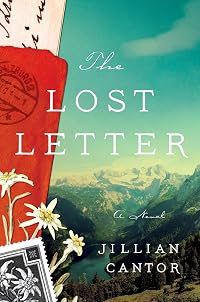
The Lost Letter
by Jillian Cantor 
On This Page
Description
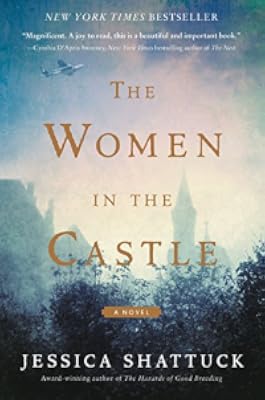
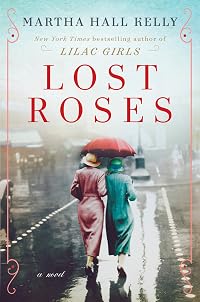
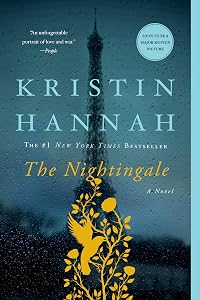
“A gorgeous and thrilling novel… Perfect for book clubs and fans of The Nightingale.” –PopSugarA historical novel of love and survival inspired by real resistance workers during World War II Austria, and the mysterious love letter that connects generations of Jewish families. A heart-breaking, heart-warming read for fans of The Women in the Castle, Lilac Girls, and Sarah's Key.
Author of the forthcoming In Another Time.
Austria, 1938. Kristoff is a young apprentice to a show more master Jewish stamp engraver. When his teacher disappears during Kristallnacht, Kristoff is forced to engrave stamps for the Germans, and simultaneously works alongside Elena, his beloved teacher's fiery daughter, and with the Austrian resistance to send underground messages and forge papers. As he falls for Elena amidst the brutal chaos of war, Kristoff must find a way to save her, and himself.
Los Angeles, 1989. Katie Nelson is going through a divorce and while cleaning out her house and life in the aftermath, she comes across the stamp collection of her father, who recently went into a nursing home. When an appraiser, Benjamin, discovers an unusual World War II-era Austrian stamp placed on an old love letter as he goes through her dad's collection, Katie and Benjamin are sent on a journey together that will uncover a story of passion and tragedy spanning decades and continents, behind the just fallen Berlin Wall.
A romantic, poignant and addictive novel, The Lost Letter shows the lasting power of love. show less
Tags
Recommendations


Member Recommendations
Member Reviews
Three words: beautiful, moving, and bittersweet. This book is a unique tale of the Austrian Resistance during World War II, centering around the love story between the daughter of a Jewish stamp maker and his apprentice. THE LOST LETTER is really historical fiction within historical fiction; the story alternates between the fall of the Berlin Wall (late 80s/early 90s) and the German invasion of Austria (late 1930s).
In 1989, Katie Nelson, whose life has been upended by her divorce and caring for an ailing father, finds a curious stamp on a letter from the World War II era in her father’s extensive stamp collection. With the help of an appraiser named Benjamin, Katie is able to uncover the story behind the mysterious letter.
I enjoyed show more this book very much, and was intrigued by both Katie and Benjamin in 1989, and Elena and Kristoff in 1939. What secrets did the stamp and letter hold? This book was a lovely blend of mystery, romance, and history. I do love vintage stamps, and this book gave readers a look at the intricacies of stamp engraving, and how they were miniature works of art. Highly recommended!
Disclosure: I received a copy of this book through Penguin’s First to Read Program in exchange for an honest review. show less
In 1989, Katie Nelson, whose life has been upended by her divorce and caring for an ailing father, finds a curious stamp on a letter from the World War II era in her father’s extensive stamp collection. With the help of an appraiser named Benjamin, Katie is able to uncover the story behind the mysterious letter.
I enjoyed show more this book very much, and was intrigued by both Katie and Benjamin in 1989, and Elena and Kristoff in 1939. What secrets did the stamp and letter hold? This book was a lovely blend of mystery, romance, and history. I do love vintage stamps, and this book gave readers a look at the intricacies of stamp engraving, and how they were miniature works of art. Highly recommended!
Disclosure: I received a copy of this book through Penguin’s First to Read Program in exchange for an honest review. show less
I love reading books about WWII and this is one of the best that I've read. The characters and story are so well done that I read long into the night to finish it because I was so intrigued with the story.
The novel has dual time lines - 1938-9 in Austria telling Kristoff's story and 1989 in LA telling Katie's story. Both stories are very interesting on their own and when they merge into one it's creates a fantastic story line. Katie takes her Dad's stamp collection to be appraised because her dad is in a memory care unit with early dementia. The appraiser finds an unopened letter with a stamp that he has never seen and he and Katie try to solve the mystery together. The other story line involves Kristoff, an apprentice stamp engraver show more working with the Farber family in Austria. As he is working and living with the family, the Nazis are approaching and finally arrive in the town they live in. Since the Farber's are Jewish, their lives are in grave danger.
This is a beautiful novel about love and family and how the love and loss during war time can have repercussions that last for generations. It's wonderful novel and I highly recommend it.
Thanks to the author and the Great Thought's Ninja Review Team for a copy of this book to read and review. All opinions are my own. show less
The novel has dual time lines - 1938-9 in Austria telling Kristoff's story and 1989 in LA telling Katie's story. Both stories are very interesting on their own and when they merge into one it's creates a fantastic story line. Katie takes her Dad's stamp collection to be appraised because her dad is in a memory care unit with early dementia. The appraiser finds an unopened letter with a stamp that he has never seen and he and Katie try to solve the mystery together. The other story line involves Kristoff, an apprentice stamp engraver show more working with the Farber family in Austria. As he is working and living with the family, the Nazis are approaching and finally arrive in the town they live in. Since the Farber's are Jewish, their lives are in grave danger.
This is a beautiful novel about love and family and how the love and loss during war time can have repercussions that last for generations. It's wonderful novel and I highly recommend it.
Thanks to the author and the Great Thought's Ninja Review Team for a copy of this book to read and review. All opinions are my own. show less
What a delightful read and definitely what I would call a “feel good” book! The story takes place in two alternate times and places: 1938-39 Austria, under the Nazi occupation, and 1989-90 Los Angeles. In Austria, the story focuses on Frederick, a Jewish stamp engraver, who — along with his wife, daughters Elena and Miri, and his non-Jewish apprentice Kristoff deal with the Nazi invasion and occupation of their country. In Los Angeles, the story focuses on 30-something Katie Nelson, a journalist who is dealing with a sudden divorce and her father — an avid stamp collecter — who has been stricken with Alzheimer’s. Obviously, stamps play an important role in the novel, and the author seamlessly weaves the alternate narratives show more together beautifully, throwing in a few well-placed surprises toward the latter part of the novel as well.
This novel is beautifully written and well-researched; it is history mixed with fiction at its best. I truly enjoyed this heartwarming story and look forward to reading other works by Jill Cantor. show less
This novel is beautifully written and well-researched; it is history mixed with fiction at its best. I truly enjoyed this heartwarming story and look forward to reading other works by Jill Cantor. show less
The way that Jillian Cantor beautifully interweaves the timelines in The Lost Letter enables us to hold both stories simultaneously in our head and in our heart. We are never jarred by a change from one time period to the other, but excitedly read on to add to what we know about each set of characters. Both stories demonstrate that the power of love, persistence, and courage, are relevant to and necessary for whatever historical period we find ourselves in.
Not just another WW2 Jewish novel....this book is a keeper by a great author!
I loved the familial connections from that horrid era to 1990. I learned that philately has to do with the study/ collection of stamps. And I stayed up way too late , at 11pm-ish I decided I could read another chapter, pages flew by and when I checked the time again? 1:30 a.m.
I did wonder if I would run to safety, or stay and resist, and most likely die.
I loved the familial connections from that horrid era to 1990. I learned that philately has to do with the study/ collection of stamps. And I stayed up way too late , at 11pm-ish I decided I could read another chapter, pages flew by and when I checked the time again? 1:30 a.m.
I did wonder if I would run to safety, or stay and resist, and most likely die.
The story opens with Katie, dropping of her father's stamp collection to a dealer to get it appraised. Katie fondly remembers going with her father to resale shops and garage sales, as he searched for unusual stamps, a gem he called them. Now suffering from dimentia/alzheimers, he is in a home, The Willows, and has told Katie she can keep his collection. She tells her father and he becomes very agitated. When she calls the dealer to tell him she is going to pick up the collection, he tells her he has found something and wants to meet her to discuss it. It is a letter that was addressed to a Fraulein Faber, but was never mailed and the stamp was one he had never seen before.
The story is told with two narrators. Katie in the present, and show more Elena Faber in 1938/1939 in Austria. We learn about Elena and a young man named Kristoff. He is an apprentice engraver with her father Frederick Faber who is renowned for engraving stamps. In the present Katie and Benjamin, the stamp appraiser, follow up on the information they find about the letter heading off to Europe to see if they can find the mysterious Fraulein Faber and deliver her letter to her. We learn about the lives of all four of these characters and how they end up where they are now.
This story pulled me in right from the first page. We know that there are risks involved with being Jewish in 1938 as well as the risk of helping the resistance. The story of Katie and Benjamin was also interesting and it was nice to see their relationship blossom. I did not know much about stamps and stamp collecting, but learned several things while reading this book. I found out about the importance of using stamps to send messages by the resistance. The characters were very sympathetic as is usually the case when reading books that took place during this time, but to actually have the ending that occurred in this book was a nice change, although some may see it as a convenient conclusion. I had no trouble following the double story line and enjoyed the way they came together. Historically, the fall of the Berlin Wall, the Holocaust, the beginning of WWII were all well researched. The author's note at the end was very enlightening. She explained how she came up with the idea for this book, make sure you read it as well. Overall, a very satisfying read and one that kept me hooked right from the start. I want to thank the First To Read program for the opportunity to read and review this book prior to publication. show less
The story is told with two narrators. Katie in the present, and show more Elena Faber in 1938/1939 in Austria. We learn about Elena and a young man named Kristoff. He is an apprentice engraver with her father Frederick Faber who is renowned for engraving stamps. In the present Katie and Benjamin, the stamp appraiser, follow up on the information they find about the letter heading off to Europe to see if they can find the mysterious Fraulein Faber and deliver her letter to her. We learn about the lives of all four of these characters and how they end up where they are now.
This story pulled me in right from the first page. We know that there are risks involved with being Jewish in 1938 as well as the risk of helping the resistance. The story of Katie and Benjamin was also interesting and it was nice to see their relationship blossom. I did not know much about stamps and stamp collecting, but learned several things while reading this book. I found out about the importance of using stamps to send messages by the resistance. The characters were very sympathetic as is usually the case when reading books that took place during this time, but to actually have the ending that occurred in this book was a nice change, although some may see it as a convenient conclusion. I had no trouble following the double story line and enjoyed the way they came together. Historically, the fall of the Berlin Wall, the Holocaust, the beginning of WWII were all well researched. The author's note at the end was very enlightening. She explained how she came up with the idea for this book, make sure you read it as well. Overall, a very satisfying read and one that kept me hooked right from the start. I want to thank the First To Read program for the opportunity to read and review this book prior to publication. show less
Thank you to Penguin Random House and their First to Read program for this ARC in exchange for an honest review.
I'm not a big fan of historical fiction and if you go through my blog, you will see that I haven't read very many books from this genre. I always feel a bit guilty about not widening my horizons so this time I chose a book that is not only part of the historical fiction genre but also the romance genre (which I also don't delve into very much).
This was a very well-written story and looked at a very different angle of the war than one I've previously read about. I've heard of Kristallnacht, of course, but this novel took an interesting perspective of it. Even though half of the story takes place during WWII, the emphasis was show more evenly divided between the relationship of Kristoff and Elena and the resistance effort. I also really liked the other narrative that was happening with Katie and her father's stamp collection. I learned a lot about stamps and their significance that I was unaware of before this story, and that was a nice surprise. The romance aspect of this novel was really well done; it was believable and simple and touching. I quite enjoyed the read and got a bit emotional at the end, which is always a good sign. This is definitely a strong historical fiction novel with a well written romance angle! show less
I'm not a big fan of historical fiction and if you go through my blog, you will see that I haven't read very many books from this genre. I always feel a bit guilty about not widening my horizons so this time I chose a book that is not only part of the historical fiction genre but also the romance genre (which I also don't delve into very much).
This was a very well-written story and looked at a very different angle of the war than one I've previously read about. I've heard of Kristallnacht, of course, but this novel took an interesting perspective of it. Even though half of the story takes place during WWII, the emphasis was show more evenly divided between the relationship of Kristoff and Elena and the resistance effort. I also really liked the other narrative that was happening with Katie and her father's stamp collection. I learned a lot about stamps and their significance that I was unaware of before this story, and that was a nice surprise. The romance aspect of this novel was really well done; it was believable and simple and touching. I quite enjoyed the read and got a bit emotional at the end, which is always a good sign. This is definitely a strong historical fiction novel with a well written romance angle! show less
Members
- Recently Added By
Lists

History: Holocaust
106 works; 1 member
Author Information

16 Works 2,398 Members
Jillian Cantor was born and raised in a suburb of Philadelphia. She earned her BA in English from Penn State University and an MFA from the University of Arizonia. She is the author of best-selling and award-winning novels for teens and adults. Her title's include The Hours Count Margot, The Lost Letter, and In Another Time. (Bowker Author show more Biography) show less
Jillian Cantor is a LibraryThing Author, an author who lists their personal library on LibraryThing.
Some Editions
Awards and Honors
Distinctions
Common Knowledge
- Canonical title
- The Lost Letter
- Original title
- The Lost Letter
- Original publication date
- 2017
- People/Characters
- Kristoff Mueller; Elena Faber; Katie Lawrence Nelson; Benjamin Grossman; Frederick Faber; Miriam Faber Kleinfelter (show all 17); Daniel Nelson; Ted Lawrence; Marissa "Rissa" Lawrence; Minna Faber; Josef Bauer; Gram; Jason Hirsch; Dr. Grimes; Herr Bergmann; Gideon Leser; Henrik Schwann
- Important places
- Wien alle Stationen, Salzburg, Austia; Los Angeles, California, USA; Grotsburg, Austria; Cardiff, Wales, UK; Vienna, Austria; Oxford, Oxfordshire, England, UK (show all 9); Coronado, California, USA; Germany; Hertzscheimer, East Germany (fictional)
- Epigraph
- (The edelweiss) is an alpine plant...that is said to grow on the line of perpetual snow,---in fact under the snow...Only the boldest alpine goatherds and hunters venture to pick the hardy little plant from its native soil. ... (show all)The possession of one is a proof of unusual daring.
---Berthold Auerbach, in Edelweiss: A Story - Dedication
- For Grandma Bea and Grandpa Milt: I remember.
- First words
- She clutched the letters tightly in her hands, careful not to damage the stamps.
- Last words
- (Click to show. Warning: May contain spoilers.)Elena answers him: "I will never say goodbye to you. Only see you again soon."
- Blurbers
- Williams, Beatriz; Jenoff, Pam; Kubica, Mary
Classifications
Statistics
- Members
- 342
- Popularity
- 92,771
- Reviews
- 33
- Rating
- (4.07)
- Languages
- 5 — Danish, English, French, German, Italian
- Media
- Paper, Audiobook, Ebook
- ISBNs
- 16
- ASINs
- 5