The Baker's Daughter
by Sarah McCoy 
On This Page
Description
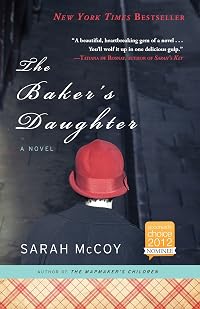
In this New York Times bestseller, two women in different eras face similar life-altering decisions, the politics of exclusion, the terrible choices we face in wartime, and the redemptive power of love.In 1945, Elsie Schmidt is a naive teenager, as eager for her first sip of champagne as she is for her first kiss. She and her family have been protected from the worst of the terror and desperation overtaking her country by a high-ranking Nazi who wishes to marry her. So when an escaped show more Jewish boy arrives on Elsie’s doorstep on Christmas Eve, Elsie understands that opening the door would put all she loves in danger.
Sixty years later, in El Paso, Texas, Reba Adams is trying to file a feel-good Christmas piece for the local magazine, and she sits down with the owner of Elsie's German Bakery for what she expects will be an easy interview. But Reba finds herself returning to the bakery again and again, anxious to find the... show less
Tags
Recommendations

















Member Recommendations
Member Reviews
I probably need to shy away from anything that is written about Nazi Germany, but there is so much potential for good material there and so much excellence in some of the things already written that I find myself being pulled in again and again. Can you say "cliche"? You cannot humanize a man who runs a concentration camp by having him kill a fellow soldier who kills a Jewish woman while arresting her husband. Why can't you tell the story of a normal German family who find themselves almost automatically joining the Nazi party, but aren't fanatics, without having the story of a saved Jew interwoven? I doubt the American servicemen were so charming that every German girl fell hopelessly in love with one look. She might have explored the show more Lebensborn Progam, which is introduced as a side track, and take a route that isn't already over-trodden, but she didn't.
I'm sorry to say that I found her characters stilted and I never felt connected to any of them. The bouncing between then and now, with the parallel stories of Elsie (our WWII German) and Reba (our modern day American) distracted rather than added to the story. Had she stuck to Elsie's story alone, I might have remained a bit more engaged, but the stops and starts killed whatever chance there was of caring for the characters.
Then there was the attempt to draw similarities between the Nazi treatment of Jews and the mission of the border patrol in Texas. She may see those as two sides of the same coin, but it was ludicrous in my mind. Two very different issues that should be treated as such. One group is trying to destroy an entire segment of the population by murdering them...the other is trying to protect a national border from illegal entry. You might find flaws in the later and you can surely find tragedy there, but they are far from having anything in common.
I considered DNFing at several points but stuck it out to the end. It didn't really matter, she had lost me far before the end. show less
I'm sorry to say that I found her characters stilted and I never felt connected to any of them. The bouncing between then and now, with the parallel stories of Elsie (our WWII German) and Reba (our modern day American) distracted rather than added to the story. Had she stuck to Elsie's story alone, I might have remained a bit more engaged, but the stops and starts killed whatever chance there was of caring for the characters.
Then there was the attempt to draw similarities between the Nazi treatment of Jews and the mission of the border patrol in Texas. She may see those as two sides of the same coin, but it was ludicrous in my mind. Two very different issues that should be treated as such. One group is trying to destroy an entire segment of the population by murdering them...the other is trying to protect a national border from illegal entry. You might find flaws in the later and you can surely find tragedy there, but they are far from having anything in common.
I considered DNFing at several points but stuck it out to the end. It didn't really matter, she had lost me far before the end. show less
Quite a few books try to juxtapose two stories, past and present, but often one or the other of the segments doesn’t work out so well. Not so with this book: both are very satisfactory, and moreover each parallels the other as the story progresses, to create a synergistic enhancement of the whole.
The story from the past centers around 16-year-old Elsie Schmidt, the daughter in a family with a bakery in Garmisch, Germany at the time of World War II. Elsie has helped out in the bakery ever since her older sister, Hazel, left for Steinhoering to enter the Lebensborn Program.
[This project was founded by Heinrich Himmler in 1935, with the goal of increasing the number of racially “pure” children in Germany. Himmler’s idea was to show more encourage SS and army officers to “mate” with approved young women (i.e., blonde hair, blue eyes, and “pure” family lineage traceable back at least three generations. The children were then taken to nurseries, evaluated, and if they passed the test, they were given to SS families to raise. If not, they were eliminated. In The Baker’s Daughter, Hazel goes to the first Lebensborn home that was opened; eventually there were ten of them. In order to maximize the results, Himmler ordered all SS and police to father as many children as possible. Still, it wasn’t happening fast enough for Himmler. He then had the SS start kidnapping children from racially acceptable countries and transferring them to Lebensborn centers to be indoctrinated. If the children thus taken refused to cooperate, they were sent to extermination camps. (In 1946, it was estimated that more than 250,000 children were kidnapped from outside of Germany. After the war, only 25,000 were sent back to their families. In some cases, it was the children themselves who refused to go back, having been successfully converted by Nazi propaganda.)]
We get a taste of what Hazel goes through from her correspondence with Elsie. But of course she must be circumspect in her letters, and so the full horror of being a brood mare in this system of legalized rape was not fully developed. But readers are given enough information to imagine what it may have been like.
For Elsie, life is a bit better, but there is still the omnipresent threat of Nazis who are corrupt with power and the ability to eliminate those who stand in their way. One of these Nazis, Josef, nearly twice her age, asks her to marry him. He seems nicer than the others, though she doesn’t love him. On the other hand, she realizes that an engagement to him is a way to provide protection for herself and her family. But on Christmas Eve, 1944, suddenly everything changes.
In the present-day story, we meet Elsie 63 years later, running her own bakery in El Paso, Texas, along with her 45-year-old daughter Jane. Reba Adams, a local reporter, comes to the bakery to interview Elsie for a Christmas feature, and immediately bonds with Elsie and Jane. Reba is somewhat estranged from her own family, because of unresolved family traumas from her past. Her older sister Deedee urges her to stop judging: “let God be the judge.” She counsels: "We have to stop being afraid of the shadows and realize that the world is made up of shades of gray, light and darkness. Can’t have one without the other.”
Reba’s inability to see gray extends to herself: she is so afraid of any darkness within her that she has constructed an artificial persona to face the world. Therefore she too, like Elsie once did, struggles with an engagement to be married. Her boyfriend Riki loves her, but Reba fears actually marrying him. The Reba that Riki knows is a lie. Would he still love her if he knew who she really was?
Riki has his own demons. He works for the Border Patrol in El Paso, and has to arrest and evict people who are only trying to survive. While not directly parallel to the case in World War II with Nazis arresting and evicting Jews, some of the same issues arise: when should the rule of law be forsaken in the name of decency? And if you don't help to save others from injustice, will you lose yourself along with them?
Evaluation: As Seamus Heaney observed when he accepted the 1995 Nobel Prize, “...the documents of civilization have been written in blood and tears.” He cautioned, “We are rightly suspicious of that which gives too much consolation in these circumstances.” And yet, he goes on to say, humans are also capable of heroic virtue and redemption. Admirably, the author shows us both sides of the coin, giving us much to consider about our past as well as our present.
I'm so glad my husband was out of town when I finished this, so he couldn’t hear my banshee-like sobbing wailing noises. Get some Kleenex and read this one!
Note: There are a lot of fascinating issues for a book club to discuss, and you could even make treats for your meeting from some of the great recipes included in the back! show less
The story from the past centers around 16-year-old Elsie Schmidt, the daughter in a family with a bakery in Garmisch, Germany at the time of World War II. Elsie has helped out in the bakery ever since her older sister, Hazel, left for Steinhoering to enter the Lebensborn Program.
[This project was founded by Heinrich Himmler in 1935, with the goal of increasing the number of racially “pure” children in Germany. Himmler’s idea was to show more encourage SS and army officers to “mate” with approved young women (i.e., blonde hair, blue eyes, and “pure” family lineage traceable back at least three generations. The children were then taken to nurseries, evaluated, and if they passed the test, they were given to SS families to raise. If not, they were eliminated. In The Baker’s Daughter, Hazel goes to the first Lebensborn home that was opened; eventually there were ten of them. In order to maximize the results, Himmler ordered all SS and police to father as many children as possible. Still, it wasn’t happening fast enough for Himmler. He then had the SS start kidnapping children from racially acceptable countries and transferring them to Lebensborn centers to be indoctrinated. If the children thus taken refused to cooperate, they were sent to extermination camps. (In 1946, it was estimated that more than 250,000 children were kidnapped from outside of Germany. After the war, only 25,000 were sent back to their families. In some cases, it was the children themselves who refused to go back, having been successfully converted by Nazi propaganda.)]
We get a taste of what Hazel goes through from her correspondence with Elsie. But of course she must be circumspect in her letters, and so the full horror of being a brood mare in this system of legalized rape was not fully developed. But readers are given enough information to imagine what it may have been like.
For Elsie, life is a bit better, but there is still the omnipresent threat of Nazis who are corrupt with power and the ability to eliminate those who stand in their way. One of these Nazis, Josef, nearly twice her age, asks her to marry him. He seems nicer than the others, though she doesn’t love him. On the other hand, she realizes that an engagement to him is a way to provide protection for herself and her family. But on Christmas Eve, 1944, suddenly everything changes.
In the present-day story, we meet Elsie 63 years later, running her own bakery in El Paso, Texas, along with her 45-year-old daughter Jane. Reba Adams, a local reporter, comes to the bakery to interview Elsie for a Christmas feature, and immediately bonds with Elsie and Jane. Reba is somewhat estranged from her own family, because of unresolved family traumas from her past. Her older sister Deedee urges her to stop judging: “let God be the judge.” She counsels: "We have to stop being afraid of the shadows and realize that the world is made up of shades of gray, light and darkness. Can’t have one without the other.”
Reba’s inability to see gray extends to herself: she is so afraid of any darkness within her that she has constructed an artificial persona to face the world. Therefore she too, like Elsie once did, struggles with an engagement to be married. Her boyfriend Riki loves her, but Reba fears actually marrying him. The Reba that Riki knows is a lie. Would he still love her if he knew who she really was?
Riki has his own demons. He works for the Border Patrol in El Paso, and has to arrest and evict people who are only trying to survive. While not directly parallel to the case in World War II with Nazis arresting and evicting Jews, some of the same issues arise: when should the rule of law be forsaken in the name of decency? And if you don't help to save others from injustice, will you lose yourself along with them?
Evaluation: As Seamus Heaney observed when he accepted the 1995 Nobel Prize, “...the documents of civilization have been written in blood and tears.” He cautioned, “We are rightly suspicious of that which gives too much consolation in these circumstances.” And yet, he goes on to say, humans are also capable of heroic virtue and redemption. Admirably, the author shows us both sides of the coin, giving us much to consider about our past as well as our present.
I'm so glad my husband was out of town when I finished this, so he couldn’t hear my banshee-like sobbing wailing noises. Get some Kleenex and read this one!
Note: There are a lot of fascinating issues for a book club to discuss, and you could even make treats for your meeting from some of the great recipes included in the back! show less
The Baker’s Daughter caught my attention initially because of its tie to World War II. But if you are thinking the novel is just another story about a woman who must decide whether or not to shelter a Jewish person during the Holocaust, you’d be mistaken. Beneath the surface is a story about love, about family and about relationships. It’s about facing our demons—our pasts—our fears and our regrets. And about forgiveness—not only of others, but of ourselves.
I loved Elsie Schmidt from the beginning, from her innocence as a young woman to her wisdom and positive outlook on life as a much older one. She showed great courage and yet was also very human in terms of her vulnerability and thought processes. I would like to be more show more like her, truly. She seems to radiate wisdom and love, even despite the darker spots in her past.
Elsie’s sister Hazel’s story particularly interested me. I was not too familiar with the Lebensborn Program before having read the novel. The researcher in me was intrigued, however, and off I went to learn more. In an effort to promote and continue a “pure” race, the Lebensborn Program was designed to encourage "approved" young women and SS officers to procreate. Infants deemed acceptable were then placed in homes of SS officers to be raised. Those found to be unacceptable were disposed of. In Hazel’s case, she volunteered for the program after the father of her son was killed. Through her letters to her sister, the reader gets to know Hazel and her situation. It was heartbreaking to say the least.
I found Josef, friend to Elsie's family, to be a particularly diverse and interesting character. I really appreciated how the author portrayed his character and the way she wove his story into Elsie's. As an SS officer, he provided an interesting viewpoint. He wasn’t guiltless by any stretch in terms of the atrocities committed against the Jewish people during World War II; however, some of the choices he made, some of the doubts and regrets he had, made him seem more sympathetic—more human. It goes to show what a skilled writer Sarah McCoy is.
Of all the characters, I most identified with Reba. I didn’t always like the choices she made. She could be a little cold at times—or so it seemed. But that’s just the way she was. That was part of her defense. It’s easy as a reader to see the whole picture. The characters within the story often only know their own hearts and minds. In some ways, as I read, I felt like Sarah McCoy had gotten into my head and was holding up a mirror to me—“See?” She was saying, “I know you. I understand.” I couldn’t have chosen a more perfect time to read this book as I am coming to terms with my own past and the loss of my father. Reba’s and my lives are entirely different, of course. Still, I could relate to her in a lot of ways. I know what it is like to grow up with a parent who suffers from Depression and alcoholism. I know what it is like to move hundreds of miles to get away. I know what it is like to feel alone, to not trust anyone, and to be afraid to get close to anyone. I know what it is like to want to be someone else, sometimes trying to be someone else. I know what it is like to be depressed too.
Elsie’s story is not much different in some respects, only it is more about her own decisions, including how they impact her relationship with her family. She had such difficult choices to make, as did everyone in her family during a very trying time. In some ways, I could relate to her story as well, particularly in terms of her relationship with her father.
A subject I wasn’t quite expecting to pop up in the novel was the issue of immigration, in particular those crossing over the border from Mexico illegally. It makes sense, really, given Reba’s fiancé Riki’s job as a border patrol agent. Still, I hadn’t expected it to take a somewhat prominent role. I think it provided a good juxtaposition to Reba’s journey through the course of the book as well as with her relationship with Riki.
Sarah McCoy has taken several different elements and adeptly woven them together in The Baker’s Daughter. There are two seemingly very different stories, and yet they come together in such a way that makes it nearly impossible not to see the parallels and common themes. I took much away from this book and continue to think about it days--even weeks--after.
There wasn’t anything I did not like about The Baker’s Daughter, from the well-drawn characters to the various story lines, to the historical and present day aspects. This book offers a lot of food for thought (and recipes at the end!) as well as touched my heart. I had a similar experience reading The Baker’s Daughter as I did reading Ann-Marie MacDonald’s The Way the Crow Flies. Is it any wonder then that Sarah McCoy’s novel, The Baker’s Daughter, is not only my favorite so far this year, but also made my all-time favorite book list? show less
I loved Elsie Schmidt from the beginning, from her innocence as a young woman to her wisdom and positive outlook on life as a much older one. She showed great courage and yet was also very human in terms of her vulnerability and thought processes. I would like to be more show more like her, truly. She seems to radiate wisdom and love, even despite the darker spots in her past.
Elsie’s sister Hazel’s story particularly interested me. I was not too familiar with the Lebensborn Program before having read the novel. The researcher in me was intrigued, however, and off I went to learn more. In an effort to promote and continue a “pure” race, the Lebensborn Program was designed to encourage "approved" young women and SS officers to procreate. Infants deemed acceptable were then placed in homes of SS officers to be raised. Those found to be unacceptable were disposed of. In Hazel’s case, she volunteered for the program after the father of her son was killed. Through her letters to her sister, the reader gets to know Hazel and her situation. It was heartbreaking to say the least.
I found Josef, friend to Elsie's family, to be a particularly diverse and interesting character. I really appreciated how the author portrayed his character and the way she wove his story into Elsie's. As an SS officer, he provided an interesting viewpoint. He wasn’t guiltless by any stretch in terms of the atrocities committed against the Jewish people during World War II; however, some of the choices he made, some of the doubts and regrets he had, made him seem more sympathetic—more human. It goes to show what a skilled writer Sarah McCoy is.
Of all the characters, I most identified with Reba. I didn’t always like the choices she made. She could be a little cold at times—or so it seemed. But that’s just the way she was. That was part of her defense. It’s easy as a reader to see the whole picture. The characters within the story often only know their own hearts and minds. In some ways, as I read, I felt like Sarah McCoy had gotten into my head and was holding up a mirror to me—“See?” She was saying, “I know you. I understand.” I couldn’t have chosen a more perfect time to read this book as I am coming to terms with my own past and the loss of my father. Reba’s and my lives are entirely different, of course. Still, I could relate to her in a lot of ways. I know what it is like to grow up with a parent who suffers from Depression and alcoholism. I know what it is like to move hundreds of miles to get away. I know what it is like to feel alone, to not trust anyone, and to be afraid to get close to anyone. I know what it is like to want to be someone else, sometimes trying to be someone else. I know what it is like to be depressed too.
Elsie’s story is not much different in some respects, only it is more about her own decisions, including how they impact her relationship with her family. She had such difficult choices to make, as did everyone in her family during a very trying time. In some ways, I could relate to her story as well, particularly in terms of her relationship with her father.
A subject I wasn’t quite expecting to pop up in the novel was the issue of immigration, in particular those crossing over the border from Mexico illegally. It makes sense, really, given Reba’s fiancé Riki’s job as a border patrol agent. Still, I hadn’t expected it to take a somewhat prominent role. I think it provided a good juxtaposition to Reba’s journey through the course of the book as well as with her relationship with Riki.
Sarah McCoy has taken several different elements and adeptly woven them together in The Baker’s Daughter. There are two seemingly very different stories, and yet they come together in such a way that makes it nearly impossible not to see the parallels and common themes. I took much away from this book and continue to think about it days--even weeks--after.
There wasn’t anything I did not like about The Baker’s Daughter, from the well-drawn characters to the various story lines, to the historical and present day aspects. This book offers a lot of food for thought (and recipes at the end!) as well as touched my heart. I had a similar experience reading The Baker’s Daughter as I did reading Ann-Marie MacDonald’s The Way the Crow Flies. Is it any wonder then that Sarah McCoy’s novel, The Baker’s Daughter, is not only my favorite so far this year, but also made my all-time favorite book list? show less
Literature is filled with the horrific, the brave, and the heartbeaking stories of World War II. But it isn't often that the story being told is of a person and a family who spent years being compliant with and even lauding Hitler's vision of a new and improved Germany. In Sarah McCoy's fantastic novel, Elsie Schmidt and her family, the bakers of the title, are just these people and her portrayal of them takes the normal black and white morality and turns it into just about every permutation of grey possible. Life is not pure good versus pure evil, why should fiction be?
The novel opens with Reba Adams, a reporter in El Paso, Texas, trying to add more substance to her seasonal article about Christmas around the world by interviewing show more Elsie Schmidt, the owner of a popular German bakery in town. Reba is looking for something heartwarming and quotable but she finds Elsie reluctant to speak of Christmas in Germany where she was a teenager during the war. Elsie tells Reba that her memories of Christmas are not typical because of the war's deprivations and she is loathe to tell the full story of her last "crappy" Christmas in Germany before marrying an American soldier. Reba perseveres and when she discovers that her new friend Elsie had once been engaged to a Nazi officer, she is appalled, sharing her disbelief with her own fiance Riki, a strictly by the book Border Patrol agent who is starting to view his own job differently.
Reba's life, her reluctance to set a date with Riki, her desire for a bigger, better job in a more vibrant city, and her family baggage alternates with Elsie's wartime letters to her older sister, one of the chosen, young, Aryan women who were a part of the Lebensborn program and supposed to bear children for the Reich. The biggest portion of the narrative though, is that of Elsie's life during 1944 and 1945 when Germany is fighting a losing battle and its people were scrambling for survival. It was then that Elsie, after attending a Christmas party for Nazi officers, is engaged, albeit reluctantly, to Lieutenant Colonel Josef Hub. It is also that Christmas that a young Jewish boy, the gifted singer at the Christmas party, escapes from his escort back to the camps and begs Elsie to hide him in return for the favor he did her earlier in the evening. Suddenly this family who has given one daughter to the cause and who relies on their connection to the Nazis in order to keep their bakery afloat is harboring an escaped Jew although that is unbeknownst to all but Elsie.
The conflicts that Elsie and Reba feel in their heart of hearts, and in fact the creeping uncertainty that all of the major and minor characters come to feel about the policies under which they live and which they have vowed to uphold, are enormous and difficult. Elsie, despite her own initial Nazi sympathies, is a wonderful and sympathetic character and her ultimate Solomonic decision is the struggle you'd expect but completely in keeping with her character. Reba is a bit harder to understand although as her family history and the demons she's running from come out, this lessens. The historical portion of the novel is fascinating and the parallel between the Nazis and the immigration war is subtle. McCoy is not implying that the one is anywhere close to as reprehensible as the other but through her characters, she points out the moral ambiguity that surrounds any situation that might at first glance appear cut and dried. The book is well written and engaging and I found myself unable to put it down once I was fully invested in the story. Fans of historical fiction will enjoy this slightly different perspective while book club readers will find many topics to consider in their discussions. show less
The novel opens with Reba Adams, a reporter in El Paso, Texas, trying to add more substance to her seasonal article about Christmas around the world by interviewing show more Elsie Schmidt, the owner of a popular German bakery in town. Reba is looking for something heartwarming and quotable but she finds Elsie reluctant to speak of Christmas in Germany where she was a teenager during the war. Elsie tells Reba that her memories of Christmas are not typical because of the war's deprivations and she is loathe to tell the full story of her last "crappy" Christmas in Germany before marrying an American soldier. Reba perseveres and when she discovers that her new friend Elsie had once been engaged to a Nazi officer, she is appalled, sharing her disbelief with her own fiance Riki, a strictly by the book Border Patrol agent who is starting to view his own job differently.
Reba's life, her reluctance to set a date with Riki, her desire for a bigger, better job in a more vibrant city, and her family baggage alternates with Elsie's wartime letters to her older sister, one of the chosen, young, Aryan women who were a part of the Lebensborn program and supposed to bear children for the Reich. The biggest portion of the narrative though, is that of Elsie's life during 1944 and 1945 when Germany is fighting a losing battle and its people were scrambling for survival. It was then that Elsie, after attending a Christmas party for Nazi officers, is engaged, albeit reluctantly, to Lieutenant Colonel Josef Hub. It is also that Christmas that a young Jewish boy, the gifted singer at the Christmas party, escapes from his escort back to the camps and begs Elsie to hide him in return for the favor he did her earlier in the evening. Suddenly this family who has given one daughter to the cause and who relies on their connection to the Nazis in order to keep their bakery afloat is harboring an escaped Jew although that is unbeknownst to all but Elsie.
The conflicts that Elsie and Reba feel in their heart of hearts, and in fact the creeping uncertainty that all of the major and minor characters come to feel about the policies under which they live and which they have vowed to uphold, are enormous and difficult. Elsie, despite her own initial Nazi sympathies, is a wonderful and sympathetic character and her ultimate Solomonic decision is the struggle you'd expect but completely in keeping with her character. Reba is a bit harder to understand although as her family history and the demons she's running from come out, this lessens. The historical portion of the novel is fascinating and the parallel between the Nazis and the immigration war is subtle. McCoy is not implying that the one is anywhere close to as reprehensible as the other but through her characters, she points out the moral ambiguity that surrounds any situation that might at first glance appear cut and dried. The book is well written and engaging and I found myself unable to put it down once I was fully invested in the story. Fans of historical fiction will enjoy this slightly different perspective while book club readers will find many topics to consider in their discussions. show less
I was so pleased to receive a copy of this book in the TNBBC giveaway and it did not disappoint in any way. Both the historical and modern-day stories were engrossing. The author was not afraid to touch on controversial topics, such as illegal immigration, but she did so in a balanced way, presenting more than one side to the story and never trying to force her beliefs on the reader. I appreciated the way she subtly raised big questions and presented different schools of thought within the framework of the story. For example, the question 'how much guilt should rest on the German people for Nazi atrocities' was explored through the lives of various characters, but Ms. McCoy left it completely up to the reader to answer that question. show more She has a fine talent for creating complex characters and using them to evoke strong emotions in the reader. I found myself in the odd position of feeling sorry for a dedicated Nazi and cold-blooded murderer. But rest assured that, despite the heavy themes, this was a highly entertaining, un-put-downable read. show less
The Baker’s Daughter caught my attention initially because of its tie to World War II. But if you are thinking the novel is just another story about a woman who must decide whether or not to shelter a Jewish person during the Holocaust, you’d be mistaken. Beneath the surface is a story about love, about family and about relationships. It’s about facing our demons—our pasts—our fears and our regrets. And about forgiveness—not only of others, but of ourselves.
I loved Elsie Schmidt from the beginning, from her innocence as a young woman to her wisdom and positive outlook on life as a much older one. She showed great courage and yet was also very human in terms of her vulnerability and thought processes. I would like to be more show more like her, truly. She seems to radiate wisdom and love, even despite the darker spots in her past.
Elsie’s sister Hazel’s story particularly interested me. I was not too familiar with the Lebensborn Program before having read the novel. The researcher in me was intrigued, however, and off I went to learn more. In an effort to promote and continue a “pure” race, the Lebensborn Program was designed to encourage "approved" young women and SS officers to procreate. Infants deemed acceptable were then placed in homes of SS officers to be raised. Those found to be unacceptable were disposed of. In Hazel’s case, she volunteered for the program after the father of her son was killed. Through her letters to her sister, the reader gets to know Hazel and her situation. It was heartbreaking to say the least.
I found Josef, friend to Elsie's family, to be a particularly diverse and interesting character. I really appreciated how the author portrayed his character and the way she wove his story into Elsie's. As an SS officer, he provided an interesting viewpoint. He wasn’t guiltless by any stretch in terms of the atrocities committed against the Jewish people during World War II; however, some of the choices he made, some of the doubts and regrets he had, made him seem more sympathetic—more human. It goes to show what a skilled writer Sarah McCoy is.
Of all the characters, I most identified with Reba. I didn’t always like the choices she made. She could be a little cold at times—or so it seemed. But that’s just the way she was. That was part of her defense. It’s easy as a reader to see the whole picture. The characters within the story often only know their own hearts and minds. In some ways, as I read, I felt like Sarah McCoy had gotten into my head and was holding up a mirror to me—“See?” She was saying, “I know you. I understand.” I couldn’t have chosen a more perfect time to read this book as I am coming to terms with my own past and the loss of my father. Reba’s and my lives are entirely different, of course. Still, I could relate to her in a lot of ways. I know what it is like to grow up with a parent who suffers from Depression and alcoholism. I know what it is like to move hundreds of miles to get away. I know what it is like to feel alone, to not trust anyone, and to be afraid to get close to anyone. I know what it is like to want to be someone else, sometimes trying to be someone else. I know what it is like to be depressed too.
Elsie’s story is not much different in some respects, only it is more about her own decisions, including how they impact her relationship with her family. She had such difficult choices to make, as did everyone in her family during a very trying time. In some ways, I could relate to her story as well, particularly in terms of her relationship with her father.
A subject I wasn’t quite expecting to pop up in the novel was the issue of immigration, in particular those crossing over the border from Mexico illegally. It makes sense, really, given Reba’s fiancé Riki’s job as a border patrol agent. Still, I hadn’t expected it to take a somewhat prominent role. I think it provided a good juxtaposition to Reba’s journey through the course of the book as well as with her relationship with Riki.
Sarah McCoy has taken several different elements and adeptly woven them together in The Baker’s Daughter. There are two seemingly very different stories, and yet they come together in such a way that makes it nearly impossible not to see the parallels and common themes. I took much away from this book and continue to think about it days--even weeks--after.
There wasn’t anything I did not like about The Baker’s Daughter, from the well-drawn characters to the various story lines, to the historical and present day aspects. This book offers a lot of food for thought (and recipes at the end!) as well as touched my heart. I had a similar experience reading The Baker’s Daughter as I did reading Ann-Marie MacDonald’s The Way the Crow Flies. Is it any wonder then that Sarah McCoy’s novel, The Baker’s Daughter, is not only my favorite so far this year, but also made my all-time favorite book list? show less
I loved Elsie Schmidt from the beginning, from her innocence as a young woman to her wisdom and positive outlook on life as a much older one. She showed great courage and yet was also very human in terms of her vulnerability and thought processes. I would like to be more show more like her, truly. She seems to radiate wisdom and love, even despite the darker spots in her past.
Elsie’s sister Hazel’s story particularly interested me. I was not too familiar with the Lebensborn Program before having read the novel. The researcher in me was intrigued, however, and off I went to learn more. In an effort to promote and continue a “pure” race, the Lebensborn Program was designed to encourage "approved" young women and SS officers to procreate. Infants deemed acceptable were then placed in homes of SS officers to be raised. Those found to be unacceptable were disposed of. In Hazel’s case, she volunteered for the program after the father of her son was killed. Through her letters to her sister, the reader gets to know Hazel and her situation. It was heartbreaking to say the least.
I found Josef, friend to Elsie's family, to be a particularly diverse and interesting character. I really appreciated how the author portrayed his character and the way she wove his story into Elsie's. As an SS officer, he provided an interesting viewpoint. He wasn’t guiltless by any stretch in terms of the atrocities committed against the Jewish people during World War II; however, some of the choices he made, some of the doubts and regrets he had, made him seem more sympathetic—more human. It goes to show what a skilled writer Sarah McCoy is.
Of all the characters, I most identified with Reba. I didn’t always like the choices she made. She could be a little cold at times—or so it seemed. But that’s just the way she was. That was part of her defense. It’s easy as a reader to see the whole picture. The characters within the story often only know their own hearts and minds. In some ways, as I read, I felt like Sarah McCoy had gotten into my head and was holding up a mirror to me—“See?” She was saying, “I know you. I understand.” I couldn’t have chosen a more perfect time to read this book as I am coming to terms with my own past and the loss of my father. Reba’s and my lives are entirely different, of course. Still, I could relate to her in a lot of ways. I know what it is like to grow up with a parent who suffers from Depression and alcoholism. I know what it is like to move hundreds of miles to get away. I know what it is like to feel alone, to not trust anyone, and to be afraid to get close to anyone. I know what it is like to want to be someone else, sometimes trying to be someone else. I know what it is like to be depressed too.
Elsie’s story is not much different in some respects, only it is more about her own decisions, including how they impact her relationship with her family. She had such difficult choices to make, as did everyone in her family during a very trying time. In some ways, I could relate to her story as well, particularly in terms of her relationship with her father.
A subject I wasn’t quite expecting to pop up in the novel was the issue of immigration, in particular those crossing over the border from Mexico illegally. It makes sense, really, given Reba’s fiancé Riki’s job as a border patrol agent. Still, I hadn’t expected it to take a somewhat prominent role. I think it provided a good juxtaposition to Reba’s journey through the course of the book as well as with her relationship with Riki.
Sarah McCoy has taken several different elements and adeptly woven them together in The Baker’s Daughter. There are two seemingly very different stories, and yet they come together in such a way that makes it nearly impossible not to see the parallels and common themes. I took much away from this book and continue to think about it days--even weeks--after.
There wasn’t anything I did not like about The Baker’s Daughter, from the well-drawn characters to the various story lines, to the historical and present day aspects. This book offers a lot of food for thought (and recipes at the end!) as well as touched my heart. I had a similar experience reading The Baker’s Daughter as I did reading Ann-Marie MacDonald’s The Way the Crow Flies. Is it any wonder then that Sarah McCoy’s novel, The Baker’s Daughter, is not only my favorite so far this year, but also made my all-time favorite book list? show less
Families and dual storylines are getting to be rather common in popular and literary fiction these days. Both are important factors of an uncommonly good novel -- Sarah M. McCoy's The Baker's Daughter.
The novel is more than one story and, indeed, it's even possible to make the case that more than one character is the baker's daughter. There is the obvious one -- Elsie is the daughter of a baker in a small German town where everyone struggles to survive as the Nazis gain power and as the war drags on. There also is Elsie's daughter, Jane, who works alongside her mother in a small town German bakery in Texas. And then there is a daughter of Elsie's heart, Reba, who comes to the bakery for what she thinks will be a quick interview about show more holiday traditions. Instead, Jane and Elsie befriend a woman who has closed off her heart, even with love from family and a good man staring her in the face.
Young Elsie is the salt of the earth that leavens good bread. She is quiet yet not passive. She misses her sister, who is in a Nazi compound set up for Aryan breeding mares (the Lebensborn Program really existed). Her life is like Margaret Atwood's The Handmaid's Tale told from the viewpoint of proud family members boasting of their daughter's fate, not realizing until far too late what horrors and ruthless cruelty are there. In a grotesque pastiche of a whirlwind, fairy tale romance, a Nazi officer bestows his ring on Elsie, and this protects Elsie and her family. Josef is acting out of guilt from Kristallnacht. Elsie realizes she has to use the gift of his protection even as she feels guilt for not loving him.
Elsie does something far braver when fate presents the opportunity to do so. It's an impulsive move, but she shows true strength in perservering with the consequences of her act.
In the present time, Reba also is separated from her sister, but it's a voluntary move. Their father was haunted by what he did in Vietnam, and Reba discovers exactly how haunting what he did was. The parallel with the German officer's guilt is but one of many parallels in the novel. None of the acts or characters are exact matches, but they do offer varying perspectives on such big ideas as honor, duty and fealty. Reba leaves her home because she wants to leave behind the hurt, although her sister continues to reach out to her.
Another man has guilt over what he once believed in. Reba's fiancee is a border agent. As an American citizen who is Hispanic, Riki believes he is doing the right thing by finding and helping deport people back across the U.S.-Mexican border. Until a young boy grabs his heart.
The Baker's Daughter is written with a light touch about drastic events that really happened or could have happened. People's lives are altered forever in seconds. People try to do the right thing. They feel guilt. They feel sorrow. Their paths, decades apart, show similar trajectories about the big ideas without making direct comparisons. The border patrol agents, for instance, is not likened to S.S. officers. But the reader knows that the actions dictated by both jobs can lead to similar misery for the people they hunt, that families can be torn apart and that tragedy can occur.
It is this ability to show how history repeats itself in the way people are treated, the way they are condemned not because of who they are but because of what they represent to those with the power, and the ability to let readers draw their own conclusions about individual characters and how their choices can work in with or challenge the power structure, that demonstrate lasting power of McCoy's novel.
There is much sweetness and coming together in the novel. There are touching moments and characters doing the right thing by others. There are the sins of the past to be mourned. But underneath that are the movements of society in how people in power treat those without any.
So enjoy the food descriptions -- which are rendered with loving care by someone who obviously knows her way around a kitchen, and be moved by the journey of the various bakers' daughters. But also let the bigger questions move you. show less
The novel is more than one story and, indeed, it's even possible to make the case that more than one character is the baker's daughter. There is the obvious one -- Elsie is the daughter of a baker in a small German town where everyone struggles to survive as the Nazis gain power and as the war drags on. There also is Elsie's daughter, Jane, who works alongside her mother in a small town German bakery in Texas. And then there is a daughter of Elsie's heart, Reba, who comes to the bakery for what she thinks will be a quick interview about show more holiday traditions. Instead, Jane and Elsie befriend a woman who has closed off her heart, even with love from family and a good man staring her in the face.
Young Elsie is the salt of the earth that leavens good bread. She is quiet yet not passive. She misses her sister, who is in a Nazi compound set up for Aryan breeding mares (the Lebensborn Program really existed). Her life is like Margaret Atwood's The Handmaid's Tale told from the viewpoint of proud family members boasting of their daughter's fate, not realizing until far too late what horrors and ruthless cruelty are there. In a grotesque pastiche of a whirlwind, fairy tale romance, a Nazi officer bestows his ring on Elsie, and this protects Elsie and her family. Josef is acting out of guilt from Kristallnacht. Elsie realizes she has to use the gift of his protection even as she feels guilt for not loving him.
Elsie does something far braver when fate presents the opportunity to do so. It's an impulsive move, but she shows true strength in perservering with the consequences of her act.
In the present time, Reba also is separated from her sister, but it's a voluntary move. Their father was haunted by what he did in Vietnam, and Reba discovers exactly how haunting what he did was. The parallel with the German officer's guilt is but one of many parallels in the novel. None of the acts or characters are exact matches, but they do offer varying perspectives on such big ideas as honor, duty and fealty. Reba leaves her home because she wants to leave behind the hurt, although her sister continues to reach out to her.
Another man has guilt over what he once believed in. Reba's fiancee is a border agent. As an American citizen who is Hispanic, Riki believes he is doing the right thing by finding and helping deport people back across the U.S.-Mexican border. Until a young boy grabs his heart.
The Baker's Daughter is written with a light touch about drastic events that really happened or could have happened. People's lives are altered forever in seconds. People try to do the right thing. They feel guilt. They feel sorrow. Their paths, decades apart, show similar trajectories about the big ideas without making direct comparisons. The border patrol agents, for instance, is not likened to S.S. officers. But the reader knows that the actions dictated by both jobs can lead to similar misery for the people they hunt, that families can be torn apart and that tragedy can occur.
It is this ability to show how history repeats itself in the way people are treated, the way they are condemned not because of who they are but because of what they represent to those with the power, and the ability to let readers draw their own conclusions about individual characters and how their choices can work in with or challenge the power structure, that demonstrate lasting power of McCoy's novel.
There is much sweetness and coming together in the novel. There are touching moments and characters doing the right thing by others. There are the sins of the past to be mourned. But underneath that are the movements of society in how people in power treat those without any.
So enjoy the food descriptions -- which are rendered with loving care by someone who obviously knows her way around a kitchen, and be moved by the journey of the various bakers' daughters. But also let the bigger questions move you. show less
Members
- Recently Added By
Lists

Books About World War II
102 works; 29 members

Women in War
148 works; 30 members

Top Five Books of 2016
795 works; 229 members

Books about World War II
241 works; 22 members

Books Read in 2016
4,666 works; 199 members
Author Information

10+ Works 1,909 Members
Sarah McCoy is the author of several novel's such as: The Time It Snowed in Puerto Rico and The Mapmaker's Children. The daughter of an army officer, McCoy spent her childhood in Germany. Her title The Baker's Daghter made the best seller list in 2017. (Bowker Author Biography)
Sarah McCoy is a LibraryThing Author, an author who lists their personal library on LibraryThing.
Common Knowledge
- Canonical title
- The Baker's Daughter
- Original title
- The Baker's Daughter
- Original publication date
- 2012-08-14
- People/Characters
- Elsie Schmidt Meriwether; Reba Adams; Ricardo "Riki" M. Chavez; Josef Hub; Max Schmidt; Luana Schmidt (show all 20); Hazel Schmidt; Tobias Zuckermann; Jane Meriwether; Sergio Rodriguez; Peter Klaus Abend; Frau Rattelmuller; Deedee Adams; Julius Schmidt; Gunther Kremer; Robby Lee; Albert Meriwether; Lillian Schmidt; Friedhelm Schmidt; Victor Garcia
- Important places
- El Paso, Texas, USA; Garmisch, Bavaria, Germany; Steinhöring, Bavaria, Germany; San Francisco, California, USA
- Important events
- World War II
- Epigraph
- Everyone is a moon, and has a dark side which he never shows to anybody. ---MARK TWAIN, "Following the Equator"
The light of heaven falls whole and white And is not shattered into dyes, The light for ever is morning light; The hills are verdured pasture-wise; The angel hosts with freshness go, And seek with laughter what to brave;--- A... (show all)nd binding all is the hushed snow Of the far-distant breaking wave.
And from a cliff-top is proclaimed The gathering of the souls for birth, The trial by existence named, The obscuration upon earth, And the slant spirits trooping by In streams and cross- and counter-streams Can but give ear to that sweet cry For its suggestion of what dreams! ---ROBERT FROST, "The Trial by Existence" - Dedication
- For Brian Zahlen bitte, mein Schatz. Ich liebe Dich.
- First words
- Long after the downstairs oven had cooled to the touch and the upstairs had grown warm with bodies cocooned in cotton sheets, she slipped her feet from beneath the thin coverlet and quietly made her way through the darkness, ... (show all)neglecting her slippers for fear that their clip might wake her sleeping husband.
- Last words
- (Click to show. Warning: May contain spoilers.)With great love and sincerest thanks, Tobias
(Click to show. Warning: May contain spoilers.)Guten appetit! --Jane - Blurbers
- Sullivan, J. Courtney; Hodgkinson, Amanda; Jio, Sarah; McNees, Kelly O'Connor; Reynolds, Sheri; de Rosnay, Tatiana (show all 7); Blum, Jenna
- Disambiguation notice*
- publié chez France Loisirs sous le titre "La bonne étoile d’Elsie"
*Some information comes from Common Knowledge in other languages. Click "Edit" for more information.
Classifications
Statistics
- Members
- 714
- Popularity
- 39,857
- Reviews
- 48
- Rating
- (3.84)
- Languages
- Dutch, English, French, Italian
- Media
- Paper, Audiobook, Ebook
- ISBNs
- 19
- ASINs
- 5