A Woman of the Iron People
by Eleanor Arnason
A Woman of the Iron People (Collections and Selections — Omnibus 1-2)
On This Page
Description
This James Tiptree Jr. Award-winning anthropological science fiction novel about first contact with an alien culture is "fascinating" and "irresistible" (Ursula K. LeGuin). Lixia and the members of her human crew are determined not to disturb the life on the planet circling the Star Sigma Draconis which they have begun exploring. But the factions on the mother ship hovering above the planet may create an unintended chaos for both the life on the planet and the humans exploring it. As the show more anger increases on the ship, the ground crew becomes more and more affected by the conflict and begins to rely on their instincts to keep the project moving forward. Unexpected danger plagues the mission as Lixia is determined to expand her knowledge. This "excellent, anthropologically oriented SF tale" novel (Publishers Weekly) explores the mix of fear and fascination as humans and aliens meet, alert to the potential for both mutual enrichment and mutual destruction, and offers "strong characters, well-written dialogue, and a plot full of adventure" (School Library Journal). show lessTags
Recommendations



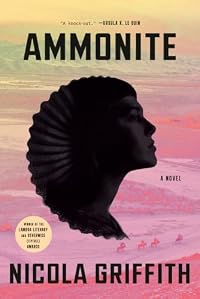




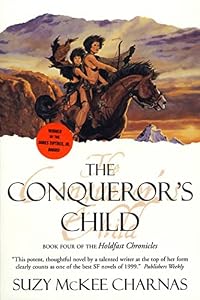



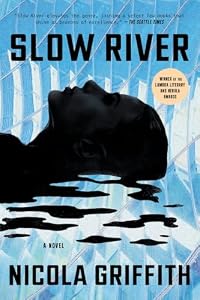
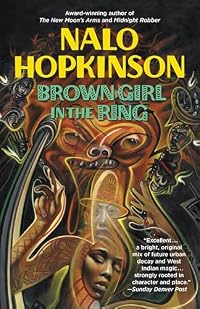




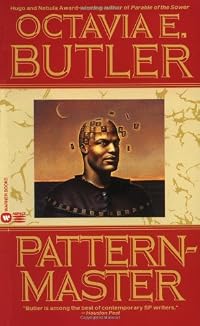
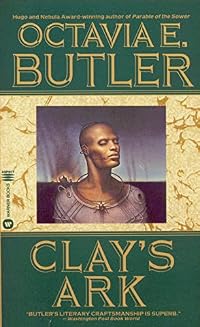










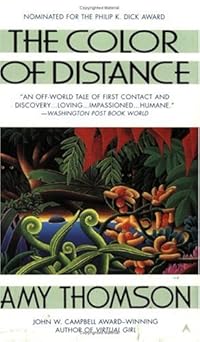


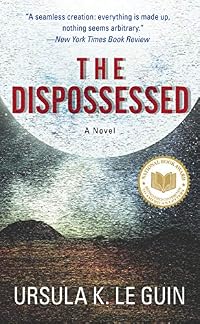


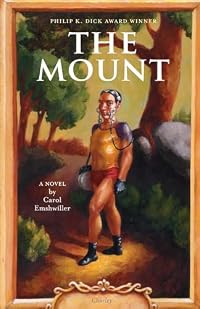



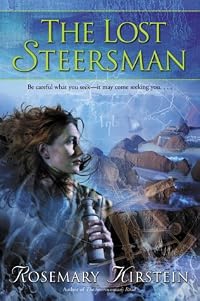

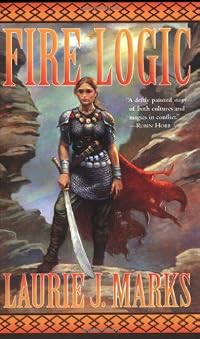
Member Recommendations

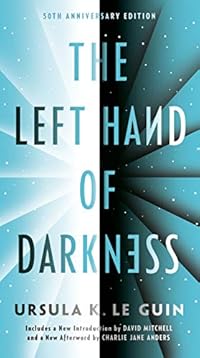
sandstone78 For envoys on strange worlds, and consideration of gender and sexuality

MartinWisse Another novel of exploration on an alien world, this is cleverly disguised as a fantasy book.

debbiereads There are lots of differences, but each book explores a complex alien culture that is not monolithic - there is difference and change among the aliens, not just change triggered by contact with humans.
jmg12 Another novel exploring an alien society and what happens when incorrect assumptions are made about the societies.
Member Reviews
https://nwhyte.livejournal.com/2883700.html
I enjoyed A Woman of the Iron People a lot. It's a great piece of speculative anthropological writing, about vulnerable Earth people exploring a planet where gender roles are very different from ours (men live solitary hunting lives, and possibly are not all that bright; women run all the settlements and technology). The tensions in the human starship crew and among the locals are sharply defined. It's in the shadow of The Left Hand of Darkness, obviously, but I thought Arnason managed the exceptionally difficult feat of creating an alien society and then concentrating on those who are deviant within that society's own constraints - by contrast, Gethen seems to be full of "straight" Gethenians.
I enjoyed A Woman of the Iron People a lot. It's a great piece of speculative anthropological writing, about vulnerable Earth people exploring a planet where gender roles are very different from ours (men live solitary hunting lives, and possibly are not all that bright; women run all the settlements and technology). The tensions in the human starship crew and among the locals are sharply defined. It's in the shadow of The Left Hand of Darkness, obviously, but I thought Arnason managed the exceptionally difficult feat of creating an alien society and then concentrating on those who are deviant within that society's own constraints - by contrast, Gethen seems to be full of "straight" Gethenians.
A Woman of the Iron People by Eleanor Arnason was a gift from my friend Matt. It's the second Arnason book I've read (Ring of Swords was the first, also from the same friend). I liked this one better than the first, in contrast to Matt, who liked Ring of Swords better. Eleanor Arnason appears to have a thing for catlike intelligent species, since both books feature different feline aliens. She also uses these nonhuman cultures to explore the nature of gender roles, using the first-contact setting to contrast with human preconceptions/assumptions.
The story is in third person and reads something like a science fiction/mythological Canterbury Tales. It's something of a first-contact novel, where a human expedition sends ethnologists down show more to this new planet to study the primitive native culture. And like many human traditional cultures, the natives are organized into tribes who have their own territories, with some movement and trade among their different communities. Like Ring of Swords, the sexes are geographically separated--the women live communally in villages, the men lead solitary existences in their individual territories located around the villages. During breeding season, the women head out into the hills (male territories). All social interactions are structured around gift giving (since they do not have the concept of money), and individual tribes are known (named) for particular gifts (or skills, if you will), such as working iron or copper or weaving reed baskets.
Much of the story is told from the native perspective, starting with Nia, the woman who gives the book its title. She's a blacksmith who had trouble in her home village and moved away. When Lu Lixia, a Hawai'ian of Chinese ethnicity, appears on the scene, Nia decides to travel with her. So begins the road trip. Along the way, they pick up some traveling companions and have various run-ins with other characters. The other two travelers who join them are Voice of the Waterfall--a very atypical native man and shaman--and Derek, another ethnographer and the only male agent who manages to remain on the planet, given that men aren't allowed into villages and strangers aren't welcome in male territories. Derek is a California cross between Native American and surfer dude--with dark skin and bleached blonde hair, and one of the few on the expedition with that rarest of all sinecures--academic tenure.
So the four travelers range across the landscape, sharing stories (and collecting more stories from people they meet), running into trouble (not hard to do when they're violating social norms by traveling together, leaving aside that two of them are clearly not native), and generally having an interesting time. Meanwhile, back on the human ship, controversy develops. Establish an outpost or a full-blown colony or just collect information?
Arnason has done a fabulous job of world-building. Moreover, I like the cultures she's developed here. I love that much of the communication is nonverbal, relying on a great many hand gestures to convey feelings and opinions. One of the problems the humans face is trying to explain human history to the natives who have no concept of war (another detail I love). And while she makes it very clear what the social norms are, in terms of gender roles, village dynamics, and the like, every character we meet violates those norms to some degree, so that in the end we feel like everyone has some experience being the "other," and every person has to find an individual solution to how to fit in or at least get along. And even someone like Nia, who is by the time of the story widely infamous for her "perversion" of shacking up with a man to raise a nuclear family together in the hills, still has quite conventional attitudes and can be appalled by someone else's quirk that doesn't fit societal mores. And she's done a great job showing the inherent diversity among individuals and groups, within the shared social and biological framework.
The other reason I like the story is the take on human history. My friend thinks this part of the story is satire, and whether it is or not, I think it's brilliant. Nearly all science fiction stories that posit human space travel from Earth conceive of either a single, unified planetary government in some sort of we're all one big happy human family utopia, or capitalism and democracy in space--lots of individual merchant types or a sort of international space colonization race--the American model in space (given that I'm reading mostly authors from the U.S., I guess this isn't too surprising). And many authors start from more distant future points that have little connection to our current geopolitical and socioeconomic situation. And of course, most humans in these science fiction scenarios are white, straight, etc.
Not in this book. Arnason appears to start from the geopolitical situation of the last 30 years or so. This human ship is a collaborative venture by a coalition of governments and other organizations. None of them have hegemony, and just about all of the continents and cultural groups are represented, from indigenous South Americans to Marxist Chinese to Russians and so on. Moreover, all of the supplies were donated by just about every organization and institution on earth, so the human expedition is like a giant ad campaign, with every dish, item of clothing, or first-aid bandage labeled with the name of that particular sponsor. There's a certain sly humor to this--when the fair-skinned Lixia is injured and applies the flesh-toned synthetic skin, it turns out to be extremely dark brown because it came from an African republic (I'm blanking on which one right now). Similarly, the characters remark how difficult it is to eliminate the sexism or racism inherent to the English language thanks to various idioms still in use.
So Arnason does a fabulous job creating diverse human and native characters, making this story very different from mainstream science fiction. She doesn't really address human religion at all, though she does explore native spiritual beliefs thanks to the shaman in the group, the shamenesses and others they meet, the various creation myths they encounter, and some of the trouble they run into.
Sexuality could be considered a bit of a weakness, and I suspect why Matt is less fond of this book. Derek and Lixia appear to be very straight, since they hook up and there's no indication either is bisexual. I don't think any other human has enough of a role to know their sexual orientation, because the human part of the plot is strictly political rather than personal. And the only evidence of homosexual activity among the natives is regarded with deep loathing and suspicion by Nia, the main native protagonist. When we first encounter her, she has a smithy outside of a village where some of the women go off into the forest together rather than seeking men during breeding season.
The cover sucks and has nothing to do with the story. That's the major flaw in this book. It's full of great characters, good dialogue, many interesting ideas and perspectives, and a plot that keeps moving at a steady pace. If you like storytelling and social exploration, this is the book for you. show less
The story is in third person and reads something like a science fiction/mythological Canterbury Tales. It's something of a first-contact novel, where a human expedition sends ethnologists down show more to this new planet to study the primitive native culture. And like many human traditional cultures, the natives are organized into tribes who have their own territories, with some movement and trade among their different communities. Like Ring of Swords, the sexes are geographically separated--the women live communally in villages, the men lead solitary existences in their individual territories located around the villages. During breeding season, the women head out into the hills (male territories). All social interactions are structured around gift giving (since they do not have the concept of money), and individual tribes are known (named) for particular gifts (or skills, if you will), such as working iron or copper or weaving reed baskets.
Much of the story is told from the native perspective, starting with Nia, the woman who gives the book its title. She's a blacksmith who had trouble in her home village and moved away. When Lu Lixia, a Hawai'ian of Chinese ethnicity, appears on the scene, Nia decides to travel with her. So begins the road trip. Along the way, they pick up some traveling companions and have various run-ins with other characters. The other two travelers who join them are Voice of the Waterfall--a very atypical native man and shaman--and Derek, another ethnographer and the only male agent who manages to remain on the planet, given that men aren't allowed into villages and strangers aren't welcome in male territories. Derek is a California cross between Native American and surfer dude--with dark skin and bleached blonde hair, and one of the few on the expedition with that rarest of all sinecures--academic tenure.
So the four travelers range across the landscape, sharing stories (and collecting more stories from people they meet), running into trouble (not hard to do when they're violating social norms by traveling together, leaving aside that two of them are clearly not native), and generally having an interesting time. Meanwhile, back on the human ship, controversy develops. Establish an outpost or a full-blown colony or just collect information?
Arnason has done a fabulous job of world-building. Moreover, I like the cultures she's developed here. I love that much of the communication is nonverbal, relying on a great many hand gestures to convey feelings and opinions. One of the problems the humans face is trying to explain human history to the natives who have no concept of war (another detail I love). And while she makes it very clear what the social norms are, in terms of gender roles, village dynamics, and the like, every character we meet violates those norms to some degree, so that in the end we feel like everyone has some experience being the "other," and every person has to find an individual solution to how to fit in or at least get along. And even someone like Nia, who is by the time of the story widely infamous for her "perversion" of shacking up with a man to raise a nuclear family together in the hills, still has quite conventional attitudes and can be appalled by someone else's quirk that doesn't fit societal mores. And she's done a great job showing the inherent diversity among individuals and groups, within the shared social and biological framework.
The other reason I like the story is the take on human history. My friend thinks this part of the story is satire, and whether it is or not, I think it's brilliant. Nearly all science fiction stories that posit human space travel from Earth conceive of either a single, unified planetary government in some sort of we're all one big happy human family utopia, or capitalism and democracy in space--lots of individual merchant types or a sort of international space colonization race--the American model in space (given that I'm reading mostly authors from the U.S., I guess this isn't too surprising). And many authors start from more distant future points that have little connection to our current geopolitical and socioeconomic situation. And of course, most humans in these science fiction scenarios are white, straight, etc.
Not in this book. Arnason appears to start from the geopolitical situation of the last 30 years or so. This human ship is a collaborative venture by a coalition of governments and other organizations. None of them have hegemony, and just about all of the continents and cultural groups are represented, from indigenous South Americans to Marxist Chinese to Russians and so on. Moreover, all of the supplies were donated by just about every organization and institution on earth, so the human expedition is like a giant ad campaign, with every dish, item of clothing, or first-aid bandage labeled with the name of that particular sponsor. There's a certain sly humor to this--when the fair-skinned Lixia is injured and applies the flesh-toned synthetic skin, it turns out to be extremely dark brown because it came from an African republic (I'm blanking on which one right now). Similarly, the characters remark how difficult it is to eliminate the sexism or racism inherent to the English language thanks to various idioms still in use.
So Arnason does a fabulous job creating diverse human and native characters, making this story very different from mainstream science fiction. She doesn't really address human religion at all, though she does explore native spiritual beliefs thanks to the shaman in the group, the shamenesses and others they meet, the various creation myths they encounter, and some of the trouble they run into.
Sexuality could be considered a bit of a weakness, and I suspect why Matt is less fond of this book. Derek and Lixia appear to be very straight, since they hook up and there's no indication either is bisexual. I don't think any other human has enough of a role to know their sexual orientation, because the human part of the plot is strictly political rather than personal. And the only evidence of homosexual activity among the natives is regarded with deep loathing and suspicion by Nia, the main native protagonist. When we first encounter her, she has a smithy outside of a village where some of the women go off into the forest together rather than seeking men during breeding season.
The cover sucks and has nothing to do with the story. That's the major flaw in this book. It's full of great characters, good dialogue, many interesting ideas and perspectives, and a plot that keeps moving at a steady pace. If you like storytelling and social exploration, this is the book for you. show less
This one sure did take a long time to read for such a short book.
On the one hand this book is fascinating. Anthropologists of a future Earth being dropped onto another planet with a similarly configured species of intelligent life. Sign me up for reading it, right?
But it wasn't just the explorations of the cultures of the aliens that got to me, it was the exploration through asides of a possible future Earth that's very different from the one we know now already.
I was fond of how thoroughly anthropologist Lixia is in this story. Not every form of fictional anthropologist does, most even break the ethical rules of the field, but Lixia is pretty close here. The story discusses ethics codes a lot, and really deals with the complications show more that can cause someone to break them, or cause them to be unusable on a situation. Straight up, this is one of the best depictions of anthropology I've seen in fiction.
The problem with the books is that it's dense enough in meaning to need a slow read, to need someone's attention on it and not half on other tasks.
So yeah, this gets a full five stars from me, but it's probably dense and boring to a lot of readers. show less
On the one hand this book is fascinating. Anthropologists of a future Earth being dropped onto another planet with a similarly configured species of intelligent life. Sign me up for reading it, right?
But it wasn't just the explorations of the cultures of the aliens that got to me, it was the exploration through asides of a possible future Earth that's very different from the one we know now already.
I was fond of how thoroughly anthropologist Lixia is in this story. Not every form of fictional anthropologist does, most even break the ethical rules of the field, but Lixia is pretty close here. The story discusses ethics codes a lot, and really deals with the complications show more that can cause someone to break them, or cause them to be unusable on a situation. Straight up, this is one of the best depictions of anthropology I've seen in fiction.
The problem with the books is that it's dense enough in meaning to need a slow read, to need someone's attention on it and not half on other tasks.
So yeah, this gets a full five stars from me, but it's probably dense and boring to a lot of readers. show less
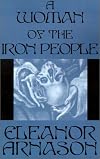
I wish I knew of a list of all the books that Ursula K. Le Guin has ever personally recommended, blurbed, or otherwise endorsed, because she’s pretty much always spot-on. I got this book because of her blurb, and was delighted by it – and surprised that I hadn’t heard of it previously. I’m going to blame poor marketing. I’m also going to give Part One of the paperback edition of this book (A Woman of the Iron People is one book; split into two paperbacks as part of that poor marketing) this year’s award for Most Ridiculously Inappropriate Cover. Check out that lady with the boobs holding a skull! In front of a tall stone tower! With a spaceship in the sky!
I presume that the cover is supposed to depict one of the main show more characters, an anthropologist. The character in question is ethnically Chinese, describes herself as being more flat-chested than average for a human female, and at no point does she wear a silly fashion bustier, nor does she hold a skull. OK, at one point a character does get his skull bashed in, but said skull does not get removed from his head. There is also a ‘tower’ in the story. It’s a primitive structure fashioned from reeds and organic materials. And there is a spaceship, although the one pictured doesn’t match the description provided. Sigh. The cover for the second half isn’t quite as egregiously random, but it’s not great, either. (Yes, the alien people are furry – but their fur is a slick pelt, like otters, and they have a thick, stocky build, like bears. They also wear clothes and don’t dance around naked, as pictured.)
Ignore the covers, and just get to the story. A criticism that the book could be more tightly plotted might have some validity. It can be a bit meandering. But I still loved it. (Maureen McHugh gets that kind of criticism, and I love her too.) If you’re interested in a first contact story with a strong anthropological focus, which concentrates on the gradual process of two very different women coming to understand each other – this is a book for you. show less
I presume that the cover is supposed to depict one of the main show more characters, an anthropologist. The character in question is ethnically Chinese, describes herself as being more flat-chested than average for a human female, and at no point does she wear a silly fashion bustier, nor does she hold a skull. OK, at one point a character does get his skull bashed in, but said skull does not get removed from his head. There is also a ‘tower’ in the story. It’s a primitive structure fashioned from reeds and organic materials. And there is a spaceship, although the one pictured doesn’t match the description provided. Sigh. The cover for the second half isn’t quite as egregiously random, but it’s not great, either. (Yes, the alien people are furry – but their fur is a slick pelt, like otters, and they have a thick, stocky build, like bears. They also wear clothes and don’t dance around naked, as pictured.)
Ignore the covers, and just get to the story. A criticism that the book could be more tightly plotted might have some validity. It can be a bit meandering. But I still loved it. (Maureen McHugh gets that kind of criticism, and I love her too.) If you’re interested in a first contact story with a strong anthropological focus, which concentrates on the gradual process of two very different women coming to understand each other – this is a book for you. show less
A picaresque novel where a human anthropologist travels across an alien planet with an alien companion/informant. At times the prose ascends to Leguinian elegant simplicity, but most of the time it is just written in default YA. The pacing is slow: The anthropologist gets up, has breakfast, does some yoga, travels down river, meets someone who tells her a myth... and on it goes. The 'plot' serves mostly to provision the ethnographic detail. That detail is interesting and credible. The trickster stories are good trickster stories. As an anthropologist I approve! But not a lot of First Contact Themes about otherness or difference are explored, and the aliens aren't very alien -- they are Native Americans with fur and sex segregation. show more Towards the end there is an interesting twist about the anthropologist's society, but sadly it's never really pursued. The alien informant character is poignant, carefully-imagined and richly relatable - she is really the main character. If you are an anthropologist interested in science fiction, I'd recommend it just because it's interesting to read as a take on our vocation. Otherwise YMMV. show less
Lixia is one of eight human anthropologists sent down to the surface of an alien planet. There, she encounters the native intelligent species, who are very like humanity in some ways but utterly alien in others. As Lixia travels the planet with Nia, an outcast woman from the Iron People tribal group, she experiences several discrete cultures whose main similarities seem rooted in the species’ biological expressions of gender and the mating impulse. But even this seems to be not so monolithic as it originally appears; Nia is outcast precisely because she defied her culture’s conventions and fell in love with a man. The pair encounter others who defy this standard, including a man who has rejected the warlike isolation of the other show more males for a life of spiritual fervor and contemplation.
A quiet, masterful book in the grand anthropological tradition of Ursula LeGuin, A Woman of the Iron People won the Mythopoeic Award—normally granted to works of fantasy, not science fiction. But such is the mythic power of the stories recounted by Nia and the other aliens that this book trancends simple genre definitions, becoming a quietly moving meditation on the nature of humanity and the self. show less
A quiet, masterful book in the grand anthropological tradition of Ursula LeGuin, A Woman of the Iron People won the Mythopoeic Award—normally granted to works of fantasy, not science fiction. But such is the mythic power of the stories recounted by Nia and the other aliens that this book trancends simple genre definitions, becoming a quietly moving meditation on the nature of humanity and the self. show less
A triumph of the author's imagination, "A Woman of the Iron People" was an entertaining read. At the same time, it was worrisome because of the fact that HUmans proliferate too much and are hateful and destructive, so now I'm worried about the future of the planet they invaded. At the ending, the shamaness tells them to stay on their island, and not to bring more HUmans from the ship, but in the last chapter, it is questionable if they are obeying those orders. See how believable Arnason made her craft?
Members
- Recently Added By
Lists

Science fiction novels with a female protagonist
105 works; 30 members

Favorite Science Fiction by Women Authors
737 works; 197 members

Best First Contact Stories
33 works; 16 members

Introduction to Fantasy and Science Fiction (Proposed Reading List)
28 works; 6 members

Nonhuman Protagonists
235 works; 34 members
Recommended Speculative Fiction by Women and People of Color
298 works; 45 members

Future Green Dragon Group Read Books
80 works; 6 members

Books Read in 2014
2,343 works; 86 members

Literature About Women and Girls
394 works; 39 members

Fantasy novels with a female protagonist
76 works; 15 members
Author Information

52+ Works 1,473 Members
Some Editions
Awards and Honors
Awards
Notable Lists
Series

Work Relationships
Is contained in
Has as a commentary on the text
Common Knowledge
- Original publication date
- 1991
- People/Characters
- Nia; Lixia; Derek
- Dedication
- For the Members of the Aardvarks, the oldest established SF writing workshop in Minneapolis and/or St. Paul
(We also do mysteries and doctoral dissertations.) - First words
- The problem, as we see it, divides in three.
Her mother had been a metal worker, a follower of the Mistress of the Forge. - Last words
- (Click to show. Warning: May contain spoilers.)"And in the morning we'll go south."
(Click to show. Warning: May contain spoilers.)An arriving ship appears as an enormous dim comet, with tail pointing along its path rather than away from the sun—and like comets of old, it can be an omen of change.
Classifications
Statistics
- Members
- 314
- Popularity
- 101,318
- Reviews
- 15
- Rating
- (3.85)
- Languages
- English, Spanish
- Media
- Paper, Ebook
- ISBNs
- 6
- ASINs
- 6