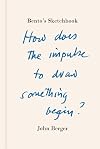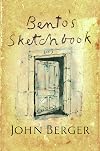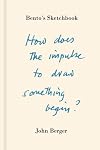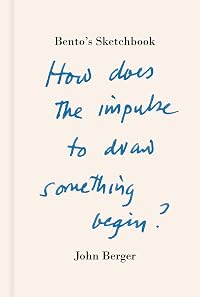
Bento's Sketchbook
by John Berger
On This Page
Description
"...An exploration of the practice of drawing, as well as a meditation on how we perceive and seek to explore our ever-changing relationship with the world around us."--P. [4] of cover.Tags
Recommendations






















Member Reviews
Ruminative. Almost languid. John Berger considers narrative and pictorial expression, the effort to call attention and the effect of seeing. Drawing from events in his life, his reading, his life-long study of art, Berger juxtaposes his reflections with numerous ink drawings. And interspersed throughout the text are excerpts from Baruch Spinoza’s writings, principally his Ethics. The effect is a gentle but thoughtful journey into Berger’s very humane understanding of art and life.
The Spinoza extracts, which might appear gnomic even if they were not presented out of context as they are here, form a running challenge for Berger. Spinoza, ascetic by choice or necessity (he lived in abject poverty), is nevertheless the great rationalist show more of 17th century thought. Although rumoured to have also drawn and painted, none of his artwork survives. In part, Berger imagines his own ink drawings filling in for those Spinoza might have attempted.
This is not a work of philosophical commentary on Spinoza. Nor is it straightforwardly an argumentative essay, though Berger does tend toward severe demarcations of categories and strong declarations. Rather the work stands as a whole — more like an artwork itself than anything else. And as such it can be enjoyed, used to prompt reflections of your own, and patiently pondered. And thus, gently recommended. show less
The Spinoza extracts, which might appear gnomic even if they were not presented out of context as they are here, form a running challenge for Berger. Spinoza, ascetic by choice or necessity (he lived in abject poverty), is nevertheless the great rationalist show more of 17th century thought. Although rumoured to have also drawn and painted, none of his artwork survives. In part, Berger imagines his own ink drawings filling in for those Spinoza might have attempted.
This is not a work of philosophical commentary on Spinoza. Nor is it straightforwardly an argumentative essay, though Berger does tend toward severe demarcations of categories and strong declarations. Rather the work stands as a whole — more like an artwork itself than anything else. And as such it can be enjoyed, used to prompt reflections of your own, and patiently pondered. And thus, gently recommended. show less
Sketchbook was striking for how recently it was published: my library copy has a white cover already discolored enough to trespass on beige. It has a 2011 copyright but something about Berger's perspective, maybe the depth of his historical use, maybe the strength of his age in his narrative voice, maybe his wandering but conscious path through the material of his own experience (but likely a combination of all these things) make the book seem like a relic. One of the concepts this book builds itself on is the exchange of scales of space, necessary for and incorporated in the act of drawing, for a sense of time. He creates a similar effect with his own prose. The drawings are beautiful in their honest state but not aesthetically show more perfect, very much a sketchbook, and a logical result from an artistic process he describes as not making a better drawing but making more of the subject come through the image.
It's comprehensive theoretically, discussing the process of drawing from every angle, the things which are similar and very different from drawing, the life experiences he has had that have inspired his drawing, resulted from his drawing, and even, in the case of a memorable museum anecdote, taken place while he is drawing. The structure rejects a categorization or plot trajectory, but a change I did notice toward the end of the book is that Berger begins to address Spinoza (Bento) in second person, offering his thoughts as a conversation rather than simply alternating his own experiences and thoughts.
I liked this book, but ultimately I'm no credible and objective authority on the topic, because I don't draw. show less
It's comprehensive theoretically, discussing the process of drawing from every angle, the things which are similar and very different from drawing, the life experiences he has had that have inspired his drawing, resulted from his drawing, and even, in the case of a memorable museum anecdote, taken place while he is drawing. The structure rejects a categorization or plot trajectory, but a change I did notice toward the end of the book is that Berger begins to address Spinoza (Bento) in second person, offering his thoughts as a conversation rather than simply alternating his own experiences and thoughts.
I liked this book, but ultimately I'm no credible and objective authority on the topic, because I don't draw. show less
I found this a charming and perceptive book. Berger's prose is easy to read and effectively punctuated. In contrast I must admit that I found the quotations from Spinoza in many cases impenetrable. I tried hard with a number of them but failed!
In particular I enjoyed his quirky approach in wondering who else in his Paris library catchment could possibly be reading The Brothers Karamazov and whether he would recognise them on the street.
The pieces on plums and the irises are both exquisitely written and make one look again at colours and structures.
For me this book could stand without the quotations from Spinoza, but that is probably heretical. I am however looking forward to reading his book entitled 'Portraits'.
In particular I enjoyed his quirky approach in wondering who else in his Paris library catchment could possibly be reading The Brothers Karamazov and whether he would recognise them on the street.
The pieces on plums and the irises are both exquisitely written and make one look again at colours and structures.
For me this book could stand without the quotations from Spinoza, but that is probably heretical. I am however looking forward to reading his book entitled 'Portraits'.
John Berger (Ways of Seeing) gives artists more to think about with his latest work, Bento's Sketchbook: How does the impulse to draw something begin? Truly there is much to ponder here even for readers who have never picked up a brush. The essays move between the life and philosophies of Benedict de Spinoza and Berger's own stories during his travels and stays in and around the art world and suburbs of contemporary Paris. Part sketchbook, the book has wonderful drawings by Berger as he imagines Spinoza might have sketched. Spinoza was known to have sketched but none of his drawings remain.
In Berger's words he and Bento "shared an awareness about where and to what the practice of drawing can lead." Berger's stories and criticisms show more inspire the drawings he includes; of a sixty-year old bicycle belonging to a friend whose wife became stricken with Alzheimer's, of dancers whose bodies reflect their exertion and endurance, of a special brush he gives to a Cambodian woman with whom he swims laps in a pool. He writes of politics and protest, tyranny and democracy and draws the faces of those whom Berger refers to as the new "profiteers." When he refers to Spinoza, he quotes one of his propositions and seamlessly weaves it into the tale. The drawings illustrate and the words defend the philosophies in a readable, visual way. At 162 pages, this is a brief but fully satisfying read and one that the reader will enjoy again after digesting it the first time. It was like a meal that you know you will talk about long after the guests have gone. show less
In Berger's words he and Bento "shared an awareness about where and to what the practice of drawing can lead." Berger's stories and criticisms show more inspire the drawings he includes; of a sixty-year old bicycle belonging to a friend whose wife became stricken with Alzheimer's, of dancers whose bodies reflect their exertion and endurance, of a special brush he gives to a Cambodian woman with whom he swims laps in a pool. He writes of politics and protest, tyranny and democracy and draws the faces of those whom Berger refers to as the new "profiteers." When he refers to Spinoza, he quotes one of his propositions and seamlessly weaves it into the tale. The drawings illustrate and the words defend the philosophies in a readable, visual way. At 162 pages, this is a brief but fully satisfying read and one that the reader will enjoy again after digesting it the first time. It was like a meal that you know you will talk about long after the guests have gone. show less
If Berger speaks to you, then we can probably be good friends. Or at least enjoy a really awesome conversation. Five stars for Berger's amazing prose and eye. But I had to drop it down to four because I simply was not up to the challenge of muddling through Spinoza late at night . . . Nonetheless, I am so very glad that I own a copy to keep close at hand. Because I will return to it often.
As always, John Berger.
Members
- Recently Added By
Author Information

150+ Works 17,167 Members
John Peter Berger was born in London, England on November 5, 1926. After serving in the British Army from 1944 to 1946, he enrolled in the Chelsea School of Art. He began his career as a painter and exhibited work at a number of London galleries in the late 1940s. He then worked as an art critic for The New Statesman for a decade. He wrote fiction show more and nonfiction including several volumes of art criticism. His novels include A Painter of Our Time, From A to X, and G., which won both the James Tait Black Memorial Prize and the Booker Prize in 1972. His other works include an essay collection entitled Permanent Red, Into Their Labors, and a book and television series entitled Ways of Seeing. In the 1970s, he collaborated with the director Alain Tanner on three films. He wrote or co-wrote La Salamandre, The Middle of the World, and Jonah Who Will Be 25 in the Year 2000. He died on January 1, 2017 at the age of 90. (Bowker Author Biography) show less
Some Editions
Awards and Honors
Distinctions
Classifications
Statistics
- Members
- 227
- Popularity
- 143,036
- Reviews
- 8
- Rating
- (3.93)
- Languages
- 6 — English, French, Italian, Russian, Spanish, Turkish
- Media
- Paper, Ebook
- ISBNs
- 16
- ASINs
- 9