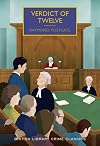
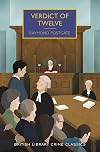
Verdict of Twelve
by Raymond Postgate
On This Page
Description
"A woman is on trial for her life, accused of murder. The twelve members of the jury each carry their own secret burden of guilt and prejudice which could affect the outcome. In this extraordinary crime novel, we follow the trial through the eyes of the jurors as they hear the evidence and try to reach a unanimous verdict. Will they find the defendant guilty, or not guilty? And will the jurors' decision be the correct one? Since its first publication in 1940, Verdict of Twelve has been show more widely hailed as a classic of British crime writing. This edition offers a new generation of readers the chance to find out why so many leading commentators have admired the novel for so long."--Amazon.com. show lessTags
Recommendations





















Member Reviews
Verdict of Twelve by Raymond Postgate is a courtroom crime classic that was originally published in 1940 and now has been re-issued as a British Library Crime Classic. I have a confession to make in that I don’t usually like courtroom drama but I have to say, this book kept me glued to the pages from start to finish.
In the beginning we are introduced to the varied members of the jury and given a short history about each of them. This personality sketch comes in handy when the jury is in deliberation and each juror’s personality plays a part in whether or not they think the defendant is guilty. The mystery itself is intriguing and I was interested to see how this would play out as there really was a significant doubt as to what show more actually happened.
This is a story of human behavior and the nature of justice. It is rather frightening how much of this jury’s opinion was formed by the appearance of the defendant and the various witnesses. Their own position in society seems to determine whether or not they would vote guilty. Verdict of Twelve is original, clever and I thoroughly enjoyed this read. show less
In the beginning we are introduced to the varied members of the jury and given a short history about each of them. This personality sketch comes in handy when the jury is in deliberation and each juror’s personality plays a part in whether or not they think the defendant is guilty. The mystery itself is intriguing and I was interested to see how this would play out as there really was a significant doubt as to what show more actually happened.
This is a story of human behavior and the nature of justice. It is rather frightening how much of this jury’s opinion was formed by the appearance of the defendant and the various witnesses. Their own position in society seems to determine whether or not they would vote guilty. Verdict of Twelve is original, clever and I thoroughly enjoyed this read. show less
Raymond Postgate’s name is virtually unknown today, but in his day, no less than Raymond Chandler lauded this novel, first published in 1940. Postgate makes his intention clear from the epigraph, which is by Karl Marx: “It is not the consciousness of men that determines their existence, but, on the contrary, their social existence determines their consciousness.” In other words, people make decisions emotionally based on their own histories and experiences, not on evidence and reason.
Rosalie van Beer, a selfish, social-climbing widow, is accused of poisoning to death her 11-year-old nephew, Philip Arkwright, whom she heartily disliked. (The feeling was, understandably, mutual.) His death left her a very wealthy woman. So did she show more kill the boy? Or is there another explanation? Postgate gives you the background of all 12 jurors — 10 men and two women — as well as of the accused and those around her, but it intensifies the tension rather than bogs down the suspenseful story.The ending is maddening, as many have pointed out, but, in Postgate’s defense, it makes his point admirably.
In the interest of full disclosure, I received this book from NetGalley, Poisoned Pen Press and British Library Publishing in exchange for an honest review. Special thanks to Poisoned Pen Press for reissuing this British crime classic. show less
Rosalie van Beer, a selfish, social-climbing widow, is accused of poisoning to death her 11-year-old nephew, Philip Arkwright, whom she heartily disliked. (The feeling was, understandably, mutual.) His death left her a very wealthy woman. So did she show more kill the boy? Or is there another explanation? Postgate gives you the background of all 12 jurors — 10 men and two women — as well as of the accused and those around her, but it intensifies the tension rather than bogs down the suspenseful story.
In the interest of full disclosure, I received this book from NetGalley, Poisoned Pen Press and British Library Publishing in exchange for an honest review. Special thanks to Poisoned Pen Press for reissuing this British crime classic. show less
CONTENT WARNING: Cruelty to animals :(
Spoilers abound!
Mrs. Rosalie Van Beer is on trial for the murder of her nephew, Philip, whom she professed to adore but who seemed to suffer more than flourish under her guardianship. It’s up to the jury to decide: was she guilty of his murder, or not guilty?
The book is structured very well and reads quickly. It illustrates how little context may be at jurors’ disposal when they have to decide the fate of another individual, and how dangerous it could be to sentence someone to death when you don’t have all the facts (or even when you do). However, it was horrific to read about how Mrs. Van Beer killed Philip’s pet rabbit and it was upsetting that she faced no consequences for it. So if show more you’re looking for a courtroom mystery, I would not necessarily recommend this one. show less
Spoilers abound!
Mrs. Rosalie Van Beer is on trial for the murder of her nephew, Philip, whom she professed to adore but who seemed to suffer more than flourish under her guardianship. It’s up to the jury to decide: was she guilty of his murder, or not guilty?
The book is structured very well and reads quickly. It illustrates how little context may be at jurors’ disposal when they have to decide the fate of another individual, and how dangerous it could be to sentence someone to death when you don’t have all the facts (or even when you do). However, it was horrific to read about how Mrs. Van Beer killed Philip’s pet rabbit and it was upsetting that she faced no consequences for it. So if show more you’re looking for a courtroom mystery, I would not necessarily recommend this one. show less
An interesting approach to a mystery; the authors gives us a sketch of each juror, then the course of the murder, followed by the trial, and finally a disingenuous 'confession' of sorts. An old book, but worth reading for fans of the development of the genre.
This was a very enjoyable story about the court case for a murder. It introduces the reader to the jurors and shares their peculiarities and oddities. We hear the evidence and are given more background than the jurors would learn from the witnesses and the barristers. We are then brought into the jury room for final deliberations.
This book demonstrates the weaknesses of trial by jury and demonstrates how difficult it would be for twelve individuals to focus purely on the evidence of any case give their varied backgrounds and inherent prejudices. Postgate tells this story while maintaining a degree of humour and manages to keep the reader’s attention to the end.
This book demonstrates the weaknesses of trial by jury and demonstrates how difficult it would be for twelve individuals to focus purely on the evidence of any case give their varied backgrounds and inherent prejudices. Postgate tells this story while maintaining a degree of humour and manages to keep the reader’s attention to the end.
This is a clever murder mystery novel presented in a unique way. It is best not to read the ending before you read the rest of the book. There is a satisfying conclusion to the story despite some moral ambiguity about the result. This provides plenty for food for thought after you finish the book.
There are four parts to the book. The first one is devoted to introducing each of the jurors who will ultimately decide the fate of the yet to be determined accused. They are a mixed bag of humanity; one of them is a murderer who “got away” with it the crime. The second part is the crime story during which readers find out who is killed and who is accused. It’s death by poison and there’s several potential accused persons, but it comes show more as no real surprise when the identity of the accused is revealed. The third part covers the trial and the presentation of evidence against the accused. One of the defenses raised is that there has been no crime: the victim committed suicide! When you come to the jury deliberations, your reader’s memory of the first part is tested: can you remember who is who, and what are their foibles? The author kindly includes some prompts to help with that. Lastly, after the verdict, is the “reveal”: when the reader finds out what really happened.
It’s a fascinating well-plotted read that requires close attention to the narrative. There’s actually two stories: the crime story and the jury trial one.
The Introduction by Martin Edwards is a welcome addition (as it is in other British Library Crime Classics), and puts the author and this book in context with respect to the Golden Age.
Thanks to Netgalley and the publisher for providing me with a copy to review. show less
There are four parts to the book. The first one is devoted to introducing each of the jurors who will ultimately decide the fate of the yet to be determined accused. They are a mixed bag of humanity; one of them is a murderer who “got away” with it the crime. The second part is the crime story during which readers find out who is killed and who is accused. It’s death by poison and there’s several potential accused persons, but it comes show more as no real surprise when the identity of the accused is revealed. The third part covers the trial and the presentation of evidence against the accused. One of the defenses raised is that there has been no crime: the victim committed suicide! When you come to the jury deliberations, your reader’s memory of the first part is tested: can you remember who is who, and what are their foibles? The author kindly includes some prompts to help with that. Lastly, after the verdict, is the “reveal”: when the reader finds out what really happened.
It’s a fascinating well-plotted read that requires close attention to the narrative. There’s actually two stories: the crime story and the jury trial one.
The Introduction by Martin Edwards is a welcome addition (as it is in other British Library Crime Classics), and puts the author and this book in context with respect to the Golden Age.
Thanks to Netgalley and the publisher for providing me with a copy to review. show less
This is the story of a murder trial, but with the focus on the twelve members of the jury and the subjective nature of their assessments of the evidence. Each interpretation is necessarily conditioned on the experiences, biases and aspirations of the individual jurors. And yet as interesting as these reflections are, it is actually the narrative, and the way the story is structured, which makes it truly compelling. The author creates an atmosphere of tension that is maintained until the final pages. The reader only knows slightly more than the jurors, enough to know when their interpretations are suspect, but not enough to know whether their overall conclusions are right or wrong. The truth is revealed only after the verdict has been show more reached. Continued show less
Members
- Recently Added By
Lists

Books mentioned in Julian Symons’ Bloody Murder
438 works; 6 members

Books Read in 2017
4,249 works; 129 members

Top Five Books of 2017
757 works; 230 members

Haycraft Queen Cornerstones
181 works; 3 members
Author Information

44+ Works 1,328 Members
Raymond Postgate (1896-1971) was a journalist, author, socialist, and founder of the Good Food Guide. An early advocate for communism, he broke from the Moscow directed Communist International in 1922 and became a leading figure in the independent British Labour movement. He was an astute and prolific commentator whose many books and articles were show more influential in twentieth-century British political theory and policy. show less
Some Editions
Awards and Honors
Notable Lists
Series
Belongs to Publisher Series
SaPo (34)
British Library Crime Classics (Novel)
Doubleday Crime Club (1940.38)
Work Relationships
Is contained in
Is abridged in
Common Knowledge
- Canonical title
- Verdict of Twelve
- Original title
- Verdict of Twelve
- Original publication date
- 1940
- Epigraph
- I swear by almighty God that I will well and truly try and true deliverance make between our sovereign lord the King and the prisoner at the bar whom I shall have in charge and a true verdict give according to the evidence... (show all).
Jurors' oath in a trial for murder
It is not the consciousness of men that determines their existence, but on the contrary their social existence determines their consciousness.
K. Marx - First words
- The Clerk of Assize had to have some way of relieving the tedium of adminstering the same oath year after year.
- Last words
- (Click to show. Warning: May contain spoilers.)"And this, I think, is your hotel."
- Original language
- English
Classifications
Statistics
- Members
- 275
- Popularity
- 117,804
- Reviews
- 18
- Rating
- (3.80)
- Languages
- 5 — Dutch, English, Finnish, German, Spanish
- Media
- Paper, Audiobook, Ebook
- ISBNs
- 19
- ASINs
- 18