On This Page
Description
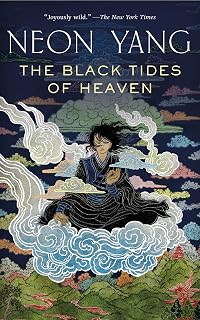
Mokoya and Akeha, the twin children of the Protector, were sold to the Grand Monastery as infants. While Mokoya developed her strange prophetic gift, Akeha was always the one who could see the strings that moved adults to action. While Mokoya received visions of what would be, Akeha realized what could be. What's more, they saw the sickness at the heart of their mother's Protectorate.A rebellion is growing. The Machinists discover new levers to move the world every day, while the Tensors show more fight to put them down and preserve the power of the state. Unwilling to continue as a pawn in their mother's twisted schemes, Akeha leaves the Tensorate behind and falls in with the rebels. But every step Akeha takes towards the Machinists is a step away from Mokoya. Can Akeha find peace without shattering the bond they share with their twin? show lessTags
Recommendations

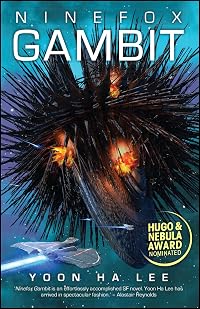
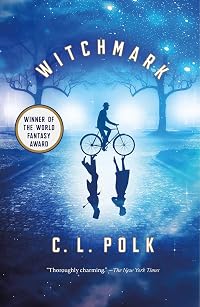
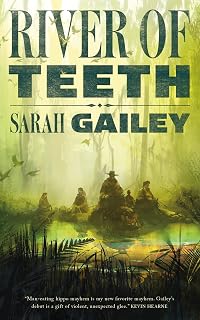
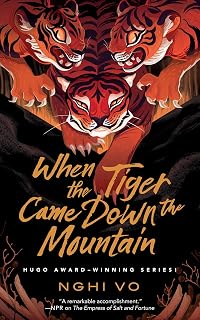






Member Reviews
The Black Tides of Heaven (2017) by JY Yang is a fantasy novella that tells the story of twins Mokoya and Akeha, presented to the Grand Monastery by their mother, the Protector, for services rendered in thwarting a rebellion. While growing up in the monastery and learning the power of slackcraft (controlling nature), Mokoya uncovers their gift of prophetic dreams and soon becomes a pawn in their mother's plans for the Protectorate. Akeha, cast aside by their mother, joins the Machinists--those rebelling against the Protectorate.
While primarily a fantasy story, I liked that the plot relied more on the characters and their actions and feelings instead of on their magical powers. For me, it sometimes weighs a story down when the author show more focuses on the wondrous aspects of the characters' mystical gifts instead of on the characters themselves. In "The Black Tides of Heaven," the characters face a number of inner struggles, such as deciding which gender they want to be, their emotions involving love, dealing with the societal impacts of the family they come from and how that divides the protectorate. I found myself more involved with the characters instead of their powers.
I highly recommend this first novella in the Tensorate series. show less
While primarily a fantasy story, I liked that the plot relied more on the characters and their actions and feelings instead of on their magical powers. For me, it sometimes weighs a story down when the author show more focuses on the wondrous aspects of the characters' mystical gifts instead of on the characters themselves. In "The Black Tides of Heaven," the characters face a number of inner struggles, such as deciding which gender they want to be, their emotions involving love, dealing with the societal impacts of the family they come from and how that divides the protectorate. I found myself more involved with the characters instead of their powers.
I highly recommend this first novella in the Tensorate series. show less
Fun and fast epic fantasy novella. Or is it SF? Regardless, there are great little tidbits and dense worldbuilding going on here and I had a pretty awesome time. I love detailed worldbuilding, but sometimes diving right into an assumed world only shown, rarely told, is its own joy.
Odd, no? But exposition CAN be quite comforting in a tale.
This doesn't have all that much of it, and that is fine except when it can get a bit overwhelming. The rest of the time, we have to just rely on the characters to get us by until all the pieces come together. Fortunately, they do. :)
The tragedy was the best part for me, but I did appreciate the sociological slant on being a woman and what has to be done to get or retain power in this particular show more setting. Both as one of the twins and the mother, in particular. But the tragedy sealed it for me.
Continuing on. :) show less
Odd, no? But exposition CAN be quite comforting in a tale.
This doesn't have all that much of it, and that is fine except when it can get a bit overwhelming. The rest of the time, we have to just rely on the characters to get us by until all the pieces come together. Fortunately, they do. :)
The tragedy was the best part for me, but I did appreciate the sociological slant on being a woman and what has to be done to get or retain power in this particular show more setting. Both as one of the twins and the mother, in particular. But the tragedy sealed it for me.
Continuing on. :) show less
2.5 stars. Sadly, I didn't love this one as much as I had expected. The beginning is very strong: lovely prose, evocative descriptions of an inventive fantasy landscape, twins who are very connected but also very different from each other: it had great potential.
Occasionally, the novella reclaims these early qualities for a beautiful sentence or two. But it felt as if it was only a novella because the author had been too lazy/uninterested in several important plot and character developments to actually write them out. A character is sent on a quest to retrieve phoenix feathers from a mountain top? Just summarize the trip in a sentence. A main character travels the realm, witnesses suffering, participates in a civil war, makes friends, show more watches those friends die? Only mentioned later in a summary, we never actually meet those friends nor witness his reaction. The interesting viewpoint character in the first chapter? Becomes irrelevant soon after. He's literally introduced with "[He] did not know it yet, but this night would change the course of all his days." Except it doesn't! He keeps his position, his job, everything continues exactly as before for him. His life doesn't change.
In addition, we start with the wonderful set-up of dual viewpoints, seeing things sometimes from one twin's perspective, sometimes from the other's. And then that just stops and we start getting only Akeha's perspective for the rest of the book, except for a few pages at the end. We later learn that the other twin was very busy during his absence and accomplished and grew a lot, but this is also only told in a summary, we don't get to experience any of the excitement.
So what are the pages spent on? Mostly: individual fights, most often against some monster that suddenly appears, and that has nothing to do with the story. Or a fight against a random drunk who also has nothing to do with the story. And teenage sexual angst, lust and self-doubt. Towards the end, we are *told* how much the twins supposedly always loved each other, and that love was the main characteristic of their relationship. But while they're actually still in the same town, we mostly see bickering arguments, jealousy, constantly comparing themselves to the other and feeling inferior or rejected, and even betraying the other by making out with their romantic partner. Uhm. Sorry, but that's pure ego drama, not sibling love in any way. And this episode is never alluded to again, never apologized for, nothing. By the way, all of the romance in this book is insta-love.
The world-building was wonderfully inventive, but also a total mess: none of it made sense in its wild mixture of historical detail, magic, and futuristic tech - none of it explained. The invented religion reminds me of the Force in Star Wars: The Slack is all, and all is the Slack. [...] All that is, exists through the grace of the Slack. All that moves, moves through the grace of the Slack. Except it doesn't, because again and again, the characters refer to "the fortunes" as moving everything, determining one's fate, granting favor or crushing you, and it's not explained why this doesn't contradict the "everything moves through the grace of the Slack" doctrine.
I guess my problem with this was mostly that the book's overall plot of a complicated civil war, technological progress in warfare, and rebellion against a tyrant, would have really benefited from a typical epic fantasy writing style. Descriptive, long, various POVs, fleshed-out, world explained, showing instead of telling. Instead, the author chose a very dreamy, fairy-tale like style that mostly tells instead of shows (except all those brief but irrelevant fight scenes of opponents unrelated to the plot), and leaves huge gaps of many years that aren't fleshed-out even though they contain absolutely crucial character development!
Maybe I shouldn't have read [b:The Empress of Salt and Fortune|51190882|The Empress of Salt and Fortune (The Singing Hills Cycle #1)|Nghi Vo|https://i.gr-assets.com/images/S/compressed.photo.goodreads.com/books/1565188992l/51190882._SX50_SY75_.jpg|71836130] before this one because they're pretty similar: the story of a revolution is told, the style is lyrical, the world is very unique and Asian-inspired, and there's the same amount of LGBT/non-binary representation and use of singular "they". Except in Empress of Salt, everything made sense, and even the writing style worked because the story was told as a story-within-a-story by a character narrating it, trying to convey what really happened through subtle allusions. The character didn't want to spell everything out, she just alluded to things, implied things, and you got it. I think it was just handled much more elegantly there. There, the short novella format also made sense, I didn't expect nor want everything to be fleshed out and was happy to leave it as a somewhat vague fairy-tale - that was part of its beauty.
What I did like here: I did feel with the twins, I was emotionally attached to them, and I loved the beautiful Asian-inspired setting. It just didn't quite come together for me, it was a bit too unpolished, not fleshed-out enough. Yang clearly has a wonderful imagination and a lot of talent, so I'd be happy to try this author again at some point in the future. show less
Occasionally, the novella reclaims these early qualities for a beautiful sentence or two. But it felt as if it was only a novella because the author had been too lazy/uninterested in several important plot and character developments to actually write them out. A character is sent on a quest to retrieve phoenix feathers from a mountain top? Just summarize the trip in a sentence. A main character travels the realm, witnesses suffering, participates in a civil war, makes friends, show more watches those friends die? Only mentioned later in a summary, we never actually meet those friends nor witness his reaction. The interesting viewpoint character in the first chapter? Becomes irrelevant soon after. He's literally introduced with "[He] did not know it yet, but this night would change the course of all his days." Except it doesn't! He keeps his position, his job, everything continues exactly as before for him. His life doesn't change.
In addition, we start with the wonderful set-up of dual viewpoints, seeing things sometimes from one twin's perspective, sometimes from the other's. And then that just stops and we start getting only Akeha's perspective for the rest of the book, except for a few pages at the end. We later learn that the other twin was very busy during his absence and accomplished and grew a lot, but this is also only told in a summary, we don't get to experience any of the excitement.
So what are the pages spent on? Mostly: individual fights, most often against some monster that suddenly appears, and that has nothing to do with the story. Or a fight against a random drunk who also has nothing to do with the story. And teenage sexual angst, lust and self-doubt. Towards the end, we are *told* how much the twins supposedly always loved each other, and that love was the main characteristic of their relationship. But while they're actually still in the same town, we mostly see bickering arguments, jealousy, constantly comparing themselves to the other and feeling inferior or rejected, and even betraying the other by making out with their romantic partner. Uhm. Sorry, but that's pure ego drama, not sibling love in any way. And this episode is never alluded to again, never apologized for, nothing. By the way, all of the romance in this book is insta-love.
The world-building was wonderfully inventive, but also a total mess: none of it made sense in its wild mixture of historical detail, magic, and futuristic tech - none of it explained. The invented religion reminds me of the Force in Star Wars: The Slack is all, and all is the Slack. [...] All that is, exists through the grace of the Slack. All that moves, moves through the grace of the Slack. Except it doesn't, because again and again, the characters refer to "the fortunes" as moving everything, determining one's fate, granting favor or crushing you, and it's not explained why this doesn't contradict the "everything moves through the grace of the Slack" doctrine.
I guess my problem with this was mostly that the book's overall plot of a complicated civil war, technological progress in warfare, and rebellion against a tyrant, would have really benefited from a typical epic fantasy writing style. Descriptive, long, various POVs, fleshed-out, world explained, showing instead of telling. Instead, the author chose a very dreamy, fairy-tale like style that mostly tells instead of shows (except all those brief but irrelevant fight scenes of opponents unrelated to the plot), and leaves huge gaps of many years that aren't fleshed-out even though they contain absolutely crucial character development!
Maybe I shouldn't have read [b:The Empress of Salt and Fortune|51190882|The Empress of Salt and Fortune (The Singing Hills Cycle #1)|Nghi Vo|https://i.gr-assets.com/images/S/compressed.photo.goodreads.com/books/1565188992l/51190882._SX50_SY75_.jpg|71836130] before this one because they're pretty similar: the story of a revolution is told, the style is lyrical, the world is very unique and Asian-inspired, and there's the same amount of LGBT/non-binary representation and use of singular "they". Except in Empress of Salt, everything made sense, and even the writing style worked because the story was told as a story-within-a-story by a character narrating it, trying to convey what really happened through subtle allusions. The character didn't want to spell everything out, she just alluded to things, implied things, and you got it. I think it was just handled much more elegantly there. There, the short novella format also made sense, I didn't expect nor want everything to be fleshed out and was happy to leave it as a somewhat vague fairy-tale - that was part of its beauty.
What I did like here: I did feel with the twins, I was emotionally attached to them, and I loved the beautiful Asian-inspired setting. It just didn't quite come together for me, it was a bit too unpolished, not fleshed-out enough. Yang clearly has a wonderful imagination and a lot of talent, so I'd be happy to try this author again at some point in the future. show less
I read this book after [b:The Red Threads of Fortune|33099586|The Red Threads of Fortune (Tensorate #2)|J.Y. Yang|https://images.gr-assets.com/books/1485291555s/33099586.jpg|53763118] although chronologically it comes first. Still, I don't think it impacted the overall experience for me.
While The Red Threads of Fortune is an intensely internal narrative, The Black Tides of Heaven is much more externally focused. We get a wider view of the world and its rules, its history and its conflicts. We follow the characters over decades of their lives, watching them grow and come into their own. The diverging paths of Mokoya and Akeha are illustrated with poignancy and care, and Akeha's struggle to define himself in a world over which he has show more little control, a world he finds more and more to be deeply, brokenly cruel is so wonderfully presented.
The way gender is explored in both novellas (but moreso in this one) is amazing and for me, a genderfluid person, seeing gender as something that isn't imposed by society but rather decided upon by the individual was incredibly validating and affirming. Akeha's discovery of his gender and even, in a strange way, his cruel and power-hungry mother's reaction was affirming and well-written representation of the many different ways gender can be explored in fiction.
I loved the worldbuilding so much, its depth and narrative relevance. I love the respect and care shown by the author to the characters. I loved the creativity, the originality, and the wonder present in this book and its companion.
I can't wait to finish the next in the series!! show less
While The Red Threads of Fortune is an intensely internal narrative, The Black Tides of Heaven is much more externally focused. We get a wider view of the world and its rules, its history and its conflicts. We follow the characters over decades of their lives, watching them grow and come into their own. The diverging paths of Mokoya and Akeha are illustrated with poignancy and care, and Akeha's struggle to define himself in a world over which he has show more little control, a world he finds more and more to be deeply, brokenly cruel is so wonderfully presented.
The way gender is explored in both novellas (but moreso in this one) is amazing and for me, a genderfluid person, seeing gender as something that isn't imposed by society but rather decided upon by the individual was incredibly validating and affirming. Akeha's discovery of his gender and even, in a strange way, his cruel and power-hungry mother's reaction was affirming and well-written representation of the many different ways gender can be explored in fiction.
I loved the worldbuilding so much, its depth and narrative relevance. I love the respect and care shown by the author to the characters. I loved the creativity, the originality, and the wonder present in this book and its companion.
I can't wait to finish the next in the series!! show less
The Black Tides of Heaven by J.Y. Yang is one of the two standalone introductions to their Tensorate series. Both it and The Red Threads of fortune can be read independent of each other, but run parallel to each other. It's a fascinating construction for the start of a series, but I can't speak to how well it works yet, because so far I've only read one of the two books. Sorry guys!
What I can speak to, though, is Yang's storytelling mastery. The Black Tides of Heaven is a tightly woven book with compelling characters and beautifully strange worldbuilding. Akeha is a strong-yet-vulnerable character of the type I adore, and they way he relates to his twin, Mokoya, her husband, and later his own lover, are all strong and incredibly show more real-feeling. The fact that I cared so deeply about all of these characters and their relationships in a book that I could finish in a day is just a testament to how well Yang knows how to draw you in and pull on your heartstrings.
I love the conceit of magic as threads and tension, and adore the fact that each person in this civilization gets to choose their gender, and that some know it at an early age, and some have a hard time choosing even when they're approaching adulthood. It's so real, so wonderful, so necessary, to see a world where everyone has to think about their gender at least enough to choose it, and people don't have to live in bodies that make them appear to be a gender that they don't feel, instead of some blindly accepting the gender that they were both with, and some constantly feeling weird and wrong for questioning what they were born with. It's a beautiful background detail that I absolutely appreciate as someone who's just beginning to think that they might belong somewhere on the nonbinary scale. It's a balm to see a world where thinking about those questions is the norm, rather than abnormal.
That is to say that I loved this book, and found in it's stormy pages a little bit of peace, and a whole lot of wonder. I would definitely recommend this book.
This review was first posted on my blog. show less
What I can speak to, though, is Yang's storytelling mastery. The Black Tides of Heaven is a tightly woven book with compelling characters and beautifully strange worldbuilding. Akeha is a strong-yet-vulnerable character of the type I adore, and they way he relates to his twin, Mokoya, her husband, and later his own lover, are all strong and incredibly show more real-feeling. The fact that I cared so deeply about all of these characters and their relationships in a book that I could finish in a day is just a testament to how well Yang knows how to draw you in and pull on your heartstrings.
I love the conceit of magic as threads and tension, and adore the fact that each person in this civilization gets to choose their gender, and that some know it at an early age, and some have a hard time choosing even when they're approaching adulthood. It's so real, so wonderful, so necessary, to see a world where everyone has to think about their gender at least enough to choose it, and people don't have to live in bodies that make them appear to be a gender that they don't feel, instead of some blindly accepting the gender that they were both with, and some constantly feeling weird and wrong for questioning what they were born with. It's a beautiful background detail that I absolutely appreciate as someone who's just beginning to think that they might belong somewhere on the nonbinary scale. It's a balm to see a world where thinking about those questions is the norm, rather than abnormal.
That is to say that I loved this book, and found in it's stormy pages a little bit of peace, and a whole lot of wonder. I would definitely recommend this book.
This review was first posted on my blog. show less
There is the outline of a story here, but nothing of interest is explored for more than a couple pages before the book fast-forwards another six years in the characters' lives to the next plot point. It's so sparse that events seem to lack continuity and character motivations become obscure. While we know that complicated romantic entanglements exist, that these two forms of systematic oppression exists, and that there is a grand rebellion, why any of these things matter to the main character, or should matter to us, is unclear. There is simply not enough depth of characterization to make any of those things complex or memorable.
I’ve known about this series for a while now and having read the reviews, I felt intimidated because I thought it might be way too outside my comfort zone or maybe not my kind of writing style at all. But I also wanted to read it and appreciate it as much as others have. So when we decided upon this novella as our April BOTM for Stars and Sorcery book club, I was ecstatic and I devoured it as soon as I picked it up.
The major drawback of this book is it’s too short size. I know I have to read the next novella as well to get a full picture of the story, but it could have been so much more wonderful if it was longer. And I say this with all my heart because I loved it and just wanted more. The world building that we get is limited in show more the amount but so expansive in scope and described so beautifully that I felt myself immersed in it. The elemental magic system is both familiar and new, but I also wanted to see so much more of it in action. The East Asian elements in the culture, world building and philosophy were integrated very seamlessly and that was some of my favorite part of the book. And the way gender is handled is wow. I have personally never seen gender being undefined and chosen by every single person in any fantasy novel before, and I was amazed at the author’s brilliant idea and how this choice affects the paths of the characters in the story.
Akeha and Mokoya are great characters and it was fascinating to see the way their relationship change as the years went by and due to the choices they made, but I also wanted to get to know them better. Would have especially liked to know more about their lives without each other, their partners and their role in the rebellion which ends up being such an important part in the second half of the book, but which we only get glimpses of. The sibling relationship made me quite emotional, and I think it’s some of very good relationship arcs I’ve read in recent times.
On the whole, this was brilliant for what it was, but it did leave me wanting in the best possible ways. This is a world I didn’t wanna leave, and I know I’m gonna be binging the rest of the series very soon. If you are someone who loves unique fantasy worlds, I think you won’t be able to put this down just like me. show less
The major drawback of this book is it’s too short size. I know I have to read the next novella as well to get a full picture of the story, but it could have been so much more wonderful if it was longer. And I say this with all my heart because I loved it and just wanted more. The world building that we get is limited in show more the amount but so expansive in scope and described so beautifully that I felt myself immersed in it. The elemental magic system is both familiar and new, but I also wanted to see so much more of it in action. The East Asian elements in the culture, world building and philosophy were integrated very seamlessly and that was some of my favorite part of the book. And the way gender is handled is wow. I have personally never seen gender being undefined and chosen by every single person in any fantasy novel before, and I was amazed at the author’s brilliant idea and how this choice affects the paths of the characters in the story.
Akeha and Mokoya are great characters and it was fascinating to see the way their relationship change as the years went by and due to the choices they made, but I also wanted to get to know them better. Would have especially liked to know more about their lives without each other, their partners and their role in the rebellion which ends up being such an important part in the second half of the book, but which we only get glimpses of. The sibling relationship made me quite emotional, and I think it’s some of very good relationship arcs I’ve read in recent times.
On the whole, this was brilliant for what it was, but it did leave me wanting in the best possible ways. This is a world I didn’t wanna leave, and I know I’m gonna be binging the rest of the series very soon. If you are someone who loves unique fantasy worlds, I think you won’t be able to put this down just like me. show less
Members
- Recently Added By
Lists

Diversity in Fantasy and Science Fiction
219 works; 32 members

LGBTQ+ Speculative Fiction
821 works; 51 members

The 100 Best Fantasy Books of All Time
100 works; 15 members

2018 Hugo Eligible Novellas
33 works; 9 members

LIBROS DE CIENCIA FICCIÓN Y FANTASIA
60 works; 1 member

infjsarah's wishlist
408 works; 2 members
Books Read in 2018
4,360 works; 110 members

Books Read in 2019
4,052 works; 108 members

Short and Sweet
246 works; 24 members

BookTok Adult
115 works; 2 members

LGBTQ+ SFF standalone novellas
42 works; 2 members

hypatian_kat to-read
429 works; 3 members

Books Read in 2020
4,379 works; 124 members

Read in 2020
33 works; 1 member

Queer Fiction (Owned TBR)
142 works; 1 member
Author Information

All Editions
Some Editions
Awards and Honors
Awards
Series

Work Relationships
Common Knowledge
- Canonical title
- The Black Tides of Heaven
- Original title
- The Black Tides of Heaven
- Original publication date
- 2017
- People/Characters
- Sanao Akeha; Sanao Mokoya; Yongcheow; Thennjay Satyaparathnam; Protector Sanao Hekate
- Dedication
- To my queer family, who chill with me in the Slack
- First words
- Head Abbot Sung of the Grand Monastery did not know it yet, but this night would change the course of all his days.
- Last words
- (Click to show. Warning: May contain spoilers.)It was enough.
- Original language
- English
Classifications
Statistics
- Members
- 1,228
- Popularity
- 20,118
- Reviews
- 52
- Rating
- (3.68)
- Languages
- English, Italian, Spanish
- Media
- Paper, Audiobook, Ebook
- ISBNs
- 7
- ASINs
- 2