On This Page
Description
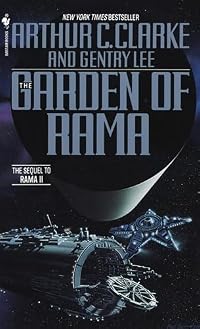
The Garden of Rama picks up the story of three astronauts trapped in the labyrinthine alien spaceship bound for deep space at the end of the previous book in the series, Rama II. The three trapped humans must use all their wits and resources to survive aboard the ship. There are other alien species aboard-some hostile, and some benevolent. But the three astronauts face the greatest danger from other humans-after a group of violent convicts is brought on board from Earth. In the meantime, the show more spacecraft is hurtling toward a rendezvous with a Raman base, and a meeting with the mysterious craft's creators. Finally, the astronauts will meet their enigmatic captors face to face-and learn the true purpose behind the mysterious craft. show lessTags
Recommendations


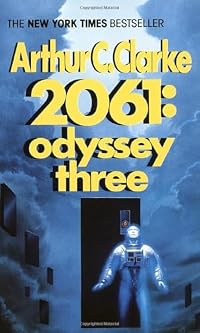
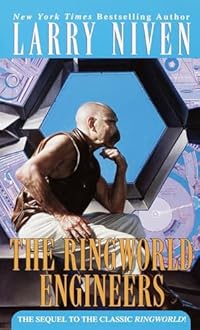
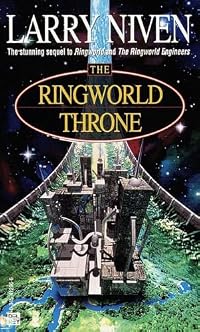

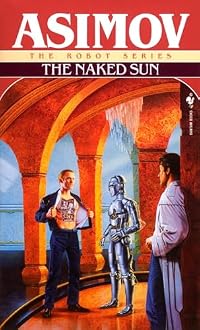








Member Reviews
There's a scene towards the end of the sixth Harry Potter book where Harry and Dumbledore find a small basin of water with a much-needed magical item at the bottom of it. The water is cursed, though, and they can't simply reach in and grab the item, nor scoop out the water; the water has to be drunk in its totality before the item can be attained. And you just know that water's going to taste bad. Think the purified essence of a thousand Domino's pizzas and then multiply that by three. Yes, that bad. Anyway, Dumbledore realises what has to be done and makes Harry promise to keep feeding him the water, glass by painful glass, and not to stop no matter what happens. Well sure enough it gets unpleasant, immediately they start Dumbledore show more starts begging Harry to stop, weeping and ranting; Harry meanwhile pleads, cajoles, and lies to his headmaster in order to get him to drink one more glass, one more glass, one more glass. Reading The Garden of Rama is pretty much like that: I'd promised myself I was going to finish the Rama series and so had to get through this book, and so I persevered through it all, shovelling page after page of toxic drivel down my throat no matter how bad it got.
I'm afraid this review isn't going to have much structure or narrative flow. There were too many things wrong with the book to make this anything more than a long list of free flowing criticisms. Besides, the book didn't bother having any structure or narrative flow so feel free to pretend that my review itself is some kind of meta-criticism if you like.
Where to start? Well, the title makes no sense for one. In [b:Rendezvous with Rama|1930977|Rendezvous with Rama|Arthur C. Clarke|http://photo.goodreads.com/books/1288718658s/1930977.jpg|1882772] the main characters rendezvoused with a spacecraft dubbed Rama. In [b:Rama II|10612691|Rama II (Rama, #2)|Arthur C. Clarke|http://photo.goodreads.com/books/1298827472s/10612691.jpg|1907786] an identical looking spacecraft, dubbed Rama II, came to the solar system to be investigated. And in [b:Rama Revealed|112517|Rama Revealed (Rama, #4)|Arthur C. Clarke|http://photo.goodreads.com/books/1171659410s/112517.jpg|828267] I assume the secrets of the whole Rama thing will be, well, revealed (although see below). So then, this book must be about some great big vegetable patch in the spacecraft, right? Alas not. A settlement built within the ship is christened New Eden, and they have plants and stuff there, but that's pretty much the only relation to any garden in the book. Maybe this first criticism is overly pedantic, but it seems the choice of title here was either overly mundane or meaningless.
Next on my gripe list is the acknowledgements section (yes, we haven't made it to page one yet). Gentry Lee thanks his wife for "conversations about the nature of the female" since the book is primarily told from Nicole Wakefield's perspective. Indeed the first part of the book is told as excerpts from her journal. So does Gentry Lee manage to transcend sex differences in this journal section? Do his wife's suggestions seamlessly meld into a convincing catalogue of thoughts from a woman trapped in an alien environment and getting pregnant left, right, and centre? No. No, no, and no. Instead we get utterly bog-standard first person prose, except every ten pages or so there will be a cringe inducing paragraph along the lines of "So my husband didn't put the toilet seat down today. What is it with men and not doing that? Huh? As a woman it really gets my goat. You know what I'm talking about ladies, oh yes." I've no doubt Mrs Lee gave her husband numerous insights into "the nature of the female" but he hasn't used them to make a believable character, he's just shoehorned a few of these bad stand-up routines into the main text.
And while we're talking about the believability of our esteemed protagonist Nicole, let me ask you a question, dear reader. If you had to start the human civilisation again from scratch, how many people do you think you'd need to ensure enough genetic diversity to make the new civilisation tenable? I seem to recall a figure mentioned in The Matrix Reloaded for the number of humans needed to rebuild Zion is twenty three. Stephen Baxter makes this a big plot point at the end of [b:Ark|2111628|Ark|Stephen Baxter|http://ecx.images-amazon.com/images/I/510IXN1IsyL._SL75_.jpg|2117036] and agonises that forty six people with maximal genetic variation might just be okay. A quick straw poll amongst my friends with backgrounds in the biological sciences reckoned that quite a bit more than that would be needed. There's evidence that the human population fell to less than 15 000 once, and that maybe 500-1000 humans could breed their way away from extinction. So, with all that in mind, how many people does Dr Nicole des Jardins Wakefield, hero of Garden of Rama, think are necessary to breed their way out of trouble? Fifteen thousand, like the actual human population after the Toba eruption? Maybe one thousand, which some research suggests is a safe minimum? Perhaps only one hundred and sixty as determined by American anthropologist John Moore? Or only one hundred, as suggested by my biology friends after three glasses of wine and two minutes to think about the problem? Maybe Baxter was right with forty six, or the Wachowski brothers with twenty three? Well, Dr Nicole, what's your answer?Two.
I'm sorry, what? There are three adults on Rama at the start of the book — two men and one woman. Nicole and her husband Richard have two daughters at which point Nicole starts wondering about how her daughters are going to continue the species. Clearly they need a man, preferably one each. So, she decides, she needs to pop out a couple of sons. Luckily, though, "one of [her] major areas of specialty during [her] medical training was genetics, especially hereditary defects." Phew! Looks like she'll realise the futility of all this and stop dooming all these kids to a lonely future in space. But no! There's more. At this point of the book Nicole is 41 years old and worries how many more babies she can have. She decides she has to have a son and preferably with Michael, the other guy on Rama with her. So then the next generation will consist of two girls and a guy, all of them either half- or full-siblings. And obviously that's a genetically viable group if ever I saw one. To be fair, Nicole doesn't just want kids with Michael to get some more genetic diversity, that'd be silly, she also picks him because both of her husband's kids are girls, while two out of the three kids that Michael has had back on Earth were boys, so having a son would be pretty much guaranteed with Mike but nigh on impossible with Dick. And here was me thinking it was fifty/fifty with both of them.
So Nicole tells her (emotionally insecure and already quite jealous) husband she wants to get it on with Michael for scientific purposes, i.e. so their daughters will have a half-brother to shag later in life. And then she's surprised when he gets upset. Aggh! Stop, Harry, I can't take anymore! Later, after having had two sons with Michael, Richard shows up and she has a third daughter with him. Her main concern? That she's already paired up in her mind her two daughters and two sons, so daughter number three doesn't have a brother to make babies with. Aggh! No more, Harry! Please! The folly of the whole thing is only pointed out to her later by her thirteen year old daughter, who decides to marry seventy-two year old Uncle Michael, because marrying her half-brothers would be incest. Aggh! Enough, enough! And on a tangentially related note, Michael's two sons with Nicole sometimes refer to him as dad and sometimes as Uncle Michael, and similarly they sometimes call Richard dad and sometimes Uncle Richard. Why?
Part two of the book reveals the purpose of Rama, how it was made, and so on. Most of the big questions are answered, which leaves one major question: what exactly is left to be revealed in Rama Revealed? We don't yet know who the over-arching authority is behind the whole thing, but it's some alien or another and frankly I don't think "It turns out Rama was built by Zylorgs from planet Herpes" is particularly fulfilling. On the subject of Rama's mission, it seems fundamentally flawed. It's supposed to catalogue the spacefaring species of the galaxy by flying through star systems, luring these species aboard, and then taking them back to The Node. From there Rama is refitted with biomes to support larger numbers of these species and messages are sent to each of these species' planets to the effect of "We're coming back, prepare a few thousand of your species to come and live on Rama for an unspecified length of time. Then the whole thing flies back around the galaxy, picking up these species for observation. Frankly this sounds like a rubbish way for an ultra advanced society to study other species, as proved by the fact that Rama only "captured" its three humans by a huge fluke.
Rama's mission is only slightly less believable than Earth's reaction to it. The human race of the original Rendezvous with Rama has spread across the solar system and, excitable Mercurians aside, the biggest problem it seems to face is an overabundance of petty bureaucracy. Gentry Lee ruthlessly deconstructs this world in Rama II, with a huge economic slump occurring just after the first novel's events that sets Earth back a century or so and obliterates its space programme. By the time Rama II begins, seventy years after its predecessor, the slump has lifted enough for a mediocre space programme to exist, but the military still decide to destroy Rama when it comes near Earth. Their missiles are ruthlessly efficient at tracking the spacecraft as they try (and fail) to obliterate it, but in this book it's claimed that Earth had believed the craft was destroyed. Apparently they fired their nuclear missiles at it and then everyone started staring at the ground saying "Yup, I'm so sure we destroyed that thing I'm not even going to look up and check."
So when Earth is informed in the 2240s, forty years after Rama II, that they need to send two thousand individuals to Rama, do they rejoice at the chance to redeem themselves, to fix past mistakes, to send their best and brightest to discover the secrets of the Universe? No, the shady council that rules the world decides it's all a hoax perpetrated by those pesky Chinese, so they send their best and brightest and a whole ship full of rapists and murderers to Mars. If there happens to be a honking great spacecraft in the vicinity of Mars then they'll board that, if not they'll start a new Martian colony. Of course they don't tell all these people going to Mars that they might end up in an alien spaceship until they're actually in the alien spaceship.
Of these two thousand people it seems that about twelve are half-decent human beings, that's including Nicole, Richard, and some of their kids. Since the kids were in stasis for their entire teenage lives they all have to deal with being, essentially, a child in an adult's body. Gentry Lee obviously deals with this in a delicate and thought-provoking manner: Patrick is shy with girls, Eleanor is perfectly fine, and Katie becomes a nymphomaniac. Wow! Of these twelve normal people, half are unceremoniously killed in a scene near the end of the book, and the humans in the colony happily let a Japanese mob boss take over. No one seems bothered that there's little food, the weather system is broken, and a hundred other problems, because the mob boss starts a war with another biome in Rama. Such flagrant clichés can work if they're told well, alas that's not the case here.
Despite the three hundred or so five star reviews here on Goodreads, I'm pretty sure I'm not the only one who struggled to find the resolve to finish this book. The editors apparently had the same problem. As the book goes on more and more typoes start appearing: spelling errors, punctuation where it doesn't belong, and so on. One of the few solaces I could take was that this book is trashy pop science fiction, not hard science fiction, so powering through its six hundred pages was not difficult, just unpleasant.
With all that in mind, I'm now off to read Rama Revealed, hopeful in the knowledge that things surely can't get worse. Can they? show less
I'm afraid this review isn't going to have much structure or narrative flow. There were too many things wrong with the book to make this anything more than a long list of free flowing criticisms. Besides, the book didn't bother having any structure or narrative flow so feel free to pretend that my review itself is some kind of meta-criticism if you like.
Where to start? Well, the title makes no sense for one. In [b:Rendezvous with Rama|1930977|Rendezvous with Rama|Arthur C. Clarke|http://photo.goodreads.com/books/1288718658s/1930977.jpg|1882772] the main characters rendezvoused with a spacecraft dubbed Rama. In [b:Rama II|10612691|Rama II (Rama, #2)|Arthur C. Clarke|http://photo.goodreads.com/books/1298827472s/10612691.jpg|1907786] an identical looking spacecraft, dubbed Rama II, came to the solar system to be investigated. And in [b:Rama Revealed|112517|Rama Revealed (Rama, #4)|Arthur C. Clarke|http://photo.goodreads.com/books/1171659410s/112517.jpg|828267] I assume the secrets of the whole Rama thing will be, well, revealed (although see below). So then, this book must be about some great big vegetable patch in the spacecraft, right? Alas not. A settlement built within the ship is christened New Eden, and they have plants and stuff there, but that's pretty much the only relation to any garden in the book. Maybe this first criticism is overly pedantic, but it seems the choice of title here was either overly mundane or meaningless.
Next on my gripe list is the acknowledgements section (yes, we haven't made it to page one yet). Gentry Lee thanks his wife for "conversations about the nature of the female" since the book is primarily told from Nicole Wakefield's perspective. Indeed the first part of the book is told as excerpts from her journal. So does Gentry Lee manage to transcend sex differences in this journal section? Do his wife's suggestions seamlessly meld into a convincing catalogue of thoughts from a woman trapped in an alien environment and getting pregnant left, right, and centre? No. No, no, and no. Instead we get utterly bog-standard first person prose, except every ten pages or so there will be a cringe inducing paragraph along the lines of "So my husband didn't put the toilet seat down today. What is it with men and not doing that? Huh? As a woman it really gets my goat. You know what I'm talking about ladies, oh yes." I've no doubt Mrs Lee gave her husband numerous insights into "the nature of the female" but he hasn't used them to make a believable character, he's just shoehorned a few of these bad stand-up routines into the main text.
And while we're talking about the believability of our esteemed protagonist Nicole, let me ask you a question, dear reader. If you had to start the human civilisation again from scratch, how many people do you think you'd need to ensure enough genetic diversity to make the new civilisation tenable? I seem to recall a figure mentioned in The Matrix Reloaded for the number of humans needed to rebuild Zion is twenty three. Stephen Baxter makes this a big plot point at the end of [b:Ark|2111628|Ark|Stephen Baxter|http://ecx.images-amazon.com/images/I/510IXN1IsyL._SL75_.jpg|2117036] and agonises that forty six people with maximal genetic variation might just be okay. A quick straw poll amongst my friends with backgrounds in the biological sciences reckoned that quite a bit more than that would be needed. There's evidence that the human population fell to less than 15 000 once, and that maybe 500-1000 humans could breed their way away from extinction. So, with all that in mind, how many people does Dr Nicole des Jardins Wakefield, hero of Garden of Rama, think are necessary to breed their way out of trouble? Fifteen thousand, like the actual human population after the Toba eruption? Maybe one thousand, which some research suggests is a safe minimum? Perhaps only one hundred and sixty as determined by American anthropologist John Moore? Or only one hundred, as suggested by my biology friends after three glasses of wine and two minutes to think about the problem? Maybe Baxter was right with forty six, or the Wachowski brothers with twenty three? Well, Dr Nicole, what's your answer?
I'm sorry, what? There are three adults on Rama at the start of the book — two men and one woman. Nicole and her husband Richard have two daughters at which point Nicole starts wondering about how her daughters are going to continue the species. Clearly they need a man, preferably one each. So, she decides, she needs to pop out a couple of sons. Luckily, though, "one of [her] major areas of specialty during [her] medical training was genetics, especially hereditary defects." Phew! Looks like she'll realise the futility of all this and stop dooming all these kids to a lonely future in space. But no! There's more. At this point of the book Nicole is 41 years old and worries how many more babies she can have. She decides she has to have a son and preferably with Michael, the other guy on Rama with her. So then the next generation will consist of two girls and a guy, all of them either half- or full-siblings. And obviously that's a genetically viable group if ever I saw one. To be fair, Nicole doesn't just want kids with Michael to get some more genetic diversity, that'd be silly, she also picks him because both of her husband's kids are girls, while two out of the three kids that Michael has had back on Earth were boys, so having a son would be pretty much guaranteed with Mike but nigh on impossible with Dick. And here was me thinking it was fifty/fifty with both of them.
So Nicole tells her (emotionally insecure and already quite jealous) husband she wants to get it on with Michael for scientific purposes, i.e. so their daughters will have a half-brother to shag later in life. And then she's surprised when he gets upset. Aggh! Stop, Harry, I can't take anymore! Later, after having had two sons with Michael, Richard shows up and she has a third daughter with him. Her main concern? That she's already paired up in her mind her two daughters and two sons, so daughter number three doesn't have a brother to make babies with. Aggh! No more, Harry! Please! The folly of the whole thing is only pointed out to her later by her thirteen year old daughter, who decides to marry seventy-two year old Uncle Michael, because marrying her half-brothers would be incest. Aggh! Enough, enough! And on a tangentially related note, Michael's two sons with Nicole sometimes refer to him as dad and sometimes as Uncle Michael, and similarly they sometimes call Richard dad and sometimes Uncle Richard. Why?
Part two of the book reveals the purpose of Rama, how it was made, and so on. Most of the big questions are answered, which leaves one major question: what exactly is left to be revealed in Rama Revealed? We don't yet know who the over-arching authority is behind the whole thing, but it's some alien or another and frankly I don't think "It turns out Rama was built by Zylorgs from planet Herpes" is particularly fulfilling. On the subject of Rama's mission, it seems fundamentally flawed. It's supposed to catalogue the spacefaring species of the galaxy by flying through star systems, luring these species aboard, and then taking them back to The Node. From there Rama is refitted with biomes to support larger numbers of these species and messages are sent to each of these species' planets to the effect of "We're coming back, prepare a few thousand of your species to come and live on Rama for an unspecified length of time. Then the whole thing flies back around the galaxy, picking up these species for observation. Frankly this sounds like a rubbish way for an ultra advanced society to study other species, as proved by the fact that Rama only "captured" its three humans by a huge fluke.
Rama's mission is only slightly less believable than Earth's reaction to it. The human race of the original Rendezvous with Rama has spread across the solar system and, excitable Mercurians aside, the biggest problem it seems to face is an overabundance of petty bureaucracy. Gentry Lee ruthlessly deconstructs this world in Rama II, with a huge economic slump occurring just after the first novel's events that sets Earth back a century or so and obliterates its space programme. By the time Rama II begins, seventy years after its predecessor, the slump has lifted enough for a mediocre space programme to exist, but the military still decide to destroy Rama when it comes near Earth. Their missiles are ruthlessly efficient at tracking the spacecraft as they try (and fail) to obliterate it, but in this book it's claimed that Earth had believed the craft was destroyed. Apparently they fired their nuclear missiles at it and then everyone started staring at the ground saying "Yup, I'm so sure we destroyed that thing I'm not even going to look up and check."
So when Earth is informed in the 2240s, forty years after Rama II, that they need to send two thousand individuals to Rama, do they rejoice at the chance to redeem themselves, to fix past mistakes, to send their best and brightest to discover the secrets of the Universe? No, the shady council that rules the world decides it's all a hoax perpetrated by those pesky Chinese, so they send their best and brightest and a whole ship full of rapists and murderers to Mars. If there happens to be a honking great spacecraft in the vicinity of Mars then they'll board that, if not they'll start a new Martian colony. Of course they don't tell all these people going to Mars that they might end up in an alien spaceship until they're actually in the alien spaceship.
Of these two thousand people it seems that about twelve are half-decent human beings, that's including Nicole, Richard, and some of their kids. Since the kids were in stasis for their entire teenage lives they all have to deal with being, essentially, a child in an adult's body. Gentry Lee obviously deals with this in a delicate and thought-provoking manner: Patrick is shy with girls, Eleanor is perfectly fine, and Katie becomes a nymphomaniac. Wow! Of these twelve normal people, half are unceremoniously killed in a scene near the end of the book, and the humans in the colony happily let a Japanese mob boss take over. No one seems bothered that there's little food, the weather system is broken, and a hundred other problems, because the mob boss starts a war with another biome in Rama. Such flagrant clichés can work if they're told well, alas that's not the case here.
Despite the three hundred or so five star reviews here on Goodreads, I'm pretty sure I'm not the only one who struggled to find the resolve to finish this book. The editors apparently had the same problem. As the book goes on more and more typoes start appearing: spelling errors, punctuation where it doesn't belong, and so on. One of the few solaces I could take was that this book is trashy pop science fiction, not hard science fiction, so powering through its six hundred pages was not difficult, just unpleasant.
With all that in mind, I'm now off to read Rama Revealed, hopeful in the knowledge that things surely can't get worse. Can they? show less
There's a scene towards the end of the sixth Harry Potter book where Harry and Dumbledore find a small basin of water with a much-needed magical item at the bottom of it. The water is cursed, though, and they can't simply reach in and grab the item, nor scoop out the water; the water has to be drunk in its totality before the item can be attained. And you just know that water's going to taste bad. Think the purified essence of a thousand Domino's pizzas and then multiply that by three. Yes, that bad. Anyway, Dumbledore realises what has to be done and makes Harry promise to keep feeding him the water, glass by painful glass, and not to stop no matter what happens. Well sure enough it gets unpleasant, immediately they start Dumbledore show more starts begging Harry to stop, weeping and ranting; Harry meanwhile pleads, cajoles, and lies to his headmaster in order to get him to drink one more glass, one more glass, one more glass. Reading The Garden of Rama is pretty much like that: I'd promised myself I was going to finish the Rama series and so had to get through this book, and so I persevered through it all, shovelling page after page of toxic drivel down my throat no matter how bad it got.
I'm afraid this review isn't going to have much structure or narrative flow. There were too many things wrong with the book to make this anything more than a long list of free flowing criticisms. Besides, the book didn't bother having any structure or narrative flow so feel free to pretend that my review itself is some kind of meta-criticism if you like.
Where to start? Well, the title makes no sense for one. In [b:Rendezvous with Rama|1930977|Rendezvous with Rama|Arthur C. Clarke|http://photo.goodreads.com/books/1288718658s/1930977.jpg|1882772] the main characters rendezvoused with a spacecraft dubbed Rama. In [b:Rama II|10612691|Rama II (Rama, #2)|Arthur C. Clarke|http://photo.goodreads.com/books/1298827472s/10612691.jpg|1907786] an identical looking spacecraft, dubbed Rama II, came to the solar system to be investigated. And in [b:Rama Revealed|112517|Rama Revealed (Rama, #4)|Arthur C. Clarke|http://photo.goodreads.com/books/1171659410s/112517.jpg|828267] I assume the secrets of the whole Rama thing will be, well, revealed (although see below). So then, this book must be about some great big vegetable patch in the spacecraft, right? Alas not. A settlement built within the ship is christened New Eden, and they have plants and stuff there, but that's pretty much the only relation to any garden in the book. Maybe this first criticism is overly pedantic, but it seems the choice of title here was either overly mundane or meaningless.
Next on my gripe list is the acknowledgements section (yes, we haven't made it to page one yet). Gentry Lee thanks his wife for "conversations about the nature of the female" since the book is primarily told from Nicole Wakefield's perspective. Indeed the first part of the book is told as excerpts from her journal. So does Gentry Lee manage to transcend sex differences in this journal section? Do his wife's suggestions seamlessly meld into a convincing catalogue of thoughts from a woman trapped in an alien environment and getting pregnant left, right, and centre? No. No, no, and no. Instead we get utterly bog-standard first person prose, except every ten pages or so there will be a cringe inducing paragraph along the lines of "So my husband didn't put the toilet seat down today. What is it with men and not doing that? Huh? As a woman it really gets my goat. You know what I'm talking about ladies, oh yes." I've no doubt Mrs Lee gave her husband numerous insights into "the nature of the female" but he hasn't used them to make a believable character, he's just shoehorned a few of these bad stand-up routines into the main text.
And while we're talking about the believability of our esteemed protagonist Nicole, let me ask you a question, dear reader. If you had to start the human civilisation again from scratch, how many people do you think you'd need to ensure enough genetic diversity to make the new civilisation tenable? I seem to recall a figure mentioned in The Matrix Reloaded for the number of humans needed to rebuild Zion is twenty three. Stephen Baxter makes this a big plot point at the end of [b:Ark|2111628|Ark|Stephen Baxter|http://ecx.images-amazon.com/images/I/510IXN1IsyL._SL75_.jpg|2117036] and agonises that forty six people with maximal genetic variation might just be okay. A quick straw poll amongst my friends with backgrounds in the biological sciences reckoned that quite a bit more than that would be needed. There's evidence that the human population fell to less than 15 000 once, and that maybe 500-1000 humans could breed their way away from extinction. So, with all that in mind, how many people does Dr Nicole des Jardins Wakefield, hero of Garden of Rama, think are necessary to breed their way out of trouble? Fifteen thousand, like the actual human population after the Toba eruption? Maybe one thousand, which some research suggests is a safe minimum? Perhaps only one hundred and sixty as determined by American anthropologist John Moore? Or only one hundred, as suggested by my biology friends after three glasses of wine and two minutes to think about the problem? Maybe Baxter was right with forty six, or the Wachowski brothers with twenty three? Well, Dr Nicole, what's your answer?Two.
I'm sorry, what? There are three adults on Rama at the start of the book — two men and one woman. Nicole and her husband Richard have two daughters at which point Nicole starts wondering about how her daughters are going to continue the species. Clearly they need a man, preferably one each. So, she decides, she needs to pop out a couple of sons. Luckily, though, "one of [her] major areas of specialty during [her] medical training was genetics, especially hereditary defects." Phew! Looks like she'll realise the futility of all this and stop dooming all these kids to a lonely future in space. But no! There's more. At this point of the book Nicole is 41 years old and worries how many more babies she can have. She decides she has to have a son and preferably with Michael, the other guy on Rama with her. So then the next generation will consist of two girls and a guy, all of them either half- or full-siblings. And obviously that's a genetically viable group if ever I saw one. To be fair, Nicole doesn't just want kids with Michael to get some more genetic diversity, that'd be silly, she also picks him because both of her husband's kids are girls, while two out of the three kids that Michael has had back on Earth were boys, so having a son would be pretty much guaranteed with Mike but nigh on impossible with Dick. And here was me thinking it was fifty/fifty with both of them.
So Nicole tells her (emotionally insecure and already quite jealous) husband she wants to get it on with Michael for scientific purposes, i.e. so their daughters will have a half-brother to shag later in life. And then she's surprised when he gets upset. Aggh! Stop, Harry, I can't take anymore! Later, after having had two sons with Michael, Richard shows up and she has a third daughter with him. Her main concern? That she's already paired up in her mind her two daughters and two sons, so daughter number three doesn't have a brother to make babies with. Aggh! No more, Harry! Please! The folly of the whole thing is only pointed out to her later by her thirteen year old daughter, who decides to marry seventy-two year old Uncle Michael, because marrying her half-brothers would be incest. Aggh! Enough, enough! And on a tangentially related note, Michael's two sons with Nicole sometimes refer to him as dad and sometimes as Uncle Michael, and similarly they sometimes call Richard dad and sometimes Uncle Richard. Why?
Part two of the book reveals the purpose of Rama, how it was made, and so on. Most of the big questions are answered, which leaves one major question: what exactly is left to be revealed in Rama Revealed? We don't yet know who the over-arching authority is behind the whole thing, but it's some alien or another and frankly I don't think "It turns out Rama was built by Zylorgs from planet Herpes" is particularly fulfilling. On the subject of Rama's mission, it seems fundamentally flawed. It's supposed to catalogue the spacefaring species of the galaxy by flying through star systems, luring these species aboard, and then taking them back to The Node. From there Rama is refitted with biomes to support larger numbers of these species and messages are sent to each of these species' planets to the effect of "We're coming back, prepare a few thousand of your species to come and live on Rama for an unspecified length of time. Then the whole thing flies back around the galaxy, picking up these species for observation. Frankly this sounds like a rubbish way for an ultra advanced society to study other species, as proved by the fact that Rama only "captured" its three humans by a huge fluke.
Rama's mission is only slightly less believable than Earth's reaction to it. The human race of the original Rendezvous with Rama has spread across the solar system and, excitable Mercurians aside, the biggest problem it seems to face is an overabundance of petty bureaucracy. Gentry Lee ruthlessly deconstructs this world in Rama II, with a huge economic slump occurring just after the first novel's events that sets Earth back a century or so and obliterates its space programme. By the time Rama II begins, seventy years after its predecessor, the slump has lifted enough for a mediocre space programme to exist, but the military still decide to destroy Rama when it comes near Earth. Their missiles are ruthlessly efficient at tracking the spacecraft as they try (and fail) to obliterate it, but in this book it's claimed that Earth had believed the craft was destroyed. Apparently they fired their nuclear missiles at it and then everyone started staring at the ground saying "Yup, I'm so sure we destroyed that thing I'm not even going to look up and check."
So when Earth is informed in the 2240s, forty years after Rama II, that they need to send two thousand individuals to Rama, do they rejoice at the chance to redeem themselves, to fix past mistakes, to send their best and brightest to discover the secrets of the Universe? No, the shady council that rules the world decides it's all a hoax perpetrated by those pesky Chinese, so they send their best and brightest and a whole ship full of rapists and murderers to Mars. If there happens to be a honking great spacecraft in the vicinity of Mars then they'll board that, if not they'll start a new Martian colony. Of course they don't tell all these people going to Mars that they might end up in an alien spaceship until they're actually in the alien spaceship.
Of these two thousand people it seems that about twelve are half-decent human beings, that's including Nicole, Richard, and some of their kids. Since the kids were in stasis for their entire teenage lives they all have to deal with being, essentially, a child in an adult's body. Gentry Lee obviously deals with this in a delicate and thought-provoking manner: Patrick is shy with girls, Eleanor is perfectly fine, and Katie becomes a nymphomaniac. Wow! Of these twelve normal people, half are unceremoniously killed in a scene near the end of the book, and the humans in the colony happily let a Japanese mob boss take over. No one seems bothered that there's little food, the weather system is broken, and a hundred other problems, because the mob boss starts a war with another biome in Rama. Such flagrant clichés can work if they're told well, alas that's not the case here.
Despite the three hundred or so five star reviews here on Goodreads, I'm pretty sure I'm not the only one who struggled to find the resolve to finish this book. The editors apparently had the same problem. As the book goes on more and more typoes start appearing: spelling errors, punctuation where it doesn't belong, and so on. One of the few solaces I could take was that this book is trashy pop science fiction, not hard science fiction, so powering through its six hundred pages was not difficult, just unpleasant.
With all that in mind, I'm now off to read Rama Revealed, hopeful in the knowledge that things surely can't get worse. Can they? show less
I'm afraid this review isn't going to have much structure or narrative flow. There were too many things wrong with the book to make this anything more than a long list of free flowing criticisms. Besides, the book didn't bother having any structure or narrative flow so feel free to pretend that my review itself is some kind of meta-criticism if you like.
Where to start? Well, the title makes no sense for one. In [b:Rendezvous with Rama|1930977|Rendezvous with Rama|Arthur C. Clarke|http://photo.goodreads.com/books/1288718658s/1930977.jpg|1882772] the main characters rendezvoused with a spacecraft dubbed Rama. In [b:Rama II|10612691|Rama II (Rama, #2)|Arthur C. Clarke|http://photo.goodreads.com/books/1298827472s/10612691.jpg|1907786] an identical looking spacecraft, dubbed Rama II, came to the solar system to be investigated. And in [b:Rama Revealed|112517|Rama Revealed (Rama, #4)|Arthur C. Clarke|http://photo.goodreads.com/books/1171659410s/112517.jpg|828267] I assume the secrets of the whole Rama thing will be, well, revealed (although see below). So then, this book must be about some great big vegetable patch in the spacecraft, right? Alas not. A settlement built within the ship is christened New Eden, and they have plants and stuff there, but that's pretty much the only relation to any garden in the book. Maybe this first criticism is overly pedantic, but it seems the choice of title here was either overly mundane or meaningless.
Next on my gripe list is the acknowledgements section (yes, we haven't made it to page one yet). Gentry Lee thanks his wife for "conversations about the nature of the female" since the book is primarily told from Nicole Wakefield's perspective. Indeed the first part of the book is told as excerpts from her journal. So does Gentry Lee manage to transcend sex differences in this journal section? Do his wife's suggestions seamlessly meld into a convincing catalogue of thoughts from a woman trapped in an alien environment and getting pregnant left, right, and centre? No. No, no, and no. Instead we get utterly bog-standard first person prose, except every ten pages or so there will be a cringe inducing paragraph along the lines of "So my husband didn't put the toilet seat down today. What is it with men and not doing that? Huh? As a woman it really gets my goat. You know what I'm talking about ladies, oh yes." I've no doubt Mrs Lee gave her husband numerous insights into "the nature of the female" but he hasn't used them to make a believable character, he's just shoehorned a few of these bad stand-up routines into the main text.
And while we're talking about the believability of our esteemed protagonist Nicole, let me ask you a question, dear reader. If you had to start the human civilisation again from scratch, how many people do you think you'd need to ensure enough genetic diversity to make the new civilisation tenable? I seem to recall a figure mentioned in The Matrix Reloaded for the number of humans needed to rebuild Zion is twenty three. Stephen Baxter makes this a big plot point at the end of [b:Ark|2111628|Ark|Stephen Baxter|http://ecx.images-amazon.com/images/I/510IXN1IsyL._SL75_.jpg|2117036] and agonises that forty six people with maximal genetic variation might just be okay. A quick straw poll amongst my friends with backgrounds in the biological sciences reckoned that quite a bit more than that would be needed. There's evidence that the human population fell to less than 15 000 once, and that maybe 500-1000 humans could breed their way away from extinction. So, with all that in mind, how many people does Dr Nicole des Jardins Wakefield, hero of Garden of Rama, think are necessary to breed their way out of trouble? Fifteen thousand, like the actual human population after the Toba eruption? Maybe one thousand, which some research suggests is a safe minimum? Perhaps only one hundred and sixty as determined by American anthropologist John Moore? Or only one hundred, as suggested by my biology friends after three glasses of wine and two minutes to think about the problem? Maybe Baxter was right with forty six, or the Wachowski brothers with twenty three? Well, Dr Nicole, what's your answer?
I'm sorry, what? There are three adults on Rama at the start of the book — two men and one woman. Nicole and her husband Richard have two daughters at which point Nicole starts wondering about how her daughters are going to continue the species. Clearly they need a man, preferably one each. So, she decides, she needs to pop out a couple of sons. Luckily, though, "one of [her] major areas of specialty during [her] medical training was genetics, especially hereditary defects." Phew! Looks like she'll realise the futility of all this and stop dooming all these kids to a lonely future in space. But no! There's more. At this point of the book Nicole is 41 years old and worries how many more babies she can have. She decides she has to have a son and preferably with Michael, the other guy on Rama with her. So then the next generation will consist of two girls and a guy, all of them either half- or full-siblings. And obviously that's a genetically viable group if ever I saw one. To be fair, Nicole doesn't just want kids with Michael to get some more genetic diversity, that'd be silly, she also picks him because both of her husband's kids are girls, while two out of the three kids that Michael has had back on Earth were boys, so having a son would be pretty much guaranteed with Mike but nigh on impossible with Dick. And here was me thinking it was fifty/fifty with both of them.
So Nicole tells her (emotionally insecure and already quite jealous) husband she wants to get it on with Michael for scientific purposes, i.e. so their daughters will have a half-brother to shag later in life. And then she's surprised when he gets upset. Aggh! Stop, Harry, I can't take anymore! Later, after having had two sons with Michael, Richard shows up and she has a third daughter with him. Her main concern? That she's already paired up in her mind her two daughters and two sons, so daughter number three doesn't have a brother to make babies with. Aggh! No more, Harry! Please! The folly of the whole thing is only pointed out to her later by her thirteen year old daughter, who decides to marry seventy-two year old Uncle Michael, because marrying her half-brothers would be incest. Aggh! Enough, enough! And on a tangentially related note, Michael's two sons with Nicole sometimes refer to him as dad and sometimes as Uncle Michael, and similarly they sometimes call Richard dad and sometimes Uncle Richard. Why?
Part two of the book reveals the purpose of Rama, how it was made, and so on. Most of the big questions are answered, which leaves one major question: what exactly is left to be revealed in Rama Revealed? We don't yet know who the over-arching authority is behind the whole thing, but it's some alien or another and frankly I don't think "It turns out Rama was built by Zylorgs from planet Herpes" is particularly fulfilling. On the subject of Rama's mission, it seems fundamentally flawed. It's supposed to catalogue the spacefaring species of the galaxy by flying through star systems, luring these species aboard, and then taking them back to The Node. From there Rama is refitted with biomes to support larger numbers of these species and messages are sent to each of these species' planets to the effect of "We're coming back, prepare a few thousand of your species to come and live on Rama for an unspecified length of time. Then the whole thing flies back around the galaxy, picking up these species for observation. Frankly this sounds like a rubbish way for an ultra advanced society to study other species, as proved by the fact that Rama only "captured" its three humans by a huge fluke.
Rama's mission is only slightly less believable than Earth's reaction to it. The human race of the original Rendezvous with Rama has spread across the solar system and, excitable Mercurians aside, the biggest problem it seems to face is an overabundance of petty bureaucracy. Gentry Lee ruthlessly deconstructs this world in Rama II, with a huge economic slump occurring just after the first novel's events that sets Earth back a century or so and obliterates its space programme. By the time Rama II begins, seventy years after its predecessor, the slump has lifted enough for a mediocre space programme to exist, but the military still decide to destroy Rama when it comes near Earth. Their missiles are ruthlessly efficient at tracking the spacecraft as they try (and fail) to obliterate it, but in this book it's claimed that Earth had believed the craft was destroyed. Apparently they fired their nuclear missiles at it and then everyone started staring at the ground saying "Yup, I'm so sure we destroyed that thing I'm not even going to look up and check."
So when Earth is informed in the 2240s, forty years after Rama II, that they need to send two thousand individuals to Rama, do they rejoice at the chance to redeem themselves, to fix past mistakes, to send their best and brightest to discover the secrets of the Universe? No, the shady council that rules the world decides it's all a hoax perpetrated by those pesky Chinese, so they send their best and brightest and a whole ship full of rapists and murderers to Mars. If there happens to be a honking great spacecraft in the vicinity of Mars then they'll board that, if not they'll start a new Martian colony. Of course they don't tell all these people going to Mars that they might end up in an alien spaceship until they're actually in the alien spaceship.
Of these two thousand people it seems that about twelve are half-decent human beings, that's including Nicole, Richard, and some of their kids. Since the kids were in stasis for their entire teenage lives they all have to deal with being, essentially, a child in an adult's body. Gentry Lee obviously deals with this in a delicate and thought-provoking manner: Patrick is shy with girls, Eleanor is perfectly fine, and Katie becomes a nymphomaniac. Wow! Of these twelve normal people, half are unceremoniously killed in a scene near the end of the book, and the humans in the colony happily let a Japanese mob boss take over. No one seems bothered that there's little food, the weather system is broken, and a hundred other problems, because the mob boss starts a war with another biome in Rama. Such flagrant clichés can work if they're told well, alas that's not the case here.
Despite the three hundred or so five star reviews here on Goodreads, I'm pretty sure I'm not the only one who struggled to find the resolve to finish this book. The editors apparently had the same problem. As the book goes on more and more typoes start appearing: spelling errors, punctuation where it doesn't belong, and so on. One of the few solaces I could take was that this book is trashy pop science fiction, not hard science fiction, so powering through its six hundred pages was not difficult, just unpleasant.
With all that in mind, I'm now off to read Rama Revealed, hopeful in the knowledge that things surely can't get worse. Can they? show less
Torn on this one...the story might have gotten three stars for being a relatively mindless read with fairly good flow, it was still mightily flawed. First, two men should not presume to write first person from a female perspective - even if one of those men claims to have bounced the story off of his wife; the first quarter of the book was in the form of diary entries of a carryover female character from Rama II...and reminded me of early sci-fi sexism. The second quarter was decent enough science fiction, but the entire last half of the book was a tiresome play on the failings of the human race, replete with a ton of caricatures and cardboard characters. And if the authors's bludgeoning polemic wasn't enough, what made them write show more dialogue using 20th century slurs and prejudices when the story takes pace 200 years in the future? I am guessing that much of this came from Gentry Lee, but then Clarke typically was weak on human interactions. I think I'll need to put some time between this one and Rama Revealed (I'm stubborn - I still intend to read as much Clark this year as I can.) show less
Like Rama #2, I went back and forth while reading this one on if I was actually enjoying it or if I would finish it at all. In the end, I did finish it and I think I'll even start the last one mostly out of a sense of completionism.
Essentially, there are five sections:
In the first, the three explorers from Rama II are leaving the solar system at high speeds. The parts where they are exploring the ship and learning how to live with the local 3D printer and interacting with other alien species is neat. The part where they decide that two men and a woman are enough to start a colony... That's just a little weird. I missed the first book, where the science and sense of exploration was the core of the story.
In the second, they get to a sort show more of routing section and finally meet an alien intelligence (even if it's still a robot). They (and by extension, we) get some neat answers. I liked this section for precisely the same reason I didn't like the first section: it's about exploring the world of Rama.
In the third, they go back to Earth, both in the context of the story and for a few scenes. They are all new characters and I cannot figure out why I care about any of them. Then they're sent off to a colony on Mars, except... surprise, they're actually going to make a new colony on the rebuilt Rama II. This is fine, but I feel like it could have been shortened.
In the fourth, the colony grows and thrives. Or not. Turns out people are people and people are terrible. Really, this whole section was depressing and not really what I was hoping to see in this book. I liked the smaller scales of the first 2.5 books. This not so much. Especially since it all ends up with exactly the sort of power struggle and corruption that I both see as entirely too plausible and hope isn't actually inevitable in such situations.
Finally, there's a big jump in the last ten percent or so where Robert goes to meet with the avian colony from the previous books. Suffice it to say, they have a strange lifecycle that we'd previously , which would have been much more interesting had Orson Scott Card not done it ~4 years earlier in Speaker for the Dead. It is exactly the sort of thing I wanted though, I just wish it had more relation to the rest of the story and had more than 10% of the pages. This is why I'm reading the 4th book, hoping there will be more of this. show less
Essentially, there are five sections:
In the first, the three explorers from Rama II are leaving the solar system at high speeds. The parts where they are exploring the ship and learning how to live with the local 3D printer and interacting with other alien species is neat. The part where they decide that two men and a woman are enough to start a colony... That's just a little weird. I missed the first book, where the science and sense of exploration was the core of the story.
In the second, they get to a sort show more of routing section and finally meet an alien intelligence (even if it's still a robot). They (and by extension, we) get some neat answers. I liked this section for precisely the same reason I didn't like the first section: it's about exploring the world of Rama.
In the third, they go back to Earth, both in the context of the story and for a few scenes. They are all new characters and I cannot figure out why I care about any of them. Then they're sent off to a colony on Mars, except... surprise, they're actually going to make a new colony on the rebuilt Rama II. This is fine, but I feel like it could have been shortened.
In the fourth, the colony grows and thrives. Or not. Turns out people are people and people are terrible. Really, this whole section was depressing and not really what I was hoping to see in this book. I liked the smaller scales of the first 2.5 books. This not so much. Especially since it all ends up with exactly the sort of power struggle and corruption that I both see as entirely too plausible and hope isn't actually inevitable in such situations.
Finally, there's a big jump in the last ten percent or so where Robert goes to meet with the avian colony from the previous books. Suffice it to say, they have a strange lifecycle that we'd previously , which would have been much more interesting had Orson Scott Card not done it ~4 years earlier in Speaker for the Dead. It is exactly the sort of thing I wanted though, I just wish it had more relation to the rest of the story and had more than 10% of the pages. This is why I'm reading the 4th book, hoping there will be more of this. show less
The first two books were really enjoyable. They center around the mystery and exploration of a strange alien vessel. This book however completely gets rid of the mystery, and expands things far too fast before defaulting to allot of needless padding. There's also a fair bit of sexism that creeps into the book that makes it more uncomfortable to read. Granted this existed in the first two books, but it feels ramped up by this book. And unlike the second book, it's shift in narrative tone doesn't really work in its favor at all.
Aarrgghhh! These people are succeeding in getting me totally frustrated -- the ending gave me no choice but to read the next installment. I'm hooked!
Sooo, disappointing. Enjoyed reading about the parts about Rama, totally disliked the whole human parts of it and specially towards the end. And hated how suddenly when people are found alone on strange lands/ships/planets where they might never see another living person, they immediately think "Oh my, how are we EVER gonna populate this place? Lets get it on!"
Nevermind at the point they still could have explored a lot more of Rama's secrets, or minded their survival even more than they did, or even tried to interact more with other species, etc. No no, lets propagate our species first.
Also totally miffed about insertion of typical human reaction ("shoot first, ask later"). Since we're doing sci-fi, can we 'fictionize' it a bit more and show more pretend humans actually think? show less
Nevermind at the point they still could have explored a lot more of Rama's secrets, or minded their survival even more than they did, or even tried to interact more with other species, etc. No no, lets propagate our species first.
Also totally miffed about insertion of typical human reaction ("shoot first, ask later"). Since we're doing sci-fi, can we 'fictionize' it a bit more and
Members
- Recently Added By
Lists

Best Science Fiction Novels
816 works; 430 members
Author Information

862+ Works 130,031 Members
Arthur C. Clarke was born in Minehead, Somerset, England, on December 16, 1917. During World War II, he served as a radar specialist in the RAF. His first published piece of fiction was Rescue Party and appeared in Astounding Science, May 1946. He graduated from King's College in London with honors in physics and mathematics, and worked in show more scientific research before turning his attention to writing fiction. His first book, Prelude to Space, was published in 1951. He is best known for his book 2001: A Space Odyssey, which was later turned into a highly successful and controversial film under the direction of Stanley Kubrick. His other works include Childhood's End, Rendezvous with Rama, The Garden of Rama, The Snows of Olympus, 2010: A Space Odyssey II, 2062: Odyssey III, and 3001: The Final Odyssey. During his lifetime, he received at least three Hugo Awards and two Nebula Awards. He died of heart failure on March 19, 2008 at the age of 90. (Bowker Author Biography) show less

13 Works 14,076 Members
Gentry Lee has been chief engineer on Project Galileo, director of science analysis & mission planning for NASA's Viking mission to Mars, & partner with Carl Sagan in the design, development, & implementation of the television series "Cosmos." He is the co-author of "Rama II," "The Garden of Rama" & "Rama Revealed," & author of "Bright Messengers" show more & "Double Full Moon." He lives in Frisco, Texas. (Bowker Author Biography) show less
Some Editions
Awards and Honors
Awards
Distinctions
Series

Belongs to Publisher Series
Work Relationships
Common Knowledge
- Canonical title
- The Garden of Rama
- Original title
- The Garden of Rama
- Original publication date
- 1991
- People/Characters
- Simone Tiasso Wakefield; Catharine Colin Wakefield; Eleanor Joan Wakefield; Benjamin Ryan O'Toole; Patrick Erin O'Toole; Nicole des Jardins (Dr.) (show all 21); Richard Wakefield; Michael O'Toole (General); Katie Wakefield (Catharine); Ellie Wakefield (Eleanor); Benjy O'Toole (Benjamin); The Eagle; Nai Bautong Watanabe; Kenji Watanabe; Max Puckett; Pyotr Mishkin (judge); Kimberly Henderson; Eponine; Simone Wakefield; Patrick O'Toole; Nicole Wakefield (Dr.)
- Important places
- Rama II; Library Node; Rama III; Kyoto, Japan; Lamphun, Thailand
- First words
- Two nights ago, at 10:44 Greenwich time on the Earth, Simone Tiasso Wakefield greeted the universe.
- Last words
- (Click to show. Warning: May contain spoilers.)Nichole stretched out on her bed. A few seconds later she was asleep.
- Original language
- English
Classifications
Statistics
- Members
- 3,607
- Popularity
- 4,488
- Reviews
- 26
- Rating
- (3.40)
- Languages
- 13 — Czech, English, French, German, Italian, Japanese, Polish, Portuguese, Romanian, Russian, Spanish, Swedish, Turkish
- Media
- Paper, Audiobook, Ebook
- ISBNs
- 41
- UPCs
- 1
- ASINs
- 20