On This Page
Description
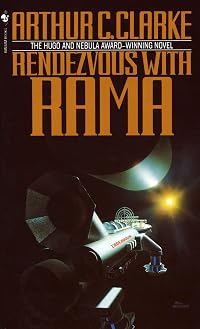
An enormous cylindrical object appears in Earth's solar system, hurtling toward the sun. A ship is sent to explore the mysterious craft-which the denizens of the solar system name Rama-and what they find is intriguing evidence of a civilization far more advanced than ours. They find an interior stretching over 50 kilometers; a forbidding cylindrical sea; mysterious and inaccessible buildings; and strange machine-animal hybrids, or "biots," that inhabit the ship. But what they don't find is show more an alien presence. So who-and where-are the Ramans? Often listed as one of Clarke's finest novels, Rendezvous With Rama has won both the Hugo and the Nebula Awards. A fast-paced and compelling story of an enigmatic encounter with alien technology, Rendezvous With Rama offers both answers and unsolved mysteries that continue to fascinate readers decades after its first publication. show lessTags
Recommendations



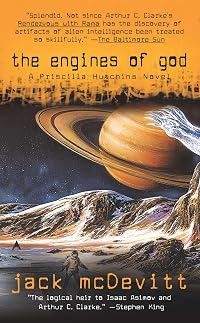

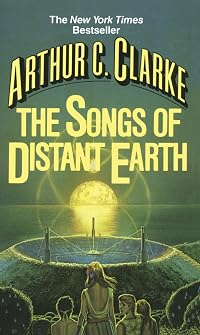
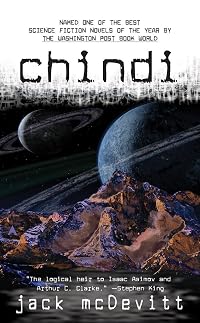
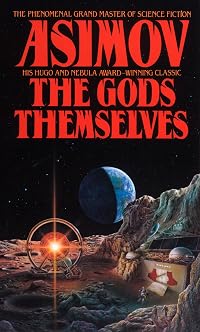

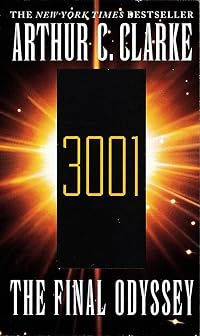
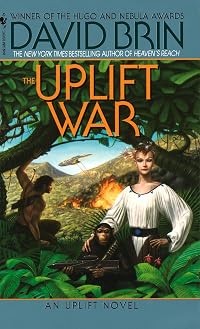
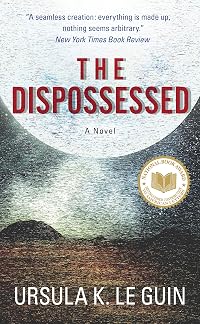
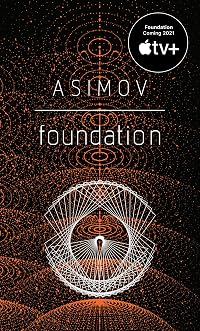



Member Recommendations

Member Reviews
"Rendezvous With Rama" was my introduction to Clarke when I first read it, back in the mid-'70s, and I was enamoured of its hard-SF nature, its concise telling, its brilliant BDO, and the perfect final line. Upon learning that Denis Villeneuve was to helm a new film, I knew I had to revisit it with older eyes. I am both glad and chagrined that I did so, and the glamour is gone from my eyes.
The best parts of RwR are all those that involve Rama itself and its investigation; fortunately, these occupy most of the text. As the crew of the Endeavour experience each step into Rama, and every new object and circumstance associated with it, the reader shares them vicariously; also, the brief window of opportunity allowed by the shared orbit show more prevents Clarke and the story from wallowing in unnecessary side-plots (a trait I wish more current authors would adopt). Best of all is the indifference the human explorers meet: Rama's own story lies elsewhere.
However, sticking points in RwR are Clarke's shibboleths written large. His characters are thin, yes. What's much more galling and artificial is that once again Clarke shows that _who_ his characters are was always less important to him than _what_ they are. Clarke finds it necessary to identify the doctor as "Surgeon Commander" throughout the book instead of "Dr. Ernst" or even "Laura." Likewise, we have "Commander Norton," every other officer or sergeant by rank, and the litter of Honourable Mr Ambassadors, Professor Doctors, and Sirs that make up odious advisory committees. Clarke loved ranks, he loved titles, and he could not perceive a world in which use of such titles was not compulsory. Sorry, but people don't really _talk_ that way.
A final bone to pick concerns a minor thread in RwR, one Clarke may have been encouraged to include by the publisher for length and texture, but one that presents such an ethical violation that I doubt it would see print today. It seems the Space Survey has genetically engineered a slave population of sterile primates for use as menial labor aboard ships. They have no rights, cannot speak, are fully expendable (conditions for euthanising them is clearly discussed), and are somehow more cost-efficient than bots or drones. Actually, the crew have NO bots, drones, or RC tools or toys of any kind: why is that? Even Jacques Cousteau used RC cameras. Maybe GMO slaves made it all more science-fictiony? Shame on you, Clarke.
Altogether, this still rates a solid 3.5 because what female characters there are are pretty cool and capable, because Jimmy Pak is a fun character, and Rama remains among the Most Bodacious BDOs in the SF canon. show less
The best parts of RwR are all those that involve Rama itself and its investigation; fortunately, these occupy most of the text. As the crew of the Endeavour experience each step into Rama, and every new object and circumstance associated with it, the reader shares them vicariously; also, the brief window of opportunity allowed by the shared orbit show more prevents Clarke and the story from wallowing in unnecessary side-plots (a trait I wish more current authors would adopt). Best of all is the indifference the human explorers meet: Rama's own story lies elsewhere.
However, sticking points in RwR are Clarke's shibboleths written large. His characters are thin, yes. What's much more galling and artificial is that once again Clarke shows that _who_ his characters are was always less important to him than _what_ they are. Clarke finds it necessary to identify the doctor as "Surgeon Commander" throughout the book instead of "Dr. Ernst" or even "Laura." Likewise, we have "Commander Norton," every other officer or sergeant by rank, and the litter of Honourable Mr Ambassadors, Professor Doctors, and Sirs that make up odious advisory committees. Clarke loved ranks, he loved titles, and he could not perceive a world in which use of such titles was not compulsory. Sorry, but people don't really _talk_ that way.
A final bone to pick concerns a minor thread in RwR, one Clarke may have been encouraged to include by the publisher for length and texture, but one that presents such an ethical violation that I doubt it would see print today. It seems the Space Survey has genetically engineered a slave population of sterile primates for use as menial labor aboard ships. They have no rights, cannot speak, are fully expendable (conditions for euthanising them is clearly discussed), and are somehow more cost-efficient than bots or drones. Actually, the crew have NO bots, drones, or RC tools or toys of any kind: why is that? Even Jacques Cousteau used RC cameras. Maybe GMO slaves made it all more science-fictiony? Shame on you, Clarke.
Altogether, this still rates a solid 3.5 because what female characters there are are pretty cool and capable, because Jimmy Pak is a fun character, and Rama remains among the Most Bodacious BDOs in the SF canon. show less
A really good Clarke yarn, up there with 2001 for a sense of awe. The way it sets up inter-solar system rivalries presages later works like The Expanse, but interpersonal conflict is not Clarke's strong side. Nor are characters. He's preoccupied with ideas, and this novel has some good ones. Like the Odyssey series this also ends ambiguously and it'll be interesting to see if there's a definitive payoff in the sequels.
I've known about this book for what seems like ever, as a canonical "big dumb object" book, but have only just read it for the first time. My what I've missed.
The plot is simple: a mysterious cylindrical object appears in nearby space. Humans go to investigate. They see many mysterious things, but many questions remain unanswered at the book's closing. That's what I knew, and it's a pretty fair description so the story didn't surprise me. Here are things that did.
First, the date. I had thought this was from the 1950s, contemporary with Asimov's Foundation and early robot stories, early 1960's at the latest. But 1973 means it appeared post-New Wave; it was written in a context where other writers were looking to be more literary: show more experimenting with prose, writing complicated characters, and making social and political commentary. Heck, this book is younger than I am.
Which makes the next surprise all the more surprising: how completely unconcerned Clarke is with trickeries of style, character development, or social awareness. Not that his characters are uninteresting. On the contrary, they represent multiple social groups with competing political or religious agendas. But Clarke doesn't seem to be commenting on current events so much as he is creating a world in which events have moved on from current preoccupations. Even forty-four years later it does not feel dated.
Another surprise: I knew that questions would be unanswered. What I didn't know was that *every* question would be unanswered. Things got curiouser and curiouser until it was just over. And yet I never felt that Clarke was being coy. Whatever the mystery, physics still applies, so despite a lack of answers it always *feels* like the answers are there. They taunt like one of those simple-to-state-difficult-to-prove problems in number theory: you always feel the result would be obvious if only you could find the right approach. I can see why this book attracts such strong devotion.
Last surprise: I knew that a sequel (Rama II) came years & years later in response to persistent requests from fans. What I didn't know was how strongly Rendezvous With Rama seems to promise a sequel, or how badly I'd want one too. I hear it's disappointing. I'm reading it anyway. show less
The plot is simple: a mysterious cylindrical object appears in nearby space. Humans go to investigate. They see many mysterious things, but many questions remain unanswered at the book's closing. That's what I knew, and it's a pretty fair description so the story didn't surprise me. Here are things that did.
First, the date. I had thought this was from the 1950s, contemporary with Asimov's Foundation and early robot stories, early 1960's at the latest. But 1973 means it appeared post-New Wave; it was written in a context where other writers were looking to be more literary: show more experimenting with prose, writing complicated characters, and making social and political commentary. Heck, this book is younger than I am.
Which makes the next surprise all the more surprising: how completely unconcerned Clarke is with trickeries of style, character development, or social awareness. Not that his characters are uninteresting. On the contrary, they represent multiple social groups with competing political or religious agendas. But Clarke doesn't seem to be commenting on current events so much as he is creating a world in which events have moved on from current preoccupations. Even forty-four years later it does not feel dated.
Another surprise: I knew that questions would be unanswered. What I didn't know was that *every* question would be unanswered. Things got curiouser and curiouser until it was just over. And yet I never felt that Clarke was being coy. Whatever the mystery, physics still applies, so despite a lack of answers it always *feels* like the answers are there. They taunt like one of those simple-to-state-difficult-to-prove problems in number theory: you always feel the result would be obvious if only you could find the right approach. I can see why this book attracts such strong devotion.
Last surprise: I knew that a sequel (Rama II) came years & years later in response to persistent requests from fans. What I didn't know was how strongly Rendezvous With Rama seems to promise a sequel, or how badly I'd want one too. I hear it's disappointing. I'm reading it anyway. show less
I was under the impression that I'd never read any Arthur C. Clarke - I had no memory of doing so. A search of LT showed me that I read 2001: A Space Odyssey two years ago and I seem to have been unimpressed - which explains why I didn't remember it (I was given a pile of SF, including some Arthur C. Clarkes, by a family member about that time). So, in the circumstances, it's rather surprising that I've been really impressed by Rendezvous With Rama.
This gripped me from the start; a real page-turner, it constantly had me eager for whatever came next. This was despite the fact that I soon knew pretty well how the book would work itself out ... turned out I was wrong - the ending took me by surprise. For me, Clarke pulled off the seemingly show more impossible feat of both writing a satisfying, properly-completed story and leaving me wanting more. It actually leaves one with a lot to think over, too.
I loved the descriptive writing, how he so perfectly created this alien world. An image that will stay with me a long time is the description of the outer surface of Rama as having been made so flawless and perfectly smooth that observers couldn't see that it was revolving.
I think I lost interest in SF years ago. This might just have re-enthused me. show less
This gripped me from the start; a real page-turner, it constantly had me eager for whatever came next. This was despite the fact that I soon knew pretty well how the book would work itself out ... turned out I was wrong - the ending took me by surprise. For me, Clarke pulled off the seemingly show more impossible feat of both writing a satisfying, properly-completed story and leaving me wanting more. It actually leaves one with a lot to think over, too.
I loved the descriptive writing, how he so perfectly created this alien world. An image that will stay with me a long time is the description of the outer surface of Rama as having been made so flawless and perfectly smooth that observers couldn't see that it was revolving.
I think I lost interest in SF years ago. This might just have re-enthused me. show less
An alien spaceship the size of Clarke’s ego flies into the solar system. The only ship in the fleet that’s within range is the USS Endeavour, Captain Hook commanding.
Clarke does something very clever. We never find out how many crew members are aboard Endevour. Neither are the characters who do appear get introduced normally. We never find out all the secrets of the main character, Rama, and despite a series of revelations throughout the novel, it’s still a mystery at the end. As a new thing is discovered, or is about to be discovered, so is a new character introduced.
Clarke was 35 years into his career at this point. It amazes me that he was still able to take literary risks of this magnitude with something as fundamental to the show more novel as characterisation – and have it pay off.
There are some brilliant descriptions of the interior of Rama especially as the crew try to acclimatise to an alien world, but it’s not Clarke’s descriptions of the distances involved but rather that a small part of Rama is equivalent to a human that gives a true sense of scale.
There’s an interesting theme of sex and fertility that runs through the novel which reflects Rama’s awakening from near zero. It’s also worth looking out for recurrences of the number three in the relationship between the different characters. show less
Clarke does something very clever. We never find out how many crew members are aboard Endevour. Neither are the characters who do appear get introduced normally. We never find out all the secrets of the main character, Rama, and despite a series of revelations throughout the novel, it’s still a mystery at the end. As a new thing is discovered, or is about to be discovered, so is a new character introduced.
Clarke was 35 years into his career at this point. It amazes me that he was still able to take literary risks of this magnitude with something as fundamental to the show more novel as characterisation – and have it pay off.
There are some brilliant descriptions of the interior of Rama especially as the crew try to acclimatise to an alien world, but it’s not Clarke’s descriptions of the distances involved but rather that a small part of Rama is equivalent to a human that gives a true sense of scale.
There’s an interesting theme of sex and fertility that runs through the novel which reflects Rama’s awakening from near zero. It’s also worth looking out for recurrences of the number three in the relationship between the different characters. show less
Arthur C. Clarke was a master. I’ve read this one several times now, but probably not for about twenty years. As time goes by, science fiction from the classic era gets filtered over and over until not too many books are still standing. This is definitely one of them, in a small group that maybe also includes Clarke’s Childhood’s End and 2001: A Space Odyssey.
Much of this one is an adventure story, a throwback for current readers to a time when the wonder of space exploration and first discoveries of alien life was all you really needed or looked for.
We passed through, hopefully, an era of high action, high pace where plots hit you with cosmic scale catastrophe and intrigue every chapter. By comparison, Clarke’s plot here rides show more a fairly even keel.
An object has been detected, passing through our solar system. At first it is thought to be an asteroid or comet, but its orbit and behavior give it away. It’s technological. It’s headed for a high speed pass around the sun, and we’ve detected it early enough to mount an exploratory mission, in this year of 2131 when much of the solar system has been colonized and interplanetary space flight is relatively routine.
Commander Norton, through whose eyes much of the story is seen, commands the Endeavour to a docking with the object, now named Rama. Rama is a large, cylinder-shaped object 50 kilometers long and 20 kilometers wide.
That’s big. Big enough to be a generational ship of some sort, or who knows what, given that we have no idea of its origin or purpose.
The story is the story of Norton’s crew’s mission to explore Rama and determine as much as they, and supporting scientists, can during the time it is safe to fly along with Rama, as it approaches the sun and then either heads back out of the solar system or alters course in some to-be-determined way.
The plot peaks are mostly produced by Rama — its unexpected and enigmatic features and behavior. The plot is also sustained by political and personal conflicts and agendas among the politicians and scientists on Earth and its colonies. To be honest, on my reading, those conflicts and personalities are background, I won’t say background “noise” but close to it, buzzing around the adventures of the Endeavour and its crew.
There’s no superhero stuff, although some heroics certainly, and no monsters, although there is certainly danger as well. To really get into the spirit of the book, you have to let yourself fall into the experience of first contact and the wonder and mystery of a truly alien encounter.
Not to give too much away, but we don’t meet the Ramans themselves. Also in my reading, that’s a strength of the book (as it is in Clarke’s 2001). As readers we are left to imagine the Ramans, with an uncertainty of 100%. That’s the thing about aliens and their artifacts. They are alien.
I can’t let this go without mentioning the parallels between Clarke’s story, written more than fifty years ago, and the real-world passage of ‘Oumuamua through our solar system in 2017. The parallels are eerie, especially if you buy into Harvard astrophysicist Avi Loeb’s claims that ‘Oumuamua exhibited signs of a technological artifact itself (I don’t). show less
Much of this one is an adventure story, a throwback for current readers to a time when the wonder of space exploration and first discoveries of alien life was all you really needed or looked for.
We passed through, hopefully, an era of high action, high pace where plots hit you with cosmic scale catastrophe and intrigue every chapter. By comparison, Clarke’s plot here rides show more a fairly even keel.
An object has been detected, passing through our solar system. At first it is thought to be an asteroid or comet, but its orbit and behavior give it away. It’s technological. It’s headed for a high speed pass around the sun, and we’ve detected it early enough to mount an exploratory mission, in this year of 2131 when much of the solar system has been colonized and interplanetary space flight is relatively routine.
Commander Norton, through whose eyes much of the story is seen, commands the Endeavour to a docking with the object, now named Rama. Rama is a large, cylinder-shaped object 50 kilometers long and 20 kilometers wide.
That’s big. Big enough to be a generational ship of some sort, or who knows what, given that we have no idea of its origin or purpose.
The story is the story of Norton’s crew’s mission to explore Rama and determine as much as they, and supporting scientists, can during the time it is safe to fly along with Rama, as it approaches the sun and then either heads back out of the solar system or alters course in some to-be-determined way.
The plot peaks are mostly produced by Rama — its unexpected and enigmatic features and behavior. The plot is also sustained by political and personal conflicts and agendas among the politicians and scientists on Earth and its colonies. To be honest, on my reading, those conflicts and personalities are background, I won’t say background “noise” but close to it, buzzing around the adventures of the Endeavour and its crew.
There’s no superhero stuff, although some heroics certainly, and no monsters, although there is certainly danger as well. To really get into the spirit of the book, you have to let yourself fall into the experience of first contact and the wonder and mystery of a truly alien encounter.
Not to give too much away, but we don’t meet the Ramans themselves. Also in my reading, that’s a strength of the book (as it is in Clarke’s 2001). As readers we are left to imagine the Ramans, with an uncertainty of 100%. That’s the thing about aliens and their artifacts. They are alien.
I can’t let this go without mentioning the parallels between Clarke’s story, written more than fifty years ago, and the real-world passage of ‘Oumuamua through our solar system in 2017. The parallels are eerie, especially if you buy into Harvard astrophysicist Avi Loeb’s claims that ‘Oumuamua exhibited signs of a technological artifact itself (I don’t). show less
A really good Clarke yarn, up there with 2001 for a sense of awe. The way it sets up inter-solar system rivalries presages later works like The Expanse, but interpersonal conflict is not Clarke's strong side. Nor are characters. He's preoccupied with ideas, and this novel has some good ones. Like the Odyssey series this also ends ambiguously and it'll be interesting to see if there's a definitive payoff in the sequels.
Members
- Recently Added By
Lists

Best Science Fiction Novels
816 works; 430 members
Survey of Classic Science Fiction
171 works; 47 members

Hugo Award Winning Novels
63 works; 23 members

NPRs your picks: top 100 Sci-Fi/Fantasy books
297 works; 80 members

Best First Contact Stories
33 works; 16 members

Best of British Literature
226 works; 40 members

S.F. Masterworks (Complete)
229 works; 15 members

Hugo Awards - Best Novel
69 works; 10 members

SF Masterworks
193 works; 8 members

Top Five Books of 2013
1,562 works; 715 members

The Novels of Arthur C. Clarke
21 works; 2 members

Nebula Award
111 works; 14 members
Locus Award for Best Novel/SF Novel
53 works; 6 members

20th Century Literature
1,161 works; 55 members

Top Five Books of 2020
982 works; 348 members

Top Five Books of 2015
811 works; 240 members
Speculative Fiction: The Award Winners
27 works; 6 members

Isaac Arthur’s Book Recommendations
98 works; 3 members

Speculative Fiction: The Classics
36 works; 5 members

A Good Read (Radio 4)
221 works; 1 member
Favorite Science Fiction
456 works; 218 members

AbeBooks: 50 essential science fiction books
50 works; 6 members

2025 Reading List
51 works; 2 members

Top Five Books of 2024
795 works; 264 members

Books Read in 2024
4,623 works; 126 members
Les 100 principaux titres de la science-fiction (1981)
126 works; 3 members

al.vick-series
381 works; 2 members

Books Read By artturnerjr - 2013
24 works; 1 member

Books Read in 2020
4,379 works; 123 members

Space Colonization
100 works; 26 members

Books Read in 2011
684 works; 19 members

Books Read in 2017
4,249 works; 130 members

1970s
657 works; 23 members
Best Books With Aliens
67 works; 10 members

Survey of Science Fiction and Fantasy
101 works; 13 members
Talk Discussions
Past Discussions
The RENDEZVOUS WITH RAMA Discussion Thread in TBR Challenge (September 2014)
Rendezvous with Rama, by Arthur C. Clarke in Group Reads - Sci-Fi (June 2012)
Author Information

863+ Works 130,290 Members
Arthur C. Clarke was born in Minehead, Somerset, England, on December 16, 1917. During World War II, he served as a radar specialist in the RAF. His first published piece of fiction was Rescue Party and appeared in Astounding Science, May 1946. He graduated from King's College in London with honors in physics and mathematics, and worked in show more scientific research before turning his attention to writing fiction. His first book, Prelude to Space, was published in 1951. He is best known for his book 2001: A Space Odyssey, which was later turned into a highly successful and controversial film under the direction of Stanley Kubrick. His other works include Childhood's End, Rendezvous with Rama, The Garden of Rama, The Snows of Olympus, 2010: A Space Odyssey II, 2062: Odyssey III, and 3001: The Final Odyssey. During his lifetime, he received at least three Hugo Awards and two Nebula Awards. He died of heart failure on March 19, 2008 at the age of 90. (Bowker Author Biography) show less
Some Editions
Awards and Honors
Awards
Distinctions
Notable Lists
Series

Belongs to Publisher Series
VGSF Classics (21)
Nébula (45)
Grandes Éxitos de Bolsillo (B-31)
SF Masterworks (65)
Urania [Mondadori] (634)
Bastei Science Fiction-Special (24371)
Heyne Allgemeine Reihe (5370)
J'ai lu (1047)
Bastei Lübbe Taschenbuch (24371)
Science Fiction Book Club (5888)
Work Relationships
Is contained in
Has the adaptation
Inspired
Has as a student's study guide
Common Knowledge
- Canonical title
- Rendezvous with Rama
- Original title
- Rendezvous with Rama
- Alternate titles*
- Rendezvous mit 31/439
- Original publication date
- 1973
- People/Characters
- William Tsien Norton (Commander); Karl Mercer (Lieutenant-Commander); Joe Calvert (Lieutenant); Willard Myron (Technical Sergeant); Carlisle Perera; Laura Ernst (Surgeon Commander) (show all 7); Ruby Barnes (Sergeant)
- Important places
- Rama (Spaceship)
- Related movies
- Rendezvous with Rama (2003 | IMDb)
- Dedication
- To Sri Lanka, where I climbed the stairway of the Gods.
- First words
- Sooner or later, it was bound to happen.
- Last words
- (Click to show. Warning: May contain spoilers.)The Ramans do everything in threes.
- Blurbers
- Heinlein, Robert A.; Herbert, Frank; Asimov, Isaac; Leonard, John
- Original language
- English
*Some information comes from Common Knowledge in other languages. Click "Edit" for more information.
Classifications
Statistics
- Members
- 11,379
- Popularity
- 798
- Reviews
- 209
- Rating
- (3.95)
- Languages
- 24 — Bulgarian, Catalan, Czech, Danish, Dutch, English, Estonian, Finnish, French, German, Galician, Greek, Hebrew, Hungarian, Italian, Korean, Lithuanian, Polish, Romanian, Russian, Spanish, Swedish, Turkish, Portuguese (Portugal)
- Media
- Paper, Audiobook, Ebook
- ISBNs
- 107
- ASINs
- 80