
The Godmakers
by Frank Herbert
On This Page
Description
On the edge of a war-weary and devastated galaxy, charismatic Lewis Orne has landed on Hamal. His assignment: to detect any signs of latent aggression in this planet's population. To his astonishment, he finds that his own latent extrasensory powers have suddenly blossomed, and he is invited to join the company of "gods" on this planet-and the people here place certain expectations on their gods. The Godmakers is an expansion of four short stories written from 1958-1960. It is an exploration show more of the concepts of war and peace, government and relgion. show lessTags
Recommendations























Member Recommendations
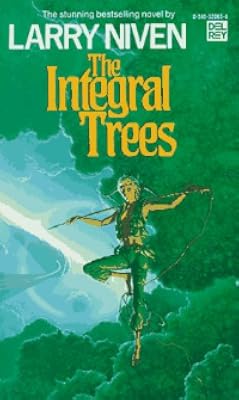
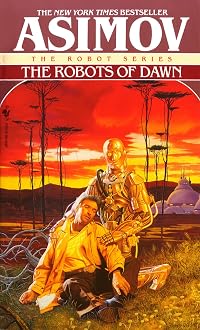
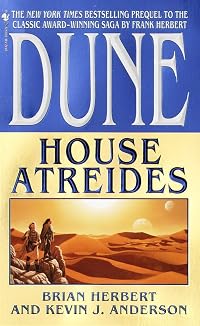
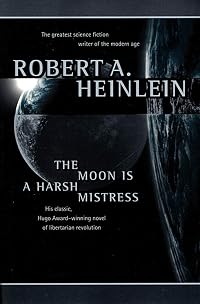
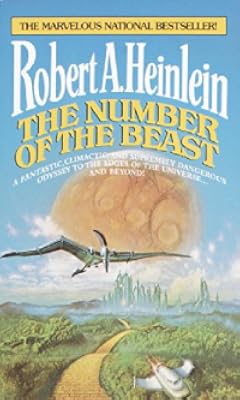
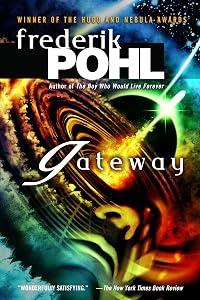
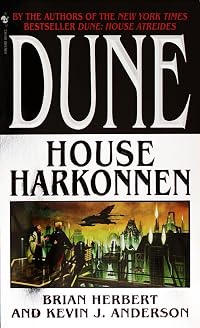
themulhern Two radically different novels about the business of reclaiming/rediscovering/reuniting with planets that were lost during a great interstellar war.
Member Reviews
Yet more evidence that Dune was the pinnacle of Herbert's science fiction career, and the majority of the rest of his books are pale reflections of the themes in that series or, to a lesser extent, the ConSentiency series. In stuff that predates Dune, like all of these short stories or Destination: Void, you can see him fumbling around with ideas and appreciate how much he raised his game for Dune. For stuff that antedates Dune, like Hellstrom's Hive, it's weird how much less insightful his treatments seem, with worse characters, lamer plots, and all-around loss of energy. Not that Dune isn't an incredible series, but I can't help mentally comparing these journeyman efforts to those of someone like Asimov, who didn't slow down until show more decades after Foundation and whose side projects in his prime were still excellent and fresh. Anyway....
Lewis Orne starts off as an agent of Rediscovery & Reeducation, a goverment organization dedicated to finding human worlds that have lost contact with the mass of humanity after an intragalactic war. If the planets seem martial, he's supposed to alert his supervisors at the Investigation-Adjustment bureau so they can come pacify the planet, ensuring that no further large destructive wars threaten the survival of the species. He's really good at his job and rescues the crew of a ship captured by a planet under investigation, so he gets promoted to a full I-A agent, whereupon he gets injured in the line of duty and sent home to recuperate. While home, he foils the conspiracy of breed of super-clever women to control galactic politics, discovers he's got psionic potential, and then undergoes a lengthy series of apotheosis procedures to literally become a god and teach humanity the true meaning of life and growth and reality, etc.
Stuff that gets recapitulated in Dune:
- The female breeding program/conspiracy, as the Bene Gesserit
- Goofy religious mysticism, including the idea of designing religions for lesser peoples
- The idea that enforcing false peace will only lead to greater wars
- Spacey drug talk about false binaries, things requiring their opposites, infinite change, the impossibility of trying to impose thought matrices on the universe, etc.
- The agents and their organizations are clearly dry runs of the BuSab in the ConSentiency series
Enjoyable enough though, and a quick read. show less
Lewis Orne starts off as an agent of Rediscovery & Reeducation, a goverment organization dedicated to finding human worlds that have lost contact with the mass of humanity after an intragalactic war. If the planets seem martial, he's supposed to alert his supervisors at the Investigation-Adjustment bureau so they can come pacify the planet, ensuring that no further large destructive wars threaten the survival of the species. He's really good at his job and rescues the crew of a ship captured by a planet under investigation, so he gets promoted to a full I-A agent, whereupon he gets injured in the line of duty and sent home to recuperate. While home, he foils the conspiracy of breed of super-clever women to control galactic politics, discovers he's got psionic potential, and then undergoes a lengthy series of apotheosis procedures to literally become a god and teach humanity the true meaning of life and growth and reality, etc.
Stuff that gets recapitulated in Dune:
- The female breeding program/conspiracy, as the Bene Gesserit
- Goofy religious mysticism, including the idea of designing religions for lesser peoples
- The idea that enforcing false peace will only lead to greater wars
- Spacey drug talk about false binaries, things requiring their opposites, infinite change, the impossibility of trying to impose thought matrices on the universe, etc.
- The agents and their organizations are clearly dry runs of the BuSab in the ConSentiency series
Enjoyable enough though, and a quick read. show less
Lewis Orne, an interstellar agent, investigates war-torn planets. After his latent psychic powers awaken, he becomes the focal point of a religious order's attempt to intentionally engineer and create a human god.
Orne works for the Rediscovery and Reeducation Service (R&R), tasked with helping distant planets reintegrate with galactic civilization after the devastating Rim Wars. After identifying a warlike culture on the planet Hamal, Orne's competence earns him a promotion to Investigative Adjustment (I-A), an agency that corrects dangerous, rogue situations across the galaxy.
While he travels from planet to planet preventing wars, the priests of the planet Amel are practicing religious engineering. They believe in using massed belief show more to deliberately engineer and create a god, and they suspect Orne may be their prime candidate.
After surviving severe injuries and near-death experiences, Orne’s extrasensory and psychic abilities fully blossom. Following a series of rigorous tests, Orne realizes he has become the deity the priests were trying to create. show less
Orne works for the Rediscovery and Reeducation Service (R&R), tasked with helping distant planets reintegrate with galactic civilization after the devastating Rim Wars. After identifying a warlike culture on the planet Hamal, Orne's competence earns him a promotion to Investigative Adjustment (I-A), an agency that corrects dangerous, rogue situations across the galaxy.
While he travels from planet to planet preventing wars, the priests of the planet Amel are practicing religious engineering. They believe in using massed belief show more to deliberately engineer and create a god, and they suspect Orne may be their prime candidate.
After surviving severe injuries and near-death experiences, Orne’s extrasensory and psychic abilities fully blossom. Following a series of rigorous tests, Orne realizes he has become the deity the priests were trying to create. show less
A visit to the idea of bending people to your will, if you can control the inputs. As usual there will be consequences.
One of the author's shorter novels, and IMHO not a very strong one. Don't get me wrong, it's still a decent book and a good example of old science fiction, and I am giving this book 3 stars. But if you're familiar with Frank Herbert's writing, this may be more accessible to you. It gets weird as it often does, and there's potential storylines introduced and then dropped and the ending is all weird, but then this is Frank Herbert, and there are good parts and lines in here.
If you're new to Frank Herbert, I would recommend something else to start with, such as the The Green Brain or The Santaroga Barrier.
If you're new to Frank Herbert, I would recommend something else to start with, such as the The Green Brain or The Santaroga Barrier.
Frank Herbert's favourite word was "prescience". The stories that make up the novel were published a few years before Dune although the novel wasn't published until 1972.
This explains the structure. The first half of the book consists of a bunch of episodes of detection, kind of like Asimov's "I, Robot" stories which involve the two cowboy robot detectives. The second half is like Dune-lite, as the character develops the power of prescience. The whole book resembles Dune in the deepities which are sprinkled at the start of each chapter. If I were fifteen, I would have bought into the tough talk of the planet-adjusting cowboys, but not any more.
I seem to remember that in "Count Zero", someone gets blown up and then regrown in a vat. A show more bit more dramatic than the fate of the protagonist in this book. show less
This explains the structure. The first half of the book consists of a bunch of episodes of detection, kind of like Asimov's "I, Robot" stories which involve the two cowboy robot detectives. The second half is like Dune-lite, as the character develops the power of prescience. The whole book resembles Dune in the deepities which are sprinkled at the start of each chapter. If I were fifteen, I would have bought into the tough talk of the planet-adjusting cowboys, but not any more.
I seem to remember that in "Count Zero", someone gets blown up and then regrown in a vat. A show more bit more dramatic than the fate of the protagonist in this book. show less
There are really two stories here: 1) the fun escapades of the hero learning the trade of determining whether a newly rediscovered Terran colony is hiding any militaristic tendencies in its hope of gaining free entry into the growing new galactic order; 2) an essay on religious mysticism on the part of the author....in the form of the hero of the first part of the book being transformed into a god in the second part. The first part of the book is a moderately well done 3* adventure. The second part is also a moderately well done 3* description of a man being squeezed into deitism(?). The extra 1/2* is bonus points for the intellectual challenge of describing a time when all of the world's religions come together and accept that they show more each believe in GOD, etc. and only differ in the particular way that God instructed them each to worship Him/Her/It. show less
...The Godmakers is not a great novel, I consider it as something of a study for Herbert's later works. The concepts that show up in Dune are the most obvious but I also think Orne is something of a proto-Jorj X. McKie, the main character in the novels Whipping Star and The Dosadi Experiment. A lot of the short fiction Herbert produced where his sandbox. He played around with ideas that would later develop into his strongest novels. Trying to patch four of these stories together and calling it a novel has not worked particularly well in this case. Still, in Herbert's oeuvre as a whole, these short stories were a significant step in his development as a writer. From that angle, they are still more than worth reading.
Full Random Comments show more review show less
Full Random Comments show more review show less
Members
- Recently Added By
Author Information

260+ Works 148,894 Members
Frank Herbert was born Franklin Patrick Herbert, Jr. in Tacoma, Washington on October 8, 1920. He worked originally as a journalist, but then turned to science fiction. His Dune series has had a major impact on that genre. Some critics assert that Herbert is responsible for bringing in a new branch of ecological science fiction. He had a personal show more interest in world ecology, and consulted with the governments of Vietnam and Pakistan about ecological issues. The length of some of Herbert's novels also helped make it acceptable for science fiction authors to write longer books. It is clear that, if the reader is engaged by the story---and Herbert certainly has the ability to engage his readers---length is not important. As is usually the case with popular fiction, it comes down to whether or not the reader is entertained, and Herbert is, above all, an entertaining and often compelling writer. His greatest talent is his ability to create new worlds that are plausible to readers, in spite of their alien nature, such as the planet Arrakis in the Dune series. Frank Herbert died of complications from pancreatic cancer on February, 11, 1986, in Madison, Wisconsin. He was 65. (Bowker Author Biography) show less
Some Editions
Series
Belongs to Publisher Series
Work Relationships
Has as a student's study guide
Common Knowledge
- Canonical title
- The Godmakers
- Original title
- The Godmakers
- Original publication date
- 1972
- People/Characters
- Lewis Orne
- First words
- Lewis Orne could not remember a time when he had been free of a peculiar, repetitive dream, when he had been able to go to sleep in the sure knowledge that the dream's wild sense of reality would not clutch at his psyche.
- Last words
- (Click to show. Warning: May contain spoilers.)I'm sure Ag will help him. Love, L.O.
- Original language*
- English US
*Some information comes from Common Knowledge in other languages. Click "Edit" for more information.
Classifications
Statistics
- Members
- 1,260
- Popularity
- 19,552
- Reviews
- 17
- Rating
- (3.42)
- Languages
- 9 — Czech, Dutch, English, French, German, Greek, Norwegian (Bokmål), Polish, Spanish
- Media
- Paper, Audiobook, Ebook
- ISBNs
- 34
- ASINs
- 21