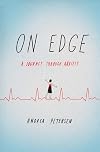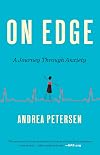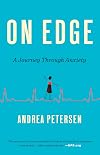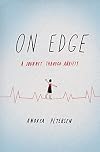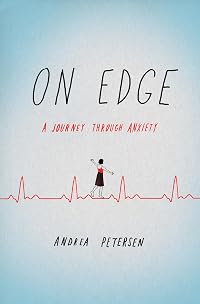
On Edge: A Journey Through Anxiety
by Andrea Petersen
On This Page
Description
A wry, sympathetic, bracingly honest account of living with anxiety, coupled with deep reportage on the science of anxiety disorders. --Tags
Recommendations














Member Reviews
On Edge: A Journey Through Anxiety by Andrea Petersen is not only an account of the author’s personal experience living with anxiety, but also a scientific and historical overview of the disorder’s various aspects. I found it to be a perfect combination of all three.
Ms. Petersen’s descriptions of her life when she’s caught in the throes of a panic attack, the reactions of her friends and loved ones when her fears overtake seemingly everyday activities should be eye-opening to those who have no understanding or experience with anxiety and comforting to those who themselves suffer from some form of the disorder to realize they are not alone. There is some validation for how they often feel and react.
The historical look into show more anxiety disorders and their treatments and the development and growth of medications used to treat the symptoms is fascinating and shows how far the research and medical community have come in understanding the disorder and treating those who suffer from it. The process continues as evidenced in the author’s examination of the current research being done in the area. For those readers whose minds have a more scientific bent these passages will no doubt prove fascinating. I read them, sometimes several times, but more often than not I just felt out of my depth.
On Edge is a valuable and fairly accessible book for those suffering from anxiety in its various forms and for those who love them. I highly recommend it and am grateful to Andrea Petersen for writing it. show less
Ms. Petersen’s descriptions of her life when she’s caught in the throes of a panic attack, the reactions of her friends and loved ones when her fears overtake seemingly everyday activities should be eye-opening to those who have no understanding or experience with anxiety and comforting to those who themselves suffer from some form of the disorder to realize they are not alone. There is some validation for how they often feel and react.
The historical look into show more anxiety disorders and their treatments and the development and growth of medications used to treat the symptoms is fascinating and shows how far the research and medical community have come in understanding the disorder and treating those who suffer from it. The process continues as evidenced in the author’s examination of the current research being done in the area. For those readers whose minds have a more scientific bent these passages will no doubt prove fascinating. I read them, sometimes several times, but more often than not I just felt out of my depth.
On Edge is a valuable and fairly accessible book for those suffering from anxiety in its various forms and for those who love them. I highly recommend it and am grateful to Andrea Petersen for writing it. show less
On Edge is partly a memoir and partly a very comprehensive research paper into anxiety disorders. Andrea Petersen, a health, psychology and neuroscience reporter for the Wall Street Journal, combines her own experience of living with anxiety with a deep dive into research that explores the disorder. As you would expect due to Ms Petersen's profession, the book is extremely well researched and well written. In fact, I think it deserves a place on the reading lists of any mental health courses out there. On Edge: A Journey Through Anxiety explores the history of the disorder, the history of diagnosis and treatment, the influence of genetics and what we can learn from the advances in neuroimaging. It looks at various treatment suggestions show more (from CBT and ACT to meditation and yoga etc.) including information on drugs. It deals with parenting and anxiety in children and young people. Petersen's research includes studies from all around the world. The attention to detail is quite impressive but the sometimes heavy research focus might not make this overly user-friendly for everybody. It took me quite a while to get through the book; the main reason being that it sometimes felt like reading for work/study rather than leisure reading. There is a lot of information to process.
But then there is Andrea Petersen's autobiographical story, which is touching, very interesting, and also brave. Ms Petersen doesn't shy away from looking at the effect her anxiety has had on past relationships or her family's history of mental health issues.
Overall, highly recommended reading if you suffer from anxiety yourself, know somebody who does and want to find out more about it, or even if you're generally interested in the subject. There is a lot of useful information, but beware if you're not used to research terminology some of this requires concentration and patience but it's worthwhile investing the time.
I received an ARC via NetGalley. show less
But then there is Andrea Petersen's autobiographical story, which is touching, very interesting, and also brave. Ms Petersen doesn't shy away from looking at the effect her anxiety has had on past relationships or her family's history of mental health issues.
Overall, highly recommended reading if you suffer from anxiety yourself, know somebody who does and want to find out more about it, or even if you're generally interested in the subject. There is a lot of useful information, but beware if you're not used to research terminology some of this requires concentration and patience but it's worthwhile investing the time.
I received an ARC via NetGalley. show less
At times, when the author described her own anxiety in this book, I could feel myself becoming more anxious too. I found the discussion of academic studies intriguing, although I'll confess much of the information isn't new to me. However, it's always worthwhile to hear the message of healthy eating, sleep, and exercise reinforced in the quest for anxiety management. No magical solution emerges from this book, but it's still good reading for the anxious.
Andrea Petersen has battled anxiety for more than twenty-five years. A contributing writer for the Wall Street Journal, Petersen describes her tribulations and those of other family members (such as her grandmother who set her house on fire and was institutionalized). "On Edge" is a competently written and well-organized book in which the author offers an objective look at what anxiety disorders are; who suffers from them; and how we deal with these disorders now, as opposed to what remedies we tried in the past. The author traces the history of anxiety disorders through the ages; discusses research studies on the subject; explains how parts of the brain may contribute to making us apprehensive or keeping us calm; and touches on the show more various treatment options available to help those crippled by feelings of impending doom. Anxiety disorders can ruin relationships and derail educational and professional dreams; cost a fortune in medical care; and diminish one's quality of life.
The chapters that explain the physical and neurological aspects of anxiety—with their host of research studies –are, at times, a bit too technical, slow-paced, and speculative. More memorable are the anecdotes about Ms. Petersen's personal odyssey: her childhood and adolescence; a disabling meltdown during her college years; her friendships; extensive travels; and career, marriage, and motherhood. She was always worried, "scanning the horizon for danger" and anticipating catastrophe.
Petersen confirms that the brain is one of the last frontiers of scientific inquiry. There is still a great deal that we do not yet know about genetics, emotions, and the nervous system. Although it is less stigmatizing these days to admit that one needs psychiatric help, there are still individuals who refuse to consult a mental health expert when needed. In her desire to empower others, Petersen courageously and poignantly bares her soul. She shares the angst she feels when her heart pounds, her head aches, and she must flee at once, no matter what she happens to be doing at the time. Most important of all, she offers hope. Admittedly, she can afford private doctors, but even those who are less well off should not despair. They can contact such organizations as the Anxiety and Depression Association of America and look for the best resources available to treat their condition. show less
The chapters that explain the physical and neurological aspects of anxiety—with their host of research studies –are, at times, a bit too technical, slow-paced, and speculative. More memorable are the anecdotes about Ms. Petersen's personal odyssey: her childhood and adolescence; a disabling meltdown during her college years; her friendships; extensive travels; and career, marriage, and motherhood. She was always worried, "scanning the horizon for danger" and anticipating catastrophe.
Petersen confirms that the brain is one of the last frontiers of scientific inquiry. There is still a great deal that we do not yet know about genetics, emotions, and the nervous system. Although it is less stigmatizing these days to admit that one needs psychiatric help, there are still individuals who refuse to consult a mental health expert when needed. In her desire to empower others, Petersen courageously and poignantly bares her soul. She shares the angst she feels when her heart pounds, her head aches, and she must flee at once, no matter what she happens to be doing at the time. Most important of all, she offers hope. Admittedly, she can afford private doctors, but even those who are less well off should not despair. They can contact such organizations as the Anxiety and Depression Association of America and look for the best resources available to treat their condition. show less
"If you met me, you probably wouldn't even notice my anxiety. When I began telling acquaintances the topic of this book, they almost uniformly said, 'I would never have guess you're anxious.'"
This may be one of the first book reviews I've written, mainly because I am very interested and passionate about this topic. One in three Americans will have an anxiety disorder at some point during their lives. There is currently no "cure."
Although I didn't find myself relating to the specific type of anxiety the author has, I did notice a few similarities that stood out to me. Mental illness is extremely misunderstood in our society and for someone who lives with it everyday, it's nice to see an author explain it in a way that more people may show more understand.
The quote I started this review with made me think of a conversation I recently had with someone. After explaining anxiety and how to cope with it every single day, they responded with, "Can't you just stop being anxious? Like it's not a real illness, it's just all in your head."
Yes actually, it is all in my head. It's a chemical imbalance that I did not choose to have. It's an illness that I would not wish on my worst enemy. It's something that I have tried to "fix" everyday. This book gave me reassurance that there are other people out there like me and there is hope. show less
This may be one of the first book reviews I've written, mainly because I am very interested and passionate about this topic. One in three Americans will have an anxiety disorder at some point during their lives. There is currently no "cure."
Although I didn't find myself relating to the specific type of anxiety the author has, I did notice a few similarities that stood out to me. Mental illness is extremely misunderstood in our society and for someone who lives with it everyday, it's nice to see an author explain it in a way that more people may show more understand.
The quote I started this review with made me think of a conversation I recently had with someone. After explaining anxiety and how to cope with it every single day, they responded with, "Can't you just stop being anxious? Like it's not a real illness, it's just all in your head."
Yes actually, it is all in my head. It's a chemical imbalance that I did not choose to have. It's an illness that I would not wish on my worst enemy. It's something that I have tried to "fix" everyday. This book gave me reassurance that there are other people out there like me and there is hope. show less
This is a memoir about a journalist's life with anxiety disorders. The memoir is interspersed with information that serves as a primer about information about anxiety, it's diagnosis and treatment options past and present. Those parts were my least favorite part of the book because the information is widely available and because it interrupted the narrative. Her personal story was raw and honest and she uses her journalist chops to interview those in her life and share their reaction to her illness.
I received an advanced copy of this book from the publisher via netgalley in exchange for an honest review. Thanks!
I received an advanced copy of this book from the publisher via netgalley in exchange for an honest review. Thanks!
One Edge: A Journey through Anxiety by Andrea Peterson is a 2017 Crown publication.
As a long -time sufferer from panic/anxiety disorder, this book truly resonated with me.
This book chronicles the author’s own personal journey with the disorder, but also offers some insight into why people develop anxiety, including a look at her family history and genetics.
Most of the key areas one might expect are covered here, such as treatment, types of anxiety, phobias, isolation, predisposition, symptoms and most importantly, how to cope and live with the disorder without completely withdrawing from the world.
Her personal story is mixed in with medical and scientific facts and research, some of which sailed over my head, although I am show more interested in the results, it was mind numbing in a few places and I zoned out.
But, for the most part, I understood where the author was coming from and my own behavior mimicked hers on many occasions.
Her story is frank, honest, and practical, and I took inspiration from her as she fights daily with this debilitating disorder and mostly wins out in the end. Fear is the main theme and I completely agree. The anticipation of anxiety is the most difficult part to gain control of.
Overall, I think this is an insightful, knowledgeable look at living with anxiety, that anyone who has been diagnosed with the malady will relate to, sympathize with and learn from. Not only that, if you have a friend or a family member with an anxiety disorder, this book will give you valuable insight and information so you can understand how better to support them.
There is no cure for anxiety, but this book does offer understanding and advice, along with the hope of a medical or scientific breakthrough someday, for future generations. In the meantime, fighting fear and anxiety is a battle we must fight daily with a determination to keep it from affecting or diminishing our quality of life. show less
As a long -time sufferer from panic/anxiety disorder, this book truly resonated with me.
This book chronicles the author’s own personal journey with the disorder, but also offers some insight into why people develop anxiety, including a look at her family history and genetics.
Most of the key areas one might expect are covered here, such as treatment, types of anxiety, phobias, isolation, predisposition, symptoms and most importantly, how to cope and live with the disorder without completely withdrawing from the world.
Her personal story is mixed in with medical and scientific facts and research, some of which sailed over my head, although I am show more interested in the results, it was mind numbing in a few places and I zoned out.
But, for the most part, I understood where the author was coming from and my own behavior mimicked hers on many occasions.
Her story is frank, honest, and practical, and I took inspiration from her as she fights daily with this debilitating disorder and mostly wins out in the end. Fear is the main theme and I completely agree. The anticipation of anxiety is the most difficult part to gain control of.
Overall, I think this is an insightful, knowledgeable look at living with anxiety, that anyone who has been diagnosed with the malady will relate to, sympathize with and learn from. Not only that, if you have a friend or a family member with an anxiety disorder, this book will give you valuable insight and information so you can understand how better to support them.
There is no cure for anxiety, but this book does offer understanding and advice, along with the hope of a medical or scientific breakthrough someday, for future generations. In the meantime, fighting fear and anxiety is a battle we must fight daily with a determination to keep it from affecting or diminishing our quality of life. show less
Members
- Recently Added By
Lists

Psychology: Abuse, Grief, Self-Help
189 works; 1 member
Author Information
2+ Works 143 Members
Andrea Petersen is a contributing writer at the Wall Street Journal and the recipient of a Rosalynn Carter Fellowship for Mental Health Journalism. Find her at byandreapetersen.com and @andreaapetersen.
Classifications
- Genres
- Nonfiction, Biography & Memoir, General Nonfiction
- DDC/MDS
- 616.85 — Applied science & technology Medicine & health Diseases, Allergies, Skin Conditions Nervous Disorders: Autism, Anorexia, OCD Miscellaneous
- LCC
- RC531 .P4227 — Medicine Internal medicine Internal medicine Neurosciences. Biological psychiatry. Neuropsychiatry Psychiatry Psychopathology Neuroses
- BISAC
Statistics
- Members
- 142
- Popularity
- 230,617
- Reviews
- 10
- Rating
- (3.95)
- Languages
- English
- Media
- Paper, Audiobook, Ebook
- ISBNs
- 7
- ASINs
- 2