On This Page
Description
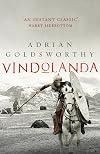
AD 98: The bustling army base at Vindolanda lies on the northern frontier of Britannia and the entire Roman world. In twenty years' time, the Emperor Hadrian will build his famous wall, but for now defences are weak, as tribes rebel against Roman rule, and local druids preach the fiery destruction of the invaders. Flavius Ferox is a Briton and a Roman centurion, given the task of keeping the peace on this wild frontier. But it will take more than just courage to survive life in Roman Britain...Tags
Recommendations













Member Reviews
Absolutely. Positively. Blown away by this title. 11 out of 5 stars. Mr. Goldsworthy is a master of all things Roman and conveying that historical information in an exciting manner with his nonfiction titles. I should not be surprised then that he is an excellent historical fiction writer as well.
The characters, the story, the details, so rich, so expressive, so exciting to get lost in. I couldn't put it down literally. The battles, the action, the fighting so well conveyed with that historian's eye for detail and accuracy. The story itself is believable and fraught with highs, lows, and all the excitement that goes with both.
This is sword and sandal goodness taken to a higher level. Cannot recommend this highly enough. And there's 2 show more more in the series!? Be still my beating heart! show less
The characters, the story, the details, so rich, so expressive, so exciting to get lost in. I couldn't put it down literally. The battles, the action, the fighting so well conveyed with that historian's eye for detail and accuracy. The story itself is believable and fraught with highs, lows, and all the excitement that goes with both.
This is sword and sandal goodness taken to a higher level. Cannot recommend this highly enough. And there's 2 show more more in the series!? Be still my beating heart! show less
I always wonder about the current trend for historians to write historical fiction. It's become something of a fashion but it doesn't always work: good historians may tell stories with novelistic flair, and good historical fiction writers have to get their facts right, but the two genres do demand a different skill-set. Not everyone can make the transition from one to the other. So I was amused to see that Adrian Goldsworthy, the celebrated historian of the Roman Empire, has decided to try his hand at a novel. Naturally, I couldn't resist; and I'm pleased to report that Goldsworthy is one of the rare breed who can make the leap. Focusing on the men based at the forts along the northernmost frontier of Roman Britain, he tells a story show more full of battles, diplomacy and honour, with a very enjoyable 'odd couple' pairing at its heart.
It's 98 AD and Britannia slumbers in apparent peace. It's been almost forty years since the great uprising of the Eceni queen Boudica, and the Roman garrisons have settled into a cautious modus vivendi with their British neighbours. Up in the north, at the tiny fort of Syracuse, the centurion Flavius Ferox has allowed himself to sink into the blessed oblivion of drink in the hope of escaping his past. British by birth - and Prince of the Silures (who lived in present-day South Wales) - Ferox has long since bought in to the Roman way of life, and takes his oaths of loyalty seriously. When sober, he serves as liaison with the local tribes, giving judgements and resolving disputes. But, one morning, his scout-leader Vindex (of the Brigantes) arrives at the fort with news of a murderous skirmish. Despite his hangover, Ferox forces himself out with the scouts to track down the malefactors, but discovers that this is more than a simple cattle raid...
For the full post, due to be published on 15 April, please see my blog:
https://theidlewoman.net/2017/04/15/vindolanda-adrian-goldsworthy show less
It's 98 AD and Britannia slumbers in apparent peace. It's been almost forty years since the great uprising of the Eceni queen Boudica, and the Roman garrisons have settled into a cautious modus vivendi with their British neighbours. Up in the north, at the tiny fort of Syracuse, the centurion Flavius Ferox has allowed himself to sink into the blessed oblivion of drink in the hope of escaping his past. British by birth - and Prince of the Silures (who lived in present-day South Wales) - Ferox has long since bought in to the Roman way of life, and takes his oaths of loyalty seriously. When sober, he serves as liaison with the local tribes, giving judgements and resolving disputes. But, one morning, his scout-leader Vindex (of the Brigantes) arrives at the fort with news of a murderous skirmish. Despite his hangover, Ferox forces himself out with the scouts to track down the malefactors, but discovers that this is more than a simple cattle raid...
For the full post, due to be published on 15 April, please see my blog:
https://theidlewoman.net/2017/04/15/vindolanda-adrian-goldsworthy show less
The author, a noted historian, has tried his hand at historical fiction--first, novels set in the Napoleonic years, now for a change in pace, Roman Britain, just after Trajan has become emperor. Having studied the Vindolanda tablets Goldsworthy has constructed a whole novel around the famous birthday invitation from one commander's wife to another. This tale is a worthy addition to the plethora of Roman novels set in Britannia. When we first meet Flavius Ferox, centurio regionarius, a Silure prince, seconded from II Augusta Legion, he's an unappealing drunk full of boredom and self-pity. He has been tasked with keeping the peace in the frontier area and is based at a small outpost, the fictional "Syracuse." But faced with military show more command, he loses these negative aspects and we quickly see his wiliness, cunning, and outright decency when on a supposedly simple raid, he and the men with him foil an ambush on Sulpicia Lepidina, wife of Vindolanda's commander of a Batavian regiment, while she's on a journey to Coria Fort to visit the commander's wife there. All through the novel, Ferox's knowledge of the different tribes and their customs prove invaluable, as well as his language skills as interpreter. A well-described battle between the Romans--from "Syracuse", Vindolanda and Coria brings to the fore the existence of a druid called the "Stallion", stirring the tribes to rebellion and aiming to expel the Romans from their land. Ferox and Sulpicia strike up an unlikely friendship. An embassy to Tincommius, an important tribal leader, proves successful and his men rush in at the exciting climactic battle with the Stallion although they hedge their bets until the last minute. Upon the order of the governor who knows his reputation for seeking out the truth wherever it may lead, Ferox unmasks a traitor in the Roman camp. This introduction to Ferox is tied up neatly, but Ferox states himself there are still loose threads. That says to me there may be a sequel in the works.
The author took what meager facts there are, also suppositions from archaeological artifacts at Vindolanda, and wove an enthralling novel. Characters were believable as to personalities and physical descriptions. The only note of dissonance I felt was the somewhat implausible and risible love scene between Ferox and Sulpicia, especially given the location. Why couldn't they just have remained platonic friends with mutual admiration? I did like how Goldsworthy pointed out differences between the tribes; they were not all the same as the Romans and even we, think. I liked his comments in the "Historical Notes" as to how he spun his story, making it as credible as possible, from the state of the Roman Army to personal details of Sulpicia, Cerialis and the number of children, --well, his; she was stepmother in the story. From the archaeological discovery of a child's shoe with an odd pattern of wear Goldsworthy posited Cerialis' oldest son having a twisted spine. I highly recommend this novel and hope to read a sequel. show less
The author took what meager facts there are, also suppositions from archaeological artifacts at Vindolanda, and wove an enthralling novel. Characters were believable as to personalities and physical descriptions. The only note of dissonance I felt was the somewhat implausible and risible love scene between Ferox and Sulpicia, especially given the location. Why couldn't they just have remained platonic friends with mutual admiration? I did like how Goldsworthy pointed out differences between the tribes; they were not all the same as the Romans and even we, think. I liked his comments in the "Historical Notes" as to how he spun his story, making it as credible as possible, from the state of the Roman Army to personal details of Sulpicia, Cerialis and the number of children, --well, his; she was stepmother in the story. From the archaeological discovery of a child's shoe with an odd pattern of wear Goldsworthy posited Cerialis' oldest son having a twisted spine. I highly recommend this novel and hope to read a sequel. show less
Titus Flavius Ferox has a foot each in two very different cultures: he is a prince of the Silures as well as a centurion in the Roman army, stationed in the far north of Britain in AD 98. Bored and with nothing much to do, he is often found drunk, but this changes when he rescues the wife of the prefect of Vindolanda during an ambush. There is evidence that someone is stirring up the surrounding tribes to start a sacred war against Rome, and Ferox must learn the truth while trying not to get killed in several skirmishes and battles against the locals, who at best tolerate the invaders and at worst openly oppose them.
This is a foray into fiction by the well-respected historian Adrian Goldsworthy, an expert on Rome and the army in show more particular, and as such the novel represents a faultless evocation of the period. Yet he is not a natural novelist and the characterisation falls back on cliché, the dialogue often feels clumsy and the pace, especially during the skirmishes and battles, is too bogged down with historical detail to flow easily. While I could clearly see the action unfolding in front of my eyes, with graphic descriptions of the carnage wrought by each side, the heart did not engage, and I felt very removed from the proceedings. Despite the fact that the plot turns into some kind of historical whodunnit, any genuine tension simply did not arise. There is a large cast of military characters and I had trouble keeping track of who’s who, as their characters weren’t sufficiently distinguishable from each other; a cast of characters in the prelims would have helped here. Additionally, I sometimes struggled to keep up with the plot as it wasn’t always easy to follow, with a few too many jumps in the narrative, not to mention several credibility-straining coincidences. Though the historical note in the appendix, as can be expected with a historian author, is interesting and makes one appreciate how much research has gone into writing this novel, in all I couldn’t help feeling that tension and pace were sacrificed for the flavour of authenticity.
The fact that I’m still considering reading the upcoming sequel is due to the fact that Flavius Ferox is an engaging character with an intriguing past and I’m interested to find out where the author is taking the story. A very generous three stars. show less
This is a foray into fiction by the well-respected historian Adrian Goldsworthy, an expert on Rome and the army in show more particular, and as such the novel represents a faultless evocation of the period. Yet he is not a natural novelist and the characterisation falls back on cliché, the dialogue often feels clumsy and the pace, especially during the skirmishes and battles, is too bogged down with historical detail to flow easily. While I could clearly see the action unfolding in front of my eyes, with graphic descriptions of the carnage wrought by each side, the heart did not engage, and I felt very removed from the proceedings. Despite the fact that the plot turns into some kind of historical whodunnit, any genuine tension simply did not arise. There is a large cast of military characters and I had trouble keeping track of who’s who, as their characters weren’t sufficiently distinguishable from each other; a cast of characters in the prelims would have helped here. Additionally, I sometimes struggled to keep up with the plot as it wasn’t always easy to follow, with a few too many jumps in the narrative, not to mention several credibility-straining coincidences. Though the historical note in the appendix, as can be expected with a historian author, is interesting and makes one appreciate how much research has gone into writing this novel, in all I couldn’t help feeling that tension and pace were sacrificed for the flavour of authenticity.
The fact that I’m still considering reading the upcoming sequel is due to the fact that Flavius Ferox is an engaging character with an intriguing past and I’m interested to find out where the author is taking the story. A very generous three stars. show less
Action adventure on the northern edge of Roman Britain, before the Wall was built.
The author tells a good yarn although there were times it seemed the author was determined to give us the benefit of ALL his research into the Roman Army and I felt quite overwhelmed. Still, good enough for me to continue with the series.
The author tells a good yarn although there were times it seemed the author was determined to give us the benefit of ALL his research into the Roman Army and I felt quite overwhelmed. Still, good enough for me to continue with the series.
Read as an audio book.
I really enjoyed this story, which was only made stronger by its adherence to historical context and culture. It was well researched, and the historical notes at the end were fascinating, and yet it was still a rollercoaster of action, mystery and clever dialogue. The narration was also very well done, with almost all characters having distinct voices and accents making it easy to differentiate despite the complex and often similar names and titles.
A very good read (listen?) that I can't believe I put off reading for so long.
I really enjoyed this story, which was only made stronger by its adherence to historical context and culture. It was well researched, and the historical notes at the end were fascinating, and yet it was still a rollercoaster of action, mystery and clever dialogue. The narration was also very well done, with almost all characters having distinct voices and accents making it easy to differentiate despite the complex and often similar names and titles.
A very good read (listen?) that I can't believe I put off reading for so long.
Read as an audio book.
I really enjoyed this story, which was only made stronger by its adherence to historical context and culture. It was well researched, and the historical notes at the end were fascinating, and yet it was still a rollercoaster of action, mystery and clever dialogue. The narration was also very well done, with almost all characters having distinct voices and accents making it easy to differentiate despite the complex and often similar names and titles.
A very good read (listen?) that I can't believe I put off reading for so long.
I really enjoyed this story, which was only made stronger by its adherence to historical context and culture. It was well researched, and the historical notes at the end were fascinating, and yet it was still a rollercoaster of action, mystery and clever dialogue. The narration was also very well done, with almost all characters having distinct voices and accents making it easy to differentiate despite the complex and often similar names and titles.
A very good read (listen?) that I can't believe I put off reading for so long.
Members
- Recently Added By
Lists

Huxley's Reading Log 2019
24 works; 1 member

Books With Place Names in the Title
257 works; 11 members
Author Information

41+ Works 9,337 Members
Adrian Goldsworthy is an award-winning historian of the classical world. He is the author of numerous books about ancient Rome, including Hadrian's Wall, Caesar, How Rome Fell, Pax Romana, and Augustus. Goldsworthy lives in South Wales.
Some Editions
Series

Common Knowledge
- Canonical title
- Vindolanda
- Original title
- Vindolanda
- Original publication date
- 2017
- People/Characters
- Titus Flavius Ferox; Vindex; Flavius Cerialis; Sulpicia Lepidina; Crispinus; Aelius Brocchus (show all 18); Claudia Severa; Gannascus; Titus Annius; Flaccus; Tincommius; Philo; Victor; Claudius Super; Venutius; Vegetus; Fortunata; Neratius Marcellus
- Important places
- Vindolanda
- Dedication
- For Sian
- First words
- The riders came from the north, black shapes in the darkness, and the few people who saw them kept out of their way and did not dare to call out a challenge.
- Last words
- (Click to show. Warning: May contain spoilers.)'It's only beginning.'
- Blurbers
- Sidebottom, Harry
- Original language
- English UK
Classifications
Statistics
- Members
- 217
- Popularity
- 150,824
- Reviews
- 11
- Rating
- (3.73)
- Languages
- Dutch, English, Spanish
- Media
- Paper, Audiobook, Ebook
- ISBNs
- 11
- ASINs
- 3