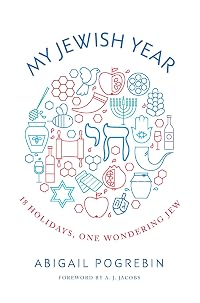
My Jewish Year: 18 Holidays, One Wondering Jew
by Abigail Pogrebin
On This Page
Description
In the tradition of The Year of Living Biblically by A.J. Jacobs and Walking the Bible: A Journey by Land Through the Five Books of Moses by Bruce Feiler comes Abigail Pogrebin's My Jewish Year, a lively chronicle of the author's journey into the spiritual heart of Judaism. Although she grew up following some holiday rituals, Pogrebin realized how little she knew about their foundational purpose and contemporary relevance; she wanted to understand what had kept these holidays alive and show more vibrant, some for thousands of years. Her curiosity led her to embark on an entire year of intensive research, observation, and writing about the milestones on the religious calendar. Whether in search of a roadmap for Jewish life or a challenging probe into the architecture of Jewish tradition, readers will be captivated, educated and inspired by Abigail Pogrebin's My Jewish Year. show lessTags
Recommendations
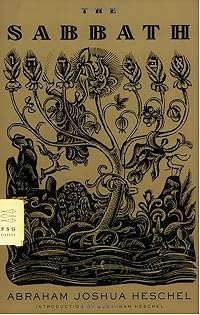
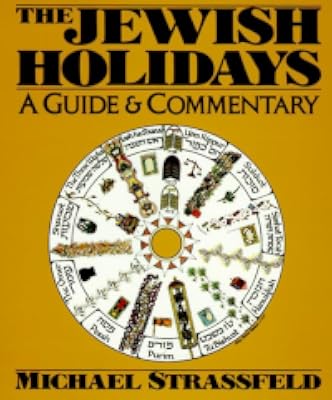
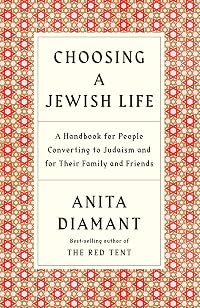
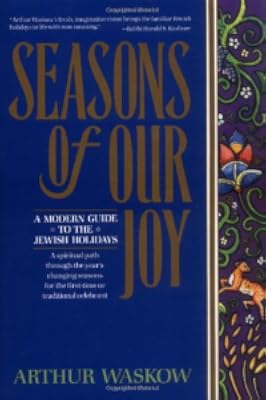









Member Recommendations
Member Reviews
Renowned author, Abigail Pogrebin, a reform Jew whose annual childhood observance covered the High Holidays, Hanukkah, and a couple of Passover Seders – decided to embark upon a yearlong journey into understanding Judaism through 18 holidays. Her book chronicles her adventures in Judaism from Elul, the period of reflection that precedes Rosh Hashanah, to the final Shabbat of the year. Her thoughts, experiences, and feelings derive from interviewing dozens of rabbis and Jewish academics on the Torah and observing the holidays at synagogues of all dominations across New York and Los Angeles. Although Judaism’s Orthodox, Conservative, and Reform branches seem to deepen the divide within the religion, Pogrebin also learned that Judaism show more has the power to unite. While dancing with the Torah during a Simchat Torah celebration, she wonders with awe “Where in the world is there a people that loves a book so much that they dance around with it?” Throughout this engaging read are funny anecdotes intertwined with deep spiritual reflection.
Pogrebin credits the year of study with making her more mindful, compelling her to “look harder at every priority, every relationship, every choice,” and quelling her concern that it’s too late to start living a Jewish life.
Abigail is the daughter of Letty Cottin Pogrebin, author and well-known activist who started Ms. Magazine with Gloria Steinem. show less
Pogrebin credits the year of study with making her more mindful, compelling her to “look harder at every priority, every relationship, every choice,” and quelling her concern that it’s too late to start living a Jewish life.
Abigail is the daughter of Letty Cottin Pogrebin, author and well-known activist who started Ms. Magazine with Gloria Steinem. show less
Abigail Pogrebin grew up in a Jewish home. Her family celebrated Rosh Hashanah, Yom Kippur, Hanukkah, two Passover Seders, and occasional Friday Shabbats. In 2014, she decided she wanted to learn more about her religion and began a one-year mission to learn about the eighteen annual Jewish holidays (including six fast days), when and how they originated, what they are about, and how they are celebrated. During that period, she visited a synagogue (sometime more than one) on every religious holiday and provides a brief history of each, comparing ideas and practices from many different people (mostly rabbis) and sources, primarily in New York City where she lived. She spoke to Orthodox, Conservative, Reform, and Reconstructionist rabbis show more and read about their interpretations of the holidays. The result is MY JEWISH YEAR
Among her many observations, she tells of the relationship between Hanukkah and Passover, each is celebrated for eight days. She quotes a few rabbis about the sexiness of Sukkot. She tells the reasons for the six fast days during the year. She does not delve deeply into Jewish history or discuss the topic of the sections of the Torah read each Shabbat.
On the whole, the book is not judgmental; it is more of a journal of what she saw and learned as well as how her journey affected her, her husband, and her children as well as other relatives and friends.
I attended an afterschool/weekend religious school for twelve years. I went to services almost every Shabbath and for New Year, Yom Kippur, the three festivals (Sukkot, Passover, and Shavuot), Simchat Torah, Hanukkah, and Shavuot. I also served on the board of my Conservative synagogue and as president of the sisterhood. I thought I knew almost everything about my religion. After my mother died, I attended the daily minyan twice a day for eleven months. I learned a lot more, especially about the services themselves. By reading MY JEWISH YEAR, I learned even more.
Some interesting insights: At Yom Kippur, we think about how, on that day, G-d seals our fate for the coming year, naming very specific ways that cause a person’s death. During that year, she thought of how people she knew had died. Commenting on one of her sources for this book, she says how a little anxiety about what will happen to us during the year can have the positive result of encouraging us to act more thoughtfully throughout the entire year.
A person has to be deepened by the Torah; not blinded by it. One cannot hide in a cave and practice the religion. One has to live with other people and engage with them. Rashi became very judgmental after living in a cave for twelve years and had to go back for another year.
We are commanded to pursue justice. She asks each of us to consider what we have done to honor that commandment.
I received a review copy of from Goodreads First Reads two weeks before Passover and immediately turned to that section of the book. In it I found some suggestions to update our Seders as well as two items that can be used for devarim (readings) at shul during the holiday. show less
Among her many observations, she tells of the relationship between Hanukkah and Passover, each is celebrated for eight days. She quotes a few rabbis about the sexiness of Sukkot. She tells the reasons for the six fast days during the year. She does not delve deeply into Jewish history or discuss the topic of the sections of the Torah read each Shabbat.
On the whole, the book is not judgmental; it is more of a journal of what she saw and learned as well as how her journey affected her, her husband, and her children as well as other relatives and friends.
I attended an afterschool/weekend religious school for twelve years. I went to services almost every Shabbath and for New Year, Yom Kippur, the three festivals (Sukkot, Passover, and Shavuot), Simchat Torah, Hanukkah, and Shavuot. I also served on the board of my Conservative synagogue and as president of the sisterhood. I thought I knew almost everything about my religion. After my mother died, I attended the daily minyan twice a day for eleven months. I learned a lot more, especially about the services themselves. By reading MY JEWISH YEAR, I learned even more.
Some interesting insights: At Yom Kippur, we think about how, on that day, G-d seals our fate for the coming year, naming very specific ways that cause a person’s death. During that year, she thought of how people she knew had died. Commenting on one of her sources for this book, she says how a little anxiety about what will happen to us during the year can have the positive result of encouraging us to act more thoughtfully throughout the entire year.
A person has to be deepened by the Torah; not blinded by it. One cannot hide in a cave and practice the religion. One has to live with other people and engage with them. Rashi became very judgmental after living in a cave for twelve years and had to go back for another year.
We are commanded to pursue justice. She asks each of us to consider what we have done to honor that commandment.
I received a review copy of from Goodreads First Reads two weeks before Passover and immediately turned to that section of the book. In it I found some suggestions to update our Seders as well as two items that can be used for devarim (readings) at shul during the holiday. show less
This was interesting, but not well edited. Her perspective on the holidays was somewhat unusual and very personal. I doubt a non Jew would like this book, and I also doubt it would motivate anyone to observe the holidays more fervently than they already do.
Not really my thing, but interesting.
Ratings
Members
- Recently Added By
Lists

Judaism & Israel
104 works; 2 members
Author Information

All Editions
Awards and Honors
Common Knowledge
- Canonical title
- My Jewish Year: 18 Holidays, One Wondering Jew
- Original title
- My Jewish Year: 18 Holidays, One Wondering Jew
- Original publication date
- 2017
- Important places
- New York, New York, USA
- First words
- It was a sure conversation-stopper: "This year I'll be researching, observing, and writing about every single Jewish holiday on the calendar."
- Quotations
- Every blade of grass has its own poem.
- Last words
- (Click to show. Warning: May contain spoilers.)Thank you for taking the trip with me.
- Blurbers
- Sarna, Jonathan D.; Telushkin, Rabbi Joseph; Malina, Joshua; Lauren, Bush Lauren; Eisner, Jane; Shapiro, Dani
Classifications
Statistics
- Members
- 157
- Popularity
- 210,487
- Reviews
- 4
- Rating
- (3.96)
- Languages
- English
- Media
- Paper, Audiobook, Ebook
- ISBNs
- 3
- ASINs
- 1