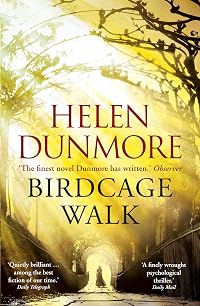
Birdcage Walk
by Helen Dunmore
On This Page
Description
It is 1792 and Europe is seized by political turmoil and violence. Lizzie Fawkes has grown up in Radical circles where each step of the French Revolution is followed with eager idealism. But she has recently married John Diner Tredevant, a property developer who is heavily invested in Bristol's housing boom, and he has everything to lose from social upheaval and the prospect of war. Soon his plans for a magnificent terrace built above the two-hundred-foot drop of the Gorge come under threat. show more Tormented and striving Diner believes that Lizzie's independent, questioning spirit must be coerced and subdued. She belongs to him: law and custom confirm it, and she must live as he wants--his passion for Lizzie darkening until she finds herself dangerously alone. Weaving a deeply personal and moving story with a historical moment of critical and complex importance, Birdcage Walk is an unsettling and brilliantly tense drama of public and private violence, resistance and terror from one of our greatest storytellers. show lessTags
Recommendations

















Member Reviews
‘’Who would look at this place and desire it?’’
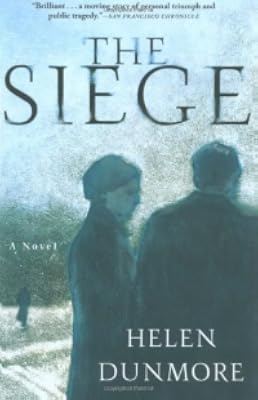
‘’The Siege’’ by Helen Dunmore was one of the very first books I read in English, when I was 18. Since then, she has become one of the authors whose work I closely follow. Her stories are raw, with a distinctive kind of beauty, sometimes full of a kind of discomforting honesty as in the case of ‘’Talking to the Dead’’. In ‘’Birdcage Walk’’, she provides one more excellent example of Historical Fiction.
The original Birdcage Walk is a famous street in Westminster, in London, but here, Dunmore transfers it to Bristol. We find ourselves in 1792, in an era of violence, of political and social turmoil caused by the aftermath of the French Revolution. Our main show more character is a young woman named Lizzie Fawkes who was born to a mother of radical intellectual beliefs. This creates significant problems to her marriage with John Diner Tredevant whose conservative convictions and worries about the major difficulties caused in his job by the turbulent times, along with a dark secret of his past compose a suffocating environment for Lizzie.
I’ve always found the era of the French Revolution magnetizing and I haven't had the chance to read a great number of novels dealing with its impact on other European countries. In ‘’Birdcage Walk’’, the consequences of the Revolution and the beginning of the Reign of Terror blend in the narration in a coherent, beautiful way. We witness the spreading of the news in England, and the fear caused by the upheaval in the sovereign monarchy of the Albion. Not to mention, the dread of a possible war between the two countries. I was pleasantly surprised to see the assassination of Jean-Paul Marat and the trial of Charlotte Corday being included in the story,an event that continues to fascinate and attract much speculation
So,when you’re dealing with such an important, rich historical period, there's always the risk that your plot and characters may be overshadowed. This isn't the case here. Without presenting a large cast of characters, Dunmore creates realistically problematic protagonists, people that you can love, hate and connect to.
‘’You speak too freely.’’
The focus is on Lizzie. She is clever, innocent, but fully aware of her surroundings and the traps that lay before her. She is a very earthly, very realistic character. A woman who tries to balance her love for her family and her feelings for her husband. Diner is, to put it simply, a despicable character.I may sound too harsh or dogmatic, but I hated him from the very first moment and my hatred grew with each page. He is cruel, cold, heartless. He wants to control Lizzie to the fullest. What she eats, whom she sees,where she goes, when she smiles, why she smiles, everything. He is a toxic, suffocating individual. It seemed to me that between him and Lizzie there was only a physical, sexual connection, dark and unhealthy. This is a man who’s incapable of love of any kind.
The secondary characters are very well-drawn and very interesting.Julia, Lizzie’s mother, a woman who follows her convictions to the end, Hannah, the nurse, the rock of the household, Augustus, Lizzie’s stepfather, sensitive and with his head in the clouds, Phillo,the stern but faithful young maid, and Will, a young, radical poet, a dreamer. However, the character that casts a long,dark shadow in the plot, is Lucie, Diner’s first wife and the spectre that haunts Lizzie’s mind and marriage.
This brings me to the structure and the themes of the novel.There is the Prelude that I found so engaging.The story starts at a graveyard, following a middle-aged man and a striking discovery by his dog,The powerful presence of Death remains tangible during the first stages of the book, and the reader already begins to wonder. Does Dunmore give certain things away too early? Yes, she does and this adds to that gloomy, foreboding feeling of impending danger that shimmers constantly as the chapters fly. There is a distinctive echo of Du Maurier's ‘’Rebecca’’, the similarities are unmistakable as the first wife's shadow falls on Lizzie, the gloomy,haunting landscape that surrounds her, the dilapidated estate begging for an owner that slowly becomes a prison...
Those who are already fans of Dunmore's writing are certain to enjoy ‘’Birdcage Walk’’. The ones who wish to familiarize themselves with her work will find a perfect introduction in this novel, and a powerful example of well-written Historical Fiction.
Many thanks to Grove Atlantic for providing me with an ARC copy through NetGalley in exchange for an honest review. show less
‘’The Siege’’ by Helen Dunmore was one of the very first books I read in English, when I was 18. Since then, she has become one of the authors whose work I closely follow. Her stories are raw, with a distinctive kind of beauty, sometimes full of a kind of discomforting honesty as in the case of ‘’Talking to the Dead’’. In ‘’Birdcage Walk’’, she provides one more excellent example of Historical Fiction.
The original Birdcage Walk is a famous street in Westminster, in London, but here, Dunmore transfers it to Bristol. We find ourselves in 1792, in an era of violence, of political and social turmoil caused by the aftermath of the French Revolution. Our main show more character is a young woman named Lizzie Fawkes who was born to a mother of radical intellectual beliefs. This creates significant problems to her marriage with John Diner Tredevant whose conservative convictions and worries about the major difficulties caused in his job by the turbulent times, along with a dark secret of his past compose a suffocating environment for Lizzie.
I’ve always found the era of the French Revolution magnetizing and I haven't had the chance to read a great number of novels dealing with its impact on other European countries. In ‘’Birdcage Walk’’, the consequences of the Revolution and the beginning of the Reign of Terror blend in the narration in a coherent, beautiful way. We witness the spreading of the news in England, and the fear caused by the upheaval in the sovereign monarchy of the Albion. Not to mention, the dread of a possible war between the two countries. I was pleasantly surprised to see the assassination of Jean-Paul Marat and the trial of Charlotte Corday being included in the story,an event that continues to fascinate and attract much speculation
So,when you’re dealing with such an important, rich historical period, there's always the risk that your plot and characters may be overshadowed. This isn't the case here. Without presenting a large cast of characters, Dunmore creates realistically problematic protagonists, people that you can love, hate and connect to.
‘’You speak too freely.’’
The focus is on Lizzie. She is clever, innocent, but fully aware of her surroundings and the traps that lay before her. She is a very earthly, very realistic character. A woman who tries to balance her love for her family and her feelings for her husband. Diner is, to put it simply, a despicable character.I may sound too harsh or dogmatic, but I hated him from the very first moment and my hatred grew with each page. He is cruel, cold, heartless. He wants to control Lizzie to the fullest. What she eats, whom she sees,where she goes, when she smiles, why she smiles, everything. He is a toxic, suffocating individual. It seemed to me that between him and Lizzie there was only a physical, sexual connection, dark and unhealthy. This is a man who’s incapable of love of any kind.
The secondary characters are very well-drawn and very interesting.Julia, Lizzie’s mother, a woman who follows her convictions to the end, Hannah, the nurse, the rock of the household, Augustus, Lizzie’s stepfather, sensitive and with his head in the clouds, Phillo,the stern but faithful young maid, and Will, a young, radical poet, a dreamer. However, the character that casts a long,dark shadow in the plot, is Lucie, Diner’s first wife and the spectre that haunts Lizzie’s mind and marriage.
This brings me to the structure and the themes of the novel.There is the Prelude that I found so engaging.The story starts at a graveyard, following a middle-aged man and a striking discovery by his dog,The powerful presence of Death remains tangible during the first stages of the book, and the reader already begins to wonder. Does Dunmore give certain things away too early? Yes, she does and this adds to that gloomy, foreboding feeling of impending danger that shimmers constantly as the chapters fly. There is a distinctive echo of Du Maurier's ‘’Rebecca’’, the similarities are unmistakable as the first wife's shadow falls on Lizzie, the gloomy,haunting landscape that surrounds her, the dilapidated estate begging for an owner that slowly becomes a prison...
Those who are already fans of Dunmore's writing are certain to enjoy ‘’Birdcage Walk’’. The ones who wish to familiarize themselves with her work will find a perfect introduction in this novel, and a powerful example of well-written Historical Fiction.
Many thanks to Grove Atlantic for providing me with an ARC copy through NetGalley in exchange for an honest review. show less
When Julia Fawkes, radical writer, dies after childbirth, her adult daughter Lizzie is left bereft. Newly married to a widower, Diner, Lizzie has to support her husband and raise her half-brother with only the help of her servant Philo. She comes into contact with a young poet but her suspicious husband thinks that more is going on than a mere friendship. Meanwhile Diner's business is collapsing, he has invested in the building of a row of houses in Bristol but the French Revolution means that no-one is interested in buying.
This is such a subtlety written book that both the minutiae of everyday Georgian life seems so much more important than the cataclysmic events across the channel and yet the ramifications are felt deeply. At one show more level the story is that of a young woman who discovers secrets about her husband that lead her into danger. At another level the radical followers of Thomas Paine are powerless to support their French friends as chaos reigns. The only jarring note for me was the modern day introduction. Whilst I know it was there to set the scene and introduce the reader to Julia Fawkes as a writer it was never revisited and felt superfluous. show less
This is such a subtlety written book that both the minutiae of everyday Georgian life seems so much more important than the cataclysmic events across the channel and yet the ramifications are felt deeply. At one show more level the story is that of a young woman who discovers secrets about her husband that lead her into danger. At another level the radical followers of Thomas Paine are powerless to support their French friends as chaos reigns. The only jarring note for me was the modern day introduction. Whilst I know it was there to set the scene and introduce the reader to Julia Fawkes as a writer it was never revisited and felt superfluous. show less
Birdcage Walk is not what I expected. I was expecting more tension, more suspense, more action. Instead, it is a very understated story. There is very little action. What little there is leans towards the anti-climactic. The whole novel is very…British…in that not much happens and when something does happen, it leaves you underwhelmed.
Some might say that this simply means it is a thinking person’s novel, but Ms. Dunmore leaves very little for readers to ponder. Most of the novel occurs in Lizzie’s head, as she questions her divided loyalties and scrutinizes her husband’s actions. This means Lizzie does our thinking for us. Making things worse, there are large pieces of the puzzle missing, so as Lizzie frets about something – show more which she does a bit too often – we never understand the entire context. Her mother and stepfather are enlightened thinkers, but we never truly understand what this means. Frequently, Lizzie references something in her past, something we can only glean through brief and incomplete sketches. Thus, we never truly get to understand Lizzie, her relationship with Diner, or her dreams and aspirations.
The one thing that kept me reading the novel was Ms. Dunmore’s prose. From the opening prologue, I was swept away by the beauty of her words. Her descriptive passages are exquisite. Thankfully, given how much of the novel revolves around the gorge and its views, there are lot of them. This keeps a reader’s interest when it would be so easy to quit.
If Ms. Dunmore’s character-building were as excellent as her prose, Birdcage Walk would be a much stronger novel. Sadly, weak characters and a humdrum plot make it a snoozefest of a novel. The bloody revolution in France is a distant terror. There is no mention of Lizzie’s radicalism, and given her upbringing, we have no idea what drew her towards a more traditional relationship like her marriage with Diner. We never really get to know Lizzie at all. When you don’t understand the main character and when the entire novel is in the main character’s mind, it is a recipe for a slow novel. That is exactly what it is. show less
Some might say that this simply means it is a thinking person’s novel, but Ms. Dunmore leaves very little for readers to ponder. Most of the novel occurs in Lizzie’s head, as she questions her divided loyalties and scrutinizes her husband’s actions. This means Lizzie does our thinking for us. Making things worse, there are large pieces of the puzzle missing, so as Lizzie frets about something – show more which she does a bit too often – we never understand the entire context. Her mother and stepfather are enlightened thinkers, but we never truly understand what this means. Frequently, Lizzie references something in her past, something we can only glean through brief and incomplete sketches. Thus, we never truly get to understand Lizzie, her relationship with Diner, or her dreams and aspirations.
The one thing that kept me reading the novel was Ms. Dunmore’s prose. From the opening prologue, I was swept away by the beauty of her words. Her descriptive passages are exquisite. Thankfully, given how much of the novel revolves around the gorge and its views, there are lot of them. This keeps a reader’s interest when it would be so easy to quit.
If Ms. Dunmore’s character-building were as excellent as her prose, Birdcage Walk would be a much stronger novel. Sadly, weak characters and a humdrum plot make it a snoozefest of a novel. The bloody revolution in France is a distant terror. There is no mention of Lizzie’s radicalism, and given her upbringing, we have no idea what drew her towards a more traditional relationship like her marriage with Diner. We never really get to know Lizzie at all. When you don’t understand the main character and when the entire novel is in the main character’s mind, it is a recipe for a slow novel. That is exactly what it is. show less
This story, set in 1792 Bristol England, was my first introduction to the poetic and illustrative writing of Helen Dunmore and sadly, this book was to be her last. It opens with a superfluous "Prelude" set in current day Bristol in an attempt to set the scene. It is followed by a disturbing covert unmarked burial of a woman. Such an act provides such tension that the reader is forever wondering when the other shoe will drop.
Lizzie, the heroin of this story, has recently married a widower who is controlling and rather needy. He is a builder of grand homes and holds grand dreams of his own extraordinary success. She, the only child of a woman widowed very early on, had always found her strength through her mother's forward vision, drive show more for equality and mastery of language through writing. Lizzie is adrift with the passing of her mother resulting in the faltering of her own centering and compass.
Meanwhile, the French Revolution is raging on. The Terror is causing many to flee to other shores. The English are on tenterhooks and hoping that war does not reach its own shores. The crumbling civil society of France is a metaphor for the condition of Lizzie's marriage and the building project.
Much of the story is told from within Lizzie's mind which at times plays tricks on her and festers doubt within her. At the moment she believes to have clarity, the pace of story picks up quickly and propels forward. However, in this reader's opinion, the climax is not worthy of the build up to it. It's all rather understated.
I am grateful to publisher Grove Atlantic and Goodreads First Reads for having provided a free copy of this book. Their generosity, however, did not influence this review - the words of which are mine alone. show less
Lizzie, the heroin of this story, has recently married a widower who is controlling and rather needy. He is a builder of grand homes and holds grand dreams of his own extraordinary success. She, the only child of a woman widowed very early on, had always found her strength through her mother's forward vision, drive show more for equality and mastery of language through writing. Lizzie is adrift with the passing of her mother resulting in the faltering of her own centering and compass.
Meanwhile, the French Revolution is raging on. The Terror is causing many to flee to other shores. The English are on tenterhooks and hoping that war does not reach its own shores. The crumbling civil society of France is a metaphor for the condition of Lizzie's marriage and the building project.
Much of the story is told from within Lizzie's mind which at times plays tricks on her and festers doubt within her. At the moment she believes to have clarity, the pace of story picks up quickly and propels forward. However, in this reader's opinion, the climax is not worthy of the build up to it. It's all rather understated.
I am grateful to publisher Grove Atlantic and Goodreads First Reads for having provided a free copy of this book. Their generosity, however, did not influence this review - the words of which are mine alone. show less
Whether it’s the Nazi’s devastating winter siege of Leningrad in 1941 (The Siege), spies and Cold War drama in 1960s London (Exposure), or the effects of the French Revolution on the people of England in 1792, Helen Dunmore’s historical fiction enlightens and captivates. In her latest and sadly, last novel, Birdcage Walk, Ms. Dunmore chose the period of the French Revolution as her timeframe. John Diner Tredevant is a builder and land speculator. He has borrowed money to build a terrace of houses overlooking The Gorge at a most unpropitious time. His wife Lizzie is the daughter of idealists whose support of the French Revolution puts them in constant danger. As Diner’s business continues to fail and his debtors close in, his show more moods become more erratic and he questions Lizzie’s independence. His past begins to intrude on their present and as she finds out more, Lizzie begins to fear for more than their ability to withstand these financial blows to their future. Birdcage Walk is a dark and brooding book, most likely drawing its nature from the excellently drawn character of Diner. I had less feeling for Lizzie, whose innocence and immaturity I found grating at times. The conversations that take place at her stepfather’s house give good context to the current events of the period. Helen Dunmore provides an informative Afterword that explains her motivation behind this work, and an insight into The Siege and Exposure as well. When you read one of her historical novels, you come away with far more than a story. You’ve been given a segment of history. show less
‘Birdcage Walk’ is the last novel by the incomparable Helen Dunmore who moved between subjects and periods with ease, setting the dramatic minutiae of people’s lives against the huge social events of the time. War, spies and, in ‘Birdcage Walk’, the French Revolution and how its impacts on a family in Bristol.
The novel opens as a walker and his dog discover a hidden grave in the undergrowth of a derelict graveyard. He reads the inscription to Julia Elizabeth Fawkes but subsequent research finds no information about her. This is followed by a short night-time scene in 1789 of a man burying a body in woods. We do not know the location, his identity or that of the body. How are these two things connected? For the first half of show more the book, I forgot these two short scenes until growing menace made me recall it and read faster.
It is 1792. This is the story of young wife Lizzie Fawkes, new wife of Bristol builder John Diner Tredevant and daughter of writer Julia Fawkes. Diner, as he is known, is developing a grand terrace of houses on the cliffs at Clifton Gorge, a development for which he specifies the best, borrowing against the potential sales. He is not keen on the company kept by his wife’s mother, seeing them as seditious socialists agitating in support of the French revolutionaries. He is aware of the potential cost to England, and his ambitious development, if the trouble in France turns into war. Lizzie is torn between two worlds, loyal to her Mammie and cautious about Augustus, her step-father and political pamphleteer, but aware her husband is under financial pressure. Diner is derided as a capitalist by Augustus and his writer friends. But Lizzie is proud, she chose her husband and remains loyal to him. But that loyalty and her young impressionable love for him are challenged. As news from Paris gets grimmer, Diner’s mood darkens. He must lay off workers, creditors chase payment, and he has night sweats. Insistent that independent Lizzie is his now, that he owns her and everything of hers, he is almost overpowering in his need to keep her close. She begins to fear he is having her followed and so disguises herself as she walks about town, lying about her visits home. And then there is the mystery of Diner’s first wife, Lucie, who died in France but of whom he does not speak. Lizzie fears he still loves Lucie.
This is a gently-written novel about tumultuous times in Europe, when the shadow of the unknown and fear – from the horrors in Paris to Diner’s secrets and his dark brooding nature – cannot be escaped. When the moment to run arrives, will Lizzie recognise it? If she does run, where to and who with? And will she know if she is running towards more danger? This is an expertly-written historical novel, rich in period detail, although the title is mentioned fleetingly and not referred to again.
Read more of my book reviews at http://www.sandradanby.com/book-reviews-a-z/ show less
The novel opens as a walker and his dog discover a hidden grave in the undergrowth of a derelict graveyard. He reads the inscription to Julia Elizabeth Fawkes but subsequent research finds no information about her. This is followed by a short night-time scene in 1789 of a man burying a body in woods. We do not know the location, his identity or that of the body. How are these two things connected? For the first half of show more the book, I forgot these two short scenes until growing menace made me recall it and read faster.
It is 1792. This is the story of young wife Lizzie Fawkes, new wife of Bristol builder John Diner Tredevant and daughter of writer Julia Fawkes. Diner, as he is known, is developing a grand terrace of houses on the cliffs at Clifton Gorge, a development for which he specifies the best, borrowing against the potential sales. He is not keen on the company kept by his wife’s mother, seeing them as seditious socialists agitating in support of the French revolutionaries. He is aware of the potential cost to England, and his ambitious development, if the trouble in France turns into war. Lizzie is torn between two worlds, loyal to her Mammie and cautious about Augustus, her step-father and political pamphleteer, but aware her husband is under financial pressure. Diner is derided as a capitalist by Augustus and his writer friends. But Lizzie is proud, she chose her husband and remains loyal to him. But that loyalty and her young impressionable love for him are challenged. As news from Paris gets grimmer, Diner’s mood darkens. He must lay off workers, creditors chase payment, and he has night sweats. Insistent that independent Lizzie is his now, that he owns her and everything of hers, he is almost overpowering in his need to keep her close. She begins to fear he is having her followed and so disguises herself as she walks about town, lying about her visits home. And then there is the mystery of Diner’s first wife, Lucie, who died in France but of whom he does not speak. Lizzie fears he still loves Lucie.
This is a gently-written novel about tumultuous times in Europe, when the shadow of the unknown and fear – from the horrors in Paris to Diner’s secrets and his dark brooding nature – cannot be escaped. When the moment to run arrives, will Lizzie recognise it? If she does run, where to and who with? And will she know if she is running towards more danger? This is an expertly-written historical novel, rich in period detail, although the title is mentioned fleetingly and not referred to again.
Read more of my book reviews at http://www.sandradanby.com/book-reviews-a-z/ show less
It's 1789, and all of Europe seems caught up in revolutionary fever. Lizzie's mother, Julia Fawkes, is a well-know activist writer who raised her daughter alone after her young husband's death. Now Lizzy has married John Diner Tradevant, an ambitious builder. Diner (as he prefers to be called) is an overbearing, obsessive husband, jealous of Lizzie's visitors, her own visits to the home of her pregnant mother and her new husband, and even her infrequent ventures into town. (Not exactly a subtle tip-off to where this plot is going.) He wants no children because, he tells her, he doesn't want to share her with anyone else. Diner also has little to say about his first wife, Lucie, except that she died in France. Fears of a war with France show more have put would-be buyers on edge, and Diner's business is going broke. When Lizzie takes in her newborn stepbrother, things go from bad to worse.
I was quite disappointed in this novel, only the second of Dunmore's that I have read. The story was so transparent that I couldn't wait for it to end. What saved this book from a lower rating was Dunmore's very fine writing and the way she creates a particular atmosphere and an underlying commentary on the persistent influence of mothers upon their daughters. show less
I was quite disappointed in this novel, only the second of Dunmore's that I have read. The story was so transparent that I couldn't wait for it to end. What saved this book from a lower rating was Dunmore's very fine writing and the way she creates a particular atmosphere and an underlying commentary on the persistent influence of mothers upon their daughters. show less
Members
- Recently Added By
Lists

Books Read in 2017
4,249 works; 129 members
Author Information

70+ Works 8,488 Members
Helen Dunmore was born in Beverley, England on December 12, 1952. She received a degree in English from the University of York in 1973. She taught English in Finland before moving to Bristol, England, where she taught literature and creative writing. She was a poet, novelist, and children's author. Her collections of poetry include The Apple Fall, show more The Raw Garden, and Inside the Wave. Her books include Talking to the Dead, Your Blue-Eyed Boy, House of Orphans, The Greatcoat, The Siege, The Betrayal, The Lie, and Birdcage Walk. She won the McKitterick Prize for debut novelists in 1994 for Zennor in Darkness, the inaugural Orange Prize for Fiction in 1996 for A Spell of Winter, and the Costa Award for Poetry in 2017 for Inside the Wave. She died of cancer on June 5, 2017 at the age of 64. (Bowker Author Biography) show less
Awards and Honors
Awards
Distinctions
The Guardian Book of the Day (2017-03-17)
Common Knowledge
- Important places
- Bristol, England, UK
- Important events
- French Revolution
Classifications
Statistics
- Members
- 315
- Popularity
- 101,117
- Reviews
- 16
- Rating
- (3.60)
- Languages
- English
- Media
- Paper, Audiobook, Ebook
- ISBNs
- 18
- ASINs
- 5