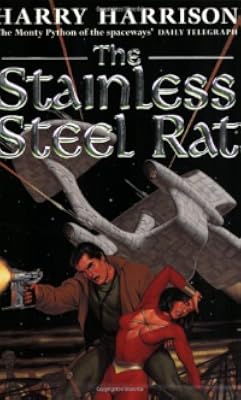
The Stainless Steel Rat
by Harry Harrison
The Stainless Steel Rat (01), The Stainless Steel Rat: Chronological (04)
On This Page
Description
Jim DiGriz is caught during one of his crimes and recruited into the Special Corps. Boring, routine desk work during his probationary period results in his discovering that someone is building a battleship, thinly disguised as an industrial vessel. In the peaceful League no one has battleships anymore, so the builder of this one would be unstoppable. DiGriz' hunt for the guilty becomes a personal battle between himself and the beautiful but deadly Angelina, who is planning a coup on one of show more the feudal worlds. DiGriz' dilemma is whether he will turn Angelina over to the Special Corps, or join with her, since he has fallen in love with her. show lessTags
Recommendations








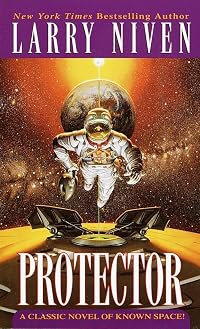
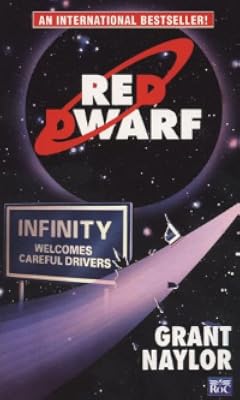


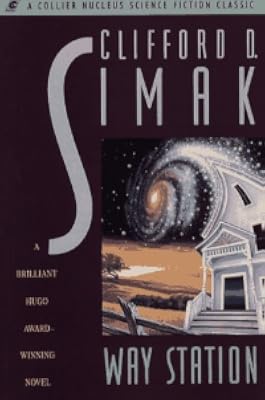
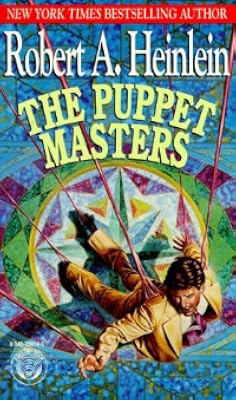






Member Recommendations
codeeater Die nicht ganz todernsten, episoden-haften Geschichten von Pirx erinnern mich an Stahlratte.

by anonymous user

Member Reviews
Jim DiGriz is a likeable a con man, a smooth, slippery rat of a guy, a stainless steel rat. Crime is rare in his world and a criminal of DiGriz’ skills is difficult catch. But eventually he does get caught and it’s all over for him. Or is it? Soon he is recruited into the Special Corps, a law enforcement group made up of ex-criminals. It takes a criminal to catch a criminal. In no time Jim is chasing after a thief that has stolen an industrial ship with the intent to build it into a battleship. The fun starts when Jim catches up with the thief, the beautiful Angelina. He has met his match.
This book was originally published in 1961 and is now considered classic sci-fi. It is book one in a series of Stainless Steel Rat books. If you show more are of a certain age and you read science fiction in your younger days, chances are good you already know about these books. Somehow I missed out on this series. Oh, I knew about them I just never got around to reading them. When I saw book one had been reissued in audio book I grabbed a copy from the library to find out what I had been missing.
This is a book with a sense of humor. The story is not deep and I don’t think it was intended to be. I laughed out loud more than a few times at the sometimes corny and sometimes clever dialog. Science fiction doesn’t have to be technical or exist in a complex, carefully built world. It can be entertaining, fun and campy. The audio was nicely performed by Phil Gigante. I enjoyed his interpretations and portrayal of the characters. At only 4 CDs for the unabridged version, this is a short book and easy to listen to.
Although dated the story has held up fairly well. Thankfully attitudes towards women and the way they are portrayed have, for the most part, changed. While Angelina was initially portrayed as brilliant and strong she quickly turned into the stereotypical femme fatal which had me gritting my teeth and grumbling gaaaah, gaaaah! Setting that aside, it was enjoyable and I’ll be listening to the next book in the series. show less
This book was originally published in 1961 and is now considered classic sci-fi. It is book one in a series of Stainless Steel Rat books. If you show more are of a certain age and you read science fiction in your younger days, chances are good you already know about these books. Somehow I missed out on this series. Oh, I knew about them I just never got around to reading them. When I saw book one had been reissued in audio book I grabbed a copy from the library to find out what I had been missing.
This is a book with a sense of humor. The story is not deep and I don’t think it was intended to be. I laughed out loud more than a few times at the sometimes corny and sometimes clever dialog. Science fiction doesn’t have to be technical or exist in a complex, carefully built world. It can be entertaining, fun and campy. The audio was nicely performed by Phil Gigante. I enjoyed his interpretations and portrayal of the characters. At only 4 CDs for the unabridged version, this is a short book and easy to listen to.
Although dated the story has held up fairly well. Thankfully attitudes towards women and the way they are portrayed have, for the most part, changed. While Angelina was initially portrayed as brilliant and strong she quickly turned into the stereotypical femme fatal which had me gritting my teeth and grumbling gaaaah, gaaaah! Setting that aside, it was enjoyable and I’ll be listening to the next book in the series. show less
I think the best thing I can say about this book is that it does not age well.
In the far future (which, I think would be about now, although I'm willing to forgive the book this bit), people have been selectively bred to be socially conscious and responsible. The few malcontents that are born are weeded out fairly quickly, so that there is virtually no crime. So the whole wide world/civilization is fairly bland, with few exceptions. The main character, Jim diGriz, is one of those exceptions, and thanks to his criminal "ability" is recruited into being a kind of anti-crime agent to stop crimes and apprehend other criminals.
Which is all well and good, if it weren't for the fact that diGriz is possibly one of the most irritating main show more characters I've had the misfortune to read. He's brash and amazing and clever and witty and oh-so-awesome. And one note (although all characters are dimensionless). And then there's the "gentle" misogyny rampant through the book. There is no world building, there are no sane motivations for any of the characters. The world is, because the author says so. The characters just do, because the author writes them to.
The upside is that this book is fast. The action is non-stop, and since the book is so short, that means it doesn't take long to get through, and there is no lag-time that makes you want to put down the book.
It's decent, I suppose. It feels like a pulp-sci-fi from the 60s. So take it for what it is. If you enjoy the campy white-knight man rescuing the world from the evil clutches of a seductress-enemy that takes no direct action, but uses her "feminine wiles" to ensnare men to her bidding, then go for it. I won't be continuing the series. show less
In the far future (which, I think would be about now, although I'm willing to forgive the book this bit), people have been selectively bred to be socially conscious and responsible. The few malcontents that are born are weeded out fairly quickly, so that there is virtually no crime. So the whole wide world/civilization is fairly bland, with few exceptions. The main character, Jim diGriz, is one of those exceptions, and thanks to his criminal "ability" is recruited into being a kind of anti-crime agent to stop crimes and apprehend other criminals.
Which is all well and good, if it weren't for the fact that diGriz is possibly one of the most irritating main show more characters I've had the misfortune to read. He's brash and amazing and clever and witty and oh-so-awesome. And one note (although all characters are dimensionless). And then there's the "gentle" misogyny rampant through the book. There is no world building, there are no sane motivations for any of the characters. The world is, because the author says so. The characters just do, because the author writes them to.
The upside is that this book is fast. The action is non-stop, and since the book is so short, that means it doesn't take long to get through, and there is no lag-time that makes you want to put down the book.
It's decent, I suppose. It feels like a pulp-sci-fi from the 60s. So take it for what it is. If you enjoy the campy white-knight man rescuing the world from the evil clutches of a seductress-enemy that takes no direct action, but uses her "feminine wiles" to ensnare men to her bidding, then go for it. I won't be continuing the series. show less
ORIGINALLY POSTED AT Fantasy Literature.
"At a certain stage, the realization strikes through that one must either live outside of society’s bonds or die of absolute boredom. There is no future or freedom in the circumscribed life and the only other life is complete rejection of the rules. There is no longer room for the soldier of fortune or the gentleman adventurer who can live both within and outside of society. Today it is all or nothing. To save my own sanity, I chose nothing."
In the future society where Jim diGriz lives, most criminal and anti-social behavior has been weeded out of the human genome. It’s hard for bad guys to hide themselves in this antiseptic society — in order to survive, you gotta be a stainless steel rat, show more and Slippery Jim diGriz is a really sneaky one. He’s exceptionally cunning but he’s not murderous, so when he finally gets caught, instead of fixing him, the intergalactic cops decide to recruit him. Jim’s pretty conflicted about working for the good guys, but soon he’s on his first case after he figures out that somebody evil is building a battleship.
The Stainless Steel Rat is, simply, tons of fun. It’s quick-paced, action-packed, and funny. The villains are purposely overdone in that cheesy James Bond / Batman kind of way, but Harry Harrison doesn’t skimp on Jim diGriz’s character. The Stainless Steel Rat is one of those outlaws that you just can’t help but root for, especially when he’s always amused with himself and his circumstances. For a science fiction novel written in 1961, The Stainless Steel Rat ages well, too.
I listened to Brilliance Audio’s version read by Phil Gigante who gives a lively performance. I’m sure that a lot of my chuckling was caused by Mr. Gigante’s interpretation of diGriz’s personality. In one scene, diGriz takes a drug that’s supposed to help him understand the mind of a sociopath. This was beautifully and hilariously portrayed by Mr. Gigante. Brilliance Audio will be producing several more Stainless Steel Rat novels read by Phil Gigante. I will definitely be picking those up! show less
"At a certain stage, the realization strikes through that one must either live outside of society’s bonds or die of absolute boredom. There is no future or freedom in the circumscribed life and the only other life is complete rejection of the rules. There is no longer room for the soldier of fortune or the gentleman adventurer who can live both within and outside of society. Today it is all or nothing. To save my own sanity, I chose nothing."
In the future society where Jim diGriz lives, most criminal and anti-social behavior has been weeded out of the human genome. It’s hard for bad guys to hide themselves in this antiseptic society — in order to survive, you gotta be a stainless steel rat, show more and Slippery Jim diGriz is a really sneaky one. He’s exceptionally cunning but he’s not murderous, so when he finally gets caught, instead of fixing him, the intergalactic cops decide to recruit him. Jim’s pretty conflicted about working for the good guys, but soon he’s on his first case after he figures out that somebody evil is building a battleship.
The Stainless Steel Rat is, simply, tons of fun. It’s quick-paced, action-packed, and funny. The villains are purposely overdone in that cheesy James Bond / Batman kind of way, but Harry Harrison doesn’t skimp on Jim diGriz’s character. The Stainless Steel Rat is one of those outlaws that you just can’t help but root for, especially when he’s always amused with himself and his circumstances. For a science fiction novel written in 1961, The Stainless Steel Rat ages well, too.
I listened to Brilliance Audio’s version read by Phil Gigante who gives a lively performance. I’m sure that a lot of my chuckling was caused by Mr. Gigante’s interpretation of diGriz’s personality. In one scene, diGriz takes a drug that’s supposed to help him understand the mind of a sociopath. This was beautifully and hilariously portrayed by Mr. Gigante. Brilliance Audio will be producing several more Stainless Steel Rat novels read by Phil Gigante. I will definitely be picking those up! show less
Harry Harrison’s The Stainless Steel Rat is one of those SF classics I’ve known about for years (probably since the days when I was 8 or 9 and scanning the family bookcases for amusingly odd titles) but never gotten around to reading. Its reputation far, far preceded it: A short, fast, funny read about a roguish master criminal loose in a far-future galactic empire. All that sounded like a good match for a January night (or two), so I pulled it off the shelf.
The 83 pages I made it through before giving up are filled with incidents, but – although they occur in a non-random order and one leads logically to the next – there’s no sense that they add up to an actual plot. I had the sense that the hero was after something more show more specific than freedom, wealth, and a good cigar . . . but no clue what that was, or how he intended to get it.
The far-future empire in which all this takes place is lightly sketched at best: a mixture of lightly disguised late-50s American cities and the conceptual furniture of decades of galactic-empire tales (faster-than-light travel, psi-based communications, and sentient robots). The supporting characters are two-dimensional at best, with none of the vibrant eccentricity that writers like Donald Westlake and Carl Hiaasen brought to the comic crime novel, or that Mike Resnick brought to his own sprawling galactic empire.
And that brings me to “Slippery Jim” Di Griz, who – despite his reputation as a swaggering antihero – came off, for me, as oddly colorless and humorless. He has the disregard for rules and authority that befits a Trickster, but not the playfulness or the exuberant delight in his own cleverness. He never seemed to be having any fun, and – by page 83 – neither was I. show less
The 83 pages I made it through before giving up are filled with incidents, but – although they occur in a non-random order and one leads logically to the next – there’s no sense that they add up to an actual plot. I had the sense that the hero was after something more show more specific than freedom, wealth, and a good cigar . . . but no clue what that was, or how he intended to get it.
The far-future empire in which all this takes place is lightly sketched at best: a mixture of lightly disguised late-50s American cities and the conceptual furniture of decades of galactic-empire tales (faster-than-light travel, psi-based communications, and sentient robots). The supporting characters are two-dimensional at best, with none of the vibrant eccentricity that writers like Donald Westlake and Carl Hiaasen brought to the comic crime novel, or that Mike Resnick brought to his own sprawling galactic empire.
And that brings me to “Slippery Jim” Di Griz, who – despite his reputation as a swaggering antihero – came off, for me, as oddly colorless and humorless. He has the disregard for rules and authority that befits a Trickster, but not the playfulness or the exuberant delight in his own cleverness. He never seemed to be having any fun, and – by page 83 – neither was I. show less
Interstellar rogue Slippery Jim diGriz pursues Angelina, his kidnapped wife, through alternate universes when she vanishes from a fraudulent Temple of Eternal Truth. Jim and his twin sons tackle a villainous physicist using technology to create literal Heaven and Hell environments.
Angelina disappears while investigating a cult that charges wealthy clients for a glimpse of paradise, forcing Jim out of his comfortable retirement on a pleasure planet. Professor Justin Slakey, an evil genius, uses wormhole technology to plunder different universes and trap victims as slaves, creating a Hell full of devils and volcanoes.
Jim, his wife, Bolivar, and James, their twin sons, must navigate these artificial realms to rescue her, featuring surreal show more battles where they are armed with large salamis to counter a lack of metal weaponry. show less
Angelina disappears while investigating a cult that charges wealthy clients for a glimpse of paradise, forcing Jim out of his comfortable retirement on a pleasure planet. Professor Justin Slakey, an evil genius, uses wormhole technology to plunder different universes and trap victims as slaves, creating a Hell full of devils and volcanoes.
Jim, his wife, Bolivar, and James, their twin sons, must navigate these artificial realms to rescue her, featuring surreal show more battles where they are armed with large salamis to counter a lack of metal weaponry. show less
You can't do a review of any of the "Stainless Steel Rat" series without first discussing the main character, Slippery Jim diGritz. To the uninitiated, Slippery Jim is a thief who steals with a smile on his face. He does not use weapons or violence, he never hurts or kills people. Instead, he prefers to use his intelligence and wit to steal his money. And Slippery Jim sees himself as set apart from society, far more intelligent and able than the rest of society, and does not wish to conform at all. All of this made Slippery Jim was one of my favourite characters when I was a teenage reader. Indeed, he is quite a fun character to read, even today.
But to the story of "The Stainless Steel Rat"... Slippery Jim, lovable rascal, has pulled show more one con too many, and has been caught by the police. Obviously, the one thing to do with a criminal like Slippery Jim, having caught him, is to make him a fellow police officer. Now enlisted in The Corps, Slippery Jim finds out there are plans afoot to build an intergalactic battleship, and he sets out after the mastermind behind all of this, who turns out to be a woman named Angeline - violent, ruthless, intelligent, and quite beautiful.
All is not well in the Slippery Jim universe, however. There's a lack of inventiveness present in the novel. Harrison employs SF tropes as he needs to progress the story, but the social attitudes of the time are largely identical to that of the early 1960's, when the book was written. There's no question of how social attitudes might change in the future, and I think that is a shame.
A bigger problem, though, is that there is a casual sexism present in much of the novel. There seems to be a presumption that women are the weaker sex, that women are somehow less capable than men, in spite of the fact that Angeline outmanoeuvres Slippery Jim in their every encounter. Angeline is required to work through other men to get what she wants. A case could be made that such discrimination occurs because of the Breakdown that occasionally gets mentioned in the book (apparently, the links between different planets was broken, and is slowly being re-implemented) but I would not be buying such an argument.
I quite enjoyed reading "Stainless Steel Rat". I quite enjoyed the main character, Slippery Jim. And "Stainless Steel Rat" is one of my favourite books. That all said, I can at the same time acknowledge that there are some flaws in the novel. There is a casual sexist theme running throughout the book, and there is a lack of inventiveness present in the world-building. But the story is quite fun (in spite of a few inconsistencies) and the character Slippery Jim is a hoot. show less
But to the story of "The Stainless Steel Rat"... Slippery Jim, lovable rascal, has pulled show more one con too many, and has been caught by the police. Obviously, the one thing to do with a criminal like Slippery Jim, having caught him, is to make him a fellow police officer. Now enlisted in The Corps, Slippery Jim finds out there are plans afoot to build an intergalactic battleship, and he sets out after the mastermind behind all of this, who turns out to be a woman named Angeline - violent, ruthless, intelligent, and quite beautiful.
All is not well in the Slippery Jim universe, however. There's a lack of inventiveness present in the novel. Harrison employs SF tropes as he needs to progress the story, but the social attitudes of the time are largely identical to that of the early 1960's, when the book was written. There's no question of how social attitudes might change in the future, and I think that is a shame.
A bigger problem, though, is that there is a casual sexism present in much of the novel. There seems to be a presumption that women are the weaker sex, that women are somehow less capable than men, in spite of the fact that Angeline outmanoeuvres Slippery Jim in their every encounter. Angeline is required to work through other men to get what she wants. A case could be made that such discrimination occurs because of the Breakdown that occasionally gets mentioned in the book (apparently, the links between different planets was broken, and is slowly being re-implemented) but I would not be buying such an argument.
I quite enjoyed reading "Stainless Steel Rat". I quite enjoyed the main character, Slippery Jim. And "Stainless Steel Rat" is one of my favourite books. That all said, I can at the same time acknowledge that there are some flaws in the novel. There is a casual sexist theme running throughout the book, and there is a lack of inventiveness present in the world-building. But the story is quite fun (in spite of a few inconsistencies) and the character Slippery Jim is a hoot. show less
Despite being written over 50 years ago, was still a current and interesting story. Classic SF never goes out of date. Essentially the story of a criminal mastermind in a post scarcity galactic culture, lots of interesting tech, interpersonal, and organizational politics.
Members
- Recently Added By
Lists

Best Science Fiction Novels
816 works; 426 members

S.F. Masterworks (Complete)
229 works; 15 members

Favorite Series
238 works; 94 members

Isaac Arthur’s Book Recommendations
98 works; 3 members

1960s, Best books published therein
254 works; 22 members
Animals in the Title
498 works; 11 members

Books Read in 2019
4,052 works; 110 members

Books We Discovered On LibraryThing
530 works; 130 members

Books Read in 2026
2,040 works; 68 members
Favorite Science Fiction
456 works; 218 members
Author Information

440+ Works 44,490 Members
Harry Harrison was born Henry Maxwell Dempsey on March 12, 1925 in Stamford, Connecticut. He was drafted into the U. S. Air Corps in 1943 and became a sharpshooter, a military policeman, a gunnery instructor, and a specialist in the prototypes of computer-guided bomb-sights and gun turrets. After being discharged, he graduated from Hunter College show more with a degree in art. By the end of the 1940s, he was running a small studio that specialized in selling illustrations to comics and science-fiction magazines. He then moved on to editing some of the magazines. As the market for comics began to shrink, he started writing for science-fiction magazines. He wrote short science fiction stories and novels including Deathworld, Captive Universe, Montezuma's Revenge, Star Smashers of the Galaxy Rangers, Stonehenge, West of Eden, Stars and Stripes Forever. He also wrote the Stainless Steel Rat series and the Bill, the Galactic Hero series. His novel Make Room! Make Room! Was the inspiration for the movie Soylent Green. He also wrote under the pseudonyms Hank Dempsey, Felix Boyd, Wade Kaempfert, Cameron Hall, Philip St. John, and Leslie Charteris. He died on August 15, 2012 at the age of 87. (Bowker Author Biography) show less
Some Editions
Awards and Honors
Awards
Series


Belongs to Publisher Series
Work Relationships
Is contained in
" Krysa iz nerzhavei͡ushcheĭ stali". " Mest' Krysy iz nerzhavei͡ushcheĭ stali". " Krysa iz nezhavei͡ushcheĭ stali spasaet mir". by Garri Garrison
Der Stahlratte Zyklus um James Bolivar diGriz (Die Geburt einer Stahlratte - Stahlratte wird Rekrut - Stahlratte zeigt die Zähne - Stahlratte schlägt zurück - Stahlratte rettet die Welt - Stahlratte will dich - Macht Stahlratte zum Präsidenten - Die Stahlratte singt den Blues - Visionen einer Stahlratte - Die Stahlratte fährt zur Hölle) by Harry Harrison
Has the adaptation
Has as a commentary on the text
Common Knowledge
- Canonical title
- The Stainless Steel Rat
- Original title
- The Stainless Steel Rat
- Alternate titles*
- Stahlratte zeigt die Zähne
- Original publication date
- 1961-11
- People/Characters
- James Bolivar diGriz; Angelina; Harold Peters Inskipp; Pepe Nero; Zug; Nielsen (show all 8); Vulff Sifternitz; Cassitor Rdenrundt
- Important places
- Freibur
- Dedication
- For Hans Stefan Santesson
- First words
- Als die Bürotür sich plötzlich öffnete, wusste ich, dass das Spiel wieder einmal aus war.
When the office door opened suddenly I knew the game was up. - Last words
- (Click to show. Warning: May contain spoilers.)Wir hoben unsere Becher und leerten sie auf Angelinas Wohl.
(Click to show. Warning: May contain spoilers.)"Here's to crime." - Publisher's editor*
- Jeschke, Wolfgang
- Original language
- English
*Some information comes from Common Knowledge in other languages. Click "Edit" for more information.
Classifications
Statistics
- Members
- 1,792
- Popularity
- 12,233
- Reviews
- 31
- Rating
- (3.66)
- Languages
- 12 — English, Finnish, French, German, Hungarian, Lithuanian, Polish, Portuguese, Russian, Spanish, Swedish, Turkish
- Media
- Paper, Audiobook, Ebook
- ISBNs
- 47
- UPCs
- 1
- ASINs
- 29