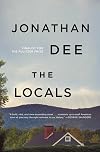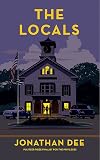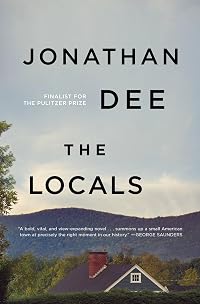
The Locals
by Jonathan Dee
On This Page
Description
"Summons up a small American town at precisely the right moment in our history . . . a bold, vital, and view-expanding novel."—George SaundersA rural working-class New England town elects as its mayor a New York hedge fund millionaire in this inspired novel for our times—fiction in the tradition of Jonathan Franzen and Jennifer Egan.
A WASHINGTON POST NOTABLE BOOK
Mark Firth is a contractor and home restorer in Howland, Massachusetts, who feels opportunity passing his family by. After show more being swindled by a financial advisor, what future can Mark promise his wife, Karen, and their young daughter, Haley? He finds himself envying the wealthy weekenders in his community whose houses sit empty all winter.
Philip Hadi used to be one of these people. But in the nervous days after 9/11 he flees New York and hires Mark to turn his Howland home into a year-round "secure location" from which he can manage billions of dollars of other people's money. The collision of these two men's very different worlds—rural vs. urban, middle class vs. wealthy—is the engine of Jonathan Dee's powerful new novel.
Inspired by Hadi, Mark looks around for a surefire investment: the mid-decade housing boom. Over Karen's objections, and teaming up with his troubled brother, Gerry, Mark starts buying up local property with cheap debt. Then the town's first selectman dies suddenly, and Hadi volunteers for office. He soon begins subtly transforming Howland in his image—with unexpected results for Mark and his extended family.
Here are the dramas of twenty-first-century America—rising inequality, working class decline, a new authoritarianism—played out in the classic setting of some of our greatest novels: the small town. The Locals is that rare work of fiction capable of capturing a fraught American moment in real time.
Praise for The Locals
"After 9/11, New York hedge fund billionaire Philip Hadi retreats to his summer home in the Berkshires. In thrall to his new town, he runs for office to keep it sleepy, sweet and free from tax hikes. Is he benevolent, arrogant or both? No one gets off the moral hook in this propulsive, brilliantly observed study."—People (Book of the Week)
"Thoughtful . . . [Jonathan Dee's] prescient sensitivity has never been more unnerving. . . . Amid the heat of today's vicious political climate, The Locals is a smoke alarm. Listen up."—Ron Charles, The Washington Post. show less
Tags
Recommendations








Member Reviews
Don’t be like the idiots who couldn’t get past the first narrator. Instead, do what I did and flip ahead to see if he stays. He doesn’t. And personally, I don’t understand why he was needed anyway.
Ok, with that out of the way let me tell you my first impression of this book was one of comfort - that I was in the hands of a writer with skill. The prose just lit up my brain somehow. Once I got past the initial narrator that is. What a creepy, misogynist piece of work he was. I was dreading meeting him again, but luckily we don’t and as I said above, I’m not sure why he was necessary. Perhaps as a way to show how undone Mark was and how trusting. 9/11 made us all crazy, but I do agree with the sentiment on page 41 that the show more people who died weren’t heroes, they were victims. Sad, but just that. This doesn't include fire, police or rescue...those deaths were the deaths of heroes.
Mark is pretty trusting. I mean, how dumb do you have to be to fall for a scam like that. I was investing in the mid-90s and found trustworthy, reputable firms to give my money to. It’s not that hard. Oy.
The small town vibe felt reminiscent of Richard Russo’s books. The relationships are all plausible, intimate and well-drawn, especially the power structure, what there is of it. I found the transitions focusing on one person to another to be smooth and natural. Gerry is a sociopath. Hadi’s civic funding reminded me of Clark Rockefeller’s doings in real-life Cornish NH. I imagined the set up would culminate in the economic implosion of 2008, but it didn’t. All in all it was a good book, but I do have some complaints -
First, the elder Firth situation goes unresolved. Much is made of mom’s worsening alzheimer’s and dad’s anger, but it just slides off the page into nothing. Second, I don’t remember people doing the hyper-local thing in 2003 or so. You know...buying local food and products because they’re local. Third, a restaurant wants to use local ingredients and has a May menu listing tomatoes, eggplant, beets, peppers etc. Stuff you will NEVER get in New England at that time unless you have a huge greenhouse operation.
The characterization of Candace’s unsatisfactory boyfriend on pages 210-11 is so great though. We all have known guys like this -
“Andrew, second-generation owner of the sporting goods store in Howland where Candace bought running shoes and the like, was a classic local type. He thought he knew everything; he was overconfident and condescending and maybe two-thirds as good looking as he thought he was and he had always gotten what he wanted because he was too dumb to understand how much else there was to want, outside of the life he was living, the life he had always lived. The less he knew about something, or someone, the more superior he felt. She longed to undo him.” show less
Ok, with that out of the way let me tell you my first impression of this book was one of comfort - that I was in the hands of a writer with skill. The prose just lit up my brain somehow. Once I got past the initial narrator that is. What a creepy, misogynist piece of work he was. I was dreading meeting him again, but luckily we don’t and as I said above, I’m not sure why he was necessary. Perhaps as a way to show how undone Mark was and how trusting. 9/11 made us all crazy, but I do agree with the sentiment on page 41 that the show more people who died weren’t heroes, they were victims. Sad, but just that. This doesn't include fire, police or rescue...those deaths were the deaths of heroes.
Mark is pretty trusting. I mean, how dumb do you have to be to fall for a scam like that. I was investing in the mid-90s and found trustworthy, reputable firms to give my money to. It’s not that hard. Oy.
The small town vibe felt reminiscent of Richard Russo’s books. The relationships are all plausible, intimate and well-drawn, especially the power structure, what there is of it. I found the transitions focusing on one person to another to be smooth and natural. Gerry is a sociopath. Hadi’s civic funding reminded me of Clark Rockefeller’s doings in real-life Cornish NH. I imagined the set up would culminate in the economic implosion of 2008, but it didn’t. All in all it was a good book, but I do have some complaints -
First, the elder Firth situation goes unresolved. Much is made of mom’s worsening alzheimer’s and dad’s anger, but it just slides off the page into nothing. Second, I don’t remember people doing the hyper-local thing in 2003 or so. You know...buying local food and products because they’re local. Third, a restaurant wants to use local ingredients and has a May menu listing tomatoes, eggplant, beets, peppers etc. Stuff you will NEVER get in New England at that time unless you have a huge greenhouse operation.
The characterization of Candace’s unsatisfactory boyfriend on pages 210-11 is so great though. We all have known guys like this -
“Andrew, second-generation owner of the sporting goods store in Howland where Candace bought running shoes and the like, was a classic local type. He thought he knew everything; he was overconfident and condescending and maybe two-thirds as good looking as he thought he was and he had always gotten what he wanted because he was too dumb to understand how much else there was to want, outside of the life he was living, the life he had always lived. The less he knew about something, or someone, the more superior he felt. She longed to undo him.” show less
Life Among the Beguiled
A very rich man, Philip Hadi, decides to make the small New England town of Howland, situated in southwestern Massachusetts, his family’s permanent home. Though something of a gnomish fellow, he possesses a feature which at once puts the locals off and thoroughly beguiles them. That something is his fabulous wealth and how he uses it to exercise his will over the town. And how he inspires a man, Mark Firth, to dream big and go for it with foreclosure purchases and renovations, in other words, house flipping. The point of the whole thing boils down to pathetic irony, for everything hoped for and promised devolves into the opposite.
The novel opens in New York City immediately after 9/11 with the first-person show more account of a grifter flummoxed by the general feelings of bonhomie and unity among New Yorkers. This, he grumbles often, is not New York. He cleaned up suing the city when he drunkenly walked in front of city bus. Promptly, he lost his winnings to a bigger grifter, an investment swindler, making him part of a class action suit. Which introduces readers to the central character of Jonathan Dee’s The Locals, Mark Firth, who is a small time contractor in Howland, also robbed by the investment swindler. By the end of the opening pages, Firth returns to Howland, once again raked over the coals of life, the victim of identity theft. Mark, oh Mark, you indeed are a mark, borne out by the balance of the novel.
Life in Howland is none too good. As with the rest of America at the time, fear consumes people. Even the Philip Hadi types, a Tom Wolfe “Master of the Universe,” are taken aback, which accounts for Hadi’s resettlement in Howland. Beyond that, though, Howland is a town in economic trouble. Mark, while better off than most, finds himself among them, with work scarce, his credit destroyed, and his marriage to Karen shaky, partly as a result of the financial swindle. Hadi proves a godsend, providing Mark with plenty of work and money to fortify the millionaire’s house against the fearful shadows of imagination. Rubbing elbows with Hadi plants in Mark’s mind the idea of possibilities. Here’s the thing about realizing financial possibilities: you’re lulled into believing the good times will go on forever. Then something like 2008 happens (the bookend of the novel).
Back to Howland. Taxes are rising and the populace isn’t happy. So when Hadi tells the locals he knows a way to treat them to more services and reduce their taxes, they make him First Selectman (mayor in New England parlance). And he delivers, covering a huge number of expenses out of his own pocket, while cutting their property taxes. Not to put too fine a point on it, they trade the American myth of rugged individualism for a few pieces of silver. Not everybody misses this. Mark’s brother, Gerry, for instance. He works in a real estate firm, which he hates, and from which he is fired. On the q-t under a pseudonym he rabble rouses about independence in a newsletter that not many read, until he becomes a pawn in a small-town political coup, exasperated when Hadi decides it’s safe to return to the city, taking his support of the town with him.
Mark, Karen, and Gerry are but three of a cast of small town characters, all with his or her own sets of problems and axes to grind, including Mark and Karen’s preteen daughter Haley, and their sister Candace, who manages to lose her teaching job, end up as librarian/social worker, and functions, to her unhappiness, as the caretaker of their ailing parents.
There’s more, but this is the gist. You’ll find much truth here. If you are from a small town, you may recognize how well Dee captures its essence. And while this all may sound a bit downbeat, Dee manages to find enough humor to prevent readers feeling too miserable. Many will find the novel a fair assessment of America life, of fears and hopes, in the first years of the 21st century. show less
A very rich man, Philip Hadi, decides to make the small New England town of Howland, situated in southwestern Massachusetts, his family’s permanent home. Though something of a gnomish fellow, he possesses a feature which at once puts the locals off and thoroughly beguiles them. That something is his fabulous wealth and how he uses it to exercise his will over the town. And how he inspires a man, Mark Firth, to dream big and go for it with foreclosure purchases and renovations, in other words, house flipping. The point of the whole thing boils down to pathetic irony, for everything hoped for and promised devolves into the opposite.
The novel opens in New York City immediately after 9/11 with the first-person show more account of a grifter flummoxed by the general feelings of bonhomie and unity among New Yorkers. This, he grumbles often, is not New York. He cleaned up suing the city when he drunkenly walked in front of city bus. Promptly, he lost his winnings to a bigger grifter, an investment swindler, making him part of a class action suit. Which introduces readers to the central character of Jonathan Dee’s The Locals, Mark Firth, who is a small time contractor in Howland, also robbed by the investment swindler. By the end of the opening pages, Firth returns to Howland, once again raked over the coals of life, the victim of identity theft. Mark, oh Mark, you indeed are a mark, borne out by the balance of the novel.
Life in Howland is none too good. As with the rest of America at the time, fear consumes people. Even the Philip Hadi types, a Tom Wolfe “Master of the Universe,” are taken aback, which accounts for Hadi’s resettlement in Howland. Beyond that, though, Howland is a town in economic trouble. Mark, while better off than most, finds himself among them, with work scarce, his credit destroyed, and his marriage to Karen shaky, partly as a result of the financial swindle. Hadi proves a godsend, providing Mark with plenty of work and money to fortify the millionaire’s house against the fearful shadows of imagination. Rubbing elbows with Hadi plants in Mark’s mind the idea of possibilities. Here’s the thing about realizing financial possibilities: you’re lulled into believing the good times will go on forever. Then something like 2008 happens (the bookend of the novel).
Back to Howland. Taxes are rising and the populace isn’t happy. So when Hadi tells the locals he knows a way to treat them to more services and reduce their taxes, they make him First Selectman (mayor in New England parlance). And he delivers, covering a huge number of expenses out of his own pocket, while cutting their property taxes. Not to put too fine a point on it, they trade the American myth of rugged individualism for a few pieces of silver. Not everybody misses this. Mark’s brother, Gerry, for instance. He works in a real estate firm, which he hates, and from which he is fired. On the q-t under a pseudonym he rabble rouses about independence in a newsletter that not many read, until he becomes a pawn in a small-town political coup, exasperated when Hadi decides it’s safe to return to the city, taking his support of the town with him.
Mark, Karen, and Gerry are but three of a cast of small town characters, all with his or her own sets of problems and axes to grind, including Mark and Karen’s preteen daughter Haley, and their sister Candace, who manages to lose her teaching job, end up as librarian/social worker, and functions, to her unhappiness, as the caretaker of their ailing parents.
There’s more, but this is the gist. You’ll find much truth here. If you are from a small town, you may recognize how well Dee captures its essence. And while this all may sound a bit downbeat, Dee manages to find enough humor to prevent readers feeling too miserable. Many will find the novel a fair assessment of America life, of fears and hopes, in the first years of the 21st century. show less
Life Among the Beguiled
A very rich man, Philip Hadi, decides to make the small New England town of Howland, situated in southwestern Massachusetts, his family’s permanent home. Though something of a gnomish fellow, he possesses a feature which at once puts the locals off and thoroughly beguiles them. That something is his fabulous wealth and how he uses it to exercise his will over the town. And how he inspires a man, Mark Firth, to dream big and go for it with foreclosure purchases and renovations, in other words, house flipping. The point of the whole thing boils down to pathetic irony, for everything hoped for and promised devolves into the opposite.
The novel opens in New York City immediately after 9/11 with the first-person show more account of a grifter flummoxed by the general feelings of bonhomie and unity among New Yorkers. This, he grumbles often, is not New York. He cleaned up suing the city when he drunkenly walked in front of city bus. Promptly, he lost his winnings to a bigger grifter, an investment swindler, making him part of a class action suit. Which introduces readers to the central character of Jonathan Dee’s The Locals, Mark Firth, who is a small time contractor in Howland, also robbed by the investment swindler. By the end of the opening pages, Firth returns to Howland, once again raked over the coals of life, the victim of identity theft. Mark, oh Mark, you indeed are a mark, borne out by the balance of the novel.
Life in Howland is none too good. As with the rest of America at the time, fear consumes people. Even the Philip Hadi types, a Tom Wolfe “Master of the Universe,” are taken aback, which accounts for Hadi’s resettlement in Howland. Beyond that, though, Howland is a town in economic trouble. Mark, while better off than most, finds himself among them, with work scarce, his credit destroyed, and his marriage to Karen shaky, partly as a result of the financial swindle. Hadi proves a godsend, providing Mark with plenty of work and money to fortify the millionaire’s house against the fearful shadows of imagination. Rubbing elbows with Hadi plants in Mark’s mind the idea of possibilities. Here’s the thing about realizing financial possibilities: you’re lulled into believing the good times will go on forever. Then something like 2008 happens (the bookend of the novel).
Back to Howland. Taxes are rising and the populace isn’t happy. So when Hadi tells the locals he knows a way to treat them to more services and reduce their taxes, they make him First Selectman (mayor in New England parlance). And he delivers, covering a huge number of expenses out of his own pocket, while cutting their property taxes. Not to put too fine a point on it, they trade the American myth of rugged individualism for a few pieces of silver. Not everybody misses this. Mark’s brother, Gerry, for instance. He works in a real estate firm, which he hates, and from which he is fired. On the q-t under a pseudonym he rabble rouses about independence in a newsletter that not many read, until he becomes a pawn in a small-town political coup, exasperated when Hadi decides it’s safe to return to the city, taking his support of the town with him.
Mark, Karen, and Gerry are but three of a cast of small town characters, all with his or her own sets of problems and axes to grind, including Mark and Karen’s preteen daughter Haley, and their sister Candace, who manages to lose her teaching job, end up as librarian/social worker, and functions, to her unhappiness, as the caretaker of their ailing parents.
There’s more, but this is the gist. You’ll find much truth here. If you are from a small town, you may recognize how well Dee captures its essence. And while this all may sound a bit downbeat, Dee manages to find enough humor to prevent readers feeling too miserable. Many will find the novel a fair assessment of America life, of fears and hopes, in the first years of the 21st century. show less
A very rich man, Philip Hadi, decides to make the small New England town of Howland, situated in southwestern Massachusetts, his family’s permanent home. Though something of a gnomish fellow, he possesses a feature which at once puts the locals off and thoroughly beguiles them. That something is his fabulous wealth and how he uses it to exercise his will over the town. And how he inspires a man, Mark Firth, to dream big and go for it with foreclosure purchases and renovations, in other words, house flipping. The point of the whole thing boils down to pathetic irony, for everything hoped for and promised devolves into the opposite.
The novel opens in New York City immediately after 9/11 with the first-person show more account of a grifter flummoxed by the general feelings of bonhomie and unity among New Yorkers. This, he grumbles often, is not New York. He cleaned up suing the city when he drunkenly walked in front of city bus. Promptly, he lost his winnings to a bigger grifter, an investment swindler, making him part of a class action suit. Which introduces readers to the central character of Jonathan Dee’s The Locals, Mark Firth, who is a small time contractor in Howland, also robbed by the investment swindler. By the end of the opening pages, Firth returns to Howland, once again raked over the coals of life, the victim of identity theft. Mark, oh Mark, you indeed are a mark, borne out by the balance of the novel.
Life in Howland is none too good. As with the rest of America at the time, fear consumes people. Even the Philip Hadi types, a Tom Wolfe “Master of the Universe,” are taken aback, which accounts for Hadi’s resettlement in Howland. Beyond that, though, Howland is a town in economic trouble. Mark, while better off than most, finds himself among them, with work scarce, his credit destroyed, and his marriage to Karen shaky, partly as a result of the financial swindle. Hadi proves a godsend, providing Mark with plenty of work and money to fortify the millionaire’s house against the fearful shadows of imagination. Rubbing elbows with Hadi plants in Mark’s mind the idea of possibilities. Here’s the thing about realizing financial possibilities: you’re lulled into believing the good times will go on forever. Then something like 2008 happens (the bookend of the novel).
Back to Howland. Taxes are rising and the populace isn’t happy. So when Hadi tells the locals he knows a way to treat them to more services and reduce their taxes, they make him First Selectman (mayor in New England parlance). And he delivers, covering a huge number of expenses out of his own pocket, while cutting their property taxes. Not to put too fine a point on it, they trade the American myth of rugged individualism for a few pieces of silver. Not everybody misses this. Mark’s brother, Gerry, for instance. He works in a real estate firm, which he hates, and from which he is fired. On the q-t under a pseudonym he rabble rouses about independence in a newsletter that not many read, until he becomes a pawn in a small-town political coup, exasperated when Hadi decides it’s safe to return to the city, taking his support of the town with him.
Mark, Karen, and Gerry are but three of a cast of small town characters, all with his or her own sets of problems and axes to grind, including Mark and Karen’s preteen daughter Haley, and their sister Candace, who manages to lose her teaching job, end up as librarian/social worker, and functions, to her unhappiness, as the caretaker of their ailing parents.
There’s more, but this is the gist. You’ll find much truth here. If you are from a small town, you may recognize how well Dee captures its essence. And while this all may sound a bit downbeat, Dee manages to find enough humor to prevent readers feeling too miserable. Many will find the novel a fair assessment of America life, of fears and hopes, in the first years of the 21st century. show less
I am an introvert. I can be outgoing and talkative and friendly, but I know I am an introvert because being around a lot of people leaves me ready for a nap and a recharge, while an extrovert would be pumped.
I was in the middle of reading The Locals when I felt that drained feeling. The point of view kept jumping from person to person and there were too many voices and people for me to handle. I took a nap.
It was several days before I pushed myself to pick the book back up. I finished it in another day's reading.
The novel starts out strong with an abrasive con man. His victim is Mark, from a small town in the Berkshires, who lost his money in an investment scam. Mark is an 'easy mark', and loses his credit card to this grifter. The show more story follows Mark back home, introducing a whole village of characters, each struggling to make it.
A New York City hedge-fund manager moves his family into their summer cottage; 9-11 and 'inside information' has convinced him that the city is no longer safe. Philip Hadi likes his new town and assumes political and financial control, paying budgetary items out of pocket to keep taxes low and home values high.
When the town decides they can't allow Hadi to arbitrarily make laws, he feels unappreciated and up and leaves--taking his money with him. The town has to deal with the hard reality that they cannot cover the budget without raising taxes significantly. They realize that under Hadi they had been living in "a fool's paradise," and must reevaluate what is necessary. The new reality includes closing the library, creating new fees, and requiring citations quotas from police.
Characters thoughts reflect aspects of 21st-century thinking:
"Corruption was a fact of life, on the governmental level especially, and if you didn't find your own little way to make it work for you, then you'd be a victim of it."
"The nation was at war; the invisible nature of that war made it both harder and more important to be vigilant."
"He thought everybody on TV was full of shit--the pundits, the alarmists, the conspiracy theorists--but their very full-of-shittiness was like a confirmation of what he felt inside: that things right now were off their anchor, that the decline of people's belief in something showed up in their apparent willingness to believe anything."
"The best part [of the Internet] was feeling that you were anonymous out there but had an identity at the same time." "...and this internet was like some giant bathroom wall where you could just scrawl whatever hate you liked."
"Some people really come to life when they have an enemy."
"Rich people, he thought. The world shaped itself around their impulses."
I was perplexed and puzzled why I did not have any immediate thoughts about the book. The ending involves a teenager who flaunts the rules and finds empowerment in resistance. Perhaps I am just too dense for subtlety? Or am I confused by too many voices, too many opinions, that I am not sure of what the author is saying?
A Goodreads friend loved this novel, which inspired me to request it from NetGalley. (She is an extrovert.) I agree with her that there are no likable characters. Each is flawed and self-centered, discouraged and angry about missing that brass ring ticket to success and happiness. Well, that could describe quite a few people today.
Perhaps my problem with the book is I don't like who we have become and I don't like the options offered to us. At the end of The Locals, Allerton, the new selectman, realizes that "any sort of collective action was automatically suspect...because if it worked, then we wouldn't be in the mess we were now in."
Once upon a time, we believed in progress and the eternal upward arc into a better world, which now we condemn as the fallacy of fairy tale thinking. And I want to hold to that fairy tale of a possible Utopia, the Star Trek world, the Utopia for Realists. Dee's novel may reflect what we have become, but I want to be inspired to consider what we may become.
I received a free ebook from the publisher through NetGalley in exchange for a fair and unbiased review. show less
I was in the middle of reading The Locals when I felt that drained feeling. The point of view kept jumping from person to person and there were too many voices and people for me to handle. I took a nap.
It was several days before I pushed myself to pick the book back up. I finished it in another day's reading.
The novel starts out strong with an abrasive con man. His victim is Mark, from a small town in the Berkshires, who lost his money in an investment scam. Mark is an 'easy mark', and loses his credit card to this grifter. The show more story follows Mark back home, introducing a whole village of characters, each struggling to make it.
A New York City hedge-fund manager moves his family into their summer cottage; 9-11 and 'inside information' has convinced him that the city is no longer safe. Philip Hadi likes his new town and assumes political and financial control, paying budgetary items out of pocket to keep taxes low and home values high.
When the town decides they can't allow Hadi to arbitrarily make laws, he feels unappreciated and up and leaves--taking his money with him. The town has to deal with the hard reality that they cannot cover the budget without raising taxes significantly. They realize that under Hadi they had been living in "a fool's paradise," and must reevaluate what is necessary. The new reality includes closing the library, creating new fees, and requiring citations quotas from police.
Characters thoughts reflect aspects of 21st-century thinking:
"Corruption was a fact of life, on the governmental level especially, and if you didn't find your own little way to make it work for you, then you'd be a victim of it."
"The nation was at war; the invisible nature of that war made it both harder and more important to be vigilant."
"He thought everybody on TV was full of shit--the pundits, the alarmists, the conspiracy theorists--but their very full-of-shittiness was like a confirmation of what he felt inside: that things right now were off their anchor, that the decline of people's belief in something showed up in their apparent willingness to believe anything."
"The best part [of the Internet] was feeling that you were anonymous out there but had an identity at the same time." "...and this internet was like some giant bathroom wall where you could just scrawl whatever hate you liked."
"Some people really come to life when they have an enemy."
"Rich people, he thought. The world shaped itself around their impulses."
I was perplexed and puzzled why I did not have any immediate thoughts about the book. The ending involves a teenager who flaunts the rules and finds empowerment in resistance. Perhaps I am just too dense for subtlety? Or am I confused by too many voices, too many opinions, that I am not sure of what the author is saying?
A Goodreads friend loved this novel, which inspired me to request it from NetGalley. (She is an extrovert.) I agree with her that there are no likable characters. Each is flawed and self-centered, discouraged and angry about missing that brass ring ticket to success and happiness. Well, that could describe quite a few people today.
Perhaps my problem with the book is I don't like who we have become and I don't like the options offered to us. At the end of The Locals, Allerton, the new selectman, realizes that "any sort of collective action was automatically suspect...because if it worked, then we wouldn't be in the mess we were now in."
Once upon a time, we believed in progress and the eternal upward arc into a better world, which now we condemn as the fallacy of fairy tale thinking. And I want to hold to that fairy tale of a possible Utopia, the Star Trek world, the Utopia for Realists. Dee's novel may reflect what we have become, but I want to be inspired to consider what we may become.
I received a free ebook from the publisher through NetGalley in exchange for a fair and unbiased review. show less
Bearing a slight resemblance to the novels Tom Perrotta and Richard Russo, the author skewers life in a desirable rural town in the Berkshires. Commencing in NYC on 9/11 with two characters who have been fleeced by a phony investment advisor, the action moves to fictional Howland, Massachusetts, where yet another persona, a hedge funder escaping to his weekend home from the chaos of the wounded city, settles in and ends up absconding with town government for his own amusement.
Dee is wickedly abrasive, which makes for some marvelous quotes, but he's got way too many male and female balls juggling in the richly comical air, and some just get dropped. A good editor should have eliminated a third of them, but this is still a very enjoyable show more read, especially for those familiar with the area and with the ongoing combativeness of rich New Yorkers vs. struggling locals.
Quotes: "This particular train ran in a straight line away from New York City for two and a half hours and then just stopped in the middle of nowhere as if due to an expiration of interest."
"They both knew their dad would probably prefer a broken storm window he could complain about to one that worked fine."
"The very rich were sometimes thrifty in eccentric, unnecessary ways, just to keep in some kind of emotional touch with the actual value of a dollar."
"Her mom felt like Haley was the face their family showed to the world. It wasn't that she was one of those mothers for whom everything had to be perfect; it was more like, if we aren't raising a happy child together, then what are we doing together at all?"
"The ensemble went right into one of those Sousa marches that everybody instantly recognized but no one knew the name of, that instantly put you in a good mood."
"The land underneath Gerry's tires was invade and tilled and consecrated by men who believed that only the pursuit of one's own interest might multiply into the common good."
And, the last line of the book: "To ask for any redress from the powerful, however small or just, was a tactical mistake. You gave up the only weapon available to you, which was to deprive them of their power to say no." show less
Dee is wickedly abrasive, which makes for some marvelous quotes, but he's got way too many male and female balls juggling in the richly comical air, and some just get dropped. A good editor should have eliminated a third of them, but this is still a very enjoyable show more read, especially for those familiar with the area and with the ongoing combativeness of rich New Yorkers vs. struggling locals.
Quotes: "This particular train ran in a straight line away from New York City for two and a half hours and then just stopped in the middle of nowhere as if due to an expiration of interest."
"They both knew their dad would probably prefer a broken storm window he could complain about to one that worked fine."
"The very rich were sometimes thrifty in eccentric, unnecessary ways, just to keep in some kind of emotional touch with the actual value of a dollar."
"Her mom felt like Haley was the face their family showed to the world. It wasn't that she was one of those mothers for whom everything had to be perfect; it was more like, if we aren't raising a happy child together, then what are we doing together at all?"
"The ensemble went right into one of those Sousa marches that everybody instantly recognized but no one knew the name of, that instantly put you in a good mood."
"The land underneath Gerry's tires was invade and tilled and consecrated by men who believed that only the pursuit of one's own interest might multiply into the common good."
And, the last line of the book: "To ask for any redress from the powerful, however small or just, was a tactical mistake. You gave up the only weapon available to you, which was to deprive them of their power to say no." show less
This book is about many things, but to me it is about how politics in the U.S. have changed since 9/11. It's about nationalism, libertarianism, democracy, autocracy, and socialism, the haves and the have-nots, the infiltration of a community or a country with outsiders. It's about apathy and participation in society.
It's also a good story with a huge cast of characters (a la Jonathan Franzen novels) about a small town in the Berkshires.
As someone who moved into a rural area from a nearby city, and who has tried to participate in a small way in the local government, much about this book resonated with me.
It's also a good story with a huge cast of characters (a la Jonathan Franzen novels) about a small town in the Berkshires.
As someone who moved into a rural area from a nearby city, and who has tried to participate in a small way in the local government, much about this book resonated with me.
A rich New Yorker moves to a small town and decides, basically as a hobby, to dabble in the town's government for a while. Quietly throwing money around, he inserts himself into the daily fabric of the residents, dabbles a little in surveillance techniques, and then casually and coolly decides to leave when he faces resistance. The town is left in shambles, and the story serves as a metaphor for what happened when the housing bubble burst in 2008. The ending was a little strange, though.
Members
- Recently Added By
Lists

Top Five Books of 2018
802 works; 265 members

Kirkus Starred Fiction Reviews of Books Published in 2017
412 works; 7 members

To Read
617 works; 7 members

Books Read in 2018
4,360 works; 110 members
Author Information

8+ Works 1,617 Members
Awards and Honors
Awards
Distinctions
Notable Lists
Common Knowledge
- Canonical title
- The Locals
- Original title
- The locals
- Original publication date
- 2017
- Original language*
- Engels
*Some information comes from Common Knowledge in other languages. Click "Edit" for more information.
Classifications
Statistics
- Members
- 267
- Popularity
- 121,164
- Reviews
- 12
- Rating
- (3.82)
- Languages
- 5 — Dutch, English, French, Italian, Romanian
- Media
- Paper, Audiobook, Ebook
- ISBNs
- 15
- ASINs
- 3