On This Page
Description
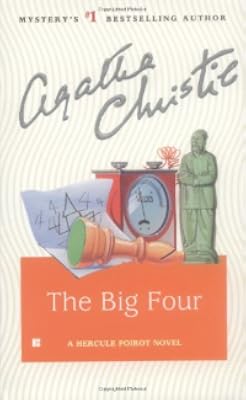
Famed private eye Hercule Poirot tackles international intrigue and espionage in this classic Agatha Christie mystery. Framed in the doorway of Hercule Poirot's bedroom stands an uninvited guest, coated from head to foot in dust. The man stares for a moment, then he sways and falls. Who is he? Is he suffering from shock or just exhaustion? Above all, what is the significance of the figure 4, scribbled over and over again on a sheet of paper? Poirot finds himself plunged into a world of show more international intrigue, risking his life-and that of his "twin brother"-to uncover the truth. show lessTags
Recommendations


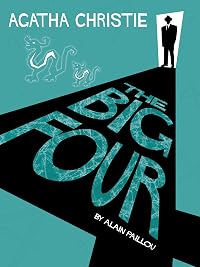





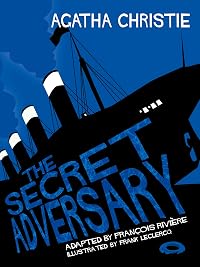






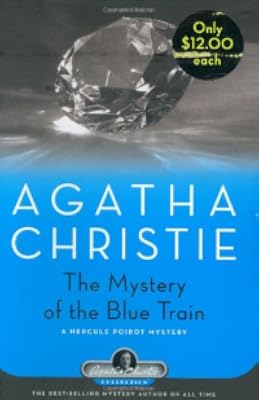
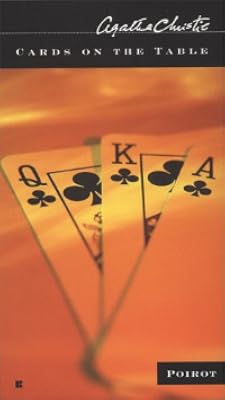
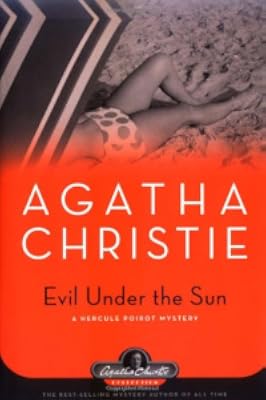
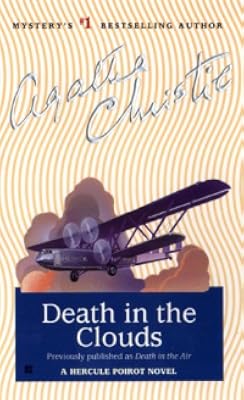
Member Recommendations

Ludi_Ling Some 30 years may separate them, but both feature the same slightly inane global conspiracy theory plot.
Member Reviews
Hercule Poirot and Arthur Hastings, just arrived from Argentina, are on the trail of a group composed of four criminal masterminds bent on world domination.
This is a very strange book, which reads more like an early thriller than a traditional mystery, and just like The Man in the Brown Suit, published in 1924, it has not aged well. From the outset there is eye-rolling melodrama, hair-raising coincidences, atrocious accents, ludicrous disguises, mysterious science, preposterous props (a tiny arrow tipped in curare inside a cigarette!) and exotic criminals. It would almost read like a deliberate farce if it didn't take itself so seriously, and we encounter some rather crude racial stereotyping, casual racism and Chinese characters show more speaking only broken pidgin English; I flinched more than once.
Instead of a smooth linear narrative the book follows a series of almost self-contained tableaux that contain their own mysteries as the intrepid duo follow leads from location to location (Poirot at one point likens himself to a 'human foxhound') but invariably come too late. Unlike in Christie's later and more accomplished novels, readers are told about the clues, not shown them carefully hidden inside the exposition or dialogue, and so there is no chance for the reader to track down the perpetrator alongside (or ahead of) the detective, which is half the fun.
The one detail that stood out for me was the fact that the murderer in one of the mysteriesdrove up in a butcher's cart and was carrying a leg of mutton, thereby going completely unnoticed by the village residents, a plot device Agatha Christie used in Death in the Clouds .
I find it curious that so many of Christie's early (and decidedly mediocre) novels appear to revolve around espionage/a criminal mastermind, and I wonder how much of that decision was due to pressure from the publisher, because they thought that's what the reading public wanted, and how much her own plotting.
One for completists only. show less
This is a very strange book, which reads more like an early thriller than a traditional mystery, and just like The Man in the Brown Suit, published in 1924, it has not aged well. From the outset there is eye-rolling melodrama, hair-raising coincidences, atrocious accents, ludicrous disguises, mysterious science, preposterous props (a tiny arrow tipped in curare inside a cigarette!) and exotic criminals. It would almost read like a deliberate farce if it didn't take itself so seriously, and we encounter some rather crude racial stereotyping, casual racism and Chinese characters show more speaking only broken pidgin English; I flinched more than once.
Instead of a smooth linear narrative the book follows a series of almost self-contained tableaux that contain their own mysteries as the intrepid duo follow leads from location to location (Poirot at one point likens himself to a 'human foxhound') but invariably come too late. Unlike in Christie's later and more accomplished novels, readers are told about the clues, not shown them carefully hidden inside the exposition or dialogue, and so there is no chance for the reader to track down the perpetrator alongside (or ahead of) the detective, which is half the fun.
The one detail that stood out for me was the fact that the murderer in one of the mysteries
I find it curious that so many of Christie's early (and decidedly mediocre) novels appear to revolve around espionage/a criminal mastermind, and I wonder how much of that decision was due to pressure from the publisher, because they thought that's what the reading public wanted, and how much her own plotting.
One for completists only. show less
The Big Four by Agatha Christie was first published in 1927 and features Hercule Poirot with assistance from his friend Hastings and Inspector Japp. Instead of being a work of detective fiction, this story is much more about espionage and international intrigue.
Poirot and Hasting become involved in tracking down a crime consortium that calls itself The Big Four and appears to be focused on “world domination”. Headed by four international criminals, Poirot must first uncover the identities of each of the four. As the hunt commences, the book becomes more of a sensational adventure piece with Poirot as the action hero and Hastings as his trusty sidekick. The Big Four was written during a difficult period in Ms. Christie’s life, and show more began as a series of stories that were then mashed together as one. She herself has called it “that rotten book”.
The Big Four really has none of the qualities that I look for in a Poirot book. Instead of sitting back, examining the evidence and putting his “little grey cells” to work, in this book he is donning disguises, faking his death and detonating smoke bombs, entirely too much action for the little detective. Luckily this book with it’s silly plot was a quick read and now can be shoved to the back of my mind and forgotten about. show less
Poirot and Hasting become involved in tracking down a crime consortium that calls itself The Big Four and appears to be focused on “world domination”. Headed by four international criminals, Poirot must first uncover the identities of each of the four. As the hunt commences, the book becomes more of a sensational adventure piece with Poirot as the action hero and Hastings as his trusty sidekick. The Big Four was written during a difficult period in Ms. Christie’s life, and show more began as a series of stories that were then mashed together as one. She herself has called it “that rotten book”.
The Big Four really has none of the qualities that I look for in a Poirot book. Instead of sitting back, examining the evidence and putting his “little grey cells” to work, in this book he is donning disguises, faking his death and detonating smoke bombs, entirely too much action for the little detective. Luckily this book with it’s silly plot was a quick read and now can be shoved to the back of my mind and forgotten about. show less
If you ever have the misfortune of reading this book you can at least rest assured that no matter which Hercule Poirot story you read from here on, it will be significantly better than the Big Four.
Published in the late 1920s, the Big Four revolves around a shadowy cabal asserting control over academia, finance and world politics in an attempt to bring down western civilization and achieve world domination. If you know anything about the political climate of the 20s and 30s this premise may ring a few alarm bells but don't worry; it's not the Jews -it's the Chinese (which in a sense makes it ahead of its time I guess).
The remarkably racist premise aside, the novel forsakes the traditional Hercule Poirot format of moderately intricate show more detective fiction in favor of a series of slapstick spy thriller vignettes -each with a twist so banal a 5-year old would be insulted by it. The story has less in common with the classical detective genre than with some sort of James Bond protofiction. The best thing you can say about the reading experience is that it occasionally reaches so bad it's good-quality, but for the most part it's a complete waste of time. show less
Published in the late 1920s, the Big Four revolves around a shadowy cabal asserting control over academia, finance and world politics in an attempt to bring down western civilization and achieve world domination. If you know anything about the political climate of the 20s and 30s this premise may ring a few alarm bells but don't worry; it's not the Jews -it's the Chinese (which in a sense makes it ahead of its time I guess).
The remarkably racist premise aside, the novel forsakes the traditional Hercule Poirot format of moderately intricate show more detective fiction in favor of a series of slapstick spy thriller vignettes -each with a twist so banal a 5-year old would be insulted by it. The story has less in common with the classical detective genre than with some sort of James Bond protofiction. The best thing you can say about the reading experience is that it occasionally reaches so bad it's good-quality, but for the most part it's a complete waste of time. show less
Easily the weakest of the Christie novels I've read. While she has tried her hand at both the Poirot-style mysteries and adventure books starring various other characters, this is an awkward attempt at melding the two together in a way that never felt satisfying. The mysteries are underwhelming thanks to their short buildup and quick solutions while the adventuring is held back by the need to rationalize it all to a greater extent than the novels where that's the sole focus.
Knowing the context behind the books explains its issued, but doesn't make them disappear. Even if you're only interested in the Poirot stories the this one can still be skipped without much of value being lost.
Knowing the context behind the books explains its issued, but doesn't make them disappear. Even if you're only interested in the Poirot stories the this one can still be skipped without much of value being lost.
The Big Four is quite the departure for Hercule Poirot books - a little more James Bond in flavor than we've come to expect from an Agatha Christie novel. Instead of one contained mystery, this is a series of mysteries linked by a secret cabal that is running the world.
Purportedly, this format is due to Christie having reworked a series of short stories into a larger narrative to publish them as a novel. The new structure of having a new small mystery every few chapters is a nice change of pace. I don't think an entire series like this would be great, but I enjoyed it as a one off.
Hastings continues to be very dense and aggravating, but it was more tolerable when there was a new mystery for him to fail to have any insight into show more regularly. Overall a fun read. show less
Purportedly, this format is due to Christie having reworked a series of short stories into a larger narrative to publish them as a novel. The new structure of having a new small mystery every few chapters is a nice change of pace. I don't think an entire series like this would be great, but I enjoyed it as a one off.
Hastings continues to be very dense and aggravating, but it was more tolerable when there was a new mystery for him to fail to have any insight into show more regularly. Overall a fun read. show less
This early Poirot novel is pulp fiction and not really a whodunnit. Poirot and Hastings go on the hunt for the members of the Big Four, a criminal syndicate led by a Chinese man who is the master planner, an American industrialist who provides the wealth, a French woman who provides scientific know how, and a mysterious number 4, the Destroyer, who seems to be able to adopt almost any disguise at will. This syndicate is supposed to be behind every riot, labour unrest and political upheaval across the world, including the Russian revolution, and even behind some natural disasters using the French woman's expertise, aiming at world domination and the collapse of civilisation. Yes, four master criminals with thousands of agents supposedly show more in every country at their disposal. This is so ridiculous I could scarcely suspend my disbelief at points, but I guess was kind of enjoyable hokum.
One contemporary review, in The Scotsman of 17 March 1927 sums it up perfectly for me: "The activities of Poirot himself cannot be taken seriously, as one takes, for example, Sherlock Holmes. The book, indeed, reads more like an exaggerated parody of popular detective fiction than a serious essay in the type. But it certainly provides plenty of fun for the reader who is prepared to be amused. If that was the intention of the authoress, she has succeeded to perfection". show less
One contemporary review, in The Scotsman of 17 March 1927 sums it up perfectly for me: "The activities of Poirot himself cannot be taken seriously, as one takes, for example, Sherlock Holmes. The book, indeed, reads more like an exaggerated parody of popular detective fiction than a serious essay in the type. But it certainly provides plenty of fun for the reader who is prepared to be amused. If that was the intention of the authoress, she has succeeded to perfection". show less
What a strange book this is. But then, so far I've found all of Christie's "international intrigue" plot lines strange. I do enjoy the relationship between Hastings and Poirot, but this one is hindered by an anti-Asian bias that, while probably true to the time and location, is still jarring and unpleasant to read, especially the accent/pidgin Christie has her Chinese characters speak. Or I guess maybe one could argue that it's Hastings's bias?
Members
- Recently Added By
Published Reviews
ThingScore 50
added by booksaplenty1949
Lists

British Mystery
469 works; 14 members

Crime and Mysteries to Read
746 works; 31 members

Agatha Christie Poirot
43 works; 2 members

Books About Murder
313 works; 7 members

Detective Stories
343 works; 5 members

Books Purchased July-December 2016
81 works; 1 member

Books With Numbers in the Title
308 works; 13 members

Books Read in 2009
464 works; 11 members

TBR
77 works; 1 member

Books Read in 2025
4,128 works; 98 members

Agatha Christie Chronology
93 works; 1 member
Author Information

2,165+ Works 441,561 Members
One of the most successful and beloved writer of mystery stories, Agatha Mary Clarissa Christie was born in 1890 in Torquay, County Devon, England. She wrote her first novel, The Mysterious Affair at Styles, in 1920, launching a literary career that spanned decades. In her lifetime, she authored 79 crime novels and a short story collection, 19 show more plays, and six novels written under the name of Mary Westmacott. Her books have sold over a billion copies in the English language with another billion in 44 foreign languages. Some of her most famous titles include Murder on the Orient Express, Mystery of the Blue Train, And Then There Were None, 13 at Dinner and The Sittaford Mystery. Noted for clever and surprising twists of plot, many of Christie's mysteries feature two unconventional fictional detectives named Hercule Poirot and Miss Jane Marple. Poirot, in particular, plays the hero of many of her works, including the classic, The Murder of Roger Ackroyd (1926), and Curtain (1975), one of her last works in which the famed detective dies. Over the years, her travels took her to the Middle East where she met noted English archaeologist Sir Max Mallowan. They married in 1930. Christie accompanied Mallowan on annual expeditions to Iraq and Syria, which served as material for Murder in Mesopotamia (1930), Death on the Nile (1937), and Appointment with Death (1938). Christie's credits also include the plays, The Mousetrap and Witness for the Prosecution (1953; film 1957). Christie received the New York Drama Critics' Circle Award for 1954-1955 for Witness. She was also named Dame Commander of the Order of the British Empire in 1971. Christie died in 1976. (Bowker Author Biography) show less
Some Editions
Awards and Honors
Notable Lists
Series

Belongs to Publisher Series
Work Relationships
Is contained in
Agatha Christie Crime Collection: The Pale Horse / The Big Four / The Secret Adversary by Agatha Christie
1920s Agatha Christie, Vol. 3: The Murder of Roger Ackroyd, The Big Four, The Mystery of the Blue Train by Agatha Christie
El misterioso caso de Styles ; Los cuatro grandes ; El templete de Nasse House ; El misterio de Pale Horse ; El misterio de Listerdale by Agatha Christie
Common Knowledge
- Canonical title
- The Big Four
- Original title
- The Big Four
- Original publication date
- 1927-01-27
- People/Characters
- Hercule Poirot; Arthur Hastings (Captain); James Japp; Vera Rossakoff
- Important places
- England, UK; Italy; United Kingdom
- First words
- I have met people who enjoy a channel crossing; men who can sit calmly in their deck-chairs and, on arrival, wait until the boat is moored, then gather their belongings together without fuss and disembark.
- Last words
- (Click to show. Warning: May contain spoilers.)"Who knows?"
- Original language
- English
- Disambiguation notice
- There are numerous books with this title by different authors.
Classifications
Statistics
- Members
- 4,510
- Popularity
- 3,267
- Reviews
- 120
- Rating
- (3.27)
- Languages
- 28 — Arabic, Bulgarian, Czech, Danish, Dutch, English, Estonian, Finnish, French, German, Greek, Gujarati, Hungarian, Indonesian, Italian, Japanese, Norwegian (Bokmål), Norwegian, Polish, Russian, Croatian, Sinhalese, Slovenian, Spanish, Swedish, Turkish, Vietnamese, Portuguese (Portugal)
- Media
- Paper, Audiobook, Ebook
- ISBNs
- 176
- UPCs
- 4
- ASINs
- 99