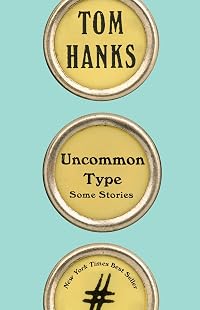
Uncommon Type: Some Stories
by Tom Hanks
On This Page
Description
A collection of seventeen wonderful short stories showing that two-time Oscar winner Tom Hanks is as talented a writer as he is an actor.A gentle Eastern European immigrant arrives in New York City after his family and his life have been torn apart by his country's civil war. A man who loves to bowl rolls a perfect game—and then another and then another and then many more in a row until he winds up ESPN's newest celebrity, and he must decide if the combination of perfection and celebrity show more has ruined the thing he loves. An eccentric billionaire and his faithful executive assistant venture into America looking for acquisitions and discover a down and out motel, romance, and a bit of real life. These are just some of the tales Tom Hanks tells in this first collection of his short stories. They are surprising, intelligent, heartwarming, and, for the millions and millions of Tom Hanks fans, an absolute must-have!. show less
Tags
Recommendations


Member Reviews
In his first story collection, Tom Hanks demonstrates, to my astonishment at least, that the character he’s played in virtually every movie since Splash is actually him—earnest, but playful; witty, but never ironic; extraverted, but with self-awareness; and fundamentally optimistic. As the British actor Stephen Fry says on the back cover, there’s something quintessentially American about this character, something that makes Hanks the natural successor to Jimmy Stewart. In his fiction, we find also that Hanks’ admiration for the men and women who fought World War II is genuine and deep; that he really is interested in the space program; and that he’s not too golly-gee naïve to drop an f-bomb once in a while. He appears to be show more the real deal.
He’s not going to win the Nobel Prize for Literature for these stories, but they’re far from a waste of time. If the ten-year-old’s point of view in “A Special Weekend” becomes cloying, that of a still-young veteran in 1953, providing for his family despite his physical and emotional scars, is moving. And given that Hanks has spent the last thirty years living in L.A., wealthy and famous, I was surprised by his ability to conjure the lives of ordinary people such as the divorcée in “A Month on Greene Street” and the immigrant in “Go See Costas.” If there’s a message in these stories, it’s that people in general are interesting, work crazily hard, and deserve your understanding and respect. It’s not hammered home or overdone. It’s as genuine as Tom Hanks, and, as they used to say in the ‘50s when several of these stories are set—my hat’s off to him. show less
He’s not going to win the Nobel Prize for Literature for these stories, but they’re far from a waste of time. If the ten-year-old’s point of view in “A Special Weekend” becomes cloying, that of a still-young veteran in 1953, providing for his family despite his physical and emotional scars, is moving. And given that Hanks has spent the last thirty years living in L.A., wealthy and famous, I was surprised by his ability to conjure the lives of ordinary people such as the divorcée in “A Month on Greene Street” and the immigrant in “Go See Costas.” If there’s a message in these stories, it’s that people in general are interesting, work crazily hard, and deserve your understanding and respect. It’s not hammered home or overdone. It’s as genuine as Tom Hanks, and, as they used to say in the ‘50s when several of these stories are set—my hat’s off to him. show less
I once read something attributed to Phillips Brooks which said that when America names its man, it names Lincoln. Well, perhaps, but it could just as easily name Tom Hanks. Hanks epitomises an American type which is common but which doesn't often get noticed because, unlike the lonesome cowboy or the hardass lawyer or the nasal-voiced tourist, it is hard to caricature. It is a type which is talented, successful, versatile, but also casual, genial, hospitable. A new neighbour who knocks on the door to say 'hi' and who will offer you the use of his lawnmower, but won't outstay his welcome. Confident and healthy, perhaps a tad complacent: someone with a decent status in a country which is broad and bountiful and with big blue skies.
I show more mention this for two reasons. Firstly, because the Hanks type is so pleasant and inoffensive that you're inclined to be kind also. (You wouldn't tell that friendly new neighbour to get the hell off your property.) And it's certainly not a reach to say nice things about his writing in Uncommon Type, his book of short stories. It's good enough, and he certainly doesn't embarrass himself. In fact, he's a cut above most celebrity writers, because most celebrity writers choose formula: thrillers, chick lit, and so on. Cheaply-won vanity projects, to tell the truth. Hanks is at least trying his hand at original literary writing, and working at establishing a voice. There's integrity here.
The second reason I mentioned this American type is because the geniality and celebrity of Tom Hanks combine to become an unexpected virtue. The stories here are filled with warm and idyllic Americana; nostalgic motifs and details like road trips, diners, corn dogs and green lawns in the suburbs. Such things are considered uncool in contemporary fiction trends, and wouldn't have been published if not for the Hanks name (I mean that as a comment on the content, not the quality). Happily, Hanks' celebrity allows such stories to emerge without being nixed by the publishing industry, because the name will sell the thing. It might not be devastating literature, but to be honest I quite liked reading some evenly-paced stories describing people sitting in a quiet kitchen drinking coffee, or stopping for lunch at a roadside café. There's an endearing sentimentality here that isn't often allowed to emerge in contemporary fiction. Hanks is willing to stop and let a character savour a milkshake, trusting that we'll enjoy those sips too.
Now, Hanks' celebrity is the unavoidable elephant in the room when trying to assess the quality of his short stories. Sometimes it's overt: you can't read his World War Two story, with its M1 Garand going "pi-cling" when the clip is empty (pg. 54), without thinking of Saving Private Ryan, and you can't read the stories like 'Alan Bean Plus Four', which discuss Apollo and the Space Age, without thinking of Apollo 13. Sometimes it's a virtue, as I mentioned above.
And sometimes it's not a virtue; the problem with writing literature is that all those who attempt literature fail often (including those who eventually succeed), and it seems no one is willing or able to tell Tom Hanks – super-successful, universally beloved cultural icon Tom Hanks – that such-and-such is good but not yet up to par. Hanks can write well enough, and is quite good at building a story, but too often I found the endings to be an anti-climax. There often seemed to be no purpose other than to have a pleasant amble. A good example of this is 'A Special Weekend', which builds a relationship between a young boy and his mother, and the complications of her new beau and the boy's father, from whom she is separated. The story sees the boy go on a road trip, take his first flight in an aeroplane, and get treated to milkshakes, and it's all very agreeable, but there's no purpose, no message, no resolution to the tension at the end.
Considering how many of the stories have weak endings, it's a bit surprising that I was rarely frustrated in reading Uncommon Type, and found a number of stories which I liked. I didn't like the recurring stories which focused around the friend group of Anna, M-Dash and Steve Wong, which I found non-descript, nor did I warm to the Hank Fiset vignettes, but 'Christmas Eve 1953' is an early highlight, containing (despite its title) the World War Two material I mentioned earlier. 'The Past is Important to Us' is, surprisingly, a straight-up time-travel story, and its unabashed nostalgia for the 1939 World's Fair in New York – "filled with so many promises of the world as it could have been" (pg. 253) – is entertainingly transmuted into a sort of wanderlust for the past.
The best story, however, is not coincidentally the one with the strongest ending: 'These Are the Meditations of My Heart'. This delves most heavily into the typewriter motif which recurs, however briefly, in each of the stories in Uncommon Type. Hanks' ability to develop typewriters as a sort of totem for his Americana and his nostalgia – "they were built to last forever" (pg. 232) – is where he comes closest to establishing his bona fides as a writer. Perhaps his greatest success here is in making his celebrity ambiguous: for all that there will be those who say, with some justification, that he has been elevated as a writer because of his celebrity, there is also a case to be made that his fame unfairly obscures some of his other qualities in evidence here. It's interesting to follow him from left to right across the page, and what writer could ask for more than that? show less
I show more mention this for two reasons. Firstly, because the Hanks type is so pleasant and inoffensive that you're inclined to be kind also. (You wouldn't tell that friendly new neighbour to get the hell off your property.) And it's certainly not a reach to say nice things about his writing in Uncommon Type, his book of short stories. It's good enough, and he certainly doesn't embarrass himself. In fact, he's a cut above most celebrity writers, because most celebrity writers choose formula: thrillers, chick lit, and so on. Cheaply-won vanity projects, to tell the truth. Hanks is at least trying his hand at original literary writing, and working at establishing a voice. There's integrity here.
The second reason I mentioned this American type is because the geniality and celebrity of Tom Hanks combine to become an unexpected virtue. The stories here are filled with warm and idyllic Americana; nostalgic motifs and details like road trips, diners, corn dogs and green lawns in the suburbs. Such things are considered uncool in contemporary fiction trends, and wouldn't have been published if not for the Hanks name (I mean that as a comment on the content, not the quality). Happily, Hanks' celebrity allows such stories to emerge without being nixed by the publishing industry, because the name will sell the thing. It might not be devastating literature, but to be honest I quite liked reading some evenly-paced stories describing people sitting in a quiet kitchen drinking coffee, or stopping for lunch at a roadside café. There's an endearing sentimentality here that isn't often allowed to emerge in contemporary fiction. Hanks is willing to stop and let a character savour a milkshake, trusting that we'll enjoy those sips too.
Now, Hanks' celebrity is the unavoidable elephant in the room when trying to assess the quality of his short stories. Sometimes it's overt: you can't read his World War Two story, with its M1 Garand going "pi-cling" when the clip is empty (pg. 54), without thinking of Saving Private Ryan, and you can't read the stories like 'Alan Bean Plus Four', which discuss Apollo and the Space Age, without thinking of Apollo 13. Sometimes it's a virtue, as I mentioned above.
And sometimes it's not a virtue; the problem with writing literature is that all those who attempt literature fail often (including those who eventually succeed), and it seems no one is willing or able to tell Tom Hanks – super-successful, universally beloved cultural icon Tom Hanks – that such-and-such is good but not yet up to par. Hanks can write well enough, and is quite good at building a story, but too often I found the endings to be an anti-climax. There often seemed to be no purpose other than to have a pleasant amble. A good example of this is 'A Special Weekend', which builds a relationship between a young boy and his mother, and the complications of her new beau and the boy's father, from whom she is separated. The story sees the boy go on a road trip, take his first flight in an aeroplane, and get treated to milkshakes, and it's all very agreeable, but there's no purpose, no message, no resolution to the tension at the end.
Considering how many of the stories have weak endings, it's a bit surprising that I was rarely frustrated in reading Uncommon Type, and found a number of stories which I liked. I didn't like the recurring stories which focused around the friend group of Anna, M-Dash and Steve Wong, which I found non-descript, nor did I warm to the Hank Fiset vignettes, but 'Christmas Eve 1953' is an early highlight, containing (despite its title) the World War Two material I mentioned earlier. 'The Past is Important to Us' is, surprisingly, a straight-up time-travel story, and its unabashed nostalgia for the 1939 World's Fair in New York – "filled with so many promises of the world as it could have been" (pg. 253) – is entertainingly transmuted into a sort of wanderlust for the past.
The best story, however, is not coincidentally the one with the strongest ending: 'These Are the Meditations of My Heart'. This delves most heavily into the typewriter motif which recurs, however briefly, in each of the stories in Uncommon Type. Hanks' ability to develop typewriters as a sort of totem for his Americana and his nostalgia – "they were built to last forever" (pg. 232) – is where he comes closest to establishing his bona fides as a writer. Perhaps his greatest success here is in making his celebrity ambiguous: for all that there will be those who say, with some justification, that he has been elevated as a writer because of his celebrity, there is also a case to be made that his fame unfairly obscures some of his other qualities in evidence here. It's interesting to follow him from left to right across the page, and what writer could ask for more than that? show less
Tom Hanks is easily one of the most favored film and screen artists we have, so it was a delight to find that his creativity extends to prose. The stories are varied and interesting, unique in such subtle ways. His ear for dialog, understandably, is perfectly pitched. But it's the characters that really resound. he obviously has an understanding of the human condition, and you can see it in his screen work. But he is also patient enough, and skilled enough with the word, to demonstrate those characters on the page and over a narrative.
Highly Recommended!!!!!
5 bones!!!!!
Highly Recommended!!!!!
5 bones!!!!!
I like to listen to an audiobook while driving from Connecticut to Florida. My husband would rather not. So, each time we do it, I try to find something that I will like, and my husband will not object to hearing for many hours. This audiobook is 10 hours, and not once did the husband tell me to turn it off. Of course, Tom Hanks knows how to appeal to the “everyman” with his voice and narratives. This collection of 17 short stories is endearing. Many of the characters, some of whom are repeated in multiple stories, are relatable for the average reader and listener. I loved the selections that included children and their relationships with parents, sometimes the parent that didn’t live with them. I also enjoyed his depictions of show more adults dating and the role of technology in characters’ lives. Of course, the typewriter in every story which embodies title significance is intriguing and hilarious at times as well as a little annoying. We found ourselves guessing as each tale began how the typewriter would show up. show less
I don't know what I was expecting of a book of short stories by Tom Hanks, but it wasn't this. That's not to say it wasn't good. I did enjoy reading the book and I liked how the stories all had something to do with type or a typewriter. Tom Hanks is pretty great at portraying a vast plethora of very different characters in movies, which I think is helpful in telling these stories of his. You can also tell that some of the movies he's acted in have given him the insight needed to write the story, such as "Go See Costas" which was probably inspired by the movie Captain Phillips and "Stay With Us" which is written in the format of a screenplay. I found "Christmas Eve 1953" quite poignant and got a kick out of the musings of small-town show more journalist Hank Fishet in each of his four "Our Town Today" segments. Another set of stories featured the same characters, but besides that didn't really seem related with any sort of continuity, so those were a little confusing.
I don't think I would have chosen this book on my own, but it was a quick and pleasurable thing to read for Book Club during this summer of the Pandemic. show less
I don't think I would have chosen this book on my own, but it was a quick and pleasurable thing to read for Book Club during this summer of the Pandemic. show less
If Tom Hanks were not already a mega-celebrity, writing of this quality would have at least raised his status to "renowned author."
I have to confess, I would never have picked this book up had I not been participating in a "book challenge" where one of the itmes was to rad a book by a celebrity. It was the last item I completed in the challenge because I dreaded facing a self-promoting memoir, Hollywod "tell-all" tale or any of the other typical drivel that comes from celebrities, especially Hollywood celebrities. But the first story in this collection taught me that this is a set of stories by an author who knows what he is doing. In fact, it was a far better book than two other short story anthologies I had recently read.
The stories show more are engaging, the characters realistic, the plots beliveable. No time is wasted in details or descriptions that do not further the plot. The writing is crisp and sharp as well as being innovative at times. All of this should be expected from a good story teller, but what impressed me the most was Hanks' versitility. The range of stories and storylines amazed me, yet the variations in style and characterization that Hanks brought to the works always made them sparkle. Reading some of the stories made it hard to believe that they were penned by the same author who wrote others in the collection.
If Tom Hanks ever to decides to crush the hopes of his film and television admirers (his work on SNL is terrific as his Big screen performances ), he would certainly have a bright future as an author.
Despite my reluctance to actually pick up a work by a celebrity in order to complete my book challenge, I found that I was glad that the challenge had made me explore many types of books that were not likely to have ever been found on my library check-out list had I not been challenges. Hank's book was probably the greatest surprise of all the eye-opening new experiences I had while completing the challenge. show less
I have to confess, I would never have picked this book up had I not been participating in a "book challenge" where one of the itmes was to rad a book by a celebrity. It was the last item I completed in the challenge because I dreaded facing a self-promoting memoir, Hollywod "tell-all" tale or any of the other typical drivel that comes from celebrities, especially Hollywood celebrities. But the first story in this collection taught me that this is a set of stories by an author who knows what he is doing. In fact, it was a far better book than two other short story anthologies I had recently read.
The stories show more are engaging, the characters realistic, the plots beliveable. No time is wasted in details or descriptions that do not further the plot. The writing is crisp and sharp as well as being innovative at times. All of this should be expected from a good story teller, but what impressed me the most was Hanks' versitility. The range of stories and storylines amazed me, yet the variations in style and characterization that Hanks brought to the works always made them sparkle. Reading some of the stories made it hard to believe that they were penned by the same author who wrote others in the collection.
If Tom Hanks ever to decides to crush the hopes of his film and television admirers (his work on SNL is terrific as his Big screen performances ), he would certainly have a bright future as an author.
Despite my reluctance to actually pick up a work by a celebrity in order to complete my book challenge, I found that I was glad that the challenge had made me explore many types of books that were not likely to have ever been found on my library check-out list had I not been challenges. Hank's book was probably the greatest surprise of all the eye-opening new experiences I had while completing the challenge. show less
I have to say I opened this volume with fairly low expectations, and was very pleasantly surprised that Tom Hanks can write very well indeed. These are absorbing short stories, all featuring a typewriter in some way, major or minor. I enjoyed it, and if he publishes another collection, I'll certainly give it a read too.
Members
- Recently Added By
Lists

Favorite Short Fiction
228 works; 99 members

TBR of Books I Don't Own
132 works; 1 member
Author Information

All Editions
Some Editions
Awards and Honors
Common Knowledge
- Original title
- Uncommon Type
- Original publication date
- 2017
- Dedication
- For Rita and all the kids.
Because of Nora. - First words
- Anna said there was only one place to find a meaningful gift for MDash--the Antique Warehouse, not so much a place for old treasures as a permanent swap meet in what used to be the Lux Theater.
- Last words
- (Click to show. Warning: May contain spoilers.)His ball curved and spun down the long lines of the shiny hardwood, headed for that pocket between the 1 and 3 pins, looking to be a strike for sure.
- Blurbers
- Martin, Steve; Kaling, Mindy; Hiaasen, Carl; Fry, Stephen; Funder, Anna; Patchett, Ann
- Original language
- English
Classifications
Statistics
- Members
- 2,499
- Popularity
- 7,719
- Reviews
- 114
- Rating
- (3.52)
- Languages
- 11 — Chinese, Dutch, English, French, German, Hungarian, Italian, Korean, Polish, Portuguese, Spanish
- Media
- Paper, Audiobook, Ebook
- ISBNs
- 54
- ASINs
- 12