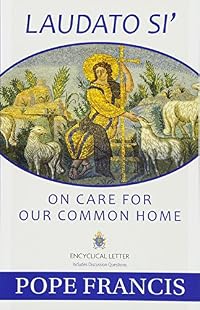
Laudato si': On Care for Our Common Home
by Papa Francesco
Papal Magisterial Documents (Encicliche — 2015)
There is 1 current discussion about this work.
On This Page
Description
"In the "Encyclical on Climate Change and Inequality," the beloved Pope exhorts the world to combat environmental degradation and its impact on the poor. In a stirring, clarion call that is not merely aimed at Catholic readers but rather at a wide, lay audience, the Pope cites the overwhelming scientific evidence of climate change, and does not hesitate to detail how it is the result of a historic level of unequal distribution of wealth."--Provided by publisher.Tags
Recommendations








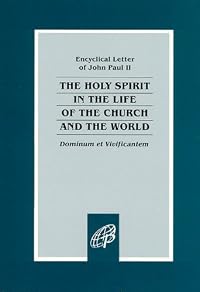
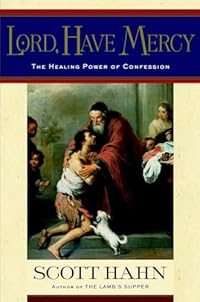
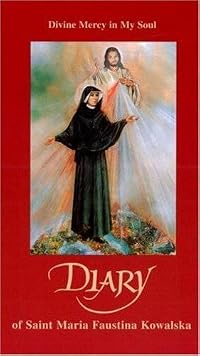
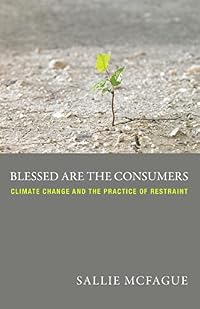

Member Recommendations

by anonymous user
Member Reviews
As books on sustainability go, this one is a light read--which is not bad given the intended audience. As expected, religious reasons for sustainability are not withheld, with a heavy dose of Roman Catholic doctrine included. More than a bit word-heavy in places. Being in the sustainability profession, I did not see much new.
The encyclical is a good read, and demonstrates a tread in the Catholic Church, should the bishops as a whole get on board with its concepts, a useful framework for achieving work towards coping with the climate changes we all face. I'm not a Catholic, but the work seems to approve of the involvement of that community of believers in the struggle to survive the the next century, and thus is worthy of favourable comment. It is short on hard data, but I am sure does provide useful precepts and good pithy quotes on the overall topics. Like Naomi Klein's "This Changes Everything", the modern Oil business does get a good deal of criticism in these pages. It is well deserved.
At the end of the Papal document Laudato Si, Pope Francis says that integral political life, and proper ecology along with it, can be renewed by community actions. As the world gains in its understanding of the world as a host of sacramental signs it can "...regain the conviction that we need one another, that we have a shared responsibility for others and the world, and that being good and decent are worth it." (#229) Francis then quotes St. John of the Cross from The Spiritual Canticle that all the goodness present in the realities and experiences of this world is present in God eminently and infinitely, or more properly, in each of these sublime realities is God (#234). This is based on John of the Cross' own reliance on Thomas show more Aquinas' fourth proof for the existence of God following degrees of being. This is a proof of God based on contemplation of the things in the world and seeing how they are all remarkably beautiful and yet don't exhaust beauty itself. The contemplation must travel further to that which is beauty itself without qualification or specific difference.
Francis at the conclusion of this encyclical letter wants all people to engage in dialogue about our common home. This is the purpose for the work and may have been, unfortunately, a little too ambitious.
A large part of the letter tries to combine the critical theory of the German sociologist Adorno (never mentioned by name) with 'the best research' available on the ecological crisis.
Encyclical Letters are a type of work unto themselves and have to be read with an eye toward the author, a sitting Pope, and the audience, which varies. He wants a new dialogue with every living person on the planet (#3) "about how we are shaping the future of our planet. We need a conversation which includes everyone, since the environmental challenge we are undergoing, and its human roots, concern us all." (#13)
One of the avenues excluded by Francis was population control. Nothing is added to his not entertaining population control, but historically it has led to eugenics, forced birth control, or genocide.
The best way to characterize this work as a whole is as a human ecology which aims to preserve the planet and its resources for future generations by changing lifestyles which might damage the planet and it's poorer populations.
This letter was not received well in the USA as it focused on mythological idea of technological change always being true 'progress' and excessive consumerism which despoils land and causes further migrations of people.
The Pope was criticized by some readers as being anti-capitalist or seeing capitalism as the sole source of human misery. Francis has, since publication, said that he could have been more balanced in his presentation but it is difficult to see how given his outlook (Adorno) and the untested hypothesizes of global warming researchers.
Some interpreted his statements as taking prima facie true the "claims" of global warming researchers for scientific fact. Francis himself defines this work as an addition to the Catholic Church's social teaching and not as a rhetorical work to believe researchers instead of factual understandings (#15). Obama has used the Pope's name several times to justify his own global warming positions. The Pope repudiates Obama's prized carbon offsets and cap and trade as ways for the rich to continue polluting within the mythical framework of care for the environment. show less
Francis at the conclusion of this encyclical letter wants all people to engage in dialogue about our common home. This is the purpose for the work and may have been, unfortunately, a little too ambitious.
A large part of the letter tries to combine the critical theory of the German sociologist Adorno (never mentioned by name) with 'the best research' available on the ecological crisis.
Encyclical Letters are a type of work unto themselves and have to be read with an eye toward the author, a sitting Pope, and the audience, which varies. He wants a new dialogue with every living person on the planet (#3) "about how we are shaping the future of our planet. We need a conversation which includes everyone, since the environmental challenge we are undergoing, and its human roots, concern us all." (#13)
One of the avenues excluded by Francis was population control. Nothing is added to his not entertaining population control, but historically it has led to eugenics, forced birth control, or genocide.
The best way to characterize this work as a whole is as a human ecology which aims to preserve the planet and its resources for future generations by changing lifestyles which might damage the planet and it's poorer populations.
This letter was not received well in the USA as it focused on mythological idea of technological change always being true 'progress' and excessive consumerism which despoils land and causes further migrations of people.
The Pope was criticized by some readers as being anti-capitalist or seeing capitalism as the sole source of human misery. Francis has, since publication, said that he could have been more balanced in his presentation but it is difficult to see how given his outlook (Adorno) and the untested hypothesizes of global warming researchers.
Some interpreted his statements as taking prima facie true the "claims" of global warming researchers for scientific fact. Francis himself defines this work as an addition to the Catholic Church's social teaching and not as a rhetorical work to believe researchers instead of factual understandings (#15). Obama has used the Pope's name several times to justify his own global warming positions. The Pope repudiates Obama's prized carbon offsets and cap and trade as ways for the rich to continue polluting within the mythical framework of care for the environment. show less
The encyclical captures the interconnectedness of social, economic and environmental justice in building and protecting Our Common Home. It highlights the "intimate relationship between the poor and the fragility of the planet".
Groundbreaking focusing of the Roman Catholic church's spiritual and practical attention to earthcare. A significant addition of an important ally toward the salvation of our planet. One major topic apparently not addressed, indeed undermined, is that of the pressure of overpopulation.
One of the many marvelous things about Pope Francis' encyclical on the environment, "Laudato Si', on Care for Our Common Home," is that it is written in a very accessible style. It does not read like an academic tome as did many encyclicals of the past. Anyone who can read a newspaper can read this encyclical and get something out of it.
The impact of the encyclical is going to be significant even outside the Catholic church. Environmentalists and scientists have endorsed the document. Likewise, non-Catholic religious leaders are eager to discuss the encyclical, which will become a topic of ecumenical and interreligious dialogue.
The impact of the encyclical is going to be significant even outside the Catholic church. Environmentalists and scientists have endorsed the document. Likewise, non-Catholic religious leaders are eager to discuss the encyclical, which will become a topic of ecumenical and interreligious dialogue.
I’ve been reading Naomi Klein’s “This Changes Everything.” It’s a primer in 21st century environmentalism. It’s a large book, and just covers the bare minimum of what anybody anywhere near the environmental movement should be fully aware. But if you don’t have time for such a text, and want something more sweeping and inspiring, read this.
Our pope’s recent encyclical is a groundbreaking text. I would go as far as to call it a turning point in the role of the Catholic Church in the history of humanity. There have been other inflection points, but I don’t think they’ve been as pronounced.
I think the best way to illustrate this is by looking directly at the text.
Table of Contents
- What is Happening to Our Common Home
- show more The Gospel of Creation
- The Human Roots of the Ecological Crisis
- Integral Ecology
- Lines of Approach and Action
- Ecological Education and Spirituality
Quotes
“[Saint] Francis asked that part of the friary garden always be left untouched, so that wild flowers and herbs could grow there.”
“Our goal is not to amass information or to satisfy curiosity, but rather to become painfully aware, to dare to turn what is happening to the world into our own personal suffering and thus to discover what each of us can do about it."
“The climate is a common good, belonging to all and meant for all."
“We seem to think that we can substitute an irreplaceable and irretrievable beauty with something which we have created ourselves."
“Real relationships with others, with all the challenges they entail, now tend to be replaced by a type of internet communication which enables us to choose or eliminate relationships at whim, thus giving rise to a new type of contrived emotion which has more to do with devices and displays than with other people and nature. Todays media do enable us to communicate and to share our knowledge and affections. Yet at times they also shield us from direct contact with the pain, the fears and the joys of others and the complexity of their personal experiences. For this reason, we should be concerned that, alongside the exciting possibilities offered by these media, a deep and melancholic dissatisfaction with interpersonal relations, or a harmful sense of isolation, can also arise."
“The foreign debt of poor countries has become a way of controlling them, yet this is not the case where ecological debt is concerned."
“As often occurs in periods of deep crisis which require bold decisions, we are tempted to think that what is happening is not entirely clear."
“Given the complexity of the ecological crisis and its multiple causes, we need to realize that the solutions will not emerge from just one way of interpreting and transforming reality."
“God rejects every claim to absolute ownership."
“Land shall not be sold in perpetuity.” - Leviticus
“Creatures exist only in dependence on each other, to complete each other, in the service of each other."
“There is always a social mortgage on all private property.” - Saint John Paul II
“Contemporary man has not been trained to use power well, because our immense technological development has not been accompanied by a development in human responsibility, values and conscience."
“It has become countercultural to choose a lifestyle whose goals are even partly independent of technology."
“The fragmentation of knowledge proves helpful for concrete applications, and yet it often leads to a loss of appreciation for the whole."
“We are faced not with two separate crises, one environmental and the other social, but rather with one complex crisis which is both social and environmental."
“There is a need to incorporate the history, culture, and architecture of each place, thus preserving its original identity."
For indigenous peoples, “land is not a commodity but rather a gift from God and from their ancestors who rest there, a sacred space with which they need to interact if they are to maintain their identity and values."
“The post-industrial period may well be remembered as one of the most irresponsible in history."
“It is not enough to balance, in the medium term, the protection of nature with financial gains, or the preservation of the environment with progress. Halfway measures simply delay the inevitable disaster. Put simply, it is a matter of redefining our notion of progress."
“No one can cultivate a sober and satisfying life without being at peace with him or herself… Inner peace is closely related to care for ecology and for the common good because, lived out authentically, it is reflected in a balanced lifestyle together with a capacity for wonder which takes us to a deeper understanding of life."
“We tend to demean contemplative rest as something unproductive and unnecessary, but this is to do away wit the very thing which is most important about work: its meaning."
Notable Terms
Sister earth
Integral ecology
Social ecology
Subsidiarity show less
Our pope’s recent encyclical is a groundbreaking text. I would go as far as to call it a turning point in the role of the Catholic Church in the history of humanity. There have been other inflection points, but I don’t think they’ve been as pronounced.
I think the best way to illustrate this is by looking directly at the text.
Table of Contents
- What is Happening to Our Common Home
- show more The Gospel of Creation
- The Human Roots of the Ecological Crisis
- Integral Ecology
- Lines of Approach and Action
- Ecological Education and Spirituality
Quotes
“[Saint] Francis asked that part of the friary garden always be left untouched, so that wild flowers and herbs could grow there.”
“Our goal is not to amass information or to satisfy curiosity, but rather to become painfully aware, to dare to turn what is happening to the world into our own personal suffering and thus to discover what each of us can do about it."
“The climate is a common good, belonging to all and meant for all."
“We seem to think that we can substitute an irreplaceable and irretrievable beauty with something which we have created ourselves."
“Real relationships with others, with all the challenges they entail, now tend to be replaced by a type of internet communication which enables us to choose or eliminate relationships at whim, thus giving rise to a new type of contrived emotion which has more to do with devices and displays than with other people and nature. Todays media do enable us to communicate and to share our knowledge and affections. Yet at times they also shield us from direct contact with the pain, the fears and the joys of others and the complexity of their personal experiences. For this reason, we should be concerned that, alongside the exciting possibilities offered by these media, a deep and melancholic dissatisfaction with interpersonal relations, or a harmful sense of isolation, can also arise."
“The foreign debt of poor countries has become a way of controlling them, yet this is not the case where ecological debt is concerned."
“As often occurs in periods of deep crisis which require bold decisions, we are tempted to think that what is happening is not entirely clear."
“Given the complexity of the ecological crisis and its multiple causes, we need to realize that the solutions will not emerge from just one way of interpreting and transforming reality."
“God rejects every claim to absolute ownership."
“Land shall not be sold in perpetuity.” - Leviticus
“Creatures exist only in dependence on each other, to complete each other, in the service of each other."
“There is always a social mortgage on all private property.” - Saint John Paul II
“Contemporary man has not been trained to use power well, because our immense technological development has not been accompanied by a development in human responsibility, values and conscience."
“It has become countercultural to choose a lifestyle whose goals are even partly independent of technology."
“The fragmentation of knowledge proves helpful for concrete applications, and yet it often leads to a loss of appreciation for the whole."
“We are faced not with two separate crises, one environmental and the other social, but rather with one complex crisis which is both social and environmental."
“There is a need to incorporate the history, culture, and architecture of each place, thus preserving its original identity."
For indigenous peoples, “land is not a commodity but rather a gift from God and from their ancestors who rest there, a sacred space with which they need to interact if they are to maintain their identity and values."
“The post-industrial period may well be remembered as one of the most irresponsible in history."
“It is not enough to balance, in the medium term, the protection of nature with financial gains, or the preservation of the environment with progress. Halfway measures simply delay the inevitable disaster. Put simply, it is a matter of redefining our notion of progress."
“No one can cultivate a sober and satisfying life without being at peace with him or herself… Inner peace is closely related to care for ecology and for the common good because, lived out authentically, it is reflected in a balanced lifestyle together with a capacity for wonder which takes us to a deeper understanding of life."
“We tend to demean contemplative rest as something unproductive and unnecessary, but this is to do away wit the very thing which is most important about work: its meaning."
Notable Terms
Sister earth
Integral ecology
Social ecology
Subsidiarity show less
Members
- Recently Added By
Lists

Top Five Books of 2016
795 works; 229 members

Books Read in 2016
4,666 works; 197 members

Top Five Books of 2025
954 works; 303 members

The Five Books That Represent Us
390 works; 147 members
Talk Discussions
Current Discussions
Laudato Si' follow up in Catholic Tradition (May 30)
Past Discussions
Laudato Si': Chapter 1 in Catholic Tradition (December 2016)
Author Information

691+ Works 11,122 Members
Pope Francis, born Jorge Mario Bergoglio on December 17, 1936, is the 266th Pope of the Catholic Church. Throughout his life, both as an individual and as a religious leader, Pope Francis has been noted for his humility, his concern for the poor, and his commitment to dialogue as a way to build bridges between people of all backgrounds, beliefs, show more and faiths. show less
Some Editions
Series

Work Relationships
Is contained in
Is abridged in
Is replied to in
Inspired
A Theology of Creation: Ecology, Art, and Laudato Si' (Catholic Ideas for a Secular World) by Thomas S. Hibbs
Care for the World: Laudato Si' and Catholic Social Thought in an Era of Climate Crisis (Law and Christianity) by Frank Pasquale
CUIDAR DE LA TIERRA, CUIDAR DE LOS POBRES. Laudato si' desde la teología y con la ciencia (Presencia Teológica nº 233) (Spanish Edition) by Enrique Sanz Giménez-Rico (Ed.)
Ein Brief für die Welt: Die Enzyklika Laudato si von Papst Franziskus für Kinder erklärt by Hubert Gaisbauer
Eucharist and Laudato Si. Care for our common home. Liturgical resources to celebrate a Catholic Season of Creation during September by Charles Rue
Ideologías ambientales y pan ambientalismo. Desde las teorías clásicas, hasta las nuevas nociones del "buen vivir" "Sumak Kawsay" o "Suma Qamaña" y la Carta Encíclica Laudato Si de Su Santidad Francisco I by María Victoria Zarabozo Mila
La ecología del Papa Francisco : un mensaje para un planeta y un mundo en crisis : reflexiones ecológicas sobre la carta encíclica "Laudato si'" sobre el cuidado de la casa común by Enrique Figueroa Clemente
Laudato Si' : lecturas desde America Latina : desarrollo, exclusivo social y ecologia integral by Jorge R. Seibold
Laudato si' : l'appello di papa Francesco : sviluppo agricolo e lotta alla fame by Fernando Chica Arellano
Has as a reference guide/companion
Has as a study
Common Knowledge
- Canonical title
- Laudato si': On Care for Our Common Home
- Original title
- Laudato si'
- Original publication date
- 2015
Classifications
- Genres
- Religion & Spirituality, Nonfiction, Science & Nature, General Nonfiction
- DDC/MDS
- 261.8 — Religion Christian organization, social work & worship Social theology and interreligious relations and attitudes Christianity and socioeconomic problems
- LCC
- BX1795 .H82 .C38313 — Philosophy, Psychology and Religion Christian Denominations Christian Denominations Catholic Church
- BISAC
Statistics
- Members
- 1,270
- Popularity
- 19,178
- Reviews
- 19
- Rating
- (4.17)
- Languages
- 14 — Catalan, Czech, Dutch, English, Estonian, Finnish, French, German, Italian, Latin, Polish, Spanish, Swedish, Portuguese (Portugal)
- Media
- Paper, Audiobook, Ebook
- ISBNs
- 110
- UPCs
- 1
- ASINs
- 23