On This Page
Description
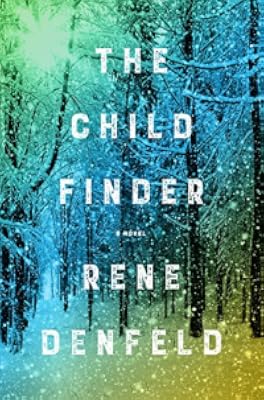
Three years ago Madison Culver went missing at the age of five while looking for a Christmas tree with her family. Private investigator Naomi Cottle continues the investigation and believes that Madison's disappearance can only be the result of an abduction. Naomi's personal journey from foster child to adulthood parallels her search for Madison, and as her fears and sources of determination come to light, the narrative also dips into Madison's mind, allowing readers to experience her show more terrifying ordeal at the hands of her captor. show lessTags
Recommendations

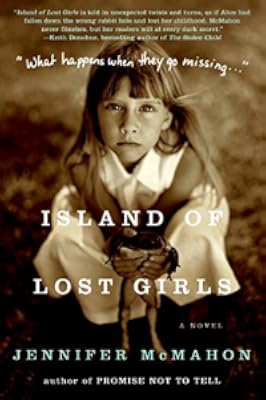
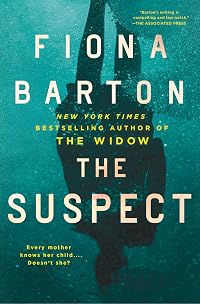
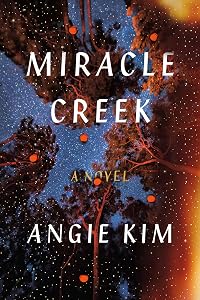
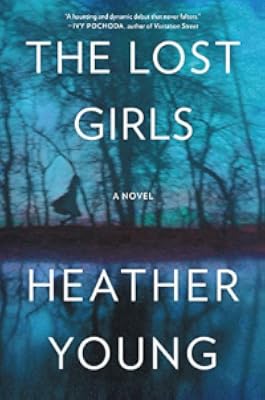

Member Recommendations
Member Reviews
Page-turning contemporary mystery about a woman with a calling to search for missing children due to her own traumatic past. The main storyline, told primarily by the Child Finder and the Snow Child, is the search for a child missing for three years in the Oregon snow country.
I found both the primary and minor characters well-drawn. I could easily imagine the store owner, the poachers and trappers, the ranger, the sheriff, the best friend, and the foster mom. The language enabled me to picture the atmosphere of the snow-covered mountains of the sparsely-populated back country of Oregon. I thought the author brought a fresh perspective to an established theme by writing from the child’s point of view, using a fantasy method employed show more by children for self-protection. It is easy to pick up the clues along the way, but I think this is intentional on the author’s part. I found it more a story of responses to trauma, and coping mechanisms, than a standard mystery. The Child Finder exhibits lingering effects from her own abduction (which we are aware of from the beginning), such as a lack of trust, inability to form deep emotional attachments, and unexplained desire to run away from even those that care for and love her. Even though these traits may distance her somewhat from the reader, I felt it was authentic and very well done by the author. The primary drawback was the obvious setup for a sequel. For example, the romantic plot line seemed out of place.
Due to the subject matter, an extra level of warning is warranted. This book contains content related to child abduction, child abuse, and pedophilia. Sexual assault aspects are handled from a child’s perspective, so it was not as graphic as it could have been. There are also scenes related to trapping and killing of animals. show less
I found both the primary and minor characters well-drawn. I could easily imagine the store owner, the poachers and trappers, the ranger, the sheriff, the best friend, and the foster mom. The language enabled me to picture the atmosphere of the snow-covered mountains of the sparsely-populated back country of Oregon. I thought the author brought a fresh perspective to an established theme by writing from the child’s point of view, using a fantasy method employed show more by children for self-protection. It is easy to pick up the clues along the way, but I think this is intentional on the author’s part. I found it more a story of responses to trauma, and coping mechanisms, than a standard mystery. The Child Finder exhibits lingering effects from her own abduction (which we are aware of from the beginning), such as a lack of trust, inability to form deep emotional attachments, and unexplained desire to run away from even those that care for and love her. Even though these traits may distance her somewhat from the reader, I felt it was authentic and very well done by the author. The primary drawback was the obvious setup for a sequel. For example, the romantic plot line seemed out of place.
Due to the subject matter, an extra level of warning is warranted. This book contains content related to child abduction, child abuse, and pedophilia. Sexual assault aspects are handled from a child’s perspective, so it was not as graphic as it could have been. There are also scenes related to trapping and killing of animals. show less
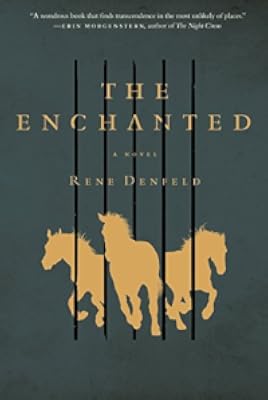
Somehow I managed to miss The Enchanted until it got reduced by Amazon to an affordable sale price. But my friend Tori put Rene Denfeld on my radar, so I've been following her on Facebook and anxiously awaiting the release of The Child Finder.
I'm tempted to give this a one-word review. WOW.
Is it a thriller? Is it a fairy tale that takes the long way around to get to the "happily ever after"? It's kind of both. It tells a horrifying story in a beautiful, poetic way. There's just enough distance between the reader and the story to keep it from being too hard to take. There were times I had to remind myself what was really happening. I don't know if I could have read this as a traditional thriller. But as whatever this is, I loved it and show more HIGHLY recommend. show less
I'm tempted to give this a one-word review. WOW.
Is it a thriller? Is it a fairy tale that takes the long way around to get to the "happily ever after"? It's kind of both. It tells a horrifying story in a beautiful, poetic way. There's just enough distance between the reader and the story to keep it from being too hard to take. There were times I had to remind myself what was really happening. I don't know if I could have read this as a traditional thriller. But as whatever this is, I loved it and show more HIGHLY recommend. show less
i don't think i've ever read a book i would describe this way, but this is just so gentle. it's not beautiful or lyrical (in the way i generally mean that), but it is lovely and just so gentle and delicate. which is especially surprising considering the subject matter is trauma and abuse.
i had been surprised when i saw this on lists of thrillers/mysteries, and i understand why it was put there, but this is neither. (if someone picks this up thinking they're getting a thriller, and wanting a heart-pounding race to a big twist, they will wonder what in the world they are reading.) this is literary, but not quite what i'm used to there, either. it's much simpler writing than i'd expected; she's saying a lot without wasting words to say show more it.
i love the compassion she brings to this story. when i read the bone people i said i'd never read a book that treats child abuse the way hulme did in that book. reading this now, i was reminded of that because both authors show a more full story - all sides of it - than we usually get. denfeld has love for the abuser, and understanding where it is due; she shows the love that can (and does) exist between the child and the person hurting them. i love the reality in that, because it's a truth we just don't acknowledge often. and it shapes how we handle these cases (and similar ones) and would probably make such a difference to survivors if we were more honest about that as a society. and it's a brave thing to do, as an author, because no one wants to be misunderstood as siding with the abuse or saying it's in any way justified or understandable. but in seeing that abusers also love and have goodness in them - and that their victims love them and have a relationship with them that is more than just fear and hurt - this brings such humanity to the story and i'm grateful whenever i find this in literature.
the incorporation of the fairy-tale-ness of it (in the actual little snippets of fairy tale, the way madison calls herself the snow girl, the beautiful and tragic scene where she tries to make a snow sister come alive, the trail of string that leads like hansel and gretl's bread crumbs, the feeling evoked) is really well done. the book is extremely atmospheric, and the fairy tales lend to this.
this wasn't what i expected, but i really did like it, and i like so much of what she's doing and saying here. and there's plenty more to think about. plus the beauty she manages to paint while telling a story that is filled with sadness; it's so true to life, filled with compassion, and somehow not usually the way we show this world. i really appreciate that she's written this, in this way.
"Each missing place was a portal."
"As always, after having the dream, she tried to uncover the truth. What part was reality and what part was fantasy? Are the stories we tell ourselves true or based on what we dream them to be?"
"She even found a way to share it with Mr. B, playing tag in the woods, alive as if he had never played before. What a sad thing that is, a grown man who has never played."
"Madison didn't understand that people can be good and bad. Not like little-mistakes bad. Like big-mistakes bad. Like go-to-jail bad.
She didn't know that when you have that kind of bad inside you, it's not like your goodness is hiding it. It is more like the badness and the goodness are all mixed together.
Madison didn't know you can love someone who is bad." show less
i had been surprised when i saw this on lists of thrillers/mysteries, and i understand why it was put there, but this is neither. (if someone picks this up thinking they're getting a thriller, and wanting a heart-pounding race to a big twist, they will wonder what in the world they are reading.) this is literary, but not quite what i'm used to there, either. it's much simpler writing than i'd expected; she's saying a lot without wasting words to say show more it.
i love the compassion she brings to this story. when i read the bone people i said i'd never read a book that treats child abuse the way hulme did in that book. reading this now, i was reminded of that because both authors show a more full story - all sides of it - than we usually get. denfeld has love for the abuser, and understanding where it is due; she shows the love that can (and does) exist between the child and the person hurting them. i love the reality in that, because it's a truth we just don't acknowledge often. and it shapes how we handle these cases (and similar ones) and would probably make such a difference to survivors if we were more honest about that as a society. and it's a brave thing to do, as an author, because no one wants to be misunderstood as siding with the abuse or saying it's in any way justified or understandable. but in seeing that abusers also love and have goodness in them - and that their victims love them and have a relationship with them that is more than just fear and hurt - this brings such humanity to the story and i'm grateful whenever i find this in literature.
the incorporation of the fairy-tale-ness of it (in the actual little snippets of fairy tale, the way madison calls herself the snow girl, the beautiful and tragic scene where she tries to make a snow sister come alive, the trail of string that leads like hansel and gretl's bread crumbs, the feeling evoked) is really well done. the book is extremely atmospheric, and the fairy tales lend to this.
this wasn't what i expected, but i really did like it, and i like so much of what she's doing and saying here. and there's plenty more to think about. plus the beauty she manages to paint while telling a story that is filled with sadness; it's so true to life, filled with compassion, and somehow not usually the way we show this world. i really appreciate that she's written this, in this way.
"Each missing place was a portal."
"As always, after having the dream, she tried to uncover the truth. What part was reality and what part was fantasy? Are the stories we tell ourselves true or based on what we dream them to be?"
"She even found a way to share it with Mr. B, playing tag in the woods, alive as if he had never played before. What a sad thing that is, a grown man who has never played."
"Madison didn't understand that people can be good and bad. Not like little-mistakes bad. Like big-mistakes bad. Like go-to-jail bad.
She didn't know that when you have that kind of bad inside you, it's not like your goodness is hiding it. It is more like the badness and the goodness are all mixed together.
Madison didn't know you can love someone who is bad." show less
My feelings about 'The Child Finder' are a little complicated. It's a book that won me over but mostly because I admired the ethic it was promoting and the empathy with which the characters were drawn. That's more of an achievement than it may sound.
If this book had come with trigger warnings, I might never have bought it. The content is very raw - a five-year-old girl, found in the woods, being held captive for three years, totally isolated, living in primitive conditions, locked away at night. being threatened, beaten and raped by her silent captor. In most books, that would have been too much for me. I'd have been turned off by the voyeurism of it. I know this stuff happens but I don't want it in my head.
The rather startling show more achievement of 'The Child Finder' is to cover these events unblinkingly but with no hint of voyeurism. I think this is because the story is told mostly from the point of view of two characters, Naomi Cuttle, the Child Finder and Maddison Culver, the girl who went missing in the snow-filled forest while her parents looked for a Christmas tree.
The story is told, in alternating chapters, along two asynchronous but converging timelines that move with the gentle rhythm of two rivers flowing slowly towards each other.
Naomi tells the story of the present-day hunt for Madison. Madison tells the story of her abduction and captivity from the time that she got lost in the snow. We learn that, as a child, Naomi escaped from captivity and abuse so traumatic that she won't allow herself to remember it. She is driven and haunted and struggling to build a life beyond searching for missing children.
Madison deals with her captivity by becoming 'Snow Girl', a fairytale character brought into being by her captor and telling herself stories that start 'Once upon a time, there was a little girl called Madison…' Snow Girl is smart, resilient and determined to make it back to a home she only remembers in dreams.
Each story was told using the third person limited point of view which gave a sort of camera lens, arms-length view of the emotions of both of the main characters. This style of storytelling made it easier to control a slow reveal of information and to increase a sense of foreboding. It was also an effective way of presenting feelings that were being filtered through shock or a self-protective numbness but it did make the characters harder to get to know. It meant that admired both of them but didn't really get inside their heads.
As the story unfolded and I learned more about Naomi and Madison, I felt closer to them. It was refreshing to have Madison not coming across as a victim, although she is one, but as a strong resilient, intelligent girl making the best sense she can of her world, and to have Naomi, showing patient persistence that was a fine blend of suspicion and hope.
Although 'The Child Finder' presents a mystery/thriller and an above-average one at that, it is really using that form to do something different. This book reads like a shared truth about survival from the survivor's point of view, about the importance of keeping hope alive and the strength needed to do it.
It's a book about painful things - abused children - lost children - death - loss -guilt - that's not played for melodrama. It's neither voyeuristic nor is it sugar-coated. It's an honest and empathetic look at surviving.
I recommend the audiobook version of 'The Child Finder' performed by Alyssa Bresnahan. Click on the SoundCloud link below to hear a sample.
https://soundcloud.com/harperaudio_us/9780062695352_thechildfinder show less
Naomi devotes her life to finding missing children. Her latest case involves Madison Culver who went missing three years earlier. Naomi’s search is focused on the Skookum National Forest in Oregon where 5-year-old Madison wandered away from her family during a Christmas tree hunt. Naomi is not just searching for a lost girl; she is also looking for her past. She herself was an abducted child though she has no memories from before her escape.
There is not much suspense because we are given Madison’s point of view. She is being held by a man whom she just calls Mr. B. She reinvents herself as the Snow Girl from a favourite fairy tale. When Naomi thinks about abducted children, she reflects that “the ones who did the best in the long show more run made a safe place inside their very own minds. Sometimes they even pretended they were someone else. Naomi didn’t believe in resilience. She believed in imagination.” It does not take a genius to figure out Madison’s fate. It is also very obvious who Mr. B actually is. There is a final scene where danger is used to create suspense, but, again, the outcome is predictable.
The author can be commended for not treating child victimization and abuse as entertainment. References to Madison’s treatment are indirect; there is no graphic, gratuitous violence. Instead, we have oblique but telling statements: “Mr. B’s hands were gentle – when he was setting the traps” and “He was wise and kind when he wasn’t angry with her.” Denfeld also manages to show compassion for Mr. B. As details of his past are revealed, the reader cannot but feel some sympathy and understanding for a damaged person. Mr. B is not to be seen as totally evil: “Madison didn’t understand that people can be good and bad. . . . She didn’t know that when you have that kind of bad inside you, it is not like your goodness is hiding it. It is more like the badness and the goodness are all mixed together.”
I did not find Naomi a character with whom I could connect though her tenacity is admirable. She is relentless in her investigations, but her obsession means that she has few friends and remains distant with her foster family. She doesn’t even spend time with her foster mother when she is dying; Naomi just leaves her foster brother to look after the woman who adopted her! She is even warned, “’We all need a sense of purpose . . . Be careful the purpose doesn’t destroy you.’” Naomi is close to very few people, but all three men in her life fall in love with her?!
There are touches of sentimentality that detract from the quality of the writing. One of Naomi’s male admirers feels rejected “But he wasn’t about to give up. His heart told him so.” There are statements like, “Her entire life she had been running from terrifying shadows she could no longer see – and in escape she ran straight into life. ” And Naomi is seen as “the wind traveling over the field, always searching, never stopping, and never knowing that true piece is when you curl around one little piece of something. One little fern. One little frond. One person to love.”
The message is one of hope. Though we live in a fragmented world where “People had a way of appearing and disappearing in one another’s lives” and though “America was an iceberg shattered into a billion fragments, and on each stood a person, rotating like an ice floe in a storm,” there is hope because “No matter how far you have run, no matter how long you have been lost, it is never too late to be found.”
I can’t believe the number of 5-star reviews this book has received. In my view, it is just average.
Please check out my reader's blog (https://schatjesshelves.blogspot.ca/) and follow me on Twitter (@DCYakabuski). show less
There is not much suspense because we are given Madison’s point of view. She is being held by a man whom she just calls Mr. B. She reinvents herself as the Snow Girl from a favourite fairy tale. When Naomi thinks about abducted children, she reflects that “the ones who did the best in the long show more run made a safe place inside their very own minds. Sometimes they even pretended they were someone else. Naomi didn’t believe in resilience. She believed in imagination.” It does not take a genius to figure out Madison’s fate. It is also very obvious who Mr. B actually is. There is a final scene where danger is used to create suspense, but, again, the outcome is predictable.
The author can be commended for not treating child victimization and abuse as entertainment. References to Madison’s treatment are indirect; there is no graphic, gratuitous violence. Instead, we have oblique but telling statements: “Mr. B’s hands were gentle – when he was setting the traps” and “He was wise and kind when he wasn’t angry with her.” Denfeld also manages to show compassion for Mr. B. As details of his past are revealed, the reader cannot but feel some sympathy and understanding for a damaged person. Mr. B is not to be seen as totally evil: “Madison didn’t understand that people can be good and bad. . . . She didn’t know that when you have that kind of bad inside you, it is not like your goodness is hiding it. It is more like the badness and the goodness are all mixed together.”
I did not find Naomi a character with whom I could connect though her tenacity is admirable. She is relentless in her investigations, but her obsession means that she has few friends and remains distant with her foster family. She doesn’t even spend time with her foster mother when she is dying; Naomi just leaves her foster brother to look after the woman who adopted her! She is even warned, “’We all need a sense of purpose . . . Be careful the purpose doesn’t destroy you.’” Naomi is close to very few people, but all three men in her life fall in love with her?!
There are touches of sentimentality that detract from the quality of the writing. One of Naomi’s male admirers feels rejected “But he wasn’t about to give up. His heart told him so.” There are statements like, “Her entire life she had been running from terrifying shadows she could no longer see – and in escape she ran straight into life. ” And Naomi is seen as “the wind traveling over the field, always searching, never stopping, and never knowing that true piece is when you curl around one little piece of something. One little fern. One little frond. One person to love.”
The message is one of hope. Though we live in a fragmented world where “People had a way of appearing and disappearing in one another’s lives” and though “America was an iceberg shattered into a billion fragments, and on each stood a person, rotating like an ice floe in a storm,” there is hope because “No matter how far you have run, no matter how long you have been lost, it is never too late to be found.”
I can’t believe the number of 5-star reviews this book has received. In my view, it is just average.
Please check out my reader's blog (https://schatjesshelves.blogspot.ca/) and follow me on Twitter (@DCYakabuski). show less
Page-turning contemporary mystery about a woman with a calling to search for missing children due to her own traumatic past. The main storyline, told primarily by the Child Finder and the Snow Child, is the search for a child missing for three years in the Oregon snow country.
I found both the primary and minor characters well-drawn. I could easily imagine the store owner, the poachers and trappers, the ranger, the sheriff, the best friend, and the foster mom. The language enabled me to picture the atmosphere of the snow-covered mountains of the sparsely-populated back country of Oregon. I thought the author brought a fresh perspective to an established theme by writing from the child’s point of view, using a fantasy method employed show more by children for self-protection. It is easy to pick up the clues along the way, but I think this is intentional on the author’s part. I found it more a story of responses to trauma, and coping mechanisms, than a standard mystery. The Child Finder exhibits lingering effects from her own abduction (which we are aware of from the beginning), such as a lack of trust, inability to form deep emotional attachments, and unexplained desire to run away from even those that care for and love her. Even though these traits may distance her somewhat from the reader, I felt it was authentic and very well done by the author. The primary drawback was the obvious setup for a sequel. For example, the romantic plot line seemed out of place.
Due to the subject matter, an extra level of warning is warranted. This book contains content related to child abduction, child abuse, and pedophilia. Sexual assault aspects are handled from a child’s perspective, so it was not as graphic as it could have been. There are also scenes related to trapping and killing of animals. show less
I found both the primary and minor characters well-drawn. I could easily imagine the store owner, the poachers and trappers, the ranger, the sheriff, the best friend, and the foster mom. The language enabled me to picture the atmosphere of the snow-covered mountains of the sparsely-populated back country of Oregon. I thought the author brought a fresh perspective to an established theme by writing from the child’s point of view, using a fantasy method employed show more by children for self-protection. It is easy to pick up the clues along the way, but I think this is intentional on the author’s part. I found it more a story of responses to trauma, and coping mechanisms, than a standard mystery. The Child Finder exhibits lingering effects from her own abduction (which we are aware of from the beginning), such as a lack of trust, inability to form deep emotional attachments, and unexplained desire to run away from even those that care for and love her. Even though these traits may distance her somewhat from the reader, I felt it was authentic and very well done by the author. The primary drawback was the obvious setup for a sequel. For example, the romantic plot line seemed out of place.
Due to the subject matter, an extra level of warning is warranted. This book contains content related to child abduction, child abuse, and pedophilia. Sexual assault aspects are handled from a child’s perspective, so it was not as graphic as it could have been. There are also scenes related to trapping and killing of animals. show less
The Child Finder by Rene Denfeld was an emotionally wrenching experience for me. The book is sensitively written from perspectives of which nightmares are made of, yet without graphic, shocking or lurid descriptions. By virtue of the latter, I was able to open my eyes and ears (both of which had shut down instinctively as soon as I realized what subject I would be forced to cope with before the end of the book). Naomi, is the child finder, and she has honed her skills to match her mental ability to track down children who have disappeared, both dead or alive. She is very good at what she does, intuitive, and can get into the heads of both the children and the parents of the children she is searching for (and into the heads of show more perpetrators where relevant). Moreover, she was abducted as a child and experienced unspeakable physical and mental horrors, before she managed to escape and be placed in the foster care of a kind and giving woman. She does not remember anything from before the abduction and her story is a separate story which is shared for the purpose of understanding the character and her motivations - but not ultimately resolved in the novel. There are several heartbreaking stories woven into the book, not the least of which was the tragic story of B. The stories are imparted with such tender restraint that I remained in awe and was inspired by the author’s talent. show less
Members
- Recently Added By
Lists

To Read
617 works; 7 members

Books Read in 2017
4,249 works; 130 members

Top Five Books of 2017
757 works; 231 members

Books Read in 2018
4,360 works; 110 members

Review 1
30 works; 1 member

Books Tagged Abuse
152 works; 4 members
Author Information

8+ Works 3,074 Members
Rene Denfeld is an American author, based in Oregon. Her essays have been published in the New York Times and other publication. She is the author of two novels, The Enchanted, which received the Prix du Premier Roman Etranger in France, and The Child Finder, which has become an international bestseller. In addition to writing, she was a Chief show more Investigator at a public defender's office, investigating death penalty cases. Her work in social justice has earned her the 2017 Break The Silence Award, given at the 24th Annual Knock Out Abuse Gala in Washington DC. (Bowker Author Biography) show less
Some Editions
Awards and Honors
Awards
Distinctions
Series

Common Knowledge
- Canonical title
- The Child Finder
- Original publication date
- 2017-09-05
- People/Characters
- Naomi Cottle; Jerome Cottle; Madison Culver; Mary Cottle
- Important places
- Oregon, USA
- Dedication
- For Ariel
- First words
- The home was a small yellow cottage on an empty street.
- Last words
- (Click to show. Warning: May contain spoilers.)This is something I know: no matter how far you have run, no matter how long you have been lost, it is never too late to be found.
- Blurbers
- Morgenstern, Erin; Homes, A.M.; Butler, Nickolas
- Original language
- English, US
Classifications
Statistics
- Members
- 1,223
- Popularity
- 20,193
- Reviews
- 84
- Rating
- (3.94)
- Languages
- 5 — Dutch, English, French, German, Spanish
- Media
- Paper, Audiobook, Ebook
- ISBNs
- 29
- ASINs
- 6