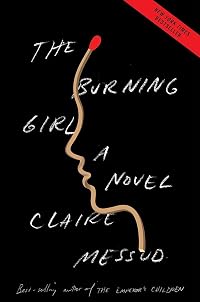
The Burning Girl
by Claire Messud
On This Page
Description
Julia and Cassie have been friends since nursery school. They have shared everything, including their desire to escape the stifling limitations of their birthplace, the quiet town of Royston, Massachusetts. But as the two girls enter adolescence, their paths diverge and Cassie sets out on a journey that will put her life in danger and shatter her oldest friendship.Tags
Recommendations


















Member Reviews
This is the story of Cassie, as seen through the eyes of her best friend, JuJu. The two girls were inseparable, and during the summer before they began middle school, they wandered all over their small Massachusetts town and the woods around it, but beginning in middle school, the girls drift apart, a process that JuJu finds confusing and painful. She's been put in all the advanced classes, while Cassie falls in with the crowd of popular kids who party. From a distance, JuJu watches Cassie change and when she gains a stepfather, the speed at which she embraces a risky lifestyle increases.
Messud has done a good job in writing her adolescent characters. JuJu is intelligent and insightful, but she's also full of the drama of the show more situation. The book is told from JuJu's POV and the author restricts the level of information the reader is given to what JuJu knows, which means we are getting Cassie's story in random sudden lumps and through hearsay, which was surprisingly effective, even as it meant that a lot of the questions remain unanswered. show less
Messud has done a good job in writing her adolescent characters. JuJu is intelligent and insightful, but she's also full of the drama of the show more situation. The book is told from JuJu's POV and the author restricts the level of information the reader is given to what JuJu knows, which means we are getting Cassie's story in random sudden lumps and through hearsay, which was surprisingly effective, even as it meant that a lot of the questions remain unanswered. show less
Julia and Cassie are best friends growing up in tiny, insignificant Royston, Massachusetts. Their story, narrated by Julia, includes an active life of the imagination, which they share and act out during one otherwise unremarkable summer, in an abandoned mental asylum located behind a fence on private property. Julia begins her narration after events have conspired to take Cassie away from her and she has had time to reflect on the behaviour of her eleven- and twelve-year-old self from the vantage point of age sixteen or seventeen. Claire Messud’s psychologically astute and suspenseful novel focuses on the ways in which social peer pressures together with uncomfortable developments in Cassie’s domestic situation distance the girls show more from each other and finally put an end to the friendship by creating an impossible divide. Some of what happens is the inevitable result of growing up, as the two girls meet new people and develop new interests and friendships that don’t necessarily include the other. But it is Cassie’s home life that creates the decisive fracture into which Cassie withdraws, not just from Julia but from most of the people in her life. The trouble starts when her impressionable single mother, Bev, begins dating a man (by all accounts a bit of an oddball) who moves in with them and imposes a restrictive brand of discipline on adolescent, impulsive Cassie. Cassie, who while growing up regarded her mother as a close ally, sees this as a betrayal and rebels. The novel works brilliantly when Messud focuses on the two friends and their intimate bond. However, much of what takes place in the novel’s highly charged final act is relayed second-hand to the reader, by Julia but through a third party, Peter, Cassie’s former boyfriend. One can see why the structure of the novel makes this necessary, but it is an awkward narrative strategy that distances us from the action and blunts our emotional response. But this is a minor quibble. The Burning Girl is another exquisitely written work of fiction by a writer who wields her pen like a scalpel and whose ability to dissect her characters’ motivations is uncanny. show less
4.5 Wow -- this is written by someone who clearly remembers adolescence well. "There are the initial social struggles, and the agonies and embarrassments of puberty and the weight of the world that falls upon each of us in varying degrees, as we finally relinquish childhood's clouds of glory to live, ever after, in our earthly realm." It is so thoughtful and reflective in a way that adds layers to a pretty simple story of 2 childhood friends who grow apart in middle school as one begins to self-destruct. It is narrated by Julia and spans the years from 7th grade through 10th grade as her age-old (since nursery school) friendship with Cassie starts to deteriorated. New friends, different classes, different interests -- some of the show more classic divisions come into play here, but there is also something deeper and more ominous in Cassie's family relationships and dynamics. Julia observes: "It's a different story depending on where you start: who's good, who's bad, what it all means. Each of us shapes our stories so they make sense of who we think we are." Julia is telling backwards, so there are hints and foreshadowing of something bad coming down the line, but the bad is never as truly awful as it could've been. Through her introspection though, it's bad enough for someone whose life has been pretty smooth and sheltered. It reminded me a little bit of A Separate Peace, but for girls and also a bit of The Age of Miracles. Julia says "Sometimes I thought that growing and being a girl was about learning to be afraid." This is the cautionary tone throughout the book. What sets Cassie spinning and away from Julia is her single mother Bev (her father died in an accident when she was a baby she was told) finding a boyfriend who moves in, their pseudo-religious clamp down on her increasingly wild behavior and her deep unhappiness that results. She begins dating Julia's crush, Peter and launches from there to older, wilder boys. Julia mourns the loss of her friendship and her own loss of childhood. She and Peter become guardians of Cassie, watching her from afar, trying to "save" her when she reaches out to them occasionally, but they are in over their heads and so is she. A beautiful story with echoes of ramifications. show less
Claire Messud is a master of characterization. No, you don’t necessarily want to be friends with her characters, but you can’t stop reading about them. This book portrays beautifully the breakdown of friendship that so often happens when girl besties hit puberty. Julia is sad and mystified when her best friend Cassie abandons her for the faster set of “cool kids.” Julia is smart, college-bound, an all-around good girl, and some see Cassie as a bad egg she should be well rid of. Julia, though, sees the anger and dysfunction in Cassie’s overtly “Christian” family, especially after Cassie’s mother takes up with the Worst Boyfriend of All Time.
The book is beautifully constructed and very moving, with enough melodrama and show more Gothic elements to make for a very realistic depiction of teenagers, the most melodramatic demographic on earth. I didn’t like it quite as much as The Woman Upstairs, but I liked it a lot. show less
The book is beautifully constructed and very moving, with enough melodrama and show more Gothic elements to make for a very realistic depiction of teenagers, the most melodramatic demographic on earth. I didn’t like it quite as much as The Woman Upstairs, but I liked it a lot. show less
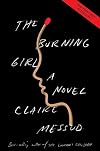
Reading this raw, detailed account of a friendship between two young girls felt like a long, slow burn, rather like seeing the long match that is on the cover burn and extinguish itself. This is because of how absorbed I became in the story and how wrapped up I felt in all the details of their lives and the account that ‘Julia’ gives us of her and her friend Cassie; it almost reads like an autobiography and it feels so raw and tragic.
Messud’s writing is so fleshed out with the character’s every thought, and all the details of the world around them, and unlike a regular stream-of-consciousness (particularly of a teen or young-adult) that might usually be filled with tired unnecessary bad language or similar, every word seems to show more be there for a reason. We need to read it all to know these two girls, and to question whether we do.
The character of Cassie, who really is trying to find her place and identity, after years of thinking one huge thing about herself, to have that idea shattered, is so heartbreaking to me; I have finished this book with a resounding feeling of how often this happens to many people in different ways. I’m also saddened by the changes in the friendship of the two and can relate that to my own experience, but the interesting thing about ‘Burning Girl’ is how the different ‘parts’ of the book show how the friendship evolves, and how Julia comes to terms with it. It really digs deep into how a childhood friendship can change, yet how you always know the essence of that person.
I said the book was a slow burn but I read it within 24 hours and enjoyed it thoroughly. Fantastic, beautiful writing. show less
Messud’s writing is so fleshed out with the character’s every thought, and all the details of the world around them, and unlike a regular stream-of-consciousness (particularly of a teen or young-adult) that might usually be filled with tired unnecessary bad language or similar, every word seems to show more be there for a reason. We need to read it all to know these two girls, and to question whether we do.
The character of Cassie, who really is trying to find her place and identity, after years of thinking one huge thing about herself, to have that idea shattered, is so heartbreaking to me; I have finished this book with a resounding feeling of how often this happens to many people in different ways. I’m also saddened by the changes in the friendship of the two and can relate that to my own experience, but the interesting thing about ‘Burning Girl’ is how the different ‘parts’ of the book show how the friendship evolves, and how Julia comes to terms with it. It really digs deep into how a childhood friendship can change, yet how you always know the essence of that person.
I said the book was a slow burn but I read it within 24 hours and enjoyed it thoroughly. Fantastic, beautiful writing. show less
I think that the majority of reviewers who gave it, on average, 2-3 stars just didn't understand the beauty of the book. The point of it wasn't to have some dramatic plot with twists and turns and everything. The plot was almost irrelevant. It was a beautiful account of a friendship we've all had, and the prose and imagery and symbolism were all so powerful.
This was a frustrating read. It's about two girls, friends since nursery school, who begin to grow apart in middle school but can't quite make a clean break. Messud has something really good to say about female friendship and to what extent we can really know someone, even someone whose thoughts we can practically predict. What fell short for me was some uneven pacing and a lack of development to explain what happened to this friendship. I perhaps wish the book had been longer and more fully explored Cassie and Juju's friendship and estrangement.
Members
- Recently Added By
Lists

Top Five Books of 2017
757 works; 231 members

Powell's Indiespensable
79 works; 6 members

Contemporary Fiction
109 works; 7 members

Kirkus Starred Fiction Reviews of Books Published in 2017
412 works; 7 members

Books Read in 2018
4,360 works; 110 members
Author Information

16+ Works 7,790 Members
Claire Messud is the author of six works of fiction. A recipient of Guggenheim and Radcliffe Fellowships and the Strauss Living Award from the American Academy of Arts and Letters, she lives in Cambridge, Massachusetts, with her family.
Awards and Honors
Awards
Distinctions
Series
Belongs to Publisher Series
Gallimard, Folio (6612)
Common Knowledge
- Canonical title
- The Burning Girl
- Original title
- The Burning Girl
- Original publication date
- 2017-08-29
- People/Characters
- Cassie Burnes; JuJu Robinson; Bev Burnes; Anders Shute; Peter Oundle
- Important places
- Massachusetts, USA
- Epigraph
- Love's the boy stood on the burning deck
trying to recite "The boy stood on
the burning deck." Love's the son
stood stammering elocution
while the poor ship in flames went down.
. . .And love... (show all)'s the burning boy.
Elizabeth Bishop, from "Casabianca" - Dedication
- For Livia, Lucian & James
And in memory of C.H. - First words
- You'd think it wouldn't bother me now.
- Last words
- (Click to show. Warning: May contain spoilers.)This is what we will never forget.
- Original language
- English US
Classifications
Statistics
- Members
- 646
- Popularity
- 45,033
- Reviews
- 36
- Rating
- (3.59)
- Languages
- 6 — Dutch, English, French, German, Italian, Swedish
- Media
- Paper, Audiobook, Ebook
- ISBNs
- 26
- ASINs
- 4