On This Page
Description
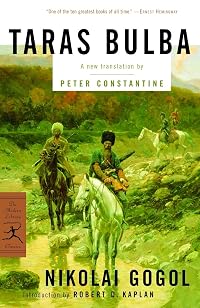
The story follows an old Cossack, Taras Bulba, and his two sons, Andriy and Ostap returning home from an Orthodox seminary in Kiev. Ostap is the more adventurous, whereas Andriy has deeply romantic feelings of an introvert. While in Kiev, he fell in love with a young Polish girl. The three men set later out on a journey to Zaporizhian Sich located in Southern Ukraine, where they join other Cossacks and go to war against Poland.Tags
Recommendations








Member Reviews
Taras Bulba is the epitome of a Cossack: brave, reckless, and passionate about upholding the dignity of the Russian Orthodox faith. His two sons have just returned from a seminary in Kiev, where a rudimentary education was beaten into them, and he is eager to initiate them into the violent comradeship that is the life of the Dnieper Cossacks. Leaving behind their weeping mother, they head for the Zaporozhian stronghold, where they join in a revolt against the Catholic Poles, who are trying to subjugate the Ukraine.
Written by Nikolai Gogol in the 1830s, Taras Bulba is the quintessential romance about the mythologized Ukrainian Cossacks. In it, Gogol attributes their violent emotions and selfless comradeship as the wellspring for the show more Russian soul. It is a classic war epic eulogizing the wildness of unfettered hatred for the Other.
As a piece of literature, it is exceptional writing, unlike anything else that Gogol wrote. Hemingway claimed it was one of the "ten greatest books of all time." I read it now, during the Russian invasion of Ukraine, thinking to understand more about the region. Instead of a historical novel, however, I encountered an epic in prose glorifying the proto-Russian. I was startled by the vehement hatred of Muslims, Catholics, and, especially, Jews. Prior to this I had only read Gogol's short stories, full of magical realism and surreal absurdism.
The Modern Library Classics edition that I have includes an interesting introduction by Robert D. Kaplan. In it he writes that Americans have been too trusting in rationalism to move people toward individual rights and democracy. The reality is that humans have irrational romantic and heroic tendencies, but these are subverted by the "crude belief systems and symbolism that sustain what the national security analyst Ralph Peters has called 'euphorias of hatred.'" He quotes Elias Canetti as writing, "The crowd needs a direction... It's constant fear of disintegration means that it will accept any goal." Gogol's Cossacks capture both the violent hatred inherent in the crowd-pack and the heroism and romanticism of the individual. I found it an important, if disturbing, read.
Edited to correct "epic in verse" to "epic in prose." show less
Written by Nikolai Gogol in the 1830s, Taras Bulba is the quintessential romance about the mythologized Ukrainian Cossacks. In it, Gogol attributes their violent emotions and selfless comradeship as the wellspring for the show more Russian soul. It is a classic war epic eulogizing the wildness of unfettered hatred for the Other.
As a piece of literature, it is exceptional writing, unlike anything else that Gogol wrote. Hemingway claimed it was one of the "ten greatest books of all time." I read it now, during the Russian invasion of Ukraine, thinking to understand more about the region. Instead of a historical novel, however, I encountered an epic in prose glorifying the proto-Russian. I was startled by the vehement hatred of Muslims, Catholics, and, especially, Jews. Prior to this I had only read Gogol's short stories, full of magical realism and surreal absurdism.
The Modern Library Classics edition that I have includes an interesting introduction by Robert D. Kaplan. In it he writes that Americans have been too trusting in rationalism to move people toward individual rights and democracy. The reality is that humans have irrational romantic and heroic tendencies, but these are subverted by the "crude belief systems and symbolism that sustain what the national security analyst Ralph Peters has called 'euphorias of hatred.'" He quotes Elias Canetti as writing, "The crowd needs a direction... It's constant fear of disintegration means that it will accept any goal." Gogol's Cossacks capture both the violent hatred inherent in the crowd-pack and the heroism and romanticism of the individual. I found it an important, if disturbing, read.
Edited to correct "epic in verse" to "epic in prose." show less
Nikolai Gogol wrote of the absurd in stories like Dead Souls and The Overcoat, and here he ostensibly finds that in the historical, for the utter disregard for peace and order that the 16th century Cossacks (living in what is now Ukraine), and their appetite for war and carousing, certainly appears absurd. Upon the return of his two sons from a seminary in Kiev, Taras Bulba spurs the Cossacks to start a war for no other reason than to gain battle experience for them. Amidst the requisite blood-drenched hacking that ensues, the younger son falls in love with one of the Polish women and changes sides, which is a betrayal. The battle rages and corpses pile up.
What’s sad is Gogol isn’t saying ‘he who lives by the sword, dies by the show more sword’, or commenting on the idiocy of war. He’s glorying in Russian nationalism, putting these wars with the Catholic Poles to the north and the Muslim Turks and Tatars to the South in the light of a grand tradition of bravery stretching back to the Iliad (emphasized by references to that book, such as enemies outside of a sieged town being dragged across the battlefield by horses), and justifying some pretty brutal anti-Semitism. His romanticized view of the Cossacks is that their “endless skirmishes and restless life saved Europe from the unstoppable infidel attacks that threatened to overthrow her.”
It’s a bleak picture of humanity. Violence and all manner of brutality abounds. The ‘uncivilized’ Cossacks are hell-bent on war. The ‘civilized’ Poles, aristocrats included, turn out for a public torture and execution in Warsaw. The author makes Taras Bulba and the Cossacks martyred heroes. It’s hard not to translate this view into present day hot spots around the world, Ukraine included, and feel sad that this is who we are. And yet it is a snapshot not only of the Cossacks from four hundred years ago, but the Russian impression of them two hundred years later, both of which were interesting to me, and I do like Gogol’s writing.
Just a couple of quotes:
“I want my vodka so clear and frothing that it hisses and whirls like it’s possessed!”
And this battlefield advice:
“If you are grazed by a bullet, or if a saber grazes your head or any other part of your body, then you must not pay too much attention to it. Just mix a measure of gunpowder with a cup of vodka, drink it down, and there’ll be no fever and all will be well. As for your wound, if it’s not too big just spit in your palm, rub some earth in it, and smear the dirt on the wound – that’ll dry it out.” show less
What’s sad is Gogol isn’t saying ‘he who lives by the sword, dies by the show more sword’, or commenting on the idiocy of war. He’s glorying in Russian nationalism, putting these wars with the Catholic Poles to the north and the Muslim Turks and Tatars to the South in the light of a grand tradition of bravery stretching back to the Iliad (emphasized by references to that book, such as enemies outside of a sieged town being dragged across the battlefield by horses), and justifying some pretty brutal anti-Semitism. His romanticized view of the Cossacks is that their “endless skirmishes and restless life saved Europe from the unstoppable infidel attacks that threatened to overthrow her.”
It’s a bleak picture of humanity. Violence and all manner of brutality abounds. The ‘uncivilized’ Cossacks are hell-bent on war. The ‘civilized’ Poles, aristocrats included, turn out for a public torture and execution in Warsaw. The author makes Taras Bulba and the Cossacks martyred heroes. It’s hard not to translate this view into present day hot spots around the world, Ukraine included, and feel sad that this is who we are. And yet it is a snapshot not only of the Cossacks from four hundred years ago, but the Russian impression of them two hundred years later, both of which were interesting to me, and I do like Gogol’s writing.
Just a couple of quotes:
“I want my vodka so clear and frothing that it hisses and whirls like it’s possessed!”
And this battlefield advice:
“If you are grazed by a bullet, or if a saber grazes your head or any other part of your body, then you must not pay too much attention to it. Just mix a measure of gunpowder with a cup of vodka, drink it down, and there’ll be no fever and all will be well. As for your wound, if it’s not too big just spit in your palm, rub some earth in it, and smear the dirt on the wound – that’ll dry it out.” show less
Tenía mucho tiempo con este libro pendiente, soy fan indiscutible de los autores rusos, más si son clásicos y por supuesto Gógol es un imperdible.
Es difícil hacer una reseña de un libro como este, voy a intentarlo y empezar por la parte literaria, es una joya, una narrativa hermosa, brillante, pulcra, rayando en la poesía incluso en algunas partes, muy a pesar de lo que la historia cuenta, uno puede deleitarse con esa suavidad de las palabras, con esa magia que te transporta al momento mismo que relatan, es una joya narrativa que solo por ese hecho vale la pena leerse.
Ahora Gógol refleja de manera extraordinaria a esta raza de Cosacos valientes que viven por y para su patria y Dios (o su religión), viven para la guerra y es la show more gloria de la misma lo que hace que vivan, sientan y sean, el reflejo de ese sentimiento está plasmado de tal manera que es muy fácil poder ver a estos personajes claramente, no es fácil comprender la idiosincrasia, creo yo, que además nos falta la sangre Rusa (o Ucraniana) para comprender a fondo lo que relata con respecto a estos personajes, su naturaleza y su sentimiento de pelear por la patria y por Dios.
En cuanto a la historia, bueno es una muy trágica y vuelvo al sentimiento de “La patria y Dios son primero”, la ética personal de Taras Bulba, su creencia profunda sobre Dios y Patria por sobre todo se encuentra reflejado en lo que tiene que hacer, pero además, pierde todo, todo lo que pudiera amar un ser humano, pero su amor por la patria y por Dios no, es se queda inquebrantable hasta el último minuto y eso es algo que me cuesta comprender, vamos, que amo a mi País, soy una patriota, pero no pongo a mis seres queridos por sobre mi País, así que me ha costado mucho poder empatizar con los sentimientos de Taras Bulba.
Por otro lado y esto se me ha hecho sentir, por sobre cualquier otro sentimiento, curiosidad , es la forma en que Gógol ha presentado a los judíos, a ver, hoy en día sería totalmente políticamente incorrecto, pero es que hay que entender que este libro fue escrito en 1835, por un lado, me refleja la forma en que la sociedad de esa época veía a los judíos, su odio hacia ellos y las razones que ellos creían tener para ese odio, no hablo de si es justificado o no, porque yo no viví en esa época y no puedo decir si realmente los judíos en ese momento eran tan avariciosos como los pinta Gógol o si simplemente es el tema de que siempre fueron gente con el poder del dinero en las manos lo que molestaba, la cosa aquí es, que podemos ver muy claramente como eran vistos y que el odio hacía ellos es muy pero que muy arraigado en la sociedad de esa época y seguramente anterior a este libro.
Un libro que me ha sorprendido en muchos sentidos, una joya, como todos los que he leído de este autor. show less
Es difícil hacer una reseña de un libro como este, voy a intentarlo y empezar por la parte literaria, es una joya, una narrativa hermosa, brillante, pulcra, rayando en la poesía incluso en algunas partes, muy a pesar de lo que la historia cuenta, uno puede deleitarse con esa suavidad de las palabras, con esa magia que te transporta al momento mismo que relatan, es una joya narrativa que solo por ese hecho vale la pena leerse.
Ahora Gógol refleja de manera extraordinaria a esta raza de Cosacos valientes que viven por y para su patria y Dios (o su religión), viven para la guerra y es la show more gloria de la misma lo que hace que vivan, sientan y sean, el reflejo de ese sentimiento está plasmado de tal manera que es muy fácil poder ver a estos personajes claramente, no es fácil comprender la idiosincrasia, creo yo, que además nos falta la sangre Rusa (o Ucraniana) para comprender a fondo lo que relata con respecto a estos personajes, su naturaleza y su sentimiento de pelear por la patria y por Dios.
En cuanto a la historia, bueno es una muy trágica y vuelvo al sentimiento de “La patria y Dios son primero”, la ética personal de Taras Bulba, su creencia profunda sobre Dios y Patria por sobre todo se encuentra reflejado en lo que tiene que hacer, pero además, pierde todo, todo lo que pudiera amar un ser humano, pero su amor por la patria y por Dios no, es se queda inquebrantable hasta el último minuto y eso es algo que me cuesta comprender, vamos, que amo a mi País, soy una patriota, pero no pongo a mis seres queridos por sobre mi País, así que me ha costado mucho poder empatizar con los sentimientos de Taras Bulba.
Por otro lado y esto se me ha hecho sentir, por sobre cualquier otro sentimiento, curiosidad , es la forma en que Gógol ha presentado a los judíos, a ver, hoy en día sería totalmente políticamente incorrecto, pero es que hay que entender que este libro fue escrito en 1835, por un lado, me refleja la forma en que la sociedad de esa época veía a los judíos, su odio hacia ellos y las razones que ellos creían tener para ese odio, no hablo de si es justificado o no, porque yo no viví en esa época y no puedo decir si realmente los judíos en ese momento eran tan avariciosos como los pinta Gógol o si simplemente es el tema de que siempre fueron gente con el poder del dinero en las manos lo que molestaba, la cosa aquí es, que podemos ver muy claramente como eran vistos y que el odio hacía ellos es muy pero que muy arraigado en la sociedad de esa época y seguramente anterior a este libro.
Un libro que me ha sorprendido en muchos sentidos, una joya, como todos los que he leído de este autor. show less
Russian imperialism-nationalism in the shape of Cossacks that rampaged the Steppes in a seemingly ceaseless struggle with perceived and made up enemies, the natural world and their brutal-romantic nature.
At least that's Gogol's 1835 and 1842 (he rewrote after much criticism by Russian authorities of its 'Ukraine' bias) version of an era when Tsarist 'expansionist' policies were again stirring with resultant oppression of other nationalities including Poles, Ukrainians, Tatars, Turks etc. as well as infamous, exploitative Pogroms on Jewish populations of the Pale of Settlement.
So, what of the book itself: A very well crafted and thoroughly readable story of mayhem and reflection within a family torn apart by forbidden love, unbounded show more fealty and reckless patriotism.
Gogol offers a vigorously engaging written version of, but no answers to the age old question of whether and at what cost to individuals and society 'love conquers all'?
Thoroughly enjoyable read - the context of its origins have to be born in mind. show less
At least that's Gogol's 1835 and 1842 (he rewrote after much criticism by Russian authorities of its 'Ukraine' bias) version of an era when Tsarist 'expansionist' policies were again stirring with resultant oppression of other nationalities including Poles, Ukrainians, Tatars, Turks etc. as well as infamous, exploitative Pogroms on Jewish populations of the Pale of Settlement.
So, what of the book itself: A very well crafted and thoroughly readable story of mayhem and reflection within a family torn apart by forbidden love, unbounded show more fealty and reckless patriotism.
Gogol offers a vigorously engaging written version of, but no answers to the age old question of whether and at what cost to individuals and society 'love conquers all'?
Thoroughly enjoyable read - the context of its origins have to be born in mind. show less
Started this slim novel a couple years ago and finally finished it. A glimpse of another time and place. NG describes the Cossack life during its hayday in the late 16th-mid 17th centuries in epic fashion. Larger than life figures battle the kingdom of Poland in what is now Ukraine. These people became part of the Russian founding myth though they were later murdered by later Russian founding myths called communism and Stalin.
“The governor has a beautiful daughter. Holy God, what a beauty!”
The Jew tried as hard as he could to convey her beauty, stretching his arms out wide, narrowing his eyes into a squint, and puckering his lips as if he were about to taste a most delicate morsel.
“What’s that got to do with it?”
“It is for her that he’s done this. He went over to them because of her. When a man falls in love, he becomes like the waterlogged sole of a shoe - you can bend it any way you want.”
--------
Great descriptions peppered with subtle humor by Gogol, from Taras Bulba.
This was an exciting little book filled with torture, mass killings, vengeance, love, faith, and devotion... you cannot extinguish the Cossack soul. I highly recommend show more spending an afternoon with Bulba. show less
The Jew tried as hard as he could to convey her beauty, stretching his arms out wide, narrowing his eyes into a squint, and puckering his lips as if he were about to taste a most delicate morsel.
“What’s that got to do with it?”
“It is for her that he’s done this. He went over to them because of her. When a man falls in love, he becomes like the waterlogged sole of a shoe - you can bend it any way you want.”
--------
Great descriptions peppered with subtle humor by Gogol, from Taras Bulba.
This was an exciting little book filled with torture, mass killings, vengeance, love, faith, and devotion... you cannot extinguish the Cossack soul. I highly recommend show more spending an afternoon with Bulba. show less
Fascinating look at 17th century Cossacks. Pretty gruesome.
Members
- Recently Added By
Lists

A Ukraine Reading List
121 works; 90 members

Russian Literature
184 works; 35 members

Reading List of Christopher McCandless
12 works; 1 member

Books set in Saint Petersburg
16 works; 1 member

Trinity College Booklist (1951): Class Nine, Foreign Literatures
161 works; 3 members

Books Read in 2024
4,623 works; 126 members
Author Information

589+ Works 28,978 Members
Nikolai Vasilevich Gogol was born in 1809 in the Ukraine. His father was an amateur playwright who had a small estate with a number of serfs. From the ages of 12 to 19, young Gogol attended a boarding school where he became known for his sharp wit and ability to amuse his classmates. After school he worked as a government clerk. He soon began show more writing memories of his childhood. His quaint depictions of the Ukrainian countryside marked his style and helped to make him famous. Gogol quickly gained fame and formed a friendship with the influential poet, Aleksandr Pushkin. Gogol is largely remembered for his realistic characterizations, his rich imagination, and his humorous style. His works include Mirgorod, a collection of short stories including Taras Bulba. Gogol's wit is evident in his short story, The Nose, where a man's nose wanders off around town in a carriage. Gogol's masterpiece is the novel Dead Souls. In this work, a swindler plots to buy from landowners their dead serfs. Towards the end of Gogol's life, his creative powers faded and he fled to Moscow. Here, he came under the power of a fanatical priest. Ten days before his death he burned some manuscripts of the second part of Dead Souls. He died of starvation in 1852, on the cusp of madness. (Bowker Author Biography) show less
Some Editions
Awards and Honors
Series

Belongs to Publisher Series
Work Relationships
Is contained in
Has the adaptation
Common Knowledge
- Canonical title
- Taras Bulba
- Original title
- Тарас Бульба
- Original publication date
- 1835; 1835: Included in Volume 1 of the short story collection "Mirgorod"; 1842 (Revised edition) (Revised edition); 1842: Revised and expanded in an edition of Gogol's complete works; 1918 (English: Hogarth) (English: Hogarth); 1975-07: Classics Illustrated Joint European Series E80 (#226 - Sweden) (#226 - Sweden)
- People/Characters
- Taras Bulba; Andrei Bulba; Ostap Bulba; Natalia; Yankel the Jew
- Important places
- Ukraine; Russia
- Related movies
- Taras Bulba (1962 | IMDb); Taras Bulba (2009 | IMDb)
- First words
- "Turn around and let me look at you!"
- Last words
- (Click to show. Warning: May contain spoilers.)They rowed on and talked of their ataman.
- Original language
- Russian
Classifications
- Genres
- General Fiction, Fiction and Literature, Historical Fiction
- DDC/MDS
- 891.733 — Literature & rhetoric Literatures of other languages East Indo-European and Celtic literatures Russian and East Slavic languages Russian fiction 1800–1917
- LCC
- PG3333 .T3 — Language and Literature Slavic languages and literatures. Baltic languages. Albanian language Slavic. Baltic. Albanian Russian literature Individual authors and works 1800-1870 Gogol'
- BISAC
Statistics
- Members
- 1,180
- Popularity
- 21,211
- Reviews
- 15
- Rating
- (3.74)
- Languages
- 20 — Amharic, Arabic, Bosnian, Catalan, Dutch, English, Finnish, French, German, Greek, Hungarian, Italian, Romanian, Russian, Serbian, Spanish, Swedish, Turkish, Ukrainian, Portuguese (Portugal)
- Media
- Paper, Audiobook, Ebook
- ISBNs
- 156
- ASINs
- 45