On This Page
Description
An insurance claim after a traffic accident alerts Perry Mason to the possibility of double-dealing concerning a parcel of land. He negotiates a very large settlement for his client, but then a wealthy businessman is found dead on his yacht and Perry is asked to defend against a charge of murder.Tags
Recommendations















Member Reviews
The Case Of The Crooked Candle (1944) (P. Mason #24) by Erle Stanley Gardner, Perry Mason is the brilliant, determined star of the most popular book series of the 20th century. This time Perry is looking out for the interests of an auto accident victim that has some smelly elements to it. On a hunch he goes after a far greater settlement than is called for, and when he gets it knows something stinks. Investigating further he discovers a scam being run on property owners with oil rights the object of the small syndicate behind it.
So much for the set-up, but when one of the syndicate is killed on a boat, Perry has to figure out why the obvious culprit is innocent. Once again he goes against Lt. Trask and the D.A.’s office to find the show more real killer. The case, set on a yacht in a shallow lagoon, involves the tides, the position of the body, what is quite possibly the killer’s bloody footprint, and the mystery of the crooked candle.
Reading this novel almost 80 years after its debut I still found it compelling. Mason, Della Street, Paul Drake and the entire cast act with a sense of style that is very often lacking in a modern novel. Having seen so many of the television dramas (including this case) I am perhaps reading with Raymond Burr et.al. in mind, which isn’t a bad thing. The puzzle herein needs close examination to follow the logic, but Perry is an adept guide and takes us through what is a bewildering series of events to the truth.
And Perry Mason appears more of a bad-ass in print than in the T.V. series, which is also a good thing. show less
So much for the set-up, but when one of the syndicate is killed on a boat, Perry has to figure out why the obvious culprit is innocent. Once again he goes against Lt. Trask and the D.A.’s office to find the show more real killer. The case, set on a yacht in a shallow lagoon, involves the tides, the position of the body, what is quite possibly the killer’s bloody footprint, and the mystery of the crooked candle.
Reading this novel almost 80 years after its debut I still found it compelling. Mason, Della Street, Paul Drake and the entire cast act with a sense of style that is very often lacking in a modern novel. Having seen so many of the television dramas (including this case) I am perhaps reading with Raymond Burr et.al. in mind, which isn’t a bad thing. The puzzle herein needs close examination to follow the logic, but Perry is an adept guide and takes us through what is a bewildering series of events to the truth.
And Perry Mason appears more of a bad-ass in print than in the T.V. series, which is also a good thing. show less
Best-Selling American Author Of The Twentieth Century
In 1970, the New York Times called Erle Stanley Gardner "the best selling American author of the century," apparently based on the sales of 170 million copies of his books at that time. That alone makes his opus worth investigating, but I was particularly drawn to this novel by my recent interest in re-watching Perry Mason TV shows. I'm a retired trial lawyer who never really liked watching trial dramas on film or TV, but I've come to enjoy Perry Mason offerings as clever, witty and fairly accurate depictions of the life of a trial lawyer (albeit exaggerated a bit for dramatic purposes).
The Case Of The Crooked Candle did not disappoint me. The text is nearly all dialog, and the show more descriptions are spare, but the dialog is well-crafted. Mason of the book is exactly the way Raymond Burr depicted him: everyone's ideal of their lawyer. He appears to work twenty-four hours a day on his most recent client's case, apparently needing no sleep and aided by a a similarly tireless secretary (Della Street) and investigator (Paul Drake). He wins his cases predominantly at the preliminary hearing stage, wringing confessions from the guilty and thereby avoiding lengthy incarceration and the agony of trial for his client. He is more than willing to play fast and loose with the district attorney, investigating detective and courtroom evidence if that's what his client needs. We might deplore some of these tendencies, except that they would be a welcome relief if deployed on our own behalf!
Of course, these novels fit within the broad genre of pulp fiction, and I can't say that I'm interested in reading a dozen more, but I heartily recommend a dose of Erle Stanley Gardner to anyone who thinks they want to understand American fiction. This is the stuff people actually read. show less
In 1970, the New York Times called Erle Stanley Gardner "the best selling American author of the century," apparently based on the sales of 170 million copies of his books at that time. That alone makes his opus worth investigating, but I was particularly drawn to this novel by my recent interest in re-watching Perry Mason TV shows. I'm a retired trial lawyer who never really liked watching trial dramas on film or TV, but I've come to enjoy Perry Mason offerings as clever, witty and fairly accurate depictions of the life of a trial lawyer (albeit exaggerated a bit for dramatic purposes).
The Case Of The Crooked Candle did not disappoint me. The text is nearly all dialog, and the show more descriptions are spare, but the dialog is well-crafted. Mason of the book is exactly the way Raymond Burr depicted him: everyone's ideal of their lawyer. He appears to work twenty-four hours a day on his most recent client's case, apparently needing no sleep and aided by a a similarly tireless secretary (Della Street) and investigator (Paul Drake). He wins his cases predominantly at the preliminary hearing stage, wringing confessions from the guilty and thereby avoiding lengthy incarceration and the agony of trial for his client. He is more than willing to play fast and loose with the district attorney, investigating detective and courtroom evidence if that's what his client needs. We might deplore some of these tendencies, except that they would be a welcome relief if deployed on our own behalf!
Of course, these novels fit within the broad genre of pulp fiction, and I can't say that I'm interested in reading a dozen more, but I heartily recommend a dose of Erle Stanley Gardner to anyone who thinks they want to understand American fiction. This is the stuff people actually read. show less
I really wanted to throw this book out of the windw. The hype surrounding the book did not seem worth it. But instead I bow to Erle Stanly Gardner for putting in a twist that blew me away.
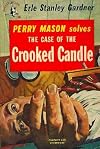
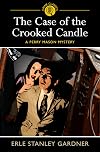
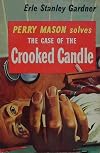
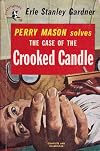
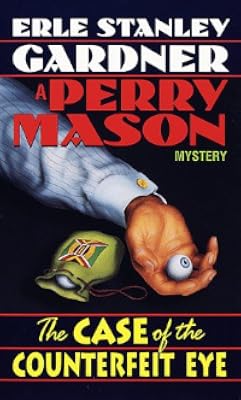
Nothing Freudian about the cover of this book. Sometimes a candle is just a candle.
I have always really liked this Perry Mason novel. One of the best.
"All this is incompetent, irrelevant and immaterial. It has no bearing whatever on the case," Linton objected.
"Overruled."
"Overruled."
Original price: $0.75.
Members
- Recently Added By
Lists

#JustTheFacts2020Gold
48 works; 1 member
#MysteryBingo2020Gold(Original)
36 works; 1 member

Barzun and Taylor's Classics of Crime
93 works; 3 members
Author Information

873+ Works 30,710 Members
Mystery writer Erle Gardner was born on July 17, 1889 in Malden, Massachusetts. In 1902, he had moved to Oroville, CA. His parents could not afford to send a second son to college, so he worked in a legal office as a clerk reading law. He spent a short time at Valparaiso University in Indiana but had to drop out because of an illegal boxing show more exhibition. He continued to travel throughout California and read law at several law offices and finally passed the bar in 1911, at the age of 21. He married Natalie Francis Beatrice Talbert on April 9, 1912. In 1916, he formed the Law Firm of Orr and Gardner in Venture, CA. Gardner used many pseudonyms such as Charles Green, Kyle Corning and Grant Holiday. While working as an attorney, he began writing fiction. In 1921, "Nellie's Naughty Nighty" was published in the pulp magazine Breezy Stories. He had a goal of writing 100,000 words a month and would sometimes write two or more stories a day. In 1923, "The Shrieking Skeleton" was sold to the Black Mask Magazine. In the 1930's, Gardner had two manuscripts that were rejected and than "rediscovered" by Thayer Hobson, the president of the William Morrow Publishing Company, and rewritten as courtroom mysteries. During this process, the character Perry Mason was born. In 1933, the first Perry Mason book was written, "The Case of the Velvet Claws." The next one was entitled "The Case of the Sulky Girl" and they were followed by more than eighty additional Mason mysteries. Gardner died on March 11, 1970. (Bowker Author Biography) show less
Awards and Honors
Distinctions
Series

Belongs to Publisher Series
Work Relationships
Common Knowledge
- Canonical title
- The Case of the Crooked Candle
- Original title
- The Case of the Crooked Candle, 1944
- Original publication date
- 1944
- People/Characters
- Perry Mason; Della Street; Paul Drake; Arthur Bickler; Fred Milfield; Daphne Milfield (show all 9); Lieutenant Tragg; Hamilton Burger; Harry Van Nuys
- Important places*
- Los Angeles, California, EEUU
- First words
- Perry Mason pushed open the door of his private office, smiled at Della Street who was dusting the corners of his desk with secretarial solicitude.
- Last words
- (Click to show. Warning: May contain spoilers.)An hysterical blonde with a black eye would seem to be an emergency case, at least an interesting one - The Case of the Black Eyed Blonde.
- Original language*
- Inglés
*Some information comes from Common Knowledge in other languages. Click "Edit" for more information.
Classifications
Statistics
- Members
- 287
- Popularity
- 112,244
- Reviews
- 8
- Rating
- (3.66)
- Languages
- 6 — Czech, English, German, Italian, Portuguese, Spanish
- Media
- Paper, Audiobook, Ebook
- ISBNs
- 22
- ASINs
- 19