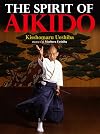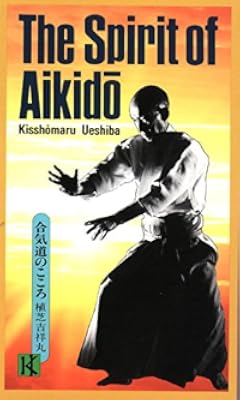
The Spirit of Aikido
by Kisshomaru Ueshiba
On This Page
Description
Aiki is the power of harmony, of all beings, all things working together. Aikido--a modern Japanese martial art unique in its synthesis of classic forms with a well-defined spiritual base--offers a key to the art of living naturally and unselfishly in a complicated world. This book explains it in reference to the founder's philosophy of mind--and action. In addition, the history of aikido's prewar development as a non-competitive new martial art is described, with a consideration of its show more international role. show lessTags
Recommendations















Member Reviews
In the years since I first read this book I've gotten 11 years of practice in Aikido.
Recently in our dojo I've seen a lot of conversation about "effectiveness" of Aikido. This is a common topic among martial arts jock-sniffers. The most common current opinion being "if it doesn't work in MMA, it is no good."
So this morning I went back and read the first couple of chapters of this book, and I'm more convinced than ever that it is CRUCIAL reading. First, in understanding the notion of a "Martial Way", and second exactly how Aikido fits into the concepts of Budo and the Martial Way.
Recently in our dojo I've seen a lot of conversation about "effectiveness" of Aikido. This is a common topic among martial arts jock-sniffers. The most common current opinion being "if it doesn't work in MMA, it is no good."
So this morning I went back and read the first couple of chapters of this book, and I'm more convinced than ever that it is CRUCIAL reading. First, in understanding the notion of a "Martial Way", and second exactly how Aikido fits into the concepts of Budo and the Martial Way.
A well written overview of Aikido written by the founders son. This is a book that you will pull off your shelf many times over the years. One must truly read this book to gain their own insight. And that is a sign of a great book. It is an absolute must for any martial artisit.
(from the dust jacket)
Aikido is a martial art practiced by men and women from many walks of life, but along with its international expansion has come a rash of misconceptions regarding both its nature and its obkjectives.
In this book, the author seeks to dispel the misconceptions, especially for the benefit of students, but he has written in such a way that event he general reader can gain an understading of the essence of aikido, the 'way of harmony with ki'.
There are many books dealing with the technical aspects of the martial arts. This book traces the key East Asian concepts and words in this long tradition and tells why Master Morihei Ueshiba founded this new martial art during the period of Japan's modernization.
Training in aikido show more differs from training in other martial arts. In discussing this, the author emphasizes the necessity of understanding the philosophy of aikido, not only to learn its unique movements and techniques, but also to master the mind, develop chadracter and cultivate the art of living. The objectives are to unify mind, body and ki, to harmonize the individual's ki and the ki of the universe, and to develop the ability to live naturally in a complex and constantly changing world.
This guide for students and instructors concludes with a brief history of aikido, its internationalization and the directory of the International Aikido Federation. Three photo sections recall the history of aikido and show how a representative technique, performed by the author, embodies the basic concepts of this modern art of self-defense.
Kisshomaru Ueshiba, Aikido Doshu, was born in 1921, the third son of Morihei Ueshiba, the founder of aikido. He graduated from Waseda University in 1946, became master of the Aikido Headquarters Dojo in 1948, and in 1967 was named chairman of the Aikikai Foundation, the principle aikido organization in Japan and overseas. His formal appointment as successor to his father took place in 1969. He holds several important posts related to the martial arts and is a trustee of the Nippon Budokan, the hall of the martial arts in central Tokyo.
Contents
Foreword, Preface
The Ki of the Universe and individual Ki
Entering and Spherical Rotation
Daily Practice, the Way to Perfection
Mastering Mind, Cultivating Technique
Strength in Living with Nature
Inheriting the Founder's Aspirations
Aikido Takes Roots in the World
Appendix: World Aikido Directory
Glossary show less
Aikido is a martial art practiced by men and women from many walks of life, but along with its international expansion has come a rash of misconceptions regarding both its nature and its obkjectives.
In this book, the author seeks to dispel the misconceptions, especially for the benefit of students, but he has written in such a way that event he general reader can gain an understading of the essence of aikido, the 'way of harmony with ki'.
There are many books dealing with the technical aspects of the martial arts. This book traces the key East Asian concepts and words in this long tradition and tells why Master Morihei Ueshiba founded this new martial art during the period of Japan's modernization.
Training in aikido show more differs from training in other martial arts. In discussing this, the author emphasizes the necessity of understanding the philosophy of aikido, not only to learn its unique movements and techniques, but also to master the mind, develop chadracter and cultivate the art of living. The objectives are to unify mind, body and ki, to harmonize the individual's ki and the ki of the universe, and to develop the ability to live naturally in a complex and constantly changing world.
This guide for students and instructors concludes with a brief history of aikido, its internationalization and the directory of the International Aikido Federation. Three photo sections recall the history of aikido and show how a representative technique, performed by the author, embodies the basic concepts of this modern art of self-defense.
Kisshomaru Ueshiba, Aikido Doshu, was born in 1921, the third son of Morihei Ueshiba, the founder of aikido. He graduated from Waseda University in 1946, became master of the Aikido Headquarters Dojo in 1948, and in 1967 was named chairman of the Aikikai Foundation, the principle aikido organization in Japan and overseas. His formal appointment as successor to his father took place in 1969. He holds several important posts related to the martial arts and is a trustee of the Nippon Budokan, the hall of the martial arts in central Tokyo.
Contents
Foreword, Preface
The Ki of the Universe and individual Ki
Entering and Spherical Rotation
Daily Practice, the Way to Perfection
Mastering Mind, Cultivating Technique
Strength in Living with Nature
Inheriting the Founder's Aspirations
Aikido Takes Roots in the World
Appendix: World Aikido Directory
Glossary show less
American translation of historical and spiritual history of Aikido. Emphasizes differences from combative martial arts. Discusses importance of nature, balance, being within sphere of energy, discipline, experience.
Necessary reading for any aikidoist.
Ratings
Members
- Recently Added By
Author Information
19 Works 372 Members
Kisshomaru Ueshiba was the second Aikido Doshu. He was born in 1921, the third son of Morihei Ueshiba, the founder of Aikido. He graduated from Waseda University in 1946, became master of the Aikido World Headquarters in 1948, and in 1967 was named chairman of the Aikikai Foundation, the principal Aikido organization in Japan and overseas. His show more formal appointment as successor to his father occurred in 1969. He held several important posts related to the martial arts and was a trustee of the Nippon Budokan, the "hall of martial arts" located in central Tokyo. He died in 1999 show less
Common Knowledge
- Canonical title
- The Spirit of Aikido
Classifications
- Genres
- Sports and Leisure, Nonfiction, General Nonfiction, Philosophy, Religion & Spirituality
- DDC/MDS
- 796.8154 — Arts & recreation Recreation, sports, and performing arts Athletic and outdoor sports and games Wrestling / Martial Arts, Judo, Karate Martial arts Asian martial arts Aikido
- LCC
- GV1114.35 .U3813 — Geography, Anthropology and Recreation Recreation. Leisure Recreation. Leisure Sports
- BISAC
Statistics
- Members
- 209
- Popularity
- 157,047
- Reviews
- 5
- Rating
- (4.05)
- Languages
- 5 — English, French, German, Italian, Portuguese
- Media
- Paper
- ISBNs
- 9