On This Page
Description
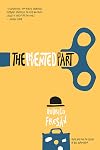
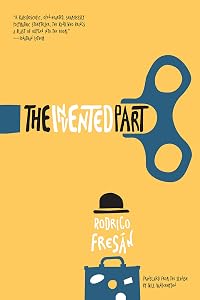
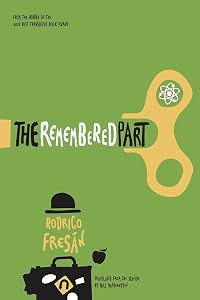
""A kaleidoscopic, open-hearted, shamelessly polymathic storyteller, the kind who brings a blast of oxygen into the room."--Jonathan Lethem. An aging writer, disillusioned with the state of literary culture, attempts to disappear in the most cosmically dramatic manner: traveling to the Hadron Collider, merging with the God particle, and transforming into an omnipresent deity -- a meta-writer -- capable of rewriting reality. With biting humor and a propulsive, contagious style, amid the show more accelerated particles of his characteristic obsessions -- the writing of F. Scott Fitzgerald, the music of Pink Floyd and The Kinks, 2001: A Space Odyssey, the links between great art and the lives of the artists who create it -- Fresan takes us on a whirlwind tour of writers and muses, madness and genius, friendships, broken families, and alternate realities, exploring themes of childhood, loss, memory, aging, and death. Drawing inspiration from the scope of modern classics and the structural pyrotechnics of the postmodern masters, the Argentine once referred to as "a pop Borges" delivers a powerful defense of great literature, a celebration of reading and writing, of the invented parts -- the stories we tell ourselves to give shape to our world. Rodrigo Fresan is the author of nine books of fiction that together compose an expansive, interconnected fictional universe -- a complex system of storylines, resonances, and self-reference that call to mind the works of David Foster Wallace, Thomas Pynchon, and Roberto Bolano. Will Vanderhyden received fellowships from the NEA and Lannan Foundation to work on The Invented Part"-- show lessTags
Recommendations













Member Reviews
Queste 4 stelle non sono 5 solo per le critiche alla lettura digitale.
per il resto è stato un viaggio stranissimo e bellissimo. Libro strano, circolare. Non è un libro di trama.
Si parla di scrittura, di scrittori, di prosa. E' un insieme di scatole cinesi disegnate da Escher, in cui ci si perde, ma rimanendo sempre attaccati ad un appena visibile filo rosso.
Mi è successa la stranissima cosa di commuovermi senza realmente capire il perché: questo libro ha avuto la capacità si smuovere qualcosa che non so bene cosa sia. E non credo che riuscirò mai a scoprirlo, neanche rileggendolo.
L'accostarsi di vari stili invoglia ad andare avanti, nonostante capoversi di decine di pagine: tutto sembra tranne che un mattone, e alla fine mi sono show more trovata con il desiderio che non finisse mai e allo stesso tempo una voglia matta di ricominciarlo.
Intanto, mi ha convinto a conoscere meglio Fitzgerald. Per il momento ho attaccato l'epistolario (bellissimo!), ma potrei anche rileggere Tenera è la notte, la cui lettura risale ormai a diversi anni fa. show less
per il resto è stato un viaggio stranissimo e bellissimo. Libro strano, circolare. Non è un libro di trama.
Si parla di scrittura, di scrittori, di prosa. E' un insieme di scatole cinesi disegnate da Escher, in cui ci si perde, ma rimanendo sempre attaccati ad un appena visibile filo rosso.
Mi è successa la stranissima cosa di commuovermi senza realmente capire il perché: questo libro ha avuto la capacità si smuovere qualcosa che non so bene cosa sia. E non credo che riuscirò mai a scoprirlo, neanche rileggendolo.
L'accostarsi di vari stili invoglia ad andare avanti, nonostante capoversi di decine di pagine: tutto sembra tranne che un mattone, e alla fine mi sono show more trovata con il desiderio che non finisse mai e allo stesso tempo una voglia matta di ricominciarlo.
Intanto, mi ha convinto a conoscere meglio Fitzgerald. Per il momento ho attaccato l'epistolario (bellissimo!), ma potrei anche rileggere Tenera è la notte, la cui lettura risale ormai a diversi anni fa. show less
As much as I would like to rate this book 4 stars, I cannot. It was too clever, too deep, too fluid, too geometric, too weird. I devoured portions of it, and felt myself drowning during other portions. It took me quite a while to finish. I had to rent it from the library 4 times, and finally bought it.
Fresan's writing is unlike anything else I've read. At times he reads as polished as Bolano, and other times he examines minute concepts from multiple dimensions at once, and in a way entirely his own. I was reminded of Javier Marias, but Marias would never indulge in this kind of well-rounded discussion of modern culture. Marias is a great writer, but the subject matter he chooses is limited compared to the wide territory Fresan covers. show more The flow of the narrative caused my mind to manufacture its own momentum, to galavant over terrain it rarely traversed. I rarely lose sleep over books, but I had to keep flipping the light back on, picking this one back up, and reading just a few more pages. Like Marquez, there is hardly anywhere to stop a reading session. You are always, perpetually in the middle of an endless paragraph, usually lost in a sentence you think you should restart. Therefore, it encourages you continually, goads you forward, and maddens you all the while.
The ideas come at you like stars after someone has engaged hyperdrive.
Remarkably, it is only part one. The Dreaming Part will be hitting retailers soon.
It is an incredibly long, intricate, dense construction of pop culture references, random characters engaged in unlikely meditative, encyclopedic monologues, and there is an extreme over-reliance on similes. So, it is not hard to believe that the author went on with this mode, or that he is sitting in his room right now, adding to the stream of thoughts and impressions, and that he will continue to do so for all eternity, into the afterlife, inexhaustible. The purpose of the thing is the style. The pleasure of it comes from the impressive accumulation. Fresan does what László Krasznahorkai does, but does it more superbly, without boring you on every page. It is an exhausting read, but you will chuckle and grin through most of it.
What might have started as a gimmicky stream of writerly rap sessions morphed into scene and setting, travelled through minds peopled by celebrated personalities, literary memorabilia, trivia, movieland, and rose to unexpected heights, attaining the breadth of great literature, all the while perplexing with its vicissitudes, defying your ludicrous attempts at judging his blustery sentences. This is a book to experience, and one to revisit. And the book goes on living, even after you have finished it... show less
Fresan's writing is unlike anything else I've read. At times he reads as polished as Bolano, and other times he examines minute concepts from multiple dimensions at once, and in a way entirely his own. I was reminded of Javier Marias, but Marias would never indulge in this kind of well-rounded discussion of modern culture. Marias is a great writer, but the subject matter he chooses is limited compared to the wide territory Fresan covers. show more The flow of the narrative caused my mind to manufacture its own momentum, to galavant over terrain it rarely traversed. I rarely lose sleep over books, but I had to keep flipping the light back on, picking this one back up, and reading just a few more pages. Like Marquez, there is hardly anywhere to stop a reading session. You are always, perpetually in the middle of an endless paragraph, usually lost in a sentence you think you should restart. Therefore, it encourages you continually, goads you forward, and maddens you all the while.
The ideas come at you like stars after someone has engaged hyperdrive.
Remarkably, it is only part one. The Dreaming Part will be hitting retailers soon.
It is an incredibly long, intricate, dense construction of pop culture references, random characters engaged in unlikely meditative, encyclopedic monologues, and there is an extreme over-reliance on similes. So, it is not hard to believe that the author went on with this mode, or that he is sitting in his room right now, adding to the stream of thoughts and impressions, and that he will continue to do so for all eternity, into the afterlife, inexhaustible. The purpose of the thing is the style. The pleasure of it comes from the impressive accumulation. Fresan does what László Krasznahorkai does, but does it more superbly, without boring you on every page. It is an exhausting read, but you will chuckle and grin through most of it.
What might have started as a gimmicky stream of writerly rap sessions morphed into scene and setting, travelled through minds peopled by celebrated personalities, literary memorabilia, trivia, movieland, and rose to unexpected heights, attaining the breadth of great literature, all the while perplexing with its vicissitudes, defying your ludicrous attempts at judging his blustery sentences. This is a book to experience, and one to revisit. And the book goes on living, even after you have finished it... show less
Ratings
Members
- Recently Added By
Lists

1001 libros que leer antes de morir
10 works; 1 member

Kirkus Starred Fiction Reviews of Books Published in 2017
412 works; 7 members

contemporary literary fiction list to check out
47 works; 1 member
Author Information

25+ Works 918 Members
Some Editions
Awards and Honors
Series

Common Knowledge
- Original title
- La parte inventada
- Original publication date
- 2014
- People/Characters
- The Boy
- Important places
- Argentina
- Epigraph
- Writing is not crypto-autobiography, and it's not current events. I'm not writing my autobiography, and I'm not writing things as they happen to me, with the exception of the use of details--thunderstorms and that sort of thi... (show all)ng. No, it's nothing that happened to me. It's a possibility. It's an idea.
--John Cheever
I had as yet no notion that life every now and then becomes literature--not for long, of course, but long enough to be what we best remember, and often enough so that what we eventually come to mean by life are those moments when life, instead of going sideways, backwards, forward, or nowhere at all, lines out straight, tense and inevitable, with a complication, climax, and, given some luck, a purgation, as if life had been made and not happened.
--Norman Maclean
People say it's not what happens in you life that matters, it's what you think happened. But this qualification, obviously, did not go far enough. It was quite possible that the central event in your life could be something that didn't happen, or something you thought didn't happen. Otherwise there'd be no need for fiction, there'd only be memoirs and histories, case histories; what happened--what actually happened to you and what you thought happened--would be enough.
--Geoff Dyer
There's a story, always ahead of you. Barely existing. Only gradually do your attach yourself to it and feed it. You discover the carapace that will contain and test your character. You will find in this way the path of your life. [...] You learn to alter your life. [...] Everything in plain sight.
--Michael Ondaatje
We see parts of things, we intuit whole things.
--Iris Murdoch
No serious attempt wil be made to enter into competition with reality.
--Robert Musil
Author here. Meaning the real author, the living human holding the pencil, not some abstract narrative persona [...]. All of this is true. This book is really true.
--David Foster Wallace
Is that the noblest objective of a work of fiction? To convince the reader that what you're writing about is really happening? I don't think so.
--Joseph Heller
It all really happened.
--Bret Easton Ellis
Indeed, ti had now become hard for me to remember just how things really had happened.
--Christopher Isherwood
I'm not sure that what happened to me yesterday was true.
--Bob Dylan
All this happened, more or less.
--Kurt Vonnegut
Nothing actually happened.
--James Salter
Always lie.
--Juan Carlos Onetti
Can I call this a novel?
--Marel Proust
This is not a pipe
--René Magritte
Part I epigraphs: The Real Character
BIOY: You'd have to write about a writer's initial steps.
BORGES: Yes, but you'd have to do so exaggerating a little.
--Adolfo Bioy Casares, Borges
En... (show all)dings are elusive, middles are nowhere to be found, but worst of all is to begin, to begin, to begin.
--Donald Barthelme, "The Dolt"
Part III epigraphs: The Imaginary Person
A life-view by the living can only be provisional. Perspectives are altered by the fact of being drawn; description solidifies the past and creates a gravitational body ... (show all)that wasn't there before. A background of dark matter-all that is not said-remains, buzzing.
--John Updike, Self-Consciousness
But if you really want to know why something happened, if explanations are what you care about, it is usually possible to come up with one. If necessary, it can be fabricated.
--William Maxwell, The Château
My memory is reliable on the very things it chooses to remember.
--Rick Moody, The Omega Force
The secret of survival is a defective imagination.
--John Banville, The Infinities
Imagination is a form of memory.
--Vladimir Nabokov, Strong Opinions - Dedication
- For Ana and Daniel:
the real part
Classifications
- Genres
- Fiction and Literature, General Fiction, Science Fiction
- DDC/MDS
- 863.64 — Literature & rhetoric Spanish Literature Spanish fiction 20th Century 1945-2000
- LCC
- PQ7798.16 .R395 .P3713 — Language and Literature French, Italian, Spanish and Portuguese literatures Spanish literature Provincial, local, colonial, etc. Spanish America
- BISAC
Statistics
- Members
- 167
- Popularity
- 196,790
- Reviews
- 2
- Rating
- (4.31)
- Languages
- English, French, Italian, Spanish
- Media
- Paper, Ebook
- ISBNs
- 8
- ASINs
- 2