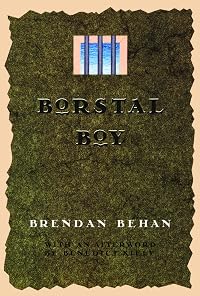
Borstal Boy
by Brendan Behan
On This Page
Description
'I have him bitched, balloxed and bewildered, for there's a system and a science in taking the piss out of a screw and I'm a well-trained man at it.'So writes Brendan Behan, poet, writer and literary legend, of the episode that coloured his life. Arrested in Liverpool as an agitator for the IRA, he was tried and sent to reform school. He was sixteen years old.The world he entered was brutal and coldly indifferent. Conditions were primitive, and violence simmered just below the surface. Yet, show more Brendan Behan found something more positive than hate in borstal- friendship, solidarity and healing flashes of kindness. Extraordinarily vivid, fluent, and moving, it is a superb and unforgettable piece of writing. show lessTags
Recommendations















Member Recommendations

Member Reviews
Brendan Behan’s account of his days in jail and a youth detention facility in England after being arrested at 16 with bomb-making material. The early days of his incarceration are rough, due to his IRA affiliation and penchant for talking back. “I was never short of an answer, historically informed and obscene.”
After he is sentenced and sent to a youth borstal his situation is improved. Behan relishes in the companionship of other young men, some in for serious crimes, and seems to get along with even the staff. Reading is a balm for Behan throughout his incarceration.
Borstal Boy is an extremely well-written book, full of energy and personality.
After he is sentenced and sent to a youth borstal his situation is improved. Behan relishes in the companionship of other young men, some in for serious crimes, and seems to get along with even the staff. Reading is a balm for Behan throughout his incarceration.
Borstal Boy is an extremely well-written book, full of energy and personality.
At age sixteen, Brendan Behan traveled from Ireland to England, carrying explosives on behalf of the IRA - this is the story about his capture, trial, and subsequent three-year Borstal sentence. Behan's coming-of-age is a story of loosening youth's rigorous ideological conviction and accepting a more moderate personality and the journey is psychologically enlightening as well as entertaining. The story in itself is obviously intriguing since not many of us (I assume) have spent time in a mid-1900s Borstal, but it's Behan's uncanny grasp of dialogue and dialects that really makes this story stand out - the multitude of voices that are presented in this story reads like a linguistic tour of the British Isles, as well as one of class show more divisions. Recommended to anyone interested in the time, the history, or the language. show less
Brendan Behan’s 1958 account of his three years in Borstal, the name for the detention center for minors in the United Kingdom. He had been arrested at the age of 16 with explosives in Liverpool, intending to plant a bomb as part of the IRA.
While such an act is morally difficult at best, Behan comes across as anything but a deranged and violent man, finding friends amongst his fellow prisoners, behaving respectfully, and holding his opinions confidently within. He is understanding of others, both for their viewpoints even if differing from his own, and for their weaknesses, for “every cripple has his own way of walking”. If ever there was a spokesman for terrorism, it would be him. And it’s amazing how easily accepted he is, show more which at one point he explains as being because “I had the same rearing as most of them; Dublin, Liverpool, Manchester, Glasgow, London. All our mothers had done the pawn – pledging on Monday, releasing on Saturday. We all knew the chip shop and the picture house and the fourpenny rush of a Saturday afternoon, and the summer swimming in the canal and being chased along the railway by the cops.”
The writing is true to Behan’s voice and he does have a natural gift. He is funny in his ‘inner voice’:
“‘You know, Pad, I’d have messed that Geordie about today. I’d ‘ave done ‘im good and proper.’
You would, Charlie, if he was tied hand and foot, and under ether.”
He is honest, admitting to avoiding a fight at one point and commenting “there’s a fearless rebel for you”.
And he has the soul of a poet, observing on his first night in prison: “As I stood, waiting over the lavatory, I heard a church bell peal in the frosty night, in some other part of the city. Cold and lonely it sounded, like the dreariest noise that ever defiled the ear of man. If you could call it a noise. It made misery mark time.”
And this later, after eating fruit in a field on work detail: “’Shan’t be sorry to get some kip,’ said a sleepy voice from the next row. It was 538 Jones, and he was yawning, half asleep already. The whole field was tired and silent, and their faces round their bushes, in the soft and gathering dark, reposed and innocent.”
The reason for downgrading my rating a bit is because the book focuses too much on the events within the detention center for my taste, which drag on. I would have loved more on his life growing up, how he joined the IRA, what it was like to be in the ranks, and the events leading up to his arrest.
Quotes:
On the IRA:
“You facquing bestud, how would you like to see a woman cut in two by a plate-glass window?
I would have answered him on the same level – Bloody Sunday, when the Black and Tans attacked a football crowd in our street; the massacre at Cork; Balbriggan; Amritsar; the RAF raids on Indian villages.”
On religion:
“…from my point of view I was as comic as I was pathetic and as comic as I was sinister; for such is the condition of man in this world (and we better put up with it, such as it is, for I never saw much hurry on parish priests in getting to the next one, nor on parsons or rabbis, for the matter of that; and as they are all supposed to be the experts on the next world, we can take it that they have heard something very unpleasant about it which makes them prefer to stick it out in this one for as long as they can).”
“…when I got over it, my expulsion from religion, it was like being pushed outside a prison and told not to come back. If I was willing to serve Mass, it was in memory of my ancestors standing around a rock, in a lonely glen, for fear of the landlords and their yeomen, or sneaking through a back-lane in Dublin, and giving the pass-word, to hear Mass in a slum public-house, when a priest’s head was worth five pounds and an Irish Catholic had no existence in law.” show less
While such an act is morally difficult at best, Behan comes across as anything but a deranged and violent man, finding friends amongst his fellow prisoners, behaving respectfully, and holding his opinions confidently within. He is understanding of others, both for their viewpoints even if differing from his own, and for their weaknesses, for “every cripple has his own way of walking”. If ever there was a spokesman for terrorism, it would be him. And it’s amazing how easily accepted he is, show more which at one point he explains as being because “I had the same rearing as most of them; Dublin, Liverpool, Manchester, Glasgow, London. All our mothers had done the pawn – pledging on Monday, releasing on Saturday. We all knew the chip shop and the picture house and the fourpenny rush of a Saturday afternoon, and the summer swimming in the canal and being chased along the railway by the cops.”
The writing is true to Behan’s voice and he does have a natural gift. He is funny in his ‘inner voice’:
“‘You know, Pad, I’d have messed that Geordie about today. I’d ‘ave done ‘im good and proper.’
You would, Charlie, if he was tied hand and foot, and under ether.”
He is honest, admitting to avoiding a fight at one point and commenting “there’s a fearless rebel for you”.
And he has the soul of a poet, observing on his first night in prison: “As I stood, waiting over the lavatory, I heard a church bell peal in the frosty night, in some other part of the city. Cold and lonely it sounded, like the dreariest noise that ever defiled the ear of man. If you could call it a noise. It made misery mark time.”
And this later, after eating fruit in a field on work detail: “’Shan’t be sorry to get some kip,’ said a sleepy voice from the next row. It was 538 Jones, and he was yawning, half asleep already. The whole field was tired and silent, and their faces round their bushes, in the soft and gathering dark, reposed and innocent.”
The reason for downgrading my rating a bit is because the book focuses too much on the events within the detention center for my taste, which drag on. I would have loved more on his life growing up, how he joined the IRA, what it was like to be in the ranks, and the events leading up to his arrest.
Quotes:
On the IRA:
“You facquing bestud, how would you like to see a woman cut in two by a plate-glass window?
I would have answered him on the same level – Bloody Sunday, when the Black and Tans attacked a football crowd in our street; the massacre at Cork; Balbriggan; Amritsar; the RAF raids on Indian villages.”
On religion:
“…from my point of view I was as comic as I was pathetic and as comic as I was sinister; for such is the condition of man in this world (and we better put up with it, such as it is, for I never saw much hurry on parish priests in getting to the next one, nor on parsons or rabbis, for the matter of that; and as they are all supposed to be the experts on the next world, we can take it that they have heard something very unpleasant about it which makes them prefer to stick it out in this one for as long as they can).”
“…when I got over it, my expulsion from religion, it was like being pushed outside a prison and told not to come back. If I was willing to serve Mass, it was in memory of my ancestors standing around a rock, in a lonely glen, for fear of the landlords and their yeomen, or sneaking through a back-lane in Dublin, and giving the pass-word, to hear Mass in a slum public-house, when a priest’s head was worth five pounds and an Irish Catholic had no existence in law.” show less
The triumph of Behan's novel is that is shows its reader the unity of men when there differences are, if not stripped away, set aside, and they are made to bond over their environment, and to help each other gets along. He is really handy with vernacular and tone, and being such puts down wonderful dialogue spoken by very rich characters. This not a dim jailhouse narrative. It is a colorful, humorous and beautifully optimistic book. Behan's sense of humanity pervades every page. Along with his play, the Quare Fellow, Borstal Boy dwells in the upper echelons of prison literature, with Genet and all of the rest.
The novel was published in 1958, and covers the period when Behan was in prison in England. He got out of Borstal (juvenile detention) in 1941 at the age of 18. The surprising thing is that he portrays the Borstal as rather pleasant, though maybe that's just because you see the prisons first, and it's a relief to get outside. He was at a Borstal where the boys worked a farm. There was plenty to eat, you got outside, you could read all you liked in the library in the evening, and there were no walls. He makes it sound as if the founder was still running it, and that he was a visionary. The Knopf edition I read has a glossary at the back, which was invaluable. The little hoodlums use cockney and Irish slang, some of it rhyming slang, e.g. show more bird is a prison sentence, from birdlime for time.
His treatment is disconcerting. He wasn't questioned harshly. The British Empire had its boot firmly on the necks of the "lesser races" at the time, yet a 16 year old who acknowledged his membership in the IRA, and had a pack of explosives and plans to bomb the shipyards during the war, was sentenced to 3 years at an open prison with other boys. In these days of mandatory sentences, and trying juveniles as adults, can you imagine that? Mind you, he also describes some beatings by guards at the prison, though considers them not too serious. He also believes that two IRA men who were arrested for a bombing, convicted and executed were innocent of that crime. show less
His treatment is disconcerting. He wasn't questioned harshly. The British Empire had its boot firmly on the necks of the "lesser races" at the time, yet a 16 year old who acknowledged his membership in the IRA, and had a pack of explosives and plans to bomb the shipyards during the war, was sentenced to 3 years at an open prison with other boys. In these days of mandatory sentences, and trying juveniles as adults, can you imagine that? Mind you, he also describes some beatings by guards at the prison, though considers them not too serious. He also believes that two IRA men who were arrested for a bombing, convicted and executed were innocent of that crime. show less
We spent just a few days in Ireland on our honeymoon trip last summer. I resolved to read more Irish writers. They churn them out.
Behan was arrested in England as a 16 year-old I.R.A. soldier and bomb maker, and this is his memoir of his time in borstal (juvie).
This is a different sort of prison book than last week’s A Gentleman in Moscow. The English juvenile justice system of the early 20th century was not the Metropol Hotel. But it ain’t the gulag neither.
Much of it was fairly impenetrable, notwithstanding the slang glossary in the back of the Knopf hardcover copy I have. A few helpful entries also serve to give you a glimpse into the subject matter:
giving the nut: butting with the head
grass: squealer, spy, informer (from show more grasshopper; rhyming slang for copper, “policeman,” and probably also for shopper, “informer”)
sea-pie: a kind of Irish stew, made with suet instead of potatoes
The peculiar kind of Irish Catholic hyper-religiosity coupled with anti-clericalism is there, heightened by the fact that Behan was more or less excommunicated for being an I.R.A. man, as the church was doing to I.R.A. leaders back in Ireland at the time (the setting is the late 1930s). But notwithstanding his excommunication, the padre tapped him to assist at mass because he knew his way around the Latin.
He is sympathetic towards not just his English fellow prisoners but also his jailers. The superintendent of his institution, whom they called “the squire,” is positively revered for his humanity and fair play.
The book has much fine humor, song, and dirty verse to recommend it.
On our recent trip we were only in Dublin for two nights and so didn’t get to see Kilmainham jail, but it was a queer feeling seeing other Republican sites and monuments. My general aversion to revolutions was heightened by the historical recency and cultural-linguistic links. It was bizarre to be walking through battlefields of a revolution only one hundred years old, a revolution that I wouldn’t have supported (for reasons that have nothing to do with whether it was right or wrong—I just always imagine myself on Team England). I don’t know quite how to explain it. Someone please explain to me what I was feeling.
Behan was dead of alcoholism at 41.
Any other Irish writers you recommend, besides the regular ones? I’m going to try William Trevor next. show less
Behan was arrested in England as a 16 year-old I.R.A. soldier and bomb maker, and this is his memoir of his time in borstal (juvie).
This is a different sort of prison book than last week’s A Gentleman in Moscow. The English juvenile justice system of the early 20th century was not the Metropol Hotel. But it ain’t the gulag neither.
Much of it was fairly impenetrable, notwithstanding the slang glossary in the back of the Knopf hardcover copy I have. A few helpful entries also serve to give you a glimpse into the subject matter:
giving the nut: butting with the head
grass: squealer, spy, informer (from show more grasshopper; rhyming slang for copper, “policeman,” and probably also for shopper, “informer”)
sea-pie: a kind of Irish stew, made with suet instead of potatoes
The peculiar kind of Irish Catholic hyper-religiosity coupled with anti-clericalism is there, heightened by the fact that Behan was more or less excommunicated for being an I.R.A. man, as the church was doing to I.R.A. leaders back in Ireland at the time (the setting is the late 1930s). But notwithstanding his excommunication, the padre tapped him to assist at mass because he knew his way around the Latin.
He is sympathetic towards not just his English fellow prisoners but also his jailers. The superintendent of his institution, whom they called “the squire,” is positively revered for his humanity and fair play.
The book has much fine humor, song, and dirty verse to recommend it.
On our recent trip we were only in Dublin for two nights and so didn’t get to see Kilmainham jail, but it was a queer feeling seeing other Republican sites and monuments. My general aversion to revolutions was heightened by the historical recency and cultural-linguistic links. It was bizarre to be walking through battlefields of a revolution only one hundred years old, a revolution that I wouldn’t have supported (for reasons that have nothing to do with whether it was right or wrong—I just always imagine myself on Team England). I don’t know quite how to explain it. Someone please explain to me what I was feeling.
Behan was dead of alcoholism at 41.
Any other Irish writers you recommend, besides the regular ones? I’m going to try William Trevor next. show less
Behan's apostasy of IRA dogma meshes perfectly with his hatred of foreign rule. Surviving British prison moves the target of his just ire from foreigners to the powerful. I paraphrase: "I have more in common with an English house painter than with the president of Ireland, who has more in common with the Queen."
Members
- Recently Added By
Lists

1001 Books You Must Read Before You Die
1,448 works; 1,134 members

Irish writers
87 works; 17 members

Allie's Wishlist
217 works; 2 members

Writers at Risk
106 works; 17 members

My TBR
371 works; 3 members

1,001 BYMRBYD Concensus
723 works; 27 members
Author Information

43+ Works 2,576 Members
Brendan Behan was born in Dublin, Ireland, in 1923. He came from a family of rebels. His father was in prison because of IRA activities when Behan was born, and his uncle Peadar Kearney was the author of A Soldiers Song, the song of rebellion that was to become the country's national anthem. Not surprisingly, Behan became a rebel himself, joining show more Fianna Eirann, a youth organization that he referred to as the Republican Boy Scouts, at the age of 9 and transferring to the IRA when he was just fourteen. When he was 16, Behan was arrested for the possession of explosives while in Liverpool, England. Apparently he had been sent there as part of a plot to blow up the battleship King George V. Behan spent 3 years in an English reform school, an experience that later became the basis for the autobiographical novel Borstal Boy. When he was released in 1942, Behan was sent back to Ireland, where he rejoined the IRA and, in less than a year found himself under arrest again. This time the charge was firing at two police officers, for which he was sentenced to 14 years in prison. He was released, however, in 1946 as part of a general amnesty. Upon leaving prison, Behan worked as a house painter and a seaman. He also began writing, initially as a freelance journalist and later as a playwright. His best-known works are his plays The Quare Fellow and The Hostage, comedy-dramas that deal with the subjects Behan knew best-Dublin and the IRA. Behan also wrote Brendan Behan's Ireland: An Irish Sketchbook, Brendan Behan's New York, The Scarperer, Confessions of an Irish Rebel, Richard's Cork Leg, and After the Wake. Behan died in 1964, at age 41, of a combination of alcoholism, jaundice, and diabetes. After Behan's death, Borstal Boy was adapted for the theatre by Frank McMahon. The resulting production won a Tony award and a New York Drama Critics Circle Award for the best play of 1969-70 season. (Bowker Author Biography) show less
Some Editions
Awards and Honors
Work Relationships
Has the adaptation
Common Knowledge
- Canonical title*
- Borstal Boy
- Original publication date
- 1958
- People/Characters
- Brendan Behan
- Related movies
- Borstal Boy (2000 | IMDb)
- Epigraph
- "...One crew of young watermen or postboys...roared and shouted the lewdest tavernsongs, as if in bravado, and were dashed against a tree and sunk with blasphemies on their lips. An old nobleman-for such his furred gown and... (show all) golden chain of office proclaimed him-went down not far from where Orlando stood, calling vengeance upon the Irish rebels, who, he cried with his last breath, had plotted this devilry..."
- ORLANDO: Virginia Woolf - First words
- Friday, in the evening, the landlady shouted up the stairs: "Oh God, oh Jesus, oh Sacred Heart, Boy, there's two gentlemen to see you."
- Last words
- (Click to show. Warning: May contain spoilers.)"Caithfidh go bhuil sé go hiontach bheith saor."
"Caithfidh go bhuil."
"It must be wonderful to be free."
"It must," said I, walked down the gangway, past a detective, and got on the train for Dublin.
*Some information comes from Common Knowledge in other languages. Click "Edit" for more information.
Classifications
Statistics
- Members
- 1,038
- Popularity
- 24,903
- Reviews
- 17
- Rating
- (3.93)
- Languages
- 7 — Danish, Dutch, English, French, German, Italian, Swedish
- Media
- Paper, Ebook
- ISBNs
- 19
- ASINs
- 35