
Benedict Kiely (1919–2007)
Author of The Penguin Book of Irish Short Stories
About the Author
Works by Benedict Kiely
Modern Irish fiction: a critique 4 copies
The leaves of the tree 1 copy
Associated Works
Rediscoveries: Informal Essays in Which Well-Known Novelists Rediscover Neglected Works of Fiction by One of Their Favorite Authors (1971) — Contributor — 27 copies
Tagged
Common Knowledge
- Birthdate
- 1919-08-15
- Date of death
- 2007-02-09
- Gender
- male
- Education
- Mount St Columba Christian Brothers School, Omagh, Ireland
National University of Ireland - Occupations
- author
broadcaster - Organizations
- Irish Independent
The Irish Press
Aosdána (Saoi) - Nationality
- Ireland
- Birthplace
- Dromore, County Tyrone, Ireland
- Places of residence
- Omagh, County Tyrone, Ireland
USA
Emo Park, Port Arlington, County Laois, Ireland - Place of death
- Dublin, Ireland
- Associated Place (for map)
- Ireland
Members
Reviews
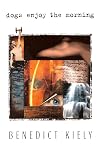
In this novel, originally published in 1968, Benedict Kiely interweaves the lives of the residents of a small Irish town called Cosmona. One such resident thinks “it would not be extravagant to suppose that something quite out of the ordinary might happen in the course of that day.” And most of what happens is extravagant disguised as the ordinary. A no-good long-lost husband returns to town escorting a Liberian sailor looking for three girls who took his money. He finds them and show more extracts his revenge. The town’s one-eyed voyeur finds himself one half of a couple having sex openly on the church tower. A convalescent holy man and a nurse find love, or at least sex. Some clever newspapermen are visiting from Dublin to do a story on a dying war veteran whose father is already mourning his loss. A free X-ray truck is parked and making announcements over a loudspeaker: “Step right in. It will only take you a few moments. You don’t have to undress.”
In a town, and a country, dominated by the Catholic Church all manner of behavior is considered sinful. But of course as the story illustrates, it still goes on. As Kiely says here: “This life was a game of consequences sometimes, and sometimes a game of comic senseless contradictions, and sometimes the two mixed up together and a lot more besides.” And so it is in Cosmona. show less
In a town, and a country, dominated by the Catholic Church all manner of behavior is considered sinful. But of course as the story illustrates, it still goes on. As Kiely says here: “This life was a game of consequences sometimes, and sometimes a game of comic senseless contradictions, and sometimes the two mixed up together and a lot more besides.” And so it is in Cosmona. show less
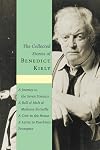
Benedict Kiely was a true Irish storyteller. This book consists of four short story collections and a novella, probably the bulk of Kiely’s short fiction. The stories here are like folk tales. They seem to grow as naturally as grass. Kiely beautifully portrays life in Ireland and Northern Ireland and masterfully creates an entire world in each story. He even takes a stab at some memories of America, notably Atlanta.
In “A View from the Treetop” a guilt laden schoolboy hides in a tree show more in the center of town, providing a narrative of the town’s activities. In “A Journey to the Seven Streams” a man recollects a day trip his family took by car when he was a boy “when cars were rare and every car, not just every make of car, had a personality of its own.” In “Maiden’s Leap” a stuffy writer learns more about himself than he bargains for.
Kiely doesn’t shy away from lust. In “Elm Valley Valerie” when the beauty rode her bicycle “an Irish setter trotted behind her, tongue out like the rest of us.”
Kiely often portrays a vanishing Ireland by seeing it through the eyes of returnees and descendants. “The Dogs in the Great Glen” is the delightful story of an American finding the glen his grandfather told him about years earlier.
He doesn’t shy away from addressing The Troubles. In his masterpiece novella “Proxopera” a man is forced to drive a car bomb to his town while his family is held captive. show less
In “A View from the Treetop” a guilt laden schoolboy hides in a tree show more in the center of town, providing a narrative of the town’s activities. In “A Journey to the Seven Streams” a man recollects a day trip his family took by car when he was a boy “when cars were rare and every car, not just every make of car, had a personality of its own.” In “Maiden’s Leap” a stuffy writer learns more about himself than he bargains for.
Kiely doesn’t shy away from lust. In “Elm Valley Valerie” when the beauty rode her bicycle “an Irish setter trotted behind her, tongue out like the rest of us.”
Kiely often portrays a vanishing Ireland by seeing it through the eyes of returnees and descendants. “The Dogs in the Great Glen” is the delightful story of an American finding the glen his grandfather told him about years earlier.
He doesn’t shy away from addressing The Troubles. In his masterpiece novella “Proxopera” a man is forced to drive a car bomb to his town while his family is held captive. show less
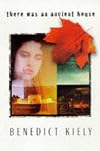
First year novitiates in a religious order in 1950s Ireland attempt to adjust to a life of silence, devotion, discipline, and the self-deprivation of “a strictly regulated life.” Those in danger of leaving – “I’m in jail. I might as well be in jail. I can’t stick this place any longer” – are counseled to wait through one more meal before deciding.
The novitiates, of varying ages, interests and vocations, blend together in a group while maintaining their individuality. Even show more the best among them can be “bogged to the neck in a spiritual desolation” at times.
This is a nuanced, lovely book that offers the best of men, some struggling with their vocation, some steady on the path. show less
The novitiates, of varying ages, interests and vocations, blend together in a group while maintaining their individuality. Even show more the best among them can be “bogged to the neck in a spiritual desolation” at times.
This is a nuanced, lovely book that offers the best of men, some struggling with their vocation, some steady on the path. show less
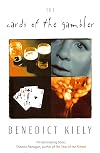
The gambler, a doctor, feels gambling has ruined him. He loses his friends, car and family. He misses the birth of his son. At his nadir, the gambler meets god, then death, in a pub. Both are disguised, but the gambler recognizes them for what they are. Reading a newspaper article about a recent mass-murder out loud for the gambler's benefit, death says "that was great fun for everybody." After making a deal with death, the gambler regains his prosperity and maintains a type of power-sharing show more arrangement with death for a number of years - knowing he is only postponing the inevtiable.
Like Flann O'Brien, Kiely works around the edges of reailty with this powerful novel. Originally published in 1953, it addresses the same concerns of life and death as O'Brien's "The Third Policeman." show less
Like Flann O'Brien, Kiely works around the edges of reailty with this powerful novel. Originally published in 1953, it addresses the same concerns of life and death as O'Brien's "The Third Policeman." show less
Awards


You May Also Like


Associated Authors
Statistics
- Works
- 37
- Also by
- 7
- Members
- 701
- Popularity
- #36,119
- Rating
- 3.9
- Reviews
- 7
- ISBNs
- 72
- Languages
- 2
- Favorited
- 3