East and West
by Chris Patten
On This Page
Description
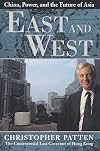
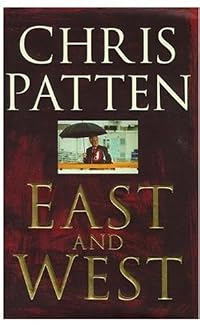
By the former Chairman of the Conservative Party and the last Governor of Hong Kong, this work offers an analysis of the Asian phenomenon and the future of economic and political liberty in China and East Asia in the 21st century. This book focuses on Chris Patten's key disputes with China over questions of democratic elections, civil liberties and Hong Kong's independence, and also examines the larger picture of the Asian value system and Communist China. It examines the implications of show more China's economic reforms, and sets out the key political agendas for the future for both East and West. show lessTags
Recommendations











Member Reviews
From the last governor of Hong Kong, a controversial, astute, and thought-provoking analysis of the Asian phenomenon and the future of economic and political liberty in China and East Asia in the next century. For Chris Patten, Hong Kong was an extraordinary vantage point from which to view the growing economic and political power of China and East Asia over the last five years. As a free colony of the British Empire and the apex of an economic success story, it benefited from the development of the Chinese economy as surely as it contributed to that economic miracle. In a political move which marked the twilight years of the Empire, Hong Kong was finally handed back to Communist China in June 1997. East and West is Chris Patten's show more account of the current Asian phenomenon and an astute analysis of China as a rapidly growing world power.
The handover of Hong Kong challenged Britain's liberal conscience. With China looming in the background, it was impossible to build a platform of independence and political democracy as had been constructed in other colonial territories. East and West focuses on Chris Patten's key disputes with China over questions of democratic election, civil liberties, and Hong Kong's independence; but, more importantly, it examines the larger picture of the Asian value system. Can you have economic change without political change? Can democratic rule guarantee fair play between economic competitors?
There can be no doubt that Asia is a potentially formidable competitor to Europe and the United States, but Communist China lies at the heart of Asian development. In his intelligent and thought-provoking book, Chris Patten examines the implications of China's economic reforms and sets out the key political agendas for the future - not only for the East, but also for the West. show less
The handover of Hong Kong challenged Britain's liberal conscience. With China looming in the background, it was impossible to build a platform of independence and political democracy as had been constructed in other colonial territories. East and West focuses on Chris Patten's key disputes with China over questions of democratic election, civil liberties, and Hong Kong's independence; but, more importantly, it examines the larger picture of the Asian value system. Can you have economic change without political change? Can democratic rule guarantee fair play between economic competitors?
There can be no doubt that Asia is a potentially formidable competitor to Europe and the United States, but Communist China lies at the heart of Asian development. In his intelligent and thought-provoking book, Chris Patten examines the implications of China's economic reforms and sets out the key political agendas for the future - not only for the East, but also for the West. show less
Written by Christopher Patten, the controversial last governor of Hong Kong under the British colonial rule, East and West is neither a book of memoir nor a hulking self-justification. Patten deftly draws on his experiences as Hong Kong Governor to formulate a number of arguments about Asia, about the conduct and implementation of economic policy, about the components of good governance, and about the relationship between political freedom and free economy.
Natives of Hong Kong would have to agree that Patten had struggled (wrestled with the Chinese leadership) in Beijing) to implement democratic institutions that would ensure Hong Kong's continued vitality and ability to prosper. On the verge of the 1997 handover which casted qualms for show more political and economic uncertainty in many Hong Kongers, Patten was in an awkward position where he was sandwiched between the Hong Kongers and the Chinese leadership. In several occasions (including this book), Patten stigmatizes the totalitarian system of the Chinese Communist system.
There had been incidences in which Hong Kongers accused Patten of betraying the colony and its 6 million occupants, of surrendering a free capitalist city to the ultimate Communist tyranny, with no negotiation and guarantee of human rights, freedom of speech, and autonomy. In the book, Patten draws on these sensitive issues and struggles to give his readers an up-close-and-personal look of the real Asia, not just Hong Kong, in all of its diversity.
Patten started penning the book back in 1996 and many of the events on which he has drawn in writing this book took place at a time when the Asian (Taiwan, Thailand, South Korea, Singapore, Malaysia, Indonesia, Philippines, Vietnam, Hong Kong) economies seemed to be climbing like rockets. Stock markets triple-leaped and the number of millionaires tripled overnight. Patten regards what has happened in Asia, despite the recent setbacks, as on the whole exciting, unique, and vital for the region and the world.
Despite many Hong Kongers have dreaded the prospect of Hong Kong's return to Chinese sovereignty (which has proven to be worrisome in the recent rally against the passage of Article 23: security and subversion law), Patten sanguinely asserts that the die-hard Chinese leadership, while intending to demonstrate the feasibility of co-existence of Leninism and capitalism, will succeed in preserving a free market and liberal democracy in Hong Kong. So the horses will keep racing, and people will go on dancing, as promised by Deng Xiao-ping. The former colony will propser and remains intact for at least 50 years under the one-country-two-system policy.
Patten further asserts that what has worked for the West has already succeeded in the East, that what took place in Asia (especially in Hong Kong, Singapore, South Korea and Taiwan) in the last thirty years was not disparate to the industrialization of Europe and the United States, only the Asian "little dragons" had evolved so much faster. Finally, Patten provides a global picture of the future, in which free markets and liberal politics sustain one another and attribute to economy prosperity. East and West delivers a personal portrait of Asia and its economic prospect, and how the East and the West come together as a whole in unifying the ideals of policy and economic conduct. show less
Natives of Hong Kong would have to agree that Patten had struggled (wrestled with the Chinese leadership) in Beijing) to implement democratic institutions that would ensure Hong Kong's continued vitality and ability to prosper. On the verge of the 1997 handover which casted qualms for show more political and economic uncertainty in many Hong Kongers, Patten was in an awkward position where he was sandwiched between the Hong Kongers and the Chinese leadership. In several occasions (including this book), Patten stigmatizes the totalitarian system of the Chinese Communist system.
There had been incidences in which Hong Kongers accused Patten of betraying the colony and its 6 million occupants, of surrendering a free capitalist city to the ultimate Communist tyranny, with no negotiation and guarantee of human rights, freedom of speech, and autonomy. In the book, Patten draws on these sensitive issues and struggles to give his readers an up-close-and-personal look of the real Asia, not just Hong Kong, in all of its diversity.
Patten started penning the book back in 1996 and many of the events on which he has drawn in writing this book took place at a time when the Asian (Taiwan, Thailand, South Korea, Singapore, Malaysia, Indonesia, Philippines, Vietnam, Hong Kong) economies seemed to be climbing like rockets. Stock markets triple-leaped and the number of millionaires tripled overnight. Patten regards what has happened in Asia, despite the recent setbacks, as on the whole exciting, unique, and vital for the region and the world.
Despite many Hong Kongers have dreaded the prospect of Hong Kong's return to Chinese sovereignty (which has proven to be worrisome in the recent rally against the passage of Article 23: security and subversion law), Patten sanguinely asserts that the die-hard Chinese leadership, while intending to demonstrate the feasibility of co-existence of Leninism and capitalism, will succeed in preserving a free market and liberal democracy in Hong Kong. So the horses will keep racing, and people will go on dancing, as promised by Deng Xiao-ping. The former colony will propser and remains intact for at least 50 years under the one-country-two-system policy.
Patten further asserts that what has worked for the West has already succeeded in the East, that what took place in Asia (especially in Hong Kong, Singapore, South Korea and Taiwan) in the last thirty years was not disparate to the industrialization of Europe and the United States, only the Asian "little dragons" had evolved so much faster. Finally, Patten provides a global picture of the future, in which free markets and liberal politics sustain one another and attribute to economy prosperity. East and West delivers a personal portrait of Asia and its economic prospect, and how the East and the West come together as a whole in unifying the ideals of policy and economic conduct. show less
Very interesting book about the Hong Kong handover from Great Britain to China. Some sympathy for the people in Hong Kong being stuck in the middle.
I didn't know that China refused to contribute to the new Hong Kong airport that they would get the benefit of, but that did not surprise me.
I didn't know that China refused to contribute to the new Hong Kong airport that they would get the benefit of, but that did not surprise me.
For students of SE Asian politics this is a must, throwing light on the mostly tedious machinations involved with dealing with politicians in SE Asia and the Pacific Rim countries. Chris Patten has an easy style and manages to involve the reader in politics without boring him/her to death.
I wanted to like this book, but find that, surprisingly, Patten really cannot write very well.
In June of 1997, over a century and a half of British rule in Hong Kong came to an end. Chris Patten writes about his experiences as the last governor of the colony of Hong Kong. He explains why he adopted the stance that he did, and how he fought his battles.
Source: Amazon - September 30, 2021
Source: Amazon - September 30, 2021
Ratings
Members
- Recently Added By
Author Information

9 Works 765 Members
Common Knowledge
- Canonical title*
- D'Est en Ouest, les lendemains du monde
- Original publication date
- 1998
*Some information comes from Common Knowledge in other languages. Click "Edit" for more information.
Classifications
- Genres
- Nonfiction, General Nonfiction, History, Biography & Memoir
- DDC/MDS
- 951.25 — History & geography History of Asia East Asia: China, Taiwan, Hong Kong, Korea Southeast China Hong Kong
- LCC
- DS796 .H757 .P39 — History of Europe, Asia, Africa and Oceania Asia History of Asia China Local history and description Hong Kong
- BISAC
Statistics
- Members
- 337
- Popularity
- 93,718
- Reviews
- 6
- Rating
- (3.34)
- Languages
- Chinese, Dutch, English, French
- Media
- Paper, Audiobook, Ebook
- ISBNs
- 16
- ASINs
- 2